
 When all the people in the synagogue heard these things, they became very angry. They got up, forced Jesus out of town, and took him to the edge of the cliff on which the town was built. They planned to throw him off the edge, but Jesus walked through the crowd and went on his way. [Luke 4:28-30 (NCV)]
For love to be real, for it to grow deep inside, it must not give in to fear. It is not afraid to give, to risk, to chance, even if it hurts. Love believes. It is faith moving forward. Fear holds us back. It makes us stop or turn and run. [Chris Fabry]
While writing yesterday’s devotion about selfishness being the opposite of love, I found several authors who suggested that fear is the opposite of love. This gave me pause; can something be the opposite of more than one thing?
From day one, when Mary and Joseph fled with Him to Egypt, Jesus had plenty of reasons to be fearful and yet fear never prevented Him from speaking, healing, pointing out hypocrisy and evil, or going to the cross. He didn’t give in to fear when, after speaking of God’s grace to Gentiles, the people of His own hometown tried to force him off a cliff. Angry mobs, religious leaders, and Rome never intimidated Jesus or kept Him from challenging the corrupt political and religious system of His day. He knew a warrant was issued for His arrest and that the cross awaited Him in Jerusalem but fear didn’t stop Jesus from boldly riding into the city while being hailed as a king. He knew Judas would betray Him and yet the Lord shared His last meal with him. Jesus didn’t plead for mercy or justice at his trial and His last words weren’t ones of fear or selfishness; they were words of loving forgiveness. Nothing Jesus said or did speaks of fear but everything He said and did speaks of love.
Afraid of commitment, rejection, manipulation, the opinions of others, insufficiency, injury, ineptitude, failure, or that there won’t be enough left over for us, we don’t love. Afraid of being vulnerable, we protect ourselves by not getting involved, not going all-out, not sharing, and not caring. So, like the priest and Levite in the Good Samaritan parable, we walk away, keep to ourselves and our interests, pretend we don’t notice, or make excuses.
Fear happens when we look at ourselves rather than trust in God. Perhaps fear and selfishness are two sides of the same coin. When we’re fearful, we become selfish and, when we’re selfish, it’s likely we’re afraid of something or someone. Love, however, is the antidote to both afflictions. God is love and where God’s love is, there is neither selfishness nor fear.
The call of Jesus is a call to take heart, to have courage, to stand tall in the name of love. The daily invitation that the risen Christ extends to us is to be a people who refuse, in love, to step to the tune of fear. [Bishop Robert O’Neill]
 Having refused to bow down and worship Nebuchadnezzar’s gold statue, Shadrach, Meshach, and Abednego bravely stood before the king. Even when offered a second opportunity to save themselves from incineration in the blazing furnace, the young men were confident the Lord they loved more than life itself would save them. “But, even if he doesn’t,” they added in what are some of the most heroic words in Scripture, “We will never serve your gods or worship the gold statue you have set up.” Furious at their refusal, the king had them tied up and tossed like logs into the fiery furnace—a fire so hot that the soldiers who threw the men into the furnace were killed. The men’s faith was well-founded; in spite of their bindings, they could be seen walking about freely in the flames (with an angel of the Lord) and the three emerged unscathed from the inferno.
 1 Timothy doesn’t tell us much about Hymenaeus or Alexander—the men whose faith was shipwrecked. From Paul’s other references to the men, we do know that Hymenaeus denied the doctrine of the resurrection and that Alexander did “much harm” to Paul, but we don’t know the details. Whatever these men said or did, by accusing them of blasphemy and handing them “over to Satan,” Paul seemed to be excommunicating them from the church.
 Today’s email contained a meme of that lovable loser Charlie Brown with the caption: “The smile on my face doesn’t mean my life is perfect. It means I appreciate what I have and what I have been blessed with. I choose to be happy.” The meme reminded me of words spoken by Jane Marczweski when she appeared on America’s Got Talent last week: “You can’t wait until life isn’t hard anymore before you decide to be happy.” Known as Nightbirde, the 30-year-old vocalist sang an original song called “It’s Okay” and received the “golden buzzer” from judge Simon Cowell. She said she wrote the song as a reminder that, “You can be happy and also be going through something really hard at the same time—you don’t have to pick one or the other.”
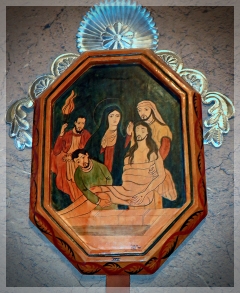 Several years ago, my mother-in-law was despondent when my brother-in-law’s deteriorating health necessitated hospice care. Parkinson’s disease had taken a terrible toll on him and a mother’s heart breaks when she sees her child’s life disintegrating before him. Yet, that’s what happened to Mary.
 Devotions of the Heart