SONGS OF VICTORY – MAUNDY THURSDAY 2022

Praise the Lord! Yes, give praise, O servants of the Lord. Praise the name of the Lord! Blessed be the name of the Lord now and forever. Everywhere—from east to west—praise the name of the Lord. For the Lord is high above the nations; his glory is higher than the heavens. [Psalm 113:1-4 (NLT)]

The stone that the builders rejected has now become the cornerstone. This is the Lord’s doing, and it is wonderful to see. This is the day the Lord has made. We will rejoice and be glad in it. … Give thanks to the Lord, for he is good! His faithful love endures forever. [Psalm 118:22-24,29 (NLT)
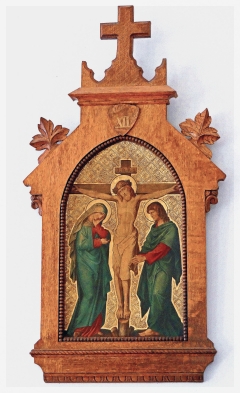
crucifixion - cathedral st. francis - santa feJesus knew that one would betray Him, another deny Him, and all desert Him. He knew the people He’d fed, healed, taught, and loved—the people who just a few days earlier had greeted him like a king with palm branches and shouts of “Hosanna”—soon would prefer a thief over Him. Because of His anguished prayers later that evening in Gethsemane, we know that He knew the suffering and torment that lay ahead for him. Nevertheless, he sang with the disciples during their Passover meal that last night and it wasn’t a sorrow-filled psalm of lament.

Because it was a Passover feast, at least twice during the evening they would have paused to sing the traditional Passover hymns commemorating Israel’s escape from slavery. Known as the “Egyptian Hallel” and consisting of Psalms 113 through 118, they are joyful hymns of praise and thanksgiving. Hallel literally means praise and the Hebrew phrase Hallelu Yah, meaning “praise the Lord,” is found frequently in these beautiful psalms. The sages understood that Psalm 118, the climax of the Hallel, was about the Messiah and that night in Jerusalem, nearly 2,000 years ago, the Messiah Himself sang those very words. As the disciples gathered in that upper room celebrating Israel’s release from bondage in Egypt, did they realize they really were celebrating man’s release from bondage to sin?

The following day, after three hours on the cross, Jesus cried out, “My God, my God, why have you abandoned me?” After the praise and thanks of the previous night, did He now doubt God? The question was rhetorical because Jesus knew exactly why He was suffering—He was bearing the weight of the sins of the world. What the gospels don’t include is the rest of Psalm 22, the psalm Jesus probably was reciting. Although the psalm begins with the complaint of unanswered prayers and abandonment by God, it is followed by a statement of confidence in Him. A complaint of being forsaken by men comes next but it also is followed by an expression of trust in the Lord.

Although the psalm was written by David, rather than reflecting his experiences, it prophetically presented the future suffering of the Messiah and the next several stanzas clearly depict the crucifixion of Jesus: people mocked and scorned Him, He was in pain, His strength ebbed, His mouth was dry, His hands and feet were pierced, He was dying, and His clothing was divided and lots cast for it. These lines are followed by a cry for deliverance.

By the psalm’s 22nd verse, however, its tone changes and the plaintive cries turn to praise and words of faithful confidence: “I will proclaim your name to my brothers and sisters. I will praise you among your assembled people. Praise the Lord, all you who fear him!” The praise and promises continue throughout the rest of the psalm. These are not the words of a defeated man but the words of the promised Messiah, the Anointed One, the one who fulfilled the promise made to Abraham in Genesis that, “through your descendants all the nations of the earth will be blessed.” Out of what seemed to be defeat came triumph.

The One who’d sung “Hallelu Yah,” the previous night with his disciples again praised the Lord with His last words as He hung on the cross. Hallelujah! Praise the Lord!

The cross was two pieces of dead wood; and a helpless, unresisting Man was nailed to it; yet it was mightier than the world, and triumphed, and will ever triumph over it. [Augustus William Hare]

I will praise you in the great assembly. I will fulfill my vows in the presence of those who worship you. The poor will eat and be satisfied. All who seek the Lord will praise him. Their hearts will rejoice with everlasting joy. The whole earth will acknowledge the Lord and return to him. All the families of the nations will bow down before him. For royal power belongs to the Lord. He rules all the nations. Let the rich of the earth feast and worship. Bow before him, all who are mortal, all whose lives will end as dust. Our children will also serve him. Future generations will hear about the wonders of the Lord. His righteous acts will be told to those not yet born. They will hear about everything he has done. [Psalm 22:25-31 (NLT)]

Copyright ©2022 jsjdevotions. All rights reserved.

PHILIP AND THE EUNUCH – Part 1

Now an angel of the Lord said to Philip, “Rise and go toward the south to the road that goes down from Jerusalem to Gaza.” This is a desert place. And he rose and went. And there was an Ethiopian, a eunuch, a court official of Candace, queen of the Ethiopians, who was in charge of all her treasure. [Acts 8:26-27 (ESV)]

firebushOnce day, the Holy Spirit told Philip to go south and then down the desert road between Jerusalem and Gaza. Although Scripture leads us to assume that Philip’s fortuitous encounter with the Ethiopian eunuch quickly followed, a look at the map tells us otherwise. At the time, Philip was in Samaria and, before he could walk the road from Jerusalem to Gaza, he had a 42-mile uphill trek south to Jerusalem before turning southwest onto the 50-mile stretch of road leading to Gaza, the southernmost of the five chief Philistine cities in southwest Palestine and the last settlement before the desert waste stretching away to Egypt. The trip to Jerusalem probably took at least two days and we don’t know how far down the Gaza Road he walked before the Apostle discovered his God-ordained task and met the treasurer of Ethiopia. In actuality, Philip was on this mission for several days before he knew why he’d been sent.
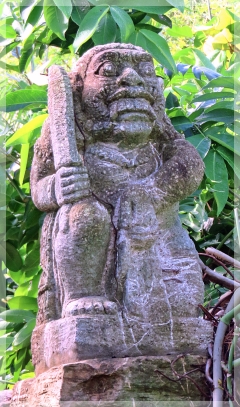
While most translations say the eunuch was from Ethiopia, he was not from the nation we know as Ethiopia. He was from a territory called Cush in the Old Testament and Nubia (meaning black) by the Romans. Present day Ethiopia (once called Abyssinia) is southeast of the ancient Nubia. This large kingdom was located in today’s southern Egypt and northern Sudan, an area considered by the Romans and Greeks to be the outer limits of the known world or “the end of the earth.” Referring to the dark skin of its inhabitants, the Greeks called any place south of Egypt Aithiopia, meaning the land of the “Burnt-Faced People.” When Wycliffe translated the Greek into English in 1382, he called this land Ethiopia and, until the late 1800s, Ethiopia was a general term referring to any of Black Africa.

The Ethiopian man was the Secretary of the Treasury/Chancellor Exchequer for Candace (Kandake in some translations). Rather than a given name, Candance was the title given to the queen mother. Her son, the king, was considered the child of the sun. As such, he was considered too holy to get involved in secular matters so the queen mother ruled the kingdom on his behalf. The Ethiopian is referred to as a eunuch because it was common in the ancient world to castrate trusted male servants in the royal household. It kept them out of the royal harem (or queen’s bed) and, since they were incapable of setting up a dynasty of their own, castration prevented them from plotting to overthrow the government.

Finally, this Philip is not the one from Bethsaida—the one who brought his friend Nathanael to Jesus and was one of the twelve apostles. This Philip is one of the seven men selected as deacons for the Jerusalem church. Following the martyrdom of Stephen and the persecution of Jesus’ followers, Scripture tells us that all the believers (“except the apostles”) fled Jerusalem and scattered. The deacon Philip went north to Samaria where he found his true calling—that of evangelist.

In Samaria, Philip “proclaimed Christ” and brought so many to believe in Jesus that “there was much joy in that city.” [Acts 8:8] Then, out of the blue, the Spirit told him to leave his thriving ministry in Samaria and start to Gaza. Did Philip question God’s reasoning? If he did, imagine his questions and the Spirit’s answers. Where exactly am I going? You don’t need to know. How will I know when I get there? I’ll tell you. What am I supposed to do? You’ll know when the time comes. How long will I be gone? As long as it takes. When do I leave? Now! We don’t know if Philip asked any of those questions but we do know that, when the Spirit said “Go!” he obeyed.

While it made no earthly sense for Philip to leave a successful ministry, it made sense to God because He’d arranged a divine appointment between Philip and the Ethiopian. God knew about the hunger for the Word of God that lay in the man’s heart and knew that Philip was the perfect choice to help fill it. People like Stephen, Peter and John brought the Gospel to Jerusalem and Judea. Philip took it to Samaria and, after he met with the Ethiopian, the Gospel would reach the last geographical sphere mentioned in the Great Commission—Ethiopia—the end of the earth!

Think of what we could do for the Lord if, like Philip, we went when the Spirit said, “Go!”

The Lord of all creation has ordained that he would do his work through us. Our seeking the Spirit’s guidance and obeying what he wants us to do and say is the way he works to bless the world. [Lloyd Ogilvie]

But you will receive power when the Holy Spirit has come upon you, and you will be my witnesses in Jerusalem and in all Judea and Samaria, and to the end of the earth. [Acts 1:8 (ESV)]

Copyright ©2022 jsjdevotions. All rights reserved


PREDICTIVE PROPHECY (Prophecy – 3)

Bel and Nebo, the gods of Babylon, bow as they are lowered to the ground. They are being hauled away on ox carts. The poor beasts stagger under the weight. Both the idols and their owners are bowed down. The gods cannot protect the people, and the people cannot protect the gods. They go off into captivity together. [Isaiah 46:1-2 (NLT)]

The Israelites were surrounded by various pagan peoples who worshipped foreign deities. Baal ruled over Canaan and Phoenicia, Chemosh over Moab, and Marduk/Bel and Nebo over Babylonia. The Philistines’ had Dagon and the Ammonites worshipped Molech. These gods usually had a domain over which they ruled. For example, Baal’s domain was rain, storms, and the harvest. Moab’s Chemosh presided over war and mountains. As patron deity of Babylon, Marduk/Bel was supposed to protect the city and rule over storms while Nebo’s purview was wisdom and science. The Philistines’ chief god Dagon presided over death, the afterlife, war, and agriculture while Ammon’s Molech reigned over the underworld, which may explain his association with child sacrifice in the Old Testament.

In spite of their reputed special powers, those pagan gods were nothing more than powerless idols who had to be carried around on ox carts and would be taken captive along with their worshippers! Marduk/Bel couldn’t protect Babylon from Cyrus or Alexander the Great and Baal, the god of rain and storms, couldn’t even make it rain after Elijah called for a drought or muster up a bolt of lightning to ignite a fire! In contrast, upon Elijah’s prayer, the God of Israel immediately flashed down flames and turned water-soaked wood into an inferno.

Perhaps, the ultimate test of any god is prophecy because only a true God can know all that has gone before and all that is yet to come. In Isaiah 41, the Lord called out those false gods because they couldn’t prophesy when He, the God of Israel, could! It wasn’t just His prophet Isaiah who accurately forecast the future; many others did as well. For example, Jeremiah accurately foretold Jerusalem’s destruction, King Jehoiakim’s death and the end of his line, Babylon’s fall, the length of captivity, and the exiles’ return to Judah. When interpreting Nebuchadnezzar’s dream, Daniel accurately foretold the different empires in historical progression—from Babylonian to Medo-Persian to Grecian and then to Roman. In 536 BC, more than 213 years before it happened, he predicted the division of Alexander the Great’s kingdom into four weaker nations. In fact, the book of Daniel predicted political history for the next 370 years!

Since true prophecy is the living word of God, I suppose the historic accuracy of those fulfilled prophecies shouldn’t surprise us. Their accuracy tells us that God exists, that there are no other gods, and that, just as He controlled the past, He is in full control of the future. There are, however, several prophecies yet to come. For example, Daniel’s predictive prophecies didn’t stop at 166 BC with the Maccabees and Antiochus IV. He continued on with end-time predictions of the antichrist, the tribulation, and humanity’s resurrection. The accuracy of past predictive prophecy tells us that those prophecies not yet fulfilled will come to pass. Will you be ready when they do?

I’ve read the last page of the Bible. It’s all going to turn out all right. [Billy Graham]

“Present the case for your idols,” says the Lord. “Let them show what they can do,” says the King of Israel. “Let them try to tell us what happened long ago so that we may consider the evidence. Or let them tell us what the future holds, so we can know what’s going to happen. Yes, tell us what will occur in the days ahead. Then we will know you are gods. In fact, do anything—good or bad! Do something that will amaze and frighten us. But no! You are less than nothing and can do nothing at all. [Isaiah 41:21-24a (NLT)]

Copyright ©2022 jsjdevotions. All rights reserved

IF HE CAN

“What do you mean, ‘If I can’?” Jesus asked. “Anything is possible if a person believes.” The father instantly cried out, “I do believe, but help me overcome my disbelief!” [Mark 9:23-24 (NLT)]

Beauty Berry FlowerPrayer is calling on God’s power; it’s like calling in the big guns to fight the battle. When doubt in the efficacy of prayer sneaks in, however, it’s more like calling in the big guns but not believing they’re loaded with enough ammunition. I am often like the father in Mark 9 who qualified his request that Jesus heal his son by saying, “If you can.” Like that father, I profess to believe but I need God to help me believe more! Sometimes, the enemy sneaks into my heart and causes me to doubt both the ammunition and God’s aim.

Looking for a feel-good movie to escape from the challenges of the day, we recently streamed the War Room. Not to be confused with the 1993 documentary The War Room, the war room in this 2015 movie is a converted closet with prayer requests covering the walls rather than an Arkansas political campaign headquarters. Focusing on the power of prayer, the story is about a crumbling marriage that is redeemed by prayer.

In one memorable scene, Elizabeth Jordan, the woman in the troubled marriage, and Miss Clara, a prayer warrior extraordinaire, are walking together when they’re confronted by a knife-wielding mugger demanding their money. As Elizabeth starts to get out her wallet, Miss Clara successfully defies him just by saying, “You put that knife down right now in the name of Jesus!” The next scene shows a frazzled Elizabeth reporting the incident to a skeptical policeman while the unruffled Miss Clara enjoys some ice cream.

Even the most positive reviews of this movie were critical of the unreality of those scenes but, as improbable as they were, their inclusion in the movie were necessary because they demonstrate the absolute faith—the total certainty—that is necessary for truly powerful prayer. Facing that mugger, Miss Clara had no doubt that she was in God’s hands and was certain that He would rescue her if she called on Jesus’ name. Later, as she calmly consumed both her and Elizabeth’s ice cream, it is obvious she wasn’t surprised by God’s protection. She expected it, as should we all if we truly believe. After all, nothing is impossible with God!

I’m not sure that God wants us to respond to a weapon-wielding robber the way Miss Clara did but I think He does want us to have the kind of faith demonstrated in that scene. When we come to Him in prayer, we must have faith enough to put our entire lives in His hands. We must believe that our prayers can actually make a difference. Indeed, prayer is the key to winning all those battles we can’t win on our own.

When we pray, do we ask with our lips but doubt in our hearts? When we ask, are we surprised when we receive? Father in heaven, I don’t know why I still doubt when you’ve shown me over and over again that my prayers do not fall on deaf ears. I have faith, dear Lord; please, help me have more!

Faith is not believing that God can. It is knowing that God will. [Ben Stein]

But when you ask him, be sure that your faith is in God alone. Do not waver, for a person with divided loyalty is as unsettled as a wave of the sea that is blown and tossed by the wind. Such people should not expect to receive anything from the Lord. [James 1:6-7 (NLT)]

Now all glory to God, who is able, through his mighty power at work within us, to accomplish infinitely more than we might ask or think. [Ephesians 3:20 (NLT)]

Copyright ©2022 jsjdevotions. All rights reserved

COME AS YOU ARE

“Now go out to the street corners and invite everyone you see.” So the servants brought in everyone they could find, good and bad alike, and the banquet hall was filled with guests. [Matthew 22:9-10 (NLT)]

My in-laws were great ones for giving theme parties. When they hosted a “Backwards Party,” guests entered through the back door, wore their clothes backwards (which my mother-in-law admitted made it difficult for the men), and ate dessert before dinner. At another get-together, attendees came dressed as children, received jump ropes and jacks, pulled taffy, and played games like “Mother May I?” and “Pin the Tail on the Donkey.” My introduction to their parties was in 1966 when they turned their house into a Prohibition era speakeasy and guests needed a password to enter. Women dressed as flappers while the men wore fedoras, vests, and spats. Another party had the theme, “Come as You Wish You Had Been.” My mother-in-law, dressed in shorts with a whistle around her neck, came as the PE teacher she once dreamed of becoming and my father-in-law dressed as the train conductor he once aspired to be. Other attendees dressed as ballerinas, weight lifters, princesses, cowboys, or baseball players.

The one theme party they never hosted was “Come as You Are!” After all, no one wants to come as they are. If we can’t be someone else entirely, at least we want to be a better version of ourselves! If I were invited to a “Come as You Are” party, I know I would cheat. I’d change out of my yoga pants, tee, and Crocs into an outfit that would suggest my life is far more exciting than it really is. Then I’d put on make-up, touch up my nails, comb my hair, and spritz on perfume before leaving the house. Yet, “Come as you are!” is exactly how God invites us to come to Him.

We don’t have to be neat, clean or accomplished, nor do we have to repair what’s broken in our lives to accept the invitation to Jesus’ party. Our Lord didn’t invite the elite or influential to be his disciples; He invited twelve ordinary, uneducated, and imperfect men. He knew Peter was impulsive, John and James hot-tempered, Judas flawed, and Matthew a traitorous tax-collector. The woman at the well and the thief on the cross didn’t have to pretend to be anything but the sinners they were and neither do we! The blind, lame, adulterous, afflicted, possessed, soiled and corrupt—they all came to Jesus, not as the innocent children they once were nor as they once wished they could have been, but just as they were. It’s hard to believe that our perfect God could love and accept us, as imperfect and flawed as we are, but He does.

Although we can come to Him as we are, make no mistake about it, we won’t remain that way. We must shed the old us and put on the new in the same way that Saul, the self-righteous Pharisee, did when he became Paul, the Apostle. When we accept Jesus’ invitation to come as we are, He will make of us what we should be.

The church is not a select circle of the immaculate, but a home where the outcast may come in. It is not a palace with gate attendants and challenging sentinels along the entrance-ways holding off at arm’s-length the stranger, but rather a hospital where the broken-hearted may be healed, and where all the weary and troubled may find rest and take counsel together. [James H. Aughey]

Jesus answered them, “Healthy people don’t need a doctor—sick people do. I have come to call not those who think they are righteous, but those who know they are sinners and need to repent.” [Luke 5:31-32 (NLT)]

Put on your new nature, and be renewed as you learn to know your Creator and become like him. In this new life, it doesn’t matter if you are a Jew or a Gentile, circumcised or uncircumcised, barbaric, uncivilized, slave, or free. Christ is all that matters, and he lives in all of us. [Colossians 3:10-11 (NLT)]

Copyright ©2021 jsjdevotions. All rights reserved.

WHO’S THE PILOT?

key west expressI trust you, O Lord. I said, “You are my God.” My future is in your hands. [Psalm 31:14-15a (GW)]

By the time our son was seventeen, he had his pilot’s license. To log solo flight time, he’d often fly from his school in another state to a small airport near our home. We’d meet him there and enjoy lunch together before he returned. Sometimes, he’d take one of us up for a short flight over the scenic countryside before he flew back to school. I don’t even like commercial flights on a jumbo jet with a seasoned pilot so getting on a single-engine Cessna with a teenager at the controls was a leap of faith for me. Nevertheless, when I’m on a plane, I have to leave the flying to those far more skilled than I—even when it’s a seventeen-year-old! Reassuring myself that there was less my son could hit in the air (while trying to forget that safely landing a plane was probably more difficult than parallel parking), I surrendered control to him and trusted that he knew what he was doing.

God is my Co-Pilot is the title of a 1945 film based on the World War II exploits of Robert Lee Scott, Jr. That title eventually became a Christianese catch-phrase and still can be found on bumper stickers today. While a charming sentiment, it is theologically incorrect. If God is our co-pilot, we’re in the wrong plane! There are no dual controls in God’s plane and He doesn’t want us touching the yoke or messing with the rudder pedals. God is neither our assistant nor are we His. He’s not the passenger on our plane; we’re the passengers on His. We don’t belong anywhere in the cockpit; we belong back in the cabin. He has a flight plan specifically designed for each of us and we have to trust that plan to Him.

While it’s easy to trust in God’s sovereignty and cede the controls to Him when the journey is smooth, it’s much harder when turbulence occurs or it begins to storm. I’ve had some bumpy (and frightening) flights, especially over the mountains in summer, but I never barged into the cockpit to take charge nor did I don a parachute and bail out. Trusting the captain, I surrendered control to him, buckled up, prayed, and let him do his job.

Unfortunately, it’s difficult for me to admit that I’m no better at running my life than I am at piloting a plane. While I’m willing to trust a complete stranger to pilot me safely home in the midst of a storm, I often bail out or push into the cockpit of life and try to seize the controls from God at the first sign of turbulence in life. The end result is that I crash and burn and God ends up being rescue squad, fire department, clean-up crew, and salvage expert. Trust and obey is really all God asks of us, and yet we often try to do His job for Him.

Heavenly Father, forgive us for the many times we try to wrest control of our lives to go in another direction than the one you planned for us. As Creator of the Universe, we concede that you are far more skilled at plotting the best route, keeping us on course, and handling all the storms, unruly fellow travelers, engine problems, and fuel shortages that trouble our days. Secure in your love for us, we know that you want us to have a safe landing. You are the captain—the pilot of our plane. Trusting in you, we are your passengers awaiting your orders.

When a train goes through a tunnel and it gets dark, you don’t throw away the ticket and jump off. You sit still and trust the engineer. [Corrie Ten Boom]

I know the plans that I have for you, declares the Lord. They are plans for peace and not disaster, plans to give you a future filled with hope. [Jeremiah 29:11 (GW)]

Copyright ©2021 jsjdevotions. All rights reserved.