DINGS AND DENTS

That Sunday evening the disciples were meeting behind locked doors because they were afraid of the Jewish leaders. Suddenly, Jesus was standing there among them! “Peace be with you,” he said. As he spoke, he showed them the wounds in his hands and his side. They were filled with joy when they saw the Lord! [John 20:19-20 (NLT)]

tiger swallowtail - butterflyWe’re selling our northern home and, as I packed up assorted family heirlooms, I came across the little sterling silver salt and pepper shakers we used for so many years. I held one in my hand a bit longer than the others; it had distinct teeth marks on it. For reasons that are unknown, my eldest child tried to bite through it. In spite of its obvious imperfection (or, perhaps because of it), the shaker is still beautiful. I’d wondered which child should get these silver pieces but, after remembering their history, I lovingly wrapped them up and placed them in my son’s box. I only hope his family will find the impressions of his baby teeth as beautiful as do I.

As I sorted through other family silver, I came to the sterling candle holders that were a wedding gift to my parents some 82 years ago. Like the salt and pepper set, they show their age with a few dents and scratches. My parent’s marriage, like the candle holders, wasn’t perfect but it endured through every circumstance. I decided to keep the candle sticks with our things as a reminder both to forgive and appreciate the beauty in imperfection.

I thought of Jesus’s scars as I packed up the dented silver. Our resurrected Lord carried the scars from his wounds. Yet, since He could pass through a locked door, He easily could have removed those wounds in his hands and side. Jesus’s scars let the disciples know who He was and our scars are an essential part of our identity, as well.

Like Jesus, we all bear scars, both inside and out. Like my silver, we have dings and dents and are a little (or a whole lot) tarnished. Just as the imperfections on my old silver tell a story, so do our scars. The scar from a C-section tells of blessings received while the scar from a hysterectomy tells of the loss of possibilities. The scars from a burn tell the story of injury and pain while the scars from open heart surgery tell of getting a new lease on life. Some scars, like those left from a divorce, a loved one’s death, or addiction, are invisible but tell their own tale, as well. Scars, dings and dents are simply evidence of things that didn’t defeat us; they are our beautiful trophies of survival and healing. Death did not conquer Jesus and, though God’s grace, life’s challenges cannot conquer us.

My scars remind me that I did indeed survive my deepest wounds. That in itself is an accomplishment. And they bring to mind something else, too. They remind me that the damage life has inflicted on me has, in many places, left me stronger and more resilient. What hurt me in the past has actually made me better equipped to face the present. [Steve Goodier]

From now on, don’t let anyone trouble me with these things. For I bear on my body the scars that show I belong to Jesus. [Galatians 6:17 (NLT)]

Copyright ©2019 jsjdevotions. All rights reserved.

WHICH IS MORE IMPORTANT?

Dear friends, do you think you’ll get anywhere in this if you learn all the right words but never do anything? Does merely talking about faith indicate that a person really has it? For instance, you come upon an old friend dressed in rags and half-starved and say, “Good morning, friend! Be clothed in Christ! Be filled with the Holy Spirit!” and walk off without providing so much as a coat or a cup of soup—where does that get you? Isn’t it obvious that God-talk without God-acts is outrageous nonsense? [James 2:14-17 (MSG)]

Which can you do without? The right side of your heart or the left? Which blade on the scissors wouldn’t be missed? What is more important? The front wheel or the back one on your bicycle? The gas pedal or the brakes on your car? The right wing or the left of an airplane? Faith or works? Neither! None of these things can operate without the other. We need two blades on the scissors, two wings on the plane and we can’t be Christians without both faith and works.

We sometimes use the word “Christian” simply as an adjective to describe good, generous, moral or loving behavior. I have Jewish, Muslim and non-believer friends who easily could be described with those same adjectives. Good works alone cannot be used to define Christianity. On the other hand, I know people who say they believe in Jesus and call themselves “Christian” who appear to be sorely lacking in the good, generous, moral and love departments. So simply saying we have “faith” in Christ doesn’t seem to define Christianity either.

Our faith makes us Christians but that faith is far more than intellectual belief. Because the Holy Spirit comes along with faith, our faith is God at work in us. True faith changes our hearts, minds and souls. Since the Holy Spirit can’t help but do good works, if we have faith, neither can we!

Works follow from faith and yet faith, without works, cannot be faith. We can neither think our way nor can we work our way into heaven but, by the grace of God, with faith, we will live our way there!

Faith without works is like a bird without wings; though she may hop with her companions on earth, yet she will never fly with them to heaven. [Francis Beaumont]

I can already hear one of you agreeing by saying, “Sounds good. You take care of the faith department, I’ll handle the works department.” Not so fast. You can no more show me your works apart from your faith than I can show you my faith apart from my works. Faith and works, works and faith, fit together hand in glove. [James 2:18 (MSG)]

Copyright ©2019 jsjdevotions. All rights reserved.

FINAL DESTINATION

I can see it now—at the Final Judgment thousands strutting up to me and saying, “Master, we preached the Message, we bashed the demons, our God-sponsored projects had everyone talking.” And do you know what I am going to say? “You missed the boat. All you did was use me to make yourselves important. You don’t impress me one bit. You’re out of here.” [Matthew 7:22-23 (MSG)]

While speaking of salvation, our pastor suggested that there are four kinds of people we might find in any church. While sure of their salvation, the people in the first group are not secure in it. It’s not that they’ve lost their salvation; they never had it! Often called nominal or cultural Christians, their faith is in religion rather than Jesus and they mistake sitting in a church pew for having a relationship with God. Thinking they can purchase their ticket on the glory train with money or works, Christianity is an insurance policy for the hereafter rather than anything affecting heart or soul. They don’t understand that looking like a Christ follower, even with impressive God talk and charitable acts, isn’t the same as being one. There is a vast difference between true faith and false professions.

The second group is made up of people who know that, because they don’t believe, they’re not saved. They know about Jesus and believe He existed but they neither believe nor disbelieve that Jesus is the Son of God and sacrificed His life in atonement for their sins. Because they’re unsure about God and Jesus and unwilling to commit to Christ, they’re not secure in their salvation. These fence sitters, however, have an advantage over the first group; at least they won’t be surprised on Judgment Day!

Although secure in their salvation, the third group remains unsure of it. Unable to be sinless and perfectly obedient, they doubt their salvation. There’s a lurking fear that, if they fail or disappoint God, He won’t welcome them through those Pearly Gates. Wondering how their sins truly can be forgiven, they can’t get their heads around God’s amazing grace. At times, I think even the firmest believer has moments of insecurity when we fear God’s power, wrath and rejection. Nevertheless, the Holy Spirit’s presence in their lives strengthens and reassures them. In spite of their fears, Jesus will know them when the time comes.

The fourth group is both sure of their salvation and secure in it; they know that Jesus has put their names on His guest list. This group, however, must be cautious. There’s another group equally sure of their salvation who Jesus won’t know when they come to the Heavenly Gate.

While we can be wrong about going to San Francisco or Paris, we don’t want to be wrong about our eternal destination. Missing the train to Chicago isn’t the same as missing the glory train to Heaven! Which group are you in? Will Jesus know your name?

Going to church doesn’t make you a Christian any more than going to a garage makes you an automobile. [Billy Sunday]

God’s Spirit touches our spirits and confirms who we really are. We know who he is, and we know who we are: Father and children. And we know we are going to get what’s coming to us—an unbelievable inheritance! We go through exactly what Christ goes through. If we go through the hard times with him, then we’re certainly going to go through the good times with him! [Romans 8:16-17 (MSG)]

Copyright ©2019 jsjdevotions. All rights reserved.

IN ALL THINGS

Always be joyful. Never stop praying. Be thankful in all circumstances, for this is God’s will for you who belong to Christ Jesus. [1 Thessalonians 5:16-18 (NLT)]

Swamp lily - Corkscrew swampAfter the Apostle Paul established the church in Thessalonica, he encountered persecution from both the Jews and city officials so he abruptly fled with Silas. In his first letter to the Thessalonians, Paul sends words of comfort, edification, and encouragement to the new church. Along with some practical advice on Christian living, he reassures the new converts in their persecution and 1 Thessalonians 5:16-18 are some of my favorite verses.
A common theme in Paul’s letters is that our joy, prayers and thanks shouldn’t depend upon our circumstances. In this letter to the Thessalonians, Paul’s short sentences have a forceful tone and, rather than merely suggesting, the Apostle is almost ordering them to rejoice, pray and give thanks! While we should rejoice in what Matthew Henry calls our “creature comforts,” rather than an emotion, this joy is an attitude of delight in the Lord rather than in our condition. Instead of “always,” the King James translation says “evermore” and, for the believer, rejoicing forevermore is possible. We can rejoice in anticipation of our future when our joy truly will be never-ending.

One of the ways to always rejoice is to pray without ceasing! Prayer is conversing with God and, if we’re talking with Him, we can’t help but be joyful. Yet, looking at Paul’s example of working as a tentmaker during his ministry, I don’t think Paul means we should be on our knees and praying incessantly 24/7. Nevertheless, we should be continually aware of God’s presence in our daily lives. Rather than do nothing but pray, we should allow nothing to hinder our perseverance and faithfulness in prayer. With attentiveness to God’s will for us, our lives should be a continual prayer and all of our actions should honor, worship and praise the Almighty!

Then we get to Paul’s third command: “Be thankful in all circumstances, for this is God’s will for you…” Because most modern translations tend to group these three verses together in one paragraph, I took the last part of this sentence to mean that it is God’s will that we rejoice, pray and give thanks in all circumstances. Indeed, I’m sure it is but, reading his words in the light of the trials facing the Thessalonians gives them deeper meaning.

Considering that they were being persecuted and “all circumstances” for them included suffering, prosecution and intimidation, Paul’s words tell them to look beyond their hardship because all that was happening was within God’s will for them! Paul knew that God is at work on behalf of His people in any and all circumstances. It is because of that, we can be thankful in scarcity, hardship, loss, peril, and sickness and as well as in plenty, opportunity, gain, security, and health.

We can rejoice forever, make our lives a continual prayer, and give thanks in all circumstances because we know that our situation, no matter how dire, is within God’s plan for us and is for our good. Knowing that “this is the will of God for you who belong to Christ Jesus,” we can, indeed, joyfully give thanks!

And we know that God causes everything to work together for the good of those who love God and are called according to his purpose for them. [Romans 8:28 (NLT)]

Copyright ©2019 jsjdevotions. All rights reserved.


FROM BAD TO WORSE

O Lord, how long will you forget me? Forever? How long will you look the other way? How long must I struggle with anguish in my soul, with sorrow in my heart every day? How long will my enemy have the upper hand? [Psalm 13:1-2 (NLT)]

Once a pampered prince, forty years later, Moses was living as a Midianite shepherd. When speaking to him from the burning bush, God laid out His plan for freeing the Israelites from Egyptian slavery and the pivotal role Moses would play in it. Protesting, Moses made excuse after excuse but God countered every excuse with a solution. Provided with a shepherd’s staff and Aaron as his mouthpiece, Moses reluctantly accepted God’s charge. Before approaching Pharaoh, however, he first met with Israel’s elders to convince them that he was on a mission from God.

Although the elders were convinced, Pharaoh wasn’t. When Moses asked that the Israelites be given just three days to journey into the wilderness and worship their God, Pharaoh didn’t just refuse. Accusing Moses of interfering with his people’s work, he cruelly increased their work load. Instead of having the straw needed for brick making provided, they had to find their own straw while still meeting their daily brick quota. When they failed to do so, the Israelite foremen were beaten. Faced with an impossible task, they approached Pharaoh. Pitilessly refusing to lighten their load, he accused the Israelites of laziness. Protesting to Moses, the foremen blamed him for the harshness of their Egyptian masters. Disheartened at his lack of success and Egypt’s increasing brutality, the Israelites lost all confidence in Moses and God’s promise of relief. Instead of going from bad to better, things had gone from bad to worse.

Sadly, even Moses lost faith. Forgetting that God told him Pharaoh would not let them go easily, the despondent Moses cried out to God. He questioned God’s purpose and even accused Him of doing nothing to help!

Things looked bad for David more than 420 years later. After Samuel anointed him king, David spent the next fifteen years on the run from King Saul who was trying to kill him. Like Moses, he was following God’s plan and yet things had gone from bad to worse for him, too. Like Moses, he cried out and asked God why he’d been forsaken.

Things looked dire for Elijah, as well. Like Moses and David, he wasn’t winning any popularity contests by obeying God. In his case, the prophet was giving unpleasant prophecies to some evil people. The enraged Jezebel was out to kill him and he’d just received her message that he’d be dead within 24-hours. The exhausted man sat under a broom bush and, sure that he was as good as dead, told God to kill him then.

Scripture teaches that, when we’re following God’s plan, we will face opposition in the world. It’s been suggested that if we don’t face the enemy’s opposition, we’re probably not doing God’s work. There will be times when our circumstances look bleak, God seems to be looking the other way, and the enemy seems to be winning.

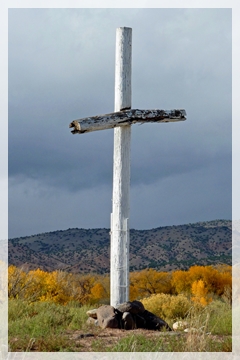
When Jesus’s followers stood at the foot of the cross, watched Him suffer, and heard Him speak the words of Psalm 22 asking God why He’d been abandoned, it probably seemed that all hope was gone and the enemy had won. Three days later, however, it was clear that all hope had arrived! We can’t give up on the power, wisdom and goodness of God because his plan sometimes seems to have gone awry. Let us always remember that God’s promise to the Israelites is as true today as it was over 3,400 years ago: “Do not be afraid or discouraged, for the Lord will personally go ahead of you. He will be with you; he will neither fail you nor abandon you.” [Deuteronomy 31:8 (NLT)]

The Lord hears his people when they call to him for help. He rescues them from all their troubles. The Lord is close to the brokenhearted; he rescues those whose spirits are crushed. The righteous person faces many troubles, but the Lord comes to the rescue each time. [Psalm 34:17-19 (NLT)]

I have told you all this so that you may have peace in me. Here on earth you will have many trials and sorrows. But take heart, because I have overcome the world.” [John 16:33 (NLT)]

Copyright ©2019 jsjdevotions. All rights reserved.

BATTLES

Can anything ever separate us from Christ’s love? Does it mean he no longer loves us if we have trouble or calamity, or are persecuted, or hungry, or destitute, or in danger, or threatened with death? … No, despite all these things, overwhelming victory is ours through Christ, who loved us. [Romans 8:35,37 (NLT)]

columbineI prayed for Pearl for over a year. This beautiful toddler had Stage-4 cancer and her bones, brain, and internal organs were riddled with the disease’s treacherous cells. Her prognosis was bleak and there were times she nearly lost her life to the effects of the various remedies rather than the cancer. That Pearl is alive and cancer free today is nothing short of a miracle. Nevertheless, she and her family went through a very dark valley to get to this place of victory. I’m sure, if given a choice, they would have preferred God to have miraculously healed her prior to the long battle she fought for over a year.

The Old Testament is filled with conflicts. In a few instances, the Israelites were given victory without ever having to go into combat. 2 Chronicles 20 tells of the time God promised Jehoshaphat the battle was God’s. At the very moment the people began to praise Him, the armies of Ammon, Moab, and Mt. Seir started fighting among themselves. By the time the army of Judah arrived, every one of their enemies was dead. 2 Kings 19 tells of a night when 185,000 enemy Assyrian soldiers were struck dead by an angel of the Lord. When the survivors awoke to the corpse-filled camp, they retreated to Nineveh where they remained. Because God took His people around the dark valley those times, the battles were won without engaging in combat or suffering loss.

For the most part, however, God’s assurance of victory rarely meant there would be no struggle. Yes, the walls of Jericho fell but, when the Israelites charged into the city with their swords and captured it, it’s hard to believe the people of Jericho didn’t defend themselves vigorously. Although the Israelites defeated them, Scripture never tells us they suffered no battle injuries or fatalities. In Joshua 10:2, God assured Joshua of victory over the Amorites but that conquest didn’t come easily. They fought so long and hard that Joshua had to ask God to prolong the day until they’d defeated their enemies. The spoils of war may have gone to the victors but, surely, they came at a cost and not every Israelite safely returned home that day. Even when we’re victorious, every battle leaves scars of one kind or another.

God could defeat armies without using any of His soldiers but He often sent His people into battle. I have no doubt that God could have miraculously cured Pearl without her and her family having to suffer through a year of painful expensive treatment and the agony of never knowing what the next procedure or test would bring. But, like the armies of Israel and Judah, they had to go through the dark valley and into battle before victoriously coming out on the other side.

The Apostle Paul tells us to rejoice in our troubles and trials because they lead to patient endurance which leads to maturity of character. I imagine Pearl’s family felt there had been more than enough character building long before her suffering ended. Nevertheless, they remained faithful and hopeful because they knew they were never alone in that dark valley. The battle was neither Pearl’s nor theirs; it was God’s.

We do not live in a perfect world. Although we are assured of victory, we are not assured of a battle-free life nor are we assured of victory while on this side of the grass. We will be faced with trials, temptations, loss, struggle, disease, suffering, and death. That God has won the war does not mean His Christian soldiers won’t ever have to fight! Nevertheless, we are victorious!

For every child of God defeats this evil world, and we achieve this victory through our faith. And who can win this battle against the world? Only those who believe that Jesus is the Son of God. [1 John 5:4-5 (NLT)]

Copyright ©2019 jsjdevotions. All rights reserved.