
Be strong and courageous! … Do not be afraid or discouraged, for the Lord will personally go ahead of you. He will be with you; he will neither fail you nor abandon you. [Deuteronomy 31:6a,8 (NLT)]
Let all who fear the Lord repeat: “His faithful love endures forever.” … The Lord is for me, so I will have no fear. What can mere people do to me? [Psalm 118:4,6 (NLT)]

Judge Guido Calabresi regularly asks his Yale law students to imagine receiving an offer of an amazing invention that could improve people’s lives in every imaginable way. In exchange for this invention, however, the lives of at least 1,000 randomly selected young people would be taken every year. When asked if they’d accept the deal, his students inevitably conclude they wouldn’t. Calabresi then asks them the difference between that offer and the automobile. The very thing that allows us to travel, see loved ones, easily move products across the country, and do things that couldn’t be done otherwise, kills even more than that! Over 2,600 teens (16-20) accounted for auto accident fatalities in 2019 and, with over 46,000 car fatalities last year, more than 150 people of every age die each day because of a car. Be that as it may, we’re not about to give up driving!
Calebresi uses his example to illustrate how selective we are in our fears. We underestimate and accept chronic risks like riding in a car while overestimating prominent ones like a terrorist attack or plane crash. In actuality, rather than dying from either of those things, we’re more likely to die by choking on food or slipping in the shower or tub but, preferring bathing, eating, and even driving to the alternatives, we decide they’re worth the risk. On the other hand, after assessing the perils involved in things like free solo climbing, running with the bulls, or base jumping, most of us probably decide they’re not worth the risk.
In contrast, any risk we take in obedience to God always is worth it. Regardless of the danger, we must obediently accept the risks in the challenges and tasks He gives us. Think of what Abraham risked by packing up his family and leaving Haran for an unknown destination. Think of the risks taken by the midwives Shiphrah and Puah when they defied Pharaoh by letting boy babies live or the risk Moses took when he returned to Egypt and confronted Pharaoh. It was a huge risk when Gideon and his 300 men took on an army 400 times their size and when David faced Goliath with just a sling and stones. In spite of the risk, Esther approached the king, Daniel defied the law by praying, and the bleeding woman touched Jesus’ robe. Joseph of Arimathea took a risk when he asked Pilate for Jesus’ body and Peter and John risked imprisonment and worse when they defied the Council by continuing to share the gospel. When we search Scripture, we don’t find people who assessed the risks and played it safe. We find God’s version of bungee jumpers and wing-suit flyers—faith-filled and obedient risk takers.
Every God-sent risk comes with a God-sent promise. He will remain faithful to us and be present in the risk. He will protect and empower us and we’ll never need more than what He supplies. As followers of Jesus, we don’t walk by sight. In spite of the risks, we walk by faith because faith means we’re willing to risk anything for God!
Trust is faith that has become absolute, approved, and accomplished. When all is said and done, there is a sort of risk in faith and its exercise. But trust is firm belief; it is faith in full bloom. Trust is a conscious act, a fact of which we are aware. [E.M. Bounds]
 We don’t know if John the Baptist recognized Jesus as his distant cousin when the two men met on the banks of the Jordan. Although they were the same age and their mothers were related in some way, with John in the desert and Jesus in Nazareth, it’s not likely they knew one another. If they did, Jesus probably seemed nothing more than an ordinary person to John at the time.
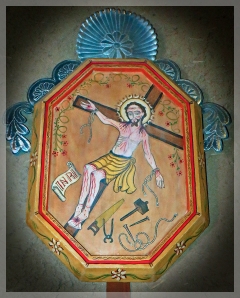 Although crucifixion probably began with the Assyrians and Babylonians, the first historical record is of Persia’s King Darius I crucifying 3,000 political opponents in 519 BC. Alexander the Great adopted the practice when he crucified 2,000 survivors of the siege of Tyre in 332 BC. In 88 BC, the Hasmonean king of Judea, Alexander Jannaeus, crucified 800 Jewish rebels after killing the rebels’ wives and children in front of them. Following a massive slave revolt against Rome in 71 BC, 6,000 rebels were crucified along the Appian Way. The crosses stretched for miles and the bodies were left there as a clear message that any rebellion would end in a violent death. After the death of Herod the Great in 4 B.C., a failed rebellion in Judea led to the crucifixion of 2,000 rebellious Jews.
 Easter is over and “season” here in southwest Florida is winding down. More people are departing than arriving as our seasonal visitors return north, transport trucks laden with cars are moving up the interstate, and we finally can get a table at our favorite restaurant! It’s been said that there is no escape from death or taxes but we usually try to flee from just about every other unpleasant thing. Thinking their lives would be better here, our snowbirds came south to escape sub-zero temps, heating bills, and shoveling snow. While the climate here is nicer, our tropical paradise doesn’t come with a guarantee and none of us can flee from life’s uncertainties and problems.
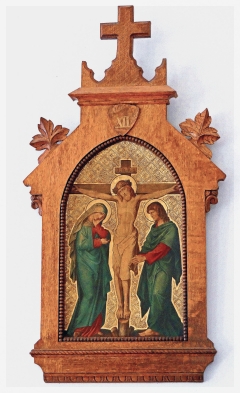 Jesus knew that one would betray Him, another deny Him, and all desert Him. He knew the people He’d fed, healed, taught, and loved—the people who just a few days earlier had greeted him like a king with palm branches and shouts of “Hosanna”—soon would prefer a thief over Him. Because of His anguished prayers later that evening in Gethsemane, we know that He knew the suffering and torment that lay ahead for him. Nevertheless, he sang with the disciples during their Passover meal that last night and it wasn’t a sorrow-filled psalm of lament.
