
“My Father! If it is possible, let this cup of suffering be taken away from me. Yet I want your will to be done, not mine.” … Then Jesus left them a second time and prayed, “My Father! If this cup cannot be taken away unless I drink it, your will be done.” … So he went to pray a third time, saying the same things again. [Matthew 26:39,42,44 (NLT)]
 Throughout His ministry, it seems that Jesus knew that the cross awaited Him but we don’t know if the human part of Him knew the exact details. Even so, it’s one thing to know what lays in the future but quite another to know it is about to begin within a matter of minutes. That night in Gethsemane, God showed Jesus the cup from which He would drink and He showed it in gruesome detail. Jesus viewed the betrayal, abandonment, sham trials, mocking, beating, flogging, and suffering torture on the cross along with the jeers of the crowd and the heartbreak and tears of His mother and the other women at the foot of the cross. Had Jesus not known exactly what the next 24-hours held, He would have been no different than the lambs brought to the Temple for sacrifice. They weren’t there of their own volition and had no knowledge of what would happen to them when presented to the priest. Rather than willing sacrifices, they were victims! The Lamb of God, however, needed to know the extraordinary cup—the horrible ordeal—that lay before him because, rather than a victim, He was a willing volunteer! His anguished prayers that night, however, tell us He didn’t look forward to it.
When we look at Jesus’ prayers that last night, there’s a condition to His request to remove the cup: “if it is possible.” If there were an alternative means to accomplish God’s will, Jesus certainly would have preferred it. Knowing exactly what He was facing, the human part of Him prayed for another way and He prayed so intensely that he sweat blood! Judas and the soldiers hadn’t yet arrived and Jesus could have quietly slipped away in the night and disappeared into Jerusalem, but He didn’t! As He prayed for deliverance, He also prayed to do God’s will. Since the Son of God had come to mankind to do His Father’s will, Jesus obediently and willingly stayed in the garden and submitted to all the horror that followed.
Looking at Jesus’ prayers in Gethsemane as a lesson in prayer, we see that since God the Father denied the request of His only Son, we shouldn’t expect God to agree to all we ask. C.S. Lewis says that Jesus’ unanswered prayers that night make it clear that prayer is not to be considered “a sort of infallible gimmick.” There is, however, a greater lesson in Jesus’ prayers in Gethsemane.
He forthrightly asked for the horror of what lay ahead to be removed which is the sort of prayer we typically offer when a loved one lies in a coma, the doctor says “inoperable,” the bank threatens foreclosure, we face 32 more radiation treatments, or a child become addicted. We pray, “Take it away, Lord—make it all right!” That, however, is usually where we stop but Jesus didn’t stop there. After asking for our difficult cup to be removed, do we add “if it is possible,” with the understanding that God’s purpose is more important than our desire? Finally, like Jesus, do we complete our prayer by fully submitting to God’s divine plan (whether we like it or not) with the words, “I want your will to be done, not mine”? Jesus submitted, will we?
If there was not an absolute necessity of his suffering them in order to their salvation, he desired that the cup might pass from him. But if sinners, on whom he had set his love, could not, agreeably to the will of God, be saved without his drinking it, he chose that the will of God should be done. He chose to go on and endure the suffering, awful as it appeared to him. [Matthew Henry]
He walked away, about a stone’s throw, and knelt down and prayed, “Father, if you are willing, please take this cup of suffering away from me. Yet I want your will to be done, not mine.” Then an angel from heaven appeared and strengthened him. He prayed more fervently, and he was in such agony of spirit that his sweat fell to the ground like great drops of blood. [Luke 22:41-44 (NLT)]
Copyright ©2022 jsjdevotions. All rights reserved.
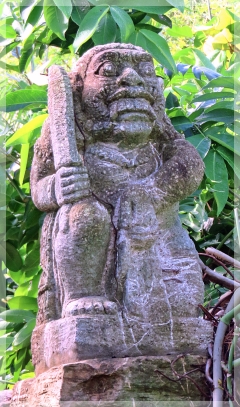 The Israelites were surrounded by various pagan peoples who worshipped foreign deities. Baal ruled over Canaan and Phoenicia, Chemosh over Moab, and Marduk/Bel and Nebo over Babylonia. The Philistines’ had Dagon and the Ammonites worshipped Molech. These gods usually had a domain over which they ruled. For example, Baal’s domain was rain, storms, and the harvest. Moab’s Chemosh presided over war and mountains. As patron deity of Babylon, Marduk/Bel was supposed to protect the city and rule over storms while Nebo’s purview was wisdom and science. The Philistines’ chief god Dagon presided over death, the afterlife, war, and agriculture while Ammon’s Molech reigned over the underworld, which may explain his association with child sacrifice in the Old Testament.
 In 538 BC, in fulfillment of Isaiah’s prophecy, Persia’s King Cyrus issued a proclamation allowing the first group of Judean exiles to return home with the purpose of rebuilding the Temple and inhabiting Jerusalem. In fulfillment of another prophecy, he then did what to any other conqueror would be unthinkable by returning the “plunder of tyrants”: 2,499 gold and silver sacred utensils taken by King Nebuchadnezzar when he ransacked the Temple. Cyrus permitted those who returned to take any wealth they’d accumulated during exile and encouraged those choosing to remain in Babylon to support their returning brethren with gifts, supplies, and food offerings. As a result, a total of 5,400 articles of gold and silver were taken back to Judah with the exiles.
 By the time of Isaiah, the Neo-Assyrian empire was the largest one the world had known. Famed for their incredible military strength, tactics, and ruthlessness, the Assyrians were a thorn in the side of both Israel and Judah and both kingdoms lived in fear of them. Assyria’s defeat of Samaria in 722 meant the end of the northern kingdom of Israel and Assyria remained a threat to Judah in the years that followed.
 Simon, Simon, Satan has asked to sift each of you like wheat. But I have pleaded in prayer for you, Simon, that your faith should not fail. So when you have repented and turned to me again, strengthen your brothers. [Luke 22:31-32 (NLT)]
 Walking along the shoreline, I was surprised to see a baby opossum on the beach. A man with a large bucket was trying to scoop him up to return him to the safety of the mangroves but the little guy would have none of it. Lost and in danger of dying of thirst or becoming dinner for an osprey or eagle, I’m sure he thought he was on a wonderful adventure. Meanwhile, his mother was probably frantically searching the mangroves for her wayward child.
