
When the time came, Jesus sat down at table, and the apostles with him. ‘I have been so much looking forward to eating this Passover with you before I have to suffer,’ he said to them. [Luke 22:14-15 (NTE)]
 Christians call it the Lord’s Supper, the Lord’s Table, the Sacrament, Holy Communion, or the Eucharist; some denominations consider it a “sacrament” while others call it an “ordinance.” While they may not agree on what to call it, they do agree that, during that last supper with His disciples, Jesus instituted or ordained its practice when He shared bread and wine, said the elements were His body and blood, and instructed the disciples to repeat the ceremony in remembrance of Him.
That was a Passover dinner and, on any other Passover, Jesus may have held up the matzo symbolizing Israel’s suffering, slavery, and privation in Egypt and said, “This is the bread of affliction our fathers ate in Egypt.” The night he was betrayed, however, Jesus held up the bread and said, “This is my body, which is given for you. Do this in remembrance of me.” On any other Passover, Jesus might have raised the Passover cup and said, “Blessed are You, Lord our God, King of the Universe, who creates the fruit of the vine.” That night, however, He lifted the cup and said, “This cup is the new covenant between God and his people—an agreement confirmed with my blood. Do this in remembrance of me as often as you drink it.”
What Jesus didn’t do that night was give step-by-step instructions regarding this rite of remembrance and there is disagreement across the denominations about the exact meaning of the elements and the whos, whats, wheres, whens, and hows of doing communion. Whether we agree or disagree over the theological details, we all probably agree that we miss coming together at the Lord’s Table during this time of social distancing. Sheltering in place, however, shouldn’t keep us from partaking in the Eucharist; it just means that we have to do it differently.
As we struggle to worship in a world where we can’t gather as a church, let us remember that the church is not a building. Altars, altar rails, chalices, patens, and specific wafers weren’t mentioned by Jesus the night he was betrayed. He didn’t say that priests or ministers were required nor did he specify songs, prayers, or method of receiving the elements. Read the gospel accounts. Jesus was at a table eating the Passover meal dinner with His friends when, with just a few well-chosen words, He instituted the Eucharist as a way of remembering Him!
Palm Sunday, while watching the on-line service, our church had Holy Communion. Using whatever we had in our kitchens, people gathered in front of their computers, tablets, and smartphones, prayed over the elements, and partook of this holy and blessed sacrament in remembrance of Him. The bread we used ranged from Triscuits, Ritz crackers, and saltines to pita, sour dough rolls, or Wonder Bread. For wine, we used whatever we had; for some, that was wine or grape juice and, for others, it could have been lemonade or water. Our purpose was to remember Jesus and we remembered Him with what we had!
Tomorrow is Maundy Thursday, the day Christians throughout the world commemorate the Last Supper and the institution of Communion. Even without an official service, my husband and I will partake of this sacrament in much the same way the early church did: in the context of a meal with a little bread and wine. We will remember Jesus, not just for what He did on the cross, but for who He was and is: our friend, Savior, Lord, and King! Won’t you join us? No matter how far apart we may be from each another, the body of Christ is one in Spirit!
We offer and present unto thee, O Lord, our selves, our souls and bodies, to be a reasonable, holy, and living sacrifice unto thee; humbly beseeching thee that we, and all others who shall be partakers of this Holy Communion, may worthily receive the most precious Body and Blood of thy Son Jesus Christ, be filled with thy grace and heavenly benediction, and made one body with him, that he may dwell in us, and we in him. [The Book of Common Prayer (1979)]
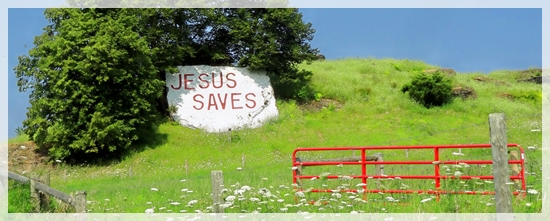 This, you see, is how much God loved the world: enough to give his only, special son, so that everyone who believes in him should not be lost but should share in the life of God’s new age. [John 3:16 (NTE)]
 When my “Weekly Wisdom” email reminded me that time is the price we must pay for intimacy with God, I thought of Cindy. A recent widow struggling to make sense of her new normal, Cindy wanted a closer relationship with God, but wasn’t quite sure how to go about it. Rather than reciting the same prayers over and over again, she wanted to sit down and talk to Him, as she would with a good friend.
 Although the book of Esther never mentions God by name, His fingerprints are found throughout the story as it illustrates God’s providence in human affairs. The Jews were in captivity in Persia and the Persian King had banished the queen. Along with all the other beautiful virgins in the land, the young Jewess Esther is taken to the King’s harem. She finds favor with the king and is declared queen while the evil Haman plots the massacre of every Jew. When Esther’s cousin Mordecai requests her help in begging for the king’s mercy, she hesitates out of fear. Reminding Esther that she isn’t exempt from Haman’s evil plot, Mordecai asks, “Who knows if perhaps you were made queen for just such a time as this?”
 My latest exercise in learning how to live the abundant life promised by Jesus was both easy and difficult: I was to speak to one person about God, even if all I said was, “God is good” or “God loves you.” Since I write about God five days a week, said “God bless you!” to a friend, and talked about God with my pastor, I figured I was done, except I knew I wasn’t.
 Devotions of the Heart