
The point is this: whoever sows sparingly will also reap sparingly, and whoever sows bountifully will also reap bountifully. Each one must give as he has decided in his heart, not reluctantly or under compulsion, for God loves a cheerful giver. And God is able to make all grace abound to you, so that having all sufficiency in all things at all times, you may abound in every good work. [2 Corinthians 9:6-8 (ESV)]

Yesterday was tax day: the day we rendered unto Washington what is theirs. In case we weren’t sure how much that was, we had 1099s, W-2s, 1040s, TurboTax, various receipts, H & R Block, and accountants to help us figure it out. Since Jesus told us to give God what is His, how much is that? God doesn’t send out W-2s listing our year’s many blessings, supply us with 1040s to fill out, or give us deductions for medical expenses, charitable donations, mortgage interest, property taxes, or gambling losses. Rather than a CPA or the IRS, we need to consult our Bibles for the answer to that question.
“Tithe” is an Old Testament term for the 10% gifts the Israelites were required to pay to support the Levites, provide for the Temple, and relieve the poor. A series of complicated rules regarding which tithes were made in what year and the amount tithed ended up making the tithe more like 23.3%. Although the New Testament never commands (or even recommends) a tithing system, Christians often refer to a tithe (or 10% of one’s earnings) as being the right donation to the church. In reality, for some, 10% would be unwise and for others, 10% is hardly enough!
Rather than a fixed percentage, the New Testament calls us to give regularly, according to our means, generously and joyously (even sacrificially at times), and out of love for God and others. While this requirement is vague about the actual amount, it actually is stricter than a fixed 10% because it is a matter of obedience and trust. What we give is a matter of prayer. It is an issue between God and us and we must be willing to give whatever it is He asks—be it time, talents, or finances—in the amount he desires.
Because Caesar’s image was on the coin, it belonged to him. Let’s not forget that we are made in God’s image and it is His face that is stamped upon us. We belong to Him and whatever we give to God already is His. We simply are returning it to the rightful owner. Moreover, the list of what we should render unto God goes far beyond money. We should give Him our worship, service, obedience, praise, love, respect, gratitude, and fidelity. In short, we owe Him everything and not just on Sundays—we owe Him everything all of the time.
As John Wesley said, the question isn’t “how much of my money will I give to God, but, how much of God’s money will I keep for myself?” Although there is no need to worry about a letter from God questioning our deductions or demanding an audit, we must remember that one day we will be called in for an accounting of how we used His gifts.
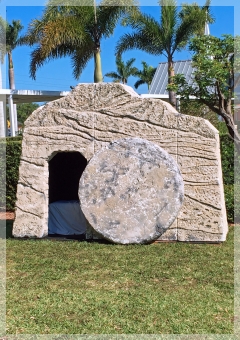 Although Jesus repeatedly predicted that He’d rise from the dead, the women didn’t bring clean clothes for a living man that Sunday morning when they went to the tomb. Instead, they brought burial spices of their own with which to anoint His dead body. Because of the Sabbath, Jesus’ burial was rushed and His body laid in a borrowed tomb. Although Joseph and Nicodemus had anointed Him, perhaps the women were concerned that, in the men’s haste to finish before sunset, they hadn’t done a proper job of preparing the body. The spices they brought would conceal the stench of decay and, out of love for Jesus, they wanted to complete the burial rites properly.
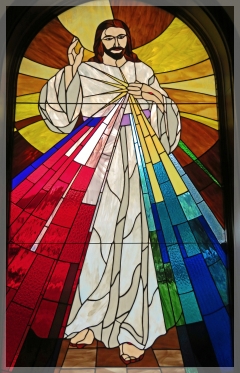 Depending on your Bible translation, the Kingdom of God is mentioned at least 68 times in the New Testament. Rather than “Kingdom of God,” Matthew usually used “Kingdom of Heaven.” All four gospels, however, are speaking of the same place. Matthew was a Jew and primarily writing for a Jewish audience. While we tend to interpret the third commandment about not misusing the Lord’s name to mean not using it irreverently, Jews have a much stricter interpretation. Believing God’s name too sacred to say aloud, by the 1st century, His name wasn’t even written or spoken in anything but prayer. Even today, many observant Jews substitute “G-d” rather than write the full name.
 We are people of physical signs and symbols and rituals help us connect with events. As a little girl, I loved Palm Sunday and not just because it meant my Lenten fasting would soon end and jelly beans would be in my Easter basket the following week. I loved the way our liturgical church observed it. The hymns of the day were filled with hosannas (a welcome relief from the more somber hymns of the Lenten season). Typically, the opening hymn was “All Glory, Laud, and Honor” and we children would follow the choir into the church while waving our palm branches. Even as a small child, I knew this day commemorated Jesus’ triumphal entry into Jerusalem.
 In writing about Blaise Pascal yesterday, I mentioned that he, along with Pierre de Fermat, laid the groundwork for probability theory back in 1654. I remember a school friend writing her term paper on probabilities who began by testing what’s called the “birthday paradox:” in a room of 23 people, there is a 50% chance that two people will have the same birthday and, out of 75 people, there is a 99.9% chance of two people’s birth dates matching. Imagine her surprise when the first two people she asked had the same birth date! That, of course was sheer coincidence but, if the next 30 people she asked also had the same birth date, another explanation would have been necessary.
 Christianity seems to be full of paradoxes. We’re saved by faith and not by works but we can’t have faith without works. As for grace and obedience—it’s God’s grace not our obedience that saves us. But, what initially sounds like a free pass isn’t because the saved are expected to have grace-fueled obedience! It’s easy to get confused when we read only isolated verses in Scripture. Rather than inconsistent or even contradictory concepts, however, faith, works, grace and obedience are complementary and interrelated. Perhaps some of the confusion comes from our language rather than our doctrine.
 Devotions of the Heart