THE PRESCRIBED BURN

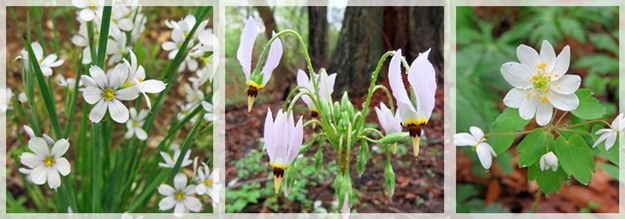
blue eyed grass- shooting star - rue anenome

I will bring that group through the fire and make them pure. I will refine them like silver and purify them like gold. They will call on my name, and I will answer them. I will say, “These are my people,” and they will say, “The Lord is our God.” [Zechariah 13:9 (NLT)]

The darkned soil, scorched bark, blackened remains of dead trees, and faint aroma of smoke indicated a prescribed burn occurred earlier this spring. But, even without those tell-tell signs, the abundance and diversity of wildflowers blanketing the forest floor told me there’d been one. Fire used to be a natural occurrence in our woodlands, prairies, and wetlands. Nowadays, we suppress natural fires, and invasive plants crowd out native flowers and grasses. Planned and controlled, these prescribed fires defeat non-native plants, stimulate the growth of native ones, restore valuable nutrients to the soil and, by eliminating leaf litter and dead wood, reduce the chance of uncontrollable wildfires. When brush and small trees are checked by the fire, flowers and grasses get enough sunlight to grow and the native plants regrow from their roots. Unlike invasive species, native plants have deep tap-roots and thick bark that enable them to survive the controlled burn’s heat.

When something similar to a controlled burn happens to us, the Bible often refers to it as refining and likens this purifying process to separating out precious metals from ore, such as silver from lead. After the ore is melted over a hot fire, hot air is blown across the surface which changes the lead to powdered lead oxide. When this dross is blown away, pure silver remains. Being more a naturalist than metallurgist, I prefer the analogy of a prescribed burn to smelting metal.

While necessary for a healthy habitat and biodiversity, I’m not sure the plants and animals appreciate the fire when it happens. I know I don’t appreciate it when God refines me. Rather than impurities like lead or invasive weeds, He wants to eradicate offensive behavior, false ideas, and bad attitudes. When weeds like jealousy, self-reliance, self-centeredness, pride, covetousness, selfishness, materialism, intolerance, or impatience invade my heart, God has a way of refining me. Rather than fire, He allows things like challenges, trials, opposition, disappointment, loss, and even illness to eliminate my invasive unwelcome weeds.

Like the native plants in the forest, I have deep roots. Not only will I will survive the trials of a burn, but I also will thrive and (like both purified silver and the renewed forest) be all the better for the experience. I can reach up to the Son’s light and blossom with the flowers of God-dependence, hope, humility, thankfulness, love, joy, peace, patience, tolerance, generosity, compassion, self-sacrifice, goodness, faith, gentleness and self-discipline.

Trials are medicines which our gracious and wise Physician prescribes because we need them; and he proportions the frequency and weight of them to what the case requires. Let us trust his skill and thank him for his prescription. [Sir Isaac Newton]
So be truly glad. There is wonderful joy ahead, even though you must endure many trials for a little while. These trials will show that your faith is genuine. It is being tested as fire tests and purifies gold—though your faith is far more precious than mere gold. So when your faith remains strong through many trials, it will bring you much praise and glory and honor on the day when Jesus Christ is revealed to the whole world. [1 Peter 1:6-8 (NLT)]

Let your roots grow down into him, and let your lives be built on him. Then your faith will grow strong in the truth you were taught, and you will overflow with thankfulness. [Colossians 2:7 (NLT)]

Copyright ©2018 jsjdevotions. All rights reserved.

DORMANCY

God, make a fresh start in me, shape a Genesis week from the chaos of my life. Don’t throw me out with the trash, or fail to breathe holiness in me. Bring me back from gray exile, put a fresh wind in my sails! [Psalm 51:10-12 (MSG)]

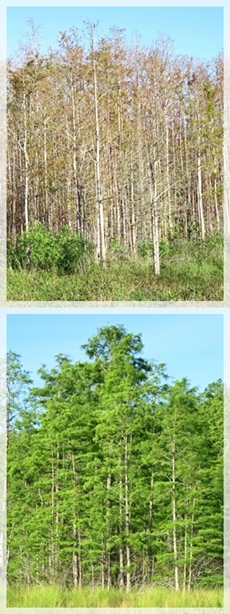
Corkscrew swamp - cypress - dormantEarlier this year, upon seeing the browning and nearly naked cypress trees at the bird sanctuary, the visitor asked if Hurricane Irma had killed them. I explained that the bald and pond cypress weren’t dead, just dormant. Being deciduous, they shed their leaves annually and were just enjoying a much needed rest during the shorter days and dryer conditions of winter. I reassured her that, in a month or so, their bright green needles would return and new growth would sprout from their branches. Today, the forest is verdant throughout the swamp.
While it is possible to force trees to evade dormancy by keeping them inside and controlling the light, temperature and water conditions, it would greatly shorten the plant’s lifespan; they’re not meant to leaf and branch continually. Dormancy is vital for the survival of deciduous trees and the way they withstand unfavorable growing conditions. When better conditions return, the trees wake up and start to bud and blossom again.

While dormancy is good for trees, dormancy is not usually considered a good thing when applied to Christians. A study in Great Britain found that 55 percent of those who identify themselves as Christian never read the Bible, 29 percent never pray, and a third of them don’t even attend church; it called these people “dormant Christians.” When God’s word isn’t growing in our hearts or we fail to bear the Fruit of the Spirit, some people say we’re in “spiritual dormancy.” Superficial, uncommitted, wilting or dying faith like this seems more a case of failure to thrive than dormancy. Just because growth isn’t obvious when a tree is dormant doesn’t mean nothing is happening. Dormancy is when the tree gathers strength, prepares for leafing and branching, and is the best time for pruning in preparation for new growth!

I’ve seen too many people lose their zeal for Christ because they haven’t taken a rest from their busyness for Him to spend time abiding in Him. It’s often when they’ve forgotten to spend time in His rest that their spiritual lives go dead. Sometimes, like trees, we need to retreat into dormancy to rest, do some pruning, and prepare ourselves to take our next steps in God’s ministry. Even Jesus took time away from His ministry for prayer and guidance.

During these next few months, my husband and I will be travelling a great deal. While I remain committed to prayer, worship, study, and journaling, there will be times when writing and posting will be difficult, if not impossible. Last year, I solved this problem with some “summer re-runs.” Knowing how refreshed and enthusiastic I felt upon my return to writing, I think dormancy is a far better term. So, like the cypress trees that go dormant in adverse conditions, I will take a break when circumstances are not conducive to writing. Unlike the trees, however, I won’t change color or shed my needles in preparation for dormancy. Instead, I’ve selected a few old devotions to repost and, with over 1,500 devotions from the last four years, I have plenty from which to choose. Throughout the next few months, they will be scattered in among new ones. So, if you see a devotion you’ve read before, don’t worry; I’m not dead, I’ve just gone dormant!

God, my shepherd! I don’t need a thing. You have bedded me down in lush meadows, you find me quiet pools to drink from. True to your word, you let me catch my breath and send me in the right direction. [Psalm 23:1-3 (MSG)]

I’ll refresh tired bodies; I’ll restore tired souls. [Jeremiah 31:25 (MSG)]

Copyright ©2018 jsjdevotions. All rights reserved.

GOOD SOIL GONE BAD

And the seeds that fell on the good soil represent honest, good-hearted people who hear God’s word, cling to it, and patiently produce a huge harvest. [Luke 8:15 (NLT)]

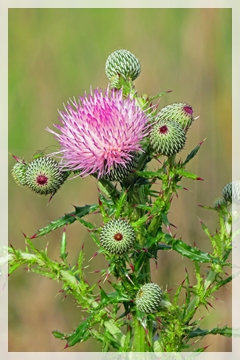
thistleWhen Hurricane Irma uprooted trees here last September, the underground irrigation pipes throughout our 1,800 home community were wrenched out of the soil and the lines ruptured. Trees and stumps had to be removed before the process of finding and fixing the leaks could begin and we went more than seven months without irrigation. What with winter and spring’s hotter than average temperatures, receiving about half of our average rainfall since November, and no working irrigation system in our community, the once lush green grass became dry and brown, the flowers wilted, and the parched soil got hard. The only things that seemed to thrive were the weeds! Fortunately, the repairs were completed last week, the summer rain eventually will arrive, and our grass, shrubbery and trees will recover.
Seeing how our once good soil became so hard and dry made me think about Jesus’ parable of the four soils in which the soils represent the sort of people who receive the seed of God’s word. One was the hard dry soil of a footpath where the birds quickly snatched away the seed. Because the second soil was rocky, the plants’ roots were shallow and they withered and died in the hot sun. The third seed was sown among the weeds that crowded out the new growth. It was only in the fertile fourth soil that the seeds produced a good crop. Although this parable tells us that not everyone will be receptive to God’s message, perhaps, there’s more to it.

When looking at our parched ground, I realize that unless it is cultivated, watered, and fertilized, good soil will not remain that way. Like the fourth soil, we can receive God’s word with enthusiasm but, unless it is well tended, our faith will suffer. Worry, busyness, or discontent can crowd out our enthusiasm and commitment the way thorny weeds do in an untended garden. If we don’t keep feeding our soil with God’s word, like the plants sown on the rocky soil, our roots can wither and die because of things like regret, troubles, doubt or unforgiveness. When we let failure, complaint, anger, or temptation give the enemy a foothold, he can snatch away our faith faster than a sparrow can a sunflower seed on a footpath. We may have been good soil when we accepted Jesus but, at various times in our lives, we can become any one of those other soils. I’m not a gardener, but even I know that it takes work to keep a garden productive. We must continue to fertilize with prayer, cultivate with a community of faith, and water with God’s word if we want to bear fruit in God’s garden.

Although Jesus was explaining to His disciples why people responded as they did to Him, His parable is more than a lesson about evangelism or gardening. It’s a reminder that good soil can go bad. We must continue to tend the soil in our spiritual garden lest Satan steals the word, we stop believing when troubles arise, or the cares of the day leave no room for His word to grow.

Remain in me, and I will remain in you. For a branch cannot produce fruit if it is severed from the vine, and you cannot be fruitful unless you remain in me. Yes, I am the vine; you are the branches. Those who remain in me, and I in them, will produce much fruit. For apart from me you can do nothing. [John 15:4-5 (NLT)]

When the ground soaks up the falling rain and bears a good crop for the farmer, it has God’s blessing. But if a field bears thorns and thistles, it is useless. The farmer will soon condemn that field and burn it. [Hebrews 6:7-8 (NLT)]

Copyright ©2018 jsjdevotions. All rights reserved.

NOT JUST HALF

From then on Jesus began to tell his disciples plainly that it was necessary for him to go to Jerusalem, and that he would suffer many terrible things at the hands of the elders, the leading priests, and the teachers of religious law. He would be killed, but on the third day he would be raised from the dead. But Peter took him aside and began to reprimand him for saying such things. “Heaven forbid, Lord,” he said. “This will never happen to you!” [Matthew 16:21-22 (NLT)]

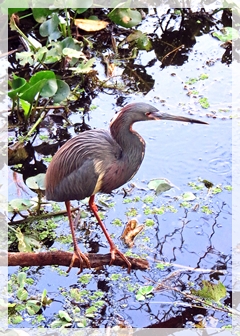
tri-colored heronWhile talking with a friend, I mentioned how many people of our generation seem unprepared for the challenges of widowhood. Having relinquished certain responsibilities to their spouses during the decades of marriage, they’re ill-equipped when they lose that spouse. There are men who have no idea how to do laundry, grocery shop, clean the bathroom or use the microwave. On the other hand, many of my women friends have never done minor repairs, paid bills, made an investment or purchased a car. “That was me!” replied my friend whose husband died of cancer. His death, while unwelcome, was not unexpected so I asked why they hadn’t prepared her for widowhood. “He tried to,” she said, “but I wouldn’t listen.” As long as they didn’t talk about his imminent passing and her future life without him, she still could deny its reality.
While thinking of her experience, I thought of the disciples’ behavior when Jesus spoke of his death. At first, He spoke metaphorically: “Destroy this temple and in three days I will raise it up.” At least three times, however, He spoke quite plainly about what the future held: he would be killed and raised from the dead. He didn’t mince any words when he described his death but the disciples didn’t understand. Jesus forewarned them but they were confused and frightened when He died, hid in a room instead of waiting expectantly at the tomb, and didn’t believe the women who said the tomb was empty.

Jesus spoke of fulfilling the prophecies and the disciples knew those prophecies. They preferred the ones about the messiah’s glory, however, to those of the suffering servant. Still thinking about an earthly king, Jesus’s words were contrary to their expectations and the disciples couldn’t reconcile what Jesus said to what they wanted. How could suffering and death accomplish anything? Like my widowed friend, they didn’t want to face the truth of what the future held. Perhaps, like her, they thought their denial would keep the horror from happening.

We aren’t all that different when it comes to seeing and hearing only what we want. In his Bible commentary, Matthew Henry cautions that we’re like the disciples when we read the Bible “by halves” – only the half we like. Consistently, the top three searched-for Bible verses are John 3:16, Jeremiah 29:11, and Philippians 4:13; the rest of the top twenty are other reassuring verses of comfort. If the Bible was a buffet, we’d find those feel-good verses on the dessert table. Dessert is great and so are those verses; nevertheless, they only tell part of the story. The other half of the Bible, while just as nourishing, isn’t quite as sweet; it’s the meaty stuff on the main dish table that tells us we’re going to have trials, temptation, affliction, and persecution. It tells us of mankind’s failures, God’s warnings, and why He had to redeem the world He created. It speaks of sin and God’s wrath and uses words like sacrifice, suffering, judgment and tribulation.

Let us never turn away from God’s word because we don’t like what it says. Ignoring the prophecies didn’t keep Jesus from being crucified and ignoring the still unfulfilled ones will not keep them from coming true! As for me, I want to be prepared for what the future brings (both in this world and the next).

Anyone with ears to hear should listen and understand. … Pay close attention to what you hear. The closer you listen, the more understanding you will be given—and you will receive even more. To those who listen to my teaching, more understanding will be given. But for those who are not listening, even what little understanding they have will be taken away from them. [Mark 4:23,24-25 (NLT)]

Copyright ©2018 jsjdevotions. All rights reserved.

DIVINE DISCIPLINE (Discipline – Part 1)

And have you forgotten the encouraging words God spoke to you as his children? He said, “My child, don’t make light of the Lord’s discipline, and don’t give up when he corrects you. For the Lord disciplines those he loves, and he punishes each one he accepts as his child.” Hebrews 12:5-6 (NLT)]

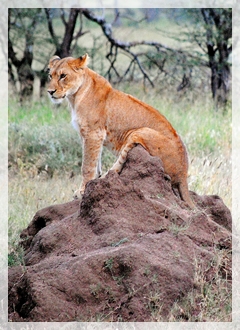
lion - tanzaniaIn C.S. Lewis’ fantasy The Horse and His Boy, Aravis, a young noblewoman, is attacked by a lion. After her wounds are cleaned and dressed, she’s told that the cuts on her back are neither deep nor dangerous and no more serious than the cuts of a whip. Aravis later learns from Aslan, the lion who attacked her, that the gashes on her back, stripe for stripe, equal the stripes laid on the back of the maidservant she’d caused to be punished. At first, this seems more like the Old Testament retribution of “an eye for an eye” than something Lewis’ Christ-like character of Aslan would do. What if the maidservant had been hung or beheaded? What then?

I began thinking about God’s justice, judgment, mercy and correction and the difference between them. We have a God of justice and mercy and yet those two words seem totally incompatible. Justice is getting the deserved punishment for the crime and mercy is not getting it. Justice is about penalty and mercy is all about pardon and compassion.  Justice would be the judge finding us guilty of speeding through a school zone and his judgment would be a fine of $1000. Mercy would be the judge coming to the defendant’s table, getting out his checkbook and paying the fine for us. Justice is served because the penalty is paid—mercy is given because we weren’t the ones to pay the fine. That, however, doesn’t mean there might not be some much needed discipline to correct our behavior. The merciful judge might send us to traffic school or require us to do community service as a crossing guard at the school. Moreover,  he will not protect us from the consequences of our offense. The ticket may cause an insurance premium increase or even a license suspension. Nevertheless, we will have been treated mercifully.

Was what happened to Aravis justice or judgment for her past behavior or was it discipline and correction intended the future? While Aravis’ action was rash, it was defensible. She deceived and drugged the maidservant who was watching her so she could escape from a forced marriage to an evil man. Under those circumstances, Aravis’ receipt of those slashes seems like an injustice. It’s easy to miss that those cuts on her back were not because the servant had been whipped. Aravis wasn’t being punished for what her servant had endured. She was being disciplined for her wanton indifference to her maidservant’s fate. Earlier in the story, when asked about the fate of the girl, Aravis coolly replied that she’d be glad if the servant had been beaten. It was only after receiving similar wounds that the once spoiled and haughty Aravis realized her thoughtlessness and showed concern for the servant’s welfare and fate. Within the next few pages, she both apologizes to someone and shows concern for his welfare (something the unwounded Aravis would never have done). Aslan’s discipline helped her become a better version of herself.

Because it’s usually unpleasant, discipline can feel a lot like punishment. While it may look like divine retribution or payback, it isn’t. Its purpose isn’t to make things right; its purpose is to make us right—to turn us from rebellion to obedience. Divine discipline is disapproval, instruction, correction, and direction. As it did with Aravis, discipline causes us to change both our point of view and behavior; it is through discipline that we become the people God wants us to be.

But consider the joy of those corrected by God! Do not despise the discipline of the Almighty when you sin. For though he wounds, he also bandages. He strikes, but his hands also heal. [Job 5:17-18 (NLT)]

Copyright ©2018 jsjdevotions. All rights reserved.


DOWN BUT NOT OUT

Share each other’s burdens, and in this way obey the law of Christ. … Therefore, whenever we have the opportunity, we should do good to everyone—especially to those in the family of faith. [Galatians 6:2,10 (NLT)]

damaged cypress trees - corkscrew swampHurricane Irma did quite a number on our southwest Florida bird sanctuary. Unfortunately, much of the boardwalk was damaged (some of it beyond repair) and there were several casualties among the trees, including two 100-foot cypress trees that proudly stood for over 400 years. Like them, many smaller trees were uprooted and now lie dead on the forest floor. Irma’s high winds did some violent and cruel pruning as it stripped bark, tore off branches, and splintered mature trees as if they were mere matchsticks. Cypress trees that were over 40-feet tall are now little more than stumps. Nevertheless, trees I thought were goners are recovering and greening up; new foliage is emerging out of their fractured tops and sides. In spite of the incredible damage they suffered, their roots still support and feed them with life giving water and they’re surviving. They may be down but they’re certainly not out.

I thought of the storms we endure in our lives; while some may be no worse than a noisy thunderstorm, others can be as devastating as a hurricane. Age and size certainly can’t keep us from falling. Nevertheless, the storm couldn’t defeat all of the trees and the setbacks and storms of life don’t have to defeat us. Like the damaged cypress trees with their new growth, we can stay rooted, survive and even thrive.

We do that through the church. Just as roots aren’t optional for trees, the church really isn’t an option for the Christian. I’m not talking about a building or a specific denomination; I’m speaking of a community of believers who belong to Christ and are bound together by both the gospel and the presence of the Holy Spirit. The church is what supports us when we start to fall, grounds us when we falter, and nurtures us with living water when we’ve been weakened.

God revealed himself to mankind when he became incarnate as Jesus Christ. As Christ’s followers, we reveal Him to mankind through the church—the church actually is Christ incarnate. As His hands and feet, heart and voice, we are the ones who keep, support, encourage, lift and comfort the broken and bruised. We are the ones who provide the nourishment and water that allow the damaged to grow and blossom once again. Like a tree that supports another one or the roots that ground and nourish it, the living breathing church is what makes it possible for our brothers and sisters to say, “I may be down, but I’m not out!”


All of you together are Christ’s body, and each of you is a part of it. [1 Corinthians 12:27 (NLT)]

Copyright ©2018 jsjdevotions. All rights reserved.