
DOUBT AND UNBELIEF

lilacWe reject all shameful deeds and underhanded methods. We don’t try to trick anyone or distort the word of God. We tell the truth before God, and all who are honest know this. If the Good News we preach is hidden behind a veil, it is hidden only from people who are perishing. Satan, who is the god of this world, has blinded the minds of those who don’t believe. They are unable to see the glorious light of the Good News. They don’t understand this message about the glory of Christ, who is the exact likeness of God. [2 Corinthians 4:2-4 (NLT)]

Yesterday, when writing about John the Baptist, I said that doubt was not the same as unbelief. In John’s question to Jesus, we have the doubts of a godly man but we see trickery and unbelief in most of the questions of the Pharisees and Sadducees.

Because the Sadducees interpreted Scripture literally and the Pharisees gave equal significance to their oral tradition, the groups frequently argued with one another over Jewish doctrine. They were, however, united in their hatred of Jesus. Unlike the Pharisees, the Sadducees did not belief in an afterlife or the resurrection of the dead. Nevertheless, they asked Jesus a question dealing with resurrection. Jewish law said that, if a woman’s husband died without having a son, the husband’s brother had the responsibility of marrying her. Using this law as their starting point, the Sadducees set up a bizarre scenario in which one brother dies without having children and his widow, who never bears a son, ends up marrying and burying brother after brother until she’s married and buried all seven brothers. The Sadducees want Jesus to tell them which of the seven will be her husband in the afterlife.

Since they didn’t believe in any afterlife, theirs was not an honest question and they’re sure Jesus can’t answer without looking foolish, offending people, or being caught in an inconsistency. He’ll appear arbitrary if he picks one brother over another and immoral if He says they all can have her! His other choice (and possibly the one for which they hope) is to admit that resurrection is a preposterous doctrine. Not only would they score a point against the Pharisees but Jesus would look like a fraud since He couldn’t be the “resurrection and the life” if there were no resurrection!

Imagine their consternation when Jesus corrected them by saying they’d misinterpreted Scripture and had underestimated God’s power with their assumption that resurrection meant a continuation of the same kind of bodies we have in this life. Jesus explained that people would be raised into bodies unlike their present ones and marriage and procreation would be unnecessary. When Jesus added that people will have bodies “like the angels in heaven,” He dug the knife deep into their absurd question because Sadducees didn’t believe in angels any more than they did resurrection.

In His final thrust, Jesus asked the Sadducees if they’d read about resurrection in the Scriptures. He then repeated these words from Exodus: “I am the God of Abraham, the God of Isaac, and the God of Jacob.” [3:6] Even though the patriarchs had been dead for more than four centuries, God’s words to Moses were in the present tense which showed that the men remained alive before Him. Jesus could have found scriptural support in words from Isaiah, Daniel, or Job but He chose a verse from part of the Pentateuch, the section the Sadducees found most authoritative. Having been out-argued by the Son of God, I imagine the Sadducees departed with their proverbial tails between their legs. The crowd that heard Jesus, however, was “astounded at his teaching.”

When comparing the questions posed by John’s disciples and the Sadducees, the differences between doubt and unbelief become clear. Where doubt seeks answers, unbelief isn’t interested in them. Doubt seeks enlightenment; unbelief prefers darkness. Doubt is receptive; unbelief is hostile. Doubt is straightforward; unbelief has ulterior motives. Doubt wants the truth; unbelief just wants to win.

There are those who insist that it is a very bad thing to question God. To them, “why?” is a rude question. That depends, I believe, on whether it is an honest search, in faith, for His meaning, or whether it is the challenge of unbelief and rebellion. [Elisabeth Elliot]

But when the Pharisees heard that he had silenced the Sadducees with his reply, they met together to question him again. [Matthew 22:34 (NLT)]

Copyright ©2022 jsjdevotions. All rights reserved.

JOHN THE BAPTIST – Part 2

On the following day, John saw Jesus coming towards him and said, “Look, there is the lamb of God who will take away the sins of the world! This is the man I meant when I said, ‘A man comes after me who is always in front of me, for he existed before I was born!’ It is true I have not known him, yet it was to make him known to the people of Israel that I came and baptised people with water.” [John 1:29-31 (PHILLIPS)]

mourning doveWe don’t know if John the Baptist recognized Jesus as his distant cousin when the two men met on the banks of the Jordan. Although they were the same age and their mothers were related in some way, with John in the desert and Jesus in Nazareth, it’s not likely they knew one another. If they did, Jesus probably seemed nothing more than an ordinary person to John at the time.

When Jesus walked toward him that day, however, John knew he was seeing someone who was more than a carpenter from Nazareth. In the same way that Elizabeth knew Mary was “the mother of my Lord” when the unborn John leapt in her womb, John recognized Jesus’ true identity as the Son of God. John seemed to have no doubt about Jesus when he testified to seeing the Spirit descend on Him like a dove and, throughout John’s ministry, he continued to point out Jesus as the “Lamb of God.”

After Jesus’ baptism, the gospel of John tells us that both John and Jesus carried on baptizing ministries. Perhaps out of jealousy, some of John’s disciples complained that more people were going to Jesus than coming to John. Again, John made it clear that he knew their different roles when he compared himself to the best man and Jesus to the bridegroom. “He must become greater and greater, and I must become less and less.” [3:30]

More than a year later, what happened to John’s confidence in Jesus’ identity? The man who once had been so sure about Jesus sent his disciples to ask, “Are you the Messiah we’ve been expecting, or should we keep looking for someone else?” [Mt 11:3] Languishing in Herod’s dungeon, John probably wondered why the conquering king from David’s line hadn’t released him. Why hadn’t Jesus taken the throne from Herod and Rome? Where was the end-time outpouring of the Spirit, the winnowing fork that would separate the chaff from the wheat, and the one who would burn the chaff with “never-ending fire”?

In truth, Jesus wasn’t the Messiah that John and his disciples were expecting; nevertheless, He was the Messiah! John, however, didn’t understand that Jesus had to teach, heal, suffer, die, resurrect, and ascend before returning a second time and executing final judgment. At first, it seems that Jesus ducks John’s question with a summary of his miracles but John understood. The miracles Jesus listed fulfilled the messianic promises in Isaiah; they were proof that He was the Messiah. Jesus’ final message for John is a beatitude that encouraged the Baptizer (and the rest of us) not to stumble in our faith just because Jesus doesn’t fit our expectations.

While we may not be languishing in a dungeon as was John, we may be in languishing in grief, infertility, depression, illness, addiction, chronic pain, money issues, infidelity, or family problems. Just as Jesus didn’t meet John’s expectations, He doesn’t always meet ours. He didn’t free John from Herod’s prison and He may not free us from ours and, like John, we may have doubts. Faith and doubt, however, are not antonyms and doubt and unbelief are not synonyms! We can be people of faith and still have questions; like John, we never should be afraid to ask those questions. John went to Jesus for the answers and, like him, we should look to the words and works of Jesus Christ for our ours. We’ll discover, as did John, that the Lord’s credentials will hold up to the toughest of questions!

Jesus gave them this reply, “Go and tell John what you see and hear—that blind men are recovering their sight, cripples are walking, lepers being healed, the deaf hearing, the dead being brought to life and the good news is being given to those in need. And happy is the man who never loses faith in me.” [Matthew 11:4-6 (PHILLIPS)]

Copyright ©2022 jsjdevotions. All rights reserved.

JOHN THE BAPTIST – Part 1

And he [John] will turn many Israelites to the Lord their God. He will be a man with the spirit and power of Elijah. He will prepare the people for the coming of the Lord. He will turn the hearts of the fathers to their children, and he will cause those who are rebellious to accept the wisdom of the godly. [Luke 1:16-17 (NLT)]

blue flag irisWhen the angel promised John’s birth to Zechariah, it was ordained that the child would be named John, that he would be a Nazarite, and that he would prepare the people for the coming of the Lord. After that, other than his circumcision, the only thing we know about John’s youth is that he “grew up and became strong in spirit. And he lived in the wilderness until he began his public ministry to Israel.” [Luke 1:80] We know that Zechariah lived in the hill country of Judea and church tradition places his home in Ein Karem near Jerusalem. Considering Zechariah’s and Elizabeth’s advanced ages, they probably didn’t live to see their boy become a man. Nevertheless, they would have been sure their son knew of his divine calling and made provisions for his care.
The word translated as wilderness or desert is erémos, meaning a barren place, it typically was used to describe the desert to the east and south of Palestine. It is speculated that John may have resided in the erémos with a community of Essenes who lived in the Judean desert near Qumran. This Jewish sect studied and copied Hebrew scripture and practiced various forms of asceticism like fasting, prayer, and celibacy. 1st century historian Josephus tells us they often took in children who were dedicated by their parents to such a lifestyle and the Dead Sea scrolls tell us they often recruited members from priestly families.

There are similarities between John and the Essenes. They both strived for holiness through a demanding ascetic lifestyle, practiced a baptism ritual requiring a change in heart, and described themselves as voices in the wilderness. Like John, Essenes had a special diet and members vowed never to eat food prepared outside the community. There was, however, a loophole and anything eatable found in nature that didn’t require preparation was allowed so John’s strange diet of wild honey and locusts would have been acceptable for an Essene.

There are, however, significant differences between the Essenes and John. Essenes interpreted Isaiah’s words, “Clear the way through the wilderness for the Lord! Make a straight highway through the wasteland” to mean they should separate themselves from Judah and civilization and live in the wilderness to await redemption. The Essenes lived in almost total isolation but John did just the opposite and became a very public voice by the banks of the Jordan as he called the nation to repent. The Essenes’ doctrine expected two Messianic figures along with a prophetic figure. The Dead Sea scrolls make it clear they did not believe Jesus to be a messianic figure but John recognized Jesus as the one and only Messiah.

With his call for the nation’s repentance, John is far more like an Old Testament prophet than an Essene. Just as Elijah confronted King Ahab about his sins, John confronted Herod. Like Elijah, he wore clothing of camel’s hair with a leather belt and his attire, while seeming strange to us, would have made perfect sense to a 1st century Jew. Jesus made the connection when he told John’s disciples that John was the fulfillment of Malachi’s prophecy that a prophet would come in the spirit and power of Elijah to prepare the way for the Lord.

John the Baptist is the connection between the Old and New Testaments—between the old covenant of the law and the new covenant of grace. We may not know much about John before his thirtieth year but we do know that he fulfilled the task God set before him: “to prepare the way for the Lord. …to give light to those who sit in darkness and in the shadow of death, and to guide us to the path of peace.”

And you, my little son, will be called the prophet of the Most High, because you will prepare the way for the Lord. You will tell his people how to find salvation through forgiveness of their sins. Because of God’s tender mercy, the morning light from heaven is about to break upon us, to give light to those who sit in darkness and in the shadow of death, and to guide us to the path of peace.” [Luke 1:76-79 (NLT)]

Copyright ©2022 jsjdevotions. All rights reserved.

WHAT HAPPENED TO THEM?

He said to them, “The Son of Man is going to be betrayed into the hands of his enemies. He will be killed, but three days later he will rise from the dead.” They didn’t understand what he was saying, however, and they were afraid to ask him what he meant. [Mark 9:31-32 (NLT)]

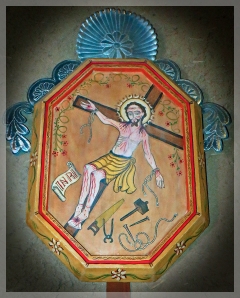
Although crucifixion probably began with the Assyrians and Babylonians, the first historical record is of Persia’s King Darius I crucifying 3,000 political opponents in 519 BC. Alexander the Great adopted the practice when he crucified 2,000 survivors of the siege of Tyre in 332 BC. In 88 BC, the Hasmonean king of Judea, Alexander Jannaeus, crucified 800 Jewish rebels after killing the rebels’ wives and children in front of them. Following a massive slave revolt against Rome in 71 BC, 6,000 rebels were crucified along the Appian Way. The crosses stretched for miles and the bodies were left there as a clear message that any rebellion would end in a violent death. After the death of Herod the Great in 4 B.C., a failed rebellion in Judea led to the crucifixion of 2,000 rebellious Jews.

While the Romans didn’t invent crucifixion, they had perfected it by the time of Jesus and the torture began long before the cross. The condemned were stripped naked, tied to a post, and flogged across the back, legs, and buttocks by Roman soldiers using whips called flagrums consisting of small pieces of bone and metal attached to a number of leather strands. The scourging left the victims’ skin ripped to the bone. If they survived the scourging, they were taunted and forced to carry the crossbar of their death instrument to the place of execution. According to Josephus, sometimes Roman soldiers further tortured the condemned by blinding them or cutting off a body part (like the tongue). Arms were nailed or strapped to the cross beam and feet to the upright. Once upright, a massive strain was put on the wrists, arms and shoulders often resulting in dislocated shoulder and elbow joints. The rib cage was constrained in a fixed position making it extremely difficult to exhale and impossible to take a full breath. While death came from suffocation, loss of body fluids, and multiple organ failure, it did not come quickly.

According to Josephus, crucifixion in Palestine was a common sight so Jesus’ disciples knew all too well what carrying a cross meant. They heard stories of Roman cruelty, saw the bloodied and battered condemned carrying their crosses, and passed by the dead bodies left decaying on crosses as a warning to those who dared challenge Rome. But, for all of their lives, these same men had been waiting for the promised Messiah to come and deliver them from Roman oppression.

Perhaps, when Jesus spoke of the cross, they thought He was referring to the many Jewish rebels who had carried their crosses for defying Rome. But, unlike those times, this time they had Jesus—the promised Messiah who finally would bring victory to the Jewish nation. Even though they believed Jesus was the Messiah, they didn’t fully understand what that meant. They thought He came to defeat Rome, rather than death, and to save a nation, not the world. Even after Jesus spoke of His death on the way to Jerusalem, we have James and John ignoring that prediction and asking Jesus for positions in His kingdom. They still pictured a political victory!

The disciples abandoned Him at His arrest and, in spite of His repeated warnings, were not prepared for His death. Surely, the man who raised Lazarus from the dead wasn’t going to die a criminal’s death, but He did and there was no doubt that He was dead. When the Sabbath was over, two disappointed followers returned to Emmaus, the women went to the tomb to anoint a dead body, and the frightened disciples were gathered in a locked room. They weren’t proclaiming Jesus that morning and didn’t even believe the women when told the tomb was empty. They were a defeated, disappointed, and frightened group of men.

So, what happened to change this group of disheartened disciples? What turned them into enthusiastic evangelists? What turned them into men who willingly followed Jesus to their own equally horrific deaths? It was seeing the risen Christ! May we always remember the truth of this message: Christ has died, Christ is risen, Christ will come again!

God raised Jesus from the dead, and we are all witnesses of this. Now he is exalted to the place of highest honor in heaven, at God’s right hand. And the Father, as he had promised, gave him the Holy Spirit to pour out upon us, just as you see and hear today. [Acts 2:32-33 (NLT)]

Copyright ©2022 jsjdevotions. All rights reserved.

FLYING AWAY

Oh, that I had wings like a dove; then I would fly away and rest! I would fly far away to the quiet of the wilderness. [Psalm 55:6-7 (NLT)]

mourning doveEaster is over and “season” here in southwest Florida is winding down. More people are departing than arriving as our seasonal visitors return north, transport trucks laden with cars are moving up the interstate, and we finally can get a table at our favorite restaurant! It’s been said that there is no escape from death or taxes but we usually try to flee from just about every other unpleasant thing. Thinking their lives would be better here, our snowbirds came south to escape sub-zero temps, heating bills, and shoveling snow. While the climate here is nicer, our tropical paradise doesn’t come with a guarantee and none of us can flee from life’s uncertainties and problems.

Rather than escaping from winter weather, Naomi and Elimelech fled from Bethlehem to escape a famine. Instead of trusting God, they ran away to Moab, a pagan nation hostile to Israel. They intended staying briefly but remained for ten years during which time their sons broke Jewish law by marrying Moabite women. Moab, however, didn’t turn out to be the sort of get-away for which they hoped; sadly, Elimelech and both sons died. A widow with no sons in a hostile and pagan land was in worse straits than a family in their homeland during a famine. Having literally fallen out of the frying pan into the fire, Naomi decided to flee from Moab. At least this time, she went in the right direction—back to Bethlehem and the God of Israel!

We’re not much different from Naomi and some of our snowbirds; we want to escape to a place where life will be better, simpler, happier, easier, less costly, or more fun. Like Naomi, however, we’re likely to be disappointed because the baggage we’ve packed contains more than our clothes. Tucked in with the sunglasses and beach attire are things like problems at work, disappointments, worries, responsibilities, lack of faith, ill health, guilt, unmet deadlines, family strife, or financial problems. If we can’t physically flee from our troubles, some people try escaping through things like procrastination, alcohol, shopping, drugs, busyness, codependency, or denial. Disregarding the bills doesn’t get them paid, ignoring the lump won’t make it disappear, and taking a vacation, moving to a new house, or having another baby won’t fix a broken marriage. There is no way to escape from life’s problems, obligations, or consequences. We carry that baggage with us wherever we go.

In Naomi and Elimelech’s day (the time of the judges), famine was a test of faith but the couple missed what God planned for them by fleeing from their challenge. If we simply suffer through our troubles and allow them to be our master, we lose hope and become bitter, as did Naomi. Having resigned herself to being an embittered penniless widow with no grandchildren, upon her return to Bethlehem the woman whose name meant pleasant called herself Mara, meaning bitter. Rather than running from or resigning ourselves to our troubles, we can endeavor to change them by trusting God—exactly what Naomi and Elimelech failed to do. Instead, it was the Moabite woman Ruth who showed more faith in Israel’s God than did her in-laws. Trusting in Him, she bravely faced the challenges of widowhood by gleaning in the fields of Boaz. Ruth, however, wasn’t alone in those fields; God was at her side! No matter how bleak the situation may seem, there’s no need to flee when we remember that God is with us in our troubles.

Good people must never expect to escape troubles; if they do, they will be disappointed, for none of their predecessors have been without them. [Charles Spurgeon]

The Lord hears his people when they call to him for help. He rescues them from all their troubles. The Lord is close to the brokenhearted; he rescues those whose spirits are crushed. The righteous person faces many troubles, but the Lord comes to the rescue each time. [Psalm 34:17-19 (ESV)]

Don’t be afraid, for I am with you. Don’t be discouraged, for I am your God. I will strengthen you and help you. I will hold you up with my victorious right hand. [Isaiah 41:10 (NLT)]

Copyright ©2022 jsjdevotions. All rights reserved.

GIVING WHAT IS DUE – TAX DAY

“This is how a king will reign over you,” Samuel said.… “He will take away the best of your fields and vineyards and olive groves and give them to his own officials. He will take a tenth of your grain and your grape harvest and distribute it among his officers and attendants. He will take your male and female slaves and demand the finest of your cattle and donkeys for his own use. He will demand a tenth of your flocks, and you will be his slaves. When that day comes, you will beg for relief from this king you are demanding, but then the Lord will not help you.” [1 Samuel 8: 11,14-18 (NLT)]

cardinalWhen the people of Israel demanded a king, Samuel cautioned them about the price they would pay. In spite of his warnings, they wanted a king and got the taxation that came with the government they wanted. Even without a king, government continues to reach its hand into our pockets and today is the deadline for filing our 2021 income taxes! We actually got three extra days this year because Emancipation Day, a public holiday in the District of Columbia, fell on the 15th. Security, protection, administration, infrastructure, and a legal system all come at a cost and taxes are the price we pay for the government we have chosen.

Although Ben Franklin said that nothing is certain except for death and taxes, some people actually do a pretty good job of dodging taxes. There is a fine line between tax avoidance and tax evasion and, as Christians, we must be careful not to cross it. Legally minimizing our taxes by taking all allowed deductions is fine. Hiding income, embellishing deductions, or outright deceit are not. We are called to be ethical and honest and that means no “creative accounting”! People who’d never pinch sneakers from Walmart, embezzle from their employer, or stick-up a 7-Eleven, often think nothing of stealing from the government (and their fellow citizens). Not paying our taxes is no less wrong than shop lifting, misappropriating funds, or armed robbery! A white lie is still a lie, petty theft is still theft and, no matter what we call it, a sin is still a sin.

We may not like the government or agree with the way they spend our money; nevertheless, because we are citizens of this nation, we’re obliged to pay for the services and benefits we receive. When Jesus was asked by the Pharisees if it was right to pay taxes to Caesar, He responded that we must give to the government that which belongs to it. While rendering unto Washington, let’s not forget that there was more to Jesus’ answer. We may be citizens of this nation but we also are citizens of the Kingdom of Heaven. As citizens of God’s Kingdom, we are to give to God that which belongs to Him—our lives, allegiance, and obedience.

Like the IRS, the rabbis of old established an elaborate system of tithing. The Levites received the first tithe—a tenth of all agricultural products (with each crop counted separately). In turn, the Levites gave a tenth of what they received to the priests. Rather than tithing goods, people could tithe with a product’s cash equivalent plus a 20% penalty. This, however, was not allowed with livestock which were counted singly with every tenth one becoming part of the tithe. The second tithe, taken from what remained after the first one, was to be taken to Jerusalem to be consumed there during festivals. The third tithe, taken after the first two, was to be given to the poor. While no tithes were taken in the seventh year, the first two tithes were taken in the first, second, fourth, and fifth years and the first and third tithes were taken in the third and sixth years. Depending on the year, the total tithe ran anywhere from 19 to 27%!

We don’t have an elaborate tithing requirement in the Christian church but that doesn’t mean we aren’t supposed to render unto God His share. What we render unto God, however, isn’t a matter determined by the calculator; it’s a matter determined by our hearts. Moreover, it’s not just our material things that should be given to the Lord. Even if we’re penniless, we still have our time, talents, love, thanks, praise, worship, and testimony. If we wonder what or how much to give, all we have to do is ask Him. Whatever He lays on our hearts is what it should be—nothing more and nothing less. But, since we are to render unto God that which is His, let us remember that it all belongs to Him!

“Well, then,” he said, “give to Caesar what belongs to Caesar, and give to God what belongs to God.” [Matthew 22:21 (NLT)]

Copyright ©2022 jsjdevotions. All rights reserved.