
Therefore, since we are surrounded by such a huge crowd of witnesses to the life of faith, let us strip off every weight that slows us down, especially the sin that so easily trips us up. And let us run with endurance the race God has set before us. We do this by keeping our eyes on Jesus, the champion who initiates and perfects our faith. [Hebrews 12:1-2a (NLT)]
 “How was work today?” asked the wife in the Born Loser comic strip (drawn by Chip Sansom). Her husband answered, “Horrendous!” adding, “It feels so good that it’s over, I’m almost glad it happened!” Having had times when my prayer was simply, “Lord, just get me through this!” I understand. Sometimes, life seems so challenging and exhausting that we’re willing to settle for merely getting through it. That, dear friend, is setting the bar far too low. God has better plans for us than just getting by and none of us are born losers.
Sarah wanted a baby so much that she was willing to settle for surrogate motherhood when, in fact, God promised that she’d give birth to a nation. When he fled to Midian, Moses just wanted to escape persecution for killing an Egyptian. God’s plans were that he would lead the Hebrews to freedom. The orphaned Esther probably just wanted to settle down with a nice Jewish boy. She never imagined that God’s plans included making her a queen who would save her people from genocide. Gideon, hiding in a winepress, just wanted to get the wheat threshed so he could feed his family. God’s plans were that he’d defeat the Midianites and become Israel’s fifth judge. The widowed foreigner Ruth just wanted to feed herself and Naomi with the leavings in Boaz’s field. She never dreamt of being great-grandmother to Israel’s second king and ancestor to the Messiah. The woman at the well just wanted to fill her water jug and go home without incident when she got the living water of Jesus. Zacchaeus, the tax man, would have been happy just to catch a glimpse of the rabbi from Nazareth. He got much more when Jesus came for dinner and brought salvation with Him. What of the fishermen from Galilee who just wanted to catch enough fish to pay their bills and put food on the table? Did they ever imagine they’d break bread with God? Considering all that God can accomplish through us, it would seem that our hopes and dreams often are way too small.
The Apostle Paul doesn’t tell us just to get through the race—to schlep halfheartedly through the course set before us. He tells us to strip every weight that slows us down and run (not walk) with perseverance. Sin can trip us up, but so can our attitude. Just hoping to make it through the day (week, month, or even year) hinders our run by setting the bar too low. We must never be willing to settle for less than the best—less than the best that God has in store for us and less than the best that we have to offer Him!
Why just settle with merely getting through life? If God just met our expectations, He’d never have the opportunity to exceed them and exceed them He will! When we allow God to determine our dreams and obediently follow His plan, the result will surpass our wildest dreams. He didn’t promise a life of just getting by: He promised a life of abundance—not a life of riches—but a rich life.
The greater danger for most of us lies not in setting our aim too high and falling short; but in setting our aim too low, and achieving our mark. [Michelangelo]
 Most of us breeze through (or skip altogether) the Bible’s genealogies. Nevertheless, when genealogy and all those “begats” seem so important in Scripture, what explanation is there for the difference between the genealogies of Jesus found in Luke and Matthew? Because Jews were meticulous about recording genealogies, it’s inconceivable to have two conflicting yet correct lists of Jesus’ lineage.
 After feeding a multitude with little more than a handful of food, Jesus sent the disciples across the Sea of Galilee to Bethsaida. He stayed behind to send the people home and then, exhausted, went into the mountains to pray. During the fourth watch (somewhere between 3:00 and 6:00 AM), Jesus looked out at the water and saw that the disciples were struggling against the wind and waves to keep the boat on course. Seeing their distress, he walked on the water toward them. Seeing Him walking on water, they thought Him a ghost and cried out in terror. Phantoms of the night were said to bring disaster and it was thought that the last thing a boatman saw before drowning in Galilee was a ghost on the water! It’s no wonder they were frightened at first.
 Whenever I asked about her boys, my sister would give a vague answer like, “They’re fine…just doing their own thing” It was several years before I learned “their own thing” meant they were breaking her mama’s heart with their mental illness, addictions, and run-ins with the law. Because she kept her pain concealed, she carried the weight of that burden alone for many years.
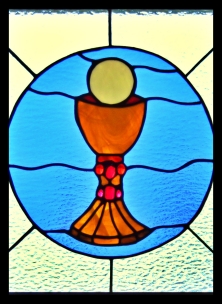 The celebration of the Lord’s Supper/Holy Communion/the Eucharist has been central to Christian worship since the early church. While Protestants think of the Eucharist as the sacrament commemorating the Last Supper with bread and wine, for Roman Catholics and some Orthodox, “Eucharist” specifically refers to the consecrated elements, especially the bread. How ever you define it, the word “eucharist” originally had nothing to do with this beautiful sacrament.
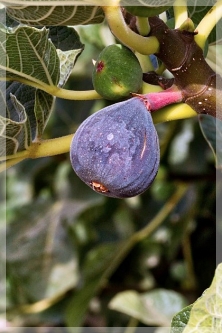 The next morning, while Jesus and the disciples walked from Bethany to Jerusalem for yet another confrontation with Judea’s religious leaders, the disciples saw the tree Jesus cursed the previous day. The disciples had witnessed Jesus cast out demons and still a storm with a just a word but, when they saw the withered and dead fig tree, they were amazed. Normally, trees die slowly from the top down but this tree instantly withered from the roots up. With dead roots, no amount of water or fertilizer would revive it. Having witnessed the tree go from abundance to ruin with just a word from the Lord, rather than asking Jesus to explain cursing the tree, the disciples focused on the speed with which the fig died.
 Devotions of the Heart