
Am I now trying to win the approval of human beings, or of God? Or am I trying to please people? If I were still trying to please people, I would not be a servant of Christ. [Galatians 1:10 (NIV)]
Each one should test their own actions. Then they can take pride in themselves alone, without comparing themselves to someone else, for each one should carry their own load. [Galatians 6:4-5a (NIV)]
 Last Thursday night’s Bible study had been as inspiring as Easter Sunday’s sermon. As we walked out of the building, I confided to my friend that there was no way I could follow such brilliant preaching. You see, our pastor was taking a much needed vacation and I would be doing the preaching for the next two Sundays. Afraid I couldn’t possibly fill his shoes or touch people’s hearts the way he does, I asked, “How can I possibly compare to him?” My friend wisely answered, “You don’t!” He reminded me to be myself and let the Holy Spirit do the rest.
As I continued to polish my sermon, the enemy kept reminding me that I could never fill our pastor’s shoes. I thought of the Apostles after Jesus had ascended. I’m sure their preaching, no matter how heartfelt and inspired, was no match for that of Jesus. That no one could possibly fill His holy sandals, however, didn’t stop them from speaking and spreading the gospel message. Scripture tells us that many became believers and were baptized after hearing the Apostle Paul speak. Yet Paul’s vast knowledge and speaking skills never kept Timothy, Silas, Barnabas, Titus or others from sharing God’s word.
When whispers of doubt are heard, I find it best to turn to God’s Word, so I turned to Paul’s letters to Timothy. Telling him not to be ashamed of his testimony, Paul encouraged the young man by reminding him that God’s Spirit “does not make us timid, but gives us power, love and self-discipline.” He advised the young man to let his teaching be shaped by his faith and love for Jesus and to teach others so that they could pass those teachings on to still more people. Reminding Timothy that the only approval he should seek was that of God, Paul’s instructions were simple: “Preach the word.” [4:2]
Granted, I felt a heavy responsibility. Ours is a growing young church and I didn’t want us to lose momentum or have the church flounder in our pastor’s absence. Then again, I suppose the people Paul left to pastor the churches he planted felt much the same way. Nevertheless, Paul’s words made me ask whose approval it was that I sought. Did I want to please God or the people? While I prayed that my words would manage to do both, I had to focus on pleasing God and trust Him to take care of the rest. The only approval I should be seeking was that of God.
My preaching, like my writing, is not about me; it’s about God. While I hope that it pleases people, the only one I need to please with my words is God. Saturday morning, my friend sent some more words of encouragement. He reminded me that I’m a child of God, gifted by Him in my own special way, and that all God asks of me is to be myself and “Preach the word.” That’s all God asks of any of us! None of us are expected to fill someone else’s shoes; we just have to wear our own and walk in a way that pleases God.
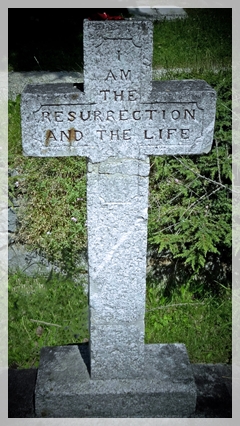 First published in 1678, John Bunyan’s The Pilgrim’s Progress is the second best-selling book of all time (the first being the Bible). In this religious allegory, the reader follows the adventures and trials of Christian (Part I) and his wife Christiana and their children (Part II) as they journey from the City of Destruction toward the Celestial City.
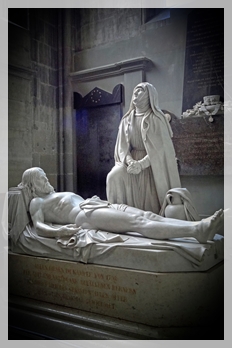 As Mary stood in the shadow of the cross, did she recall Simeon’s words when he held the infant Jesus in his arms? His prophecy came true that day at Calvary; as she watched her son endure such torture, it truly must have felt as if a sword had pierced her very soul. Jesus was supposed to be the glory of His nation but there He was—dying the death of a criminal. Mary didn’t understand why her beloved boy had to perish and she certainly didn’t know that He’d be back in three days. Imagine her sorrow and the emptiness in her heart as she witnessed her son’s agony.
 There’s a therapeutic riding center across the highway from one of the churches we attend. Along with horses, barn cat, and dog, they have a rooster. No matter what the time of day we’re there, that rooster crows. Every time I hear that bird’s loud “cock-a-doodle-do!” I remember Jesus’s words to Peter and ask myself, “Have I denied my Lord today?”
 Some things never change and, aside from death, it’s said that taxes are the only other sure thing in our lives. Along with a poll (or head) tax, the Romans had a variety of other taxes including customs taxes, property taxes, import and export taxes, crop taxes, toll bridges, sales tax, and special taxes when there was a war or building project to finance. Sounds a bit like nowadays! Yesterday was April 15, the day the IRS demanded what is theirs. When you put “the” and “IRS” together you get the word “theirs” and, once we’ve filed our taxes, it sure feels like the government considers most of what’s ours to be theirs!
 Paul’s letter to Philemon on behalf of Onesimus is a lesson in the subtle art of persuasion. It’s said that we catch more flies with honey than vinegar and Paul illustrates that beautifully. A lot was on the line for the runaway slave Onesimus—if Paul didn’t convince Philemon to forgive him, the man could have been killed or sold to work in the lead mines. And, if Paul’s letter offended Philemon, the new church at Colossae could have suffered. As short as his letter is, I imagine Paul prayed and labored over it a long time.
