JUST ASKING

Jesus replied, “I tell you the truth, you want to be with me because I fed you, not because you understood the miraculous signs. But don’t be so concerned about perishable things like food. Spend your energy seeking the eternal life that the Son of Man can give you.” [John 6:26-27 (NLT)]
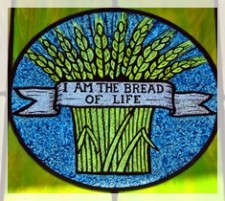
Although people flocked to Jesus, many came for His miracles and what He could do for them rather than for His message. After all, He gave sight to the blind, calmed storms, gave excellent fishing instructions, cured the paralyzed, freed people from demons, healed the sick, raised the dead, turned water into wine, made money appear in the mouth of a fish, and fed thousands with next to nothing. After Jesus fed the multitude, the people recalled the Messianic prophecy of Deuteronomy 18:18 that God would raise up a prophet like Moses and they wanted to make Him king. They didn’t understand that the kingdom of the Messiah would be a spiritual, not a political, one. Rather than seeing Jesus’ miracles as God’s stamp of approval on Him and coming to Jesus out of faith, they came to Him looking for more. As if feeding lunch to over 5,000 hadn’t been enough, they wanted an even greater miracle on a par with the manna Moses provided for the Israelites. Even though Jesus fed 5,000 men for a day, Moses fed millions for decades!

Jesus, however, corrected them. The manna wasn’t from Moses—it was from God. Moreover, that manna only lasted one day—the true bread from heaven, the bread Jesus offered, would last for eternity. Jesus wasn’t there to sustain life with something perishable but to give life with something everlasting!

Seeing Jesus as a miracle worker and a political king, the crowd followed Him. How do we see Him and why do we come to Him? Do we come for spiritual reasons or worldly ones? We may not expect Jesus to provide the food and drink for our next party but are we seeking Him for other things we think we can get from Him? By joining a church, are we seeking friends, contacts, or status? Do we have a personal agenda like politics, business relationships, or help from the parish? Are we motivated to seek Jesus in pursuit of wealth, success, comfort, emotional experience, or a miraculous fix of a problem?

Do we look to Jesus for our advancement or to advance His kingdom? Do we want to be glorified for what we do or glorify Him with what we do? Do we want to feel loved and or do we want to love Him and His children? Are we seeking an emotional high rather than spiritual growth? Do we seek power, influence, or recognition rather than a life of service and humility? Do we want His joy without our obedience or His forgiveness without our repentance?

Like the woman at the well, do we want His water so we don’t have to walk to the well and fill our jugs? Like the people who followed Jesus to Capernaum, do we want Him to miraculously satisfy our daily physical needs? Are we little better than Judas and following Him for the pieces of silver preached in the prosperity gospel? Are we looking for material possessions and wealth or spiritual gifts and the Fruit of the Spirit? Do we seek Him for what He can do for us or for who He is? Do we look to Jesus to take whatever is in His hand or do we come to offer Him what is in ours? Just asking…

True Christianity is to manifest genuinely Christ-like behavior by dependence on the working of the Spirit of God within, motivated by a love for the glory and honor of God. [Ray C. Stedman]

I tell you the truth, anyone who believes has eternal life. Yes, I am the bread of life! Your ancestors ate manna in the wilderness, but they all died. Anyone who eats the bread from heaven, however, will never die. I am the living bread that came down from heaven. Anyone who eats this bread will live forever; and this bread, which I will offer so the world may live, is my flesh. [John 6:47-51 (NLT)]

Copyright ©2022 jsjdevotions. All rights reserved

FEEDING THE MULTITUDE – Part 2

At this they began to argue with each other because they hadn’t brought any bread. Jesus knew what they were saying, so he said, “You have so little faith! Why are you arguing with each other about having no bread? Don’t you understand even yet? Don’t you remember the 5,000 I fed with five loaves, and the baskets of leftovers you picked up? Or the 4,000 I fed with seven loaves, and the large baskets of leftovers you picked up?” [Matthew 16:7-10 (NLT)]

white ibisMatthew and Mark tell of a second time Jesus fed a multitude. Jesus had been north of Galilee in Tyre and Sidon before going south to the Sea of Galilee and on to the region of the Ten Towns or Decapolis. Once there, a huge crowd assembled and set up camp around Jesus as He healed and preached. After three days on the hillside, the crowd ran out of provisions and Jesus voiced His concern. Just like the first time they were faced with a hungry crowd, the disciples don’t know what to do, even though the solution was standing right in front of them. After they found seven loaves and a few fish, Jesus miraculously turned that into a feast for 4,000 men (plus women and children) with seven large reed baskets of food remaining!

Why would Matthew and Mark include two almost identical stories to their gospels?  Perhaps the reason is found in the location of these miracles. While the setting of these miracles seems unimportant to us in the 21st century, it wasn’t when the miracles occurred and the words were written. Located on the north shore of the Galilean Sea, the Bethsaida region was Jewish, and most (if not all) of the recipients of that first miraculous meal were Jews. When Jesus was in Tyre and Sidon, however, He was in a Gentile region and at least 35 miles north of the Sea of Galilee. To get to the Decapolis, He had to go east, cross the Jordan, and then proceed south to the southern end of the Sea. Since he was on His way back to Judea, it’s evident that Jesus deliberately went out of His way to minister to this Gentile and largely pagan region.

With their addition of Jesus feeding the multitude in the Decapolis, Matthew and Mark made it clear that Jesus came for both Jew and Gentile. Let this story be a reminder that, whether Jew or Gentile, good church-going people or idol worshippers and pagans, deserving or undeserving, all of God’s children deserve to be fed both spiritually and physically.

It also seems that Jesus’ miracles of provision needed repeating for His disciples. Even though He previously turned a boy’s lunch into a banquet for well over 5,000 hungry people, the disciples stood around not knowing what to do when faced with another hungry crowd of 4,000 men (plus women and children)! Instead of seeing an opportunity, they saw an impossibility. Rather than asking Jesus where they’d find enough food in the wilderness, they immediately should have offered what they did have to Jesus and asked Him to make it enough! It seems the disciples were slow learners!

Even though Jesus turned seven loaves and a few fish into an al fresco picnic for thousands, the disciples still didn’t understand. Shortly after this miracle, Jesus and the disciples were in a boat and crossing the lake. When the disciples realized they had only one loaf of bread between them, they argued about the lack of food! They sat there quarreling about bread while the Bread of Life sat in the boat with them. For the One who could multiply seven loaves to feed a multitude, turning one loaf into enough for thirteen men was child’s play, but they were blind to who He was and what He could do!

May we always remember that God can do things that exceed our wildest imagination. If we just bring Him what we have—no matter how little or insignificant it may seem—God will make it enough. As the old hymn goes: “Little is much when God is in it.”

Now all glory to God, who is able, through his mighty power at work within us, to accomplish infinitely more than we might ask or think. [Ephesians 3:20 (NLT)]

Jesus replied, “I am the bread of life. Whoever comes to me will never be hungry again. Whoever believes in me will never be thirsty.” [John 6:35 (NLT)]

Copyright ©2022 jsjdevotions. All rights reserved.

THE WORST SIN

No, this is the kind of fasting I want: Free those who are wrongly imprisoned; lighten the burden of those who work for you. Let the oppressed go free, and remove the chains that bind people. Share your food with the hungry, and give shelter to the homeless. Give clothes to those who need them, and do not hide from relatives who need your help. [Isaiah 58:6-7 (NLT)]

Canadian geese - goslingsLast week, a devotion I read asked, “What is the worst sin?” How would you answer it? While the “Seven Deadly Sins” (pride, greed, lust, envy, gluttony, wrath, and sloth) are all wrong, I’m not sure they belong at the top of the list. Would it be idolatry, murder, stealing, or adultery? What about the heinous sins of mass murder, genocide, torture, or the abuse of children?

Of course, there’s “blasphemy against the Holy Spirit,” the unforgiveable sin mentioned by Jesus in Matthew 12 and Mark 3. While attributing the divine power of Jesus to Satan without repenting of it is unforgivable and was bad news for Pharisees to whom Jesus was speaking, since it hurts only the sinner, I don’t think it seems to be the worst sin either.

I pondered this question over coffee while the news was airing on TV. Richard Engle gave a report from an orphanage in Ukraine that left me in tears. When Ukraine became an independent country in 1991, it inherited a broken system in which parents of disabled children were encouraged to commit their children to institutional care. Sadly, in the absence of community-based support, therapy services, or educational opportunities, families continued to abandon severely disabled children to institutions. As a result, before the war, Ukraine had the largest number of children in institutional care in Europe; 100,000 children lived in 700 institutions.

Around half of those institutionalized children had special needs or disabilities and others were separated from their families because of poverty, addiction, or poor health; only a few actually were orphans. As these “orphanages” in war-torn eastern Ukraine were evacuated, their caregivers abandoned the most severely disabled to other institutions and fled. The remaining facilities are so overrun that day and therapy rooms have been converted into dormitories. They are overcrowded, understaffed, unequipped, and unable to provide anything but basic medical attention; as a result, proper care, stimulation, rehabilitation, and therapy can’t be provided and the residents’ conditions continue to deteriorate.

Engles’ report was about visiting such an institution that was packed with 200 profoundly disabled youngsters, all of whom were abandoned by their families. Some of the children, refugees from eastern Ukrainian institutions, were little more than skin and bones. These children (and others like them) are innocent victims of a broken system, a horrifying war, and a world that looked the other way. Could the worst of all sins be one of omission—that of not loving enough to see or care?

The question about the worst sin, however, was misleading. There is no “worst” sin because every sin is an affront to God. No sin is so small that it isn’t offensive to Him and deserving of punishment nor is there any sin so great that He can’t forgive it. Nevertheless, there can be a great difference in the earthly impact of our sins. While both are sins, a drug company’s lie about the safety of its pain medication has a vastly different impact than a child’s lie about taking a cookie from the jar. Without a doubt, what has happened to those Ukrainian children is a sin with devastating consequences for those involved.

When Jesus was asked the most important commandment, He answered “You must love the Lord your God with all your heart, all your soul, and all your mind.” He continued with the second and equally important commandment of, “‘Love your neighbor as yourself.” Unfortunately, we don’t have to go to Ukraine to find the least of Jesus’ brothers and sisters who are hungry, homeless, sick, alone, exploited, abused, or abandoned. While there is little we can do for those Ukrainian “orphans,” there is much we can do to alleviate the suffering of others who are “the least of these” here and now. May we love God and our neighbor enough to notice and to care!

Then these righteous ones will reply, “Lord, when did we ever see you hungry and feed you? Or thirsty and give you something to drink? Or a stranger and show you hospitality? Or naked and give you clothing? When did we ever see you sick or in prison and visit you?” And the King will say, “I tell you the truth, when you did it to one of the least of these my brothers and sisters, you were doing it to me!” [Matthew 25:37-40 (NLT)]

Copyright ©2022 jsjdevotions. All rights reserved.

THE SAD STORY

After that generation died, another generation grew up who did not acknowledge the Lord or remember the mighty things he had done for Israel. … In those days Israel had no king; all the people did whatever seemed right in their own eyes. [Judges 2:10, 21:25 (NLT)]

tulipAs a history of Israel’s disobedience, idolatry, and moral depravity, Judges is one of the saddest books of the Bible; it also is one of the bloodiest and violent. After starting well with war against the pagan tribes of Canaan, it ends with civil war and Israelite killing Israelite. While some tribes obediently drove the pagan people from their land, others found it easier to tolerate sin than fully eradicate it. By the time of Gideon, altars to Baal and Asherah poles had been erected and people wanted to kill Gideon for destroying them. It only went from bad to worse after Samson. Micah sinfully set up a shrine for his idols, wrongly fashioned a priestly ephod, ordained his son into the priesthood, and then purchased the services of a Levite as his personal priest! After the Danites stole his idols, ephod, and Levite, they set up their own idolatrous shrine with the Levite as priest. Did no one remember God’s laws given to them by Moses that specifically covered priests, ephods, Levites, and the worship of idols?

As for violence—along with the carnage of battle, there’s a disembowelment, a tent peg hammered into a head, eyes getting gouged out, and a king’s thumbs and big toes get amputated to humiliate him. Thirty men are killed just to pay a gambling debt and a father’s foolish vow ends in the sacrifice of his daughter. After 300 foxes are set on fire in a vengeful act that destroys a town’s grain fields, vineyards, and olive groves, a father and daughter are burned to death as payback!

Instead of conquering the fertile land they’d been given, the Danites moved north, burned the peaceful city of Laish, and mercilessly killed its inhabitants. When the men of Gibeah raped and killed a Levite’s concubine, the Levite dismembered her body to summon the tribes of Israel. Then, after they nearly eradicate the entire tribe of Benjamin in retaliation for the concubine’s death, the men regret their actions. To right the wrong, they slaughter every man, woman, and child in Jabesh-gilead except for 400 virgins who are given to the surviving soldiers of Benjamin. Needing more virgins, another 200 young women were forcibly abducted from Shiloh. How did this happen? What happened to God’s law? How did Israel fall into such sin, violence, and mayhem?

Scripture tells us that one generation after Joshua’s death, the people forgot and, within one generation of the death of each judge, they forgot again! There was a reason God wanted his word passed on through the generations and a reason he commanded people to keep repeating the law to their children. Whether the command to put His words on hands, foreheads, and doorposts was literal or figurative, God wanted His word to be an inescapable part of His people’s lives and the lives of every generation that followed. Why? Because God’s Word means life!

When I look at the disobedience, idolatry, moral depravity, and violence in Judges, I can’t help but see parallels today. As my mother would say, it seems that the world is going to hell in a handbasket. Indeed, it does! There’s a reason the world doesn’t seem much better in 2022 than during the 300 plus years of turmoil recounted in Judges. As they did nearly 3,400 years ago, people continue to do whatever seems right in their own eyes. We’ve allowed the full story of God’s redemption to be forgotten, disregarded, or never heard. The people of Israel didn’t need a king; they needed God. So do we! What are we going to do about it?

And you must commit yourselves wholeheartedly to these commands that I am giving you today. Repeat them again and again to your children. Talk about them when you are at home and when you are on the road, when you are going to bed and when you are getting up. Tie them to your hands and wear them on your forehead as reminders. Write them on the doorposts of your house and on your gates. [Deuteronomy 6:6-8 (NLT)]

Copyright ©2022 jsjdevotions. All rights reserved

BLIND (Samson – Part 2)

A final word: Be strong in the Lord and in his mighty power. [Ephesians 6:10 (NLT)]

For I can do everything through Christ, who gives me strength. [Philippians 4:13 (NLT)]

HibiscusWhile the Nazarites’ long hair was supposed to be a constant reminder of their commitment to God and a sign to others of their vow, I don’t think his hair was what gave Samson his strength. Three times Delilah asked Samson the source of his strength, three times he lied in his answer, and three times he woke to find himself incapacitated in the way he said he could be defeated. After being betrayed by Delilah three times, why would the man finally tell her the truth the fourth time she asked? He couldn’t possibly have been that foolish. Perhaps, his Philistine wife’s betrayal years earlier taught him a thing or two about deceit. When Samson finally told Delilah the source of his strength, could he have thought all four of his answers to be lies? Wanting to continue enjoying her favors in bed, he might have thought he’d given her an answer as outlandish as tying him with seven bowstrings or weaving his hair onto a loom. I’m not a Bible scholar but I suspect the boastful warrior thought that, in spite of having the long hair of a Nazarite, he alone was the true source of his strength.

What the proud man didn’t understand was that his strength wasn’t found in bulging muscles, six-pack abs, or even untrimmed hair—it was found in God. Samson didn’t lose his strength when he lost his hair. He lost his strength when he lost sight of God—when he decided his lustful desires were more important than his Nazirite vows. Nazarites’ hair was dedicated to God and their heads were shaved only when their vows came to an end. This was to be done publicly at the door of the tabernacle. Considered sacred, the hair was part of their offerings presented to the Lord and was to be burned with the peace offering. Because the hair was consecrated to the Lord, it was not be cast into any profane place—and there probably was no place more profane than the pagan Delilah’s bedroom. Samson’s strength didn’t leave him because his head was shaved. He lost his strength when he ended his Nazirite vows by choosing the pagan and treacherous Delilah over the God to whom he’d been dedicated.

Samson’s long hair was merely a symbol of his being set apart and it didn’t give him strength any more than wearing a cross or a clerical collar endows people with virtue or makes them Christian. Earlier in life, it wasn’t Samson’s hair that enabled him to break out of restraints and kill 1,000 Philistines with a bone—it was the Spirit of the Lord that had come upon him. Rather than thanking God, however, Samson proudly boasted of his personal triumph: “With the jawbone of a donkey, I’ve killed a thousand men!” After claiming the victory for himself, he complained to God about his thirst. When water gushed from a rock, rather than offering thanks to God, Samson called it “The Spring of the One Who Cried Out.” A better name would have been the “The Spring of the God Who Answers!”

Although Samson called to God to deliver him from thirst, he might have been wiser if he’d called to God to deliver him from temptation and desire. Sadly, there is no mention of Samson calling to God again until we find him blind, weak, and humiliated as he is paraded in front of the Philistine crowd in their temple. Thinking God’s purpose was to serve him rather than his purpose being to serve God, Samson was blind long before the Philistines gouged out his eyes. He’d been blind to the power of God throughout his life. As Craig Groeschel aptly said, “He lost sight of his blind spots, which ultimately cost him his sight.”

It was only when he was blind that Samson finally saw the real source of his strength and prayed, “O God, please strengthen me just one more time.” God heard his prayer and Samson killed more Philistines as he died than he ever did when he lived. Without God, no matter how good our eyesight, we are blind and, without Him, no matter how many hours we’ve spent at the gym, we will be weak. It is when we look to God that we see, when we admit our weakness that we become strong, and when we are humble that we can be great.

Amazing grace! How sweet the sound That saved a wretch like me! I once was lost, but now am found; Was blind, but now I see. [John Newton]

Each time he said, “My grace is all you need. My power works best in weakness.” So now I am glad to boast about my weaknesses, so that the power of Christ can work through me. That’s why I take pleasure in my weaknesses, and in the insults, hardships, persecutions, and troubles that I suffer for Christ. For when I am weak, then I am strong. [2 Corinthians 12:9-10 NLT]

Copyright ©2022 jsjdevotions. All rights reserved

THE NAZIRITE (Samson – Part 1)

I appeal to you therefore, brothers, by the mercies of God, to present your bodies as a living sacrifice, holy and acceptable to God, which is your spiritual worship. Do not be conformed to this world, but be transformed by the renewal of your mind, that by testing you may discern what is the will of God, what is good and acceptable and perfect. [Romans 12:1-2 (ESV)]

great egretThe word Nazirite comes from the Hebrew words nazir, meaning to consecrate, and nazar, meaning to separate. By taking on the vows prescribed in Numbers 6:2-21, Nazirites separated themselves from the world and were consecrated to God. For the length of their vows, they abstained from wine or any fermented drink. They also were prohibited from eating, drinking, or touching anything coming from a grape vine such as grape juice, wine vinegar, raisins, grapes, and grape seeds, skins, and leaves. Their hair was not to be cut during the entire length of the vow and the Nazirite was prohibited from becoming ceremonially unclean by being anywhere near a dead body. Both men and women could take the Nazirite vow and, at its conclusion, their hair was shaved and special offerings were made to the Lord. Typically, the vow was taken voluntarily and had a specific time frame, usually thirty days. For three men in Scripture, however, becoming a life-long Nazirite was decided for them. Angels of the Lord determined that both Samson and John the Baptist were to be Nazirites and it was Samuel’s mother who dedicated him a Nazirite.

Perhaps it was because it wasn’t his choice to become a Nazirite that Samson seemed particularly flawed in his role. While his hair remained uncut until that unfortunate night with Delilah, he certainly didn’t remain set apart from society or consecrated to God. He deliberately defied both Jewish law and his parents by marrying a Philistine woman and, later in life, he continued to consort with Philistine women of questionable morality. Samson’s first wife finagled the answer to his riddle with a combination of feminine wiles and nagging. More than twenty years later, the enticing Delilah managed to do the same thing. But, because of his lust and braggadocio, the man who could kill a lion with his bare hands and slay thousands of Philistines, was putty in the hands of a sexy nagging woman.

As for being ceremonially unclean—after killing thirty men, Samson stripped them of their clothing to pay off a gambling debt and, after killing a lion, he later returned to its carcass. Finding a bee hive in the animal’s remains, he scooped out handfuls of honey. As a Nazirite, he never should have touched the dead men or returned to the dead animal or reached inside its decaying body. The lion had attacked him near the vineyards of Timnah but, as a Nazirite, he never should have been anywhere near a vineyard. Later, during his week-long nuptial celebration, in a move that that seems suspiciously like the sort of thing a young man would do after having too much to drink, Samson asked a riddle and bet thirty Philistine men that they couldn’t answer it. The prohibition about grapes and wine was supposed to show self-discipline and restraint but most of Samson’s behavior speaks of hotheadedness, pride, entitlement, lust, and self-indulgence rather than consecration to the Lord, ritual purity, or self-control.

Although Samson’s story is told in three chapters of Judges, his twenty years as a judge are dismissed with one short sentence. The mighty warrior—the man dedicated to God while still in the womb and selected by God to deliver His people—ended up blind and grinding grain in prison. He squandered his strength on foolish wagers, getting out of scrapes that were his own fault, and chasing after pagan women. He was a lustful braggart who was physically strong but morally weak. Granted, in his last act, he killed thousands of Philistines by destroying their temple but consider what this man could have accomplished if he truly had consecrated his life to God!

Take my life and let it be consecrated, Lord, to thee. … Take myself, and I will be ever, only, all for thee. [Francis R. Havergal]

But you are a chosen race, a royal priesthood, a holy nation, a people for his own possession, that you may proclaim the excellencies of him who called you out of darkness into his marvelous light. [1 Peter 2:9 (ESV)]

Copyright ©2022 jsjdevotions. All rights reserved