
 Pride goes before destruction, and haughtiness before a fall. [Proverbs 16:18 (NLT)]
I will not endure conceit and pride. [Psalm 101:5b (NLT)]
With her uncanny sense of what it means to be part of a family, Lynn Johnston’s comic strip For Better or for Worse often hits home. In one, Elly, the weary mother, is pecking away at her typewriter. When her husband John asks why, with all of the people in her department, she seems to get everything dumped on her, El admits that it wasn’t “dumped;” she volunteered! Her thoughts in the final frame read: “Trouble with having a big mouth is…You usually bite off more than you can chew!” Truer words were never said!
Many years ago, I certainly bit off more than I could chew. School, church, community, and charity obligations began to interfere with my mothering. I was in a push to complete a major publicity campaign for a charity event when, like Elly, I sat working at the typewriter. My three small children took one look at me, intently typing, and started to cry in chorus. Shushing them, I sat them in front of the TV, and returned to my work. Those tears, however, preyed on my mind. They told me, in no uncertain terms, that I’d clearly taken on way too much. While my family’s basic needs had been met, I’d neither been truly present nor very pleasant. Following that day, I finished the obligations I already had, lessened my participation in several activities, and didn’t take on any new responsibilities until my children were older.
What is it that gives us such big mouths when it comes to taking on more than we can chew? In my case, it was an inflated ego. Sure no one could do as good a job as I would, I tried to do it all! No one else could do the publicity right, so I did it; no one else could write a good newsletter, so I did it; no one else could be as good a Brownie leader, so I did it. I foolishly thought I could do it all! It took three tearful children to remind me that only God can do it all and He’s the only one who can do it perfectly. The rest of us need to realize our limitations.
Having greatly overestimated my abilities and underestimated those of others, I was filled with pride and conceit. While the obligations I had were all good causes and worthy of my efforts, I had to understand that I wasn’t the only person who could complete God’s tasks. Pride had kept me from trusting that God would provide the qualified people necessary to do His work if He wanted it done.
The following year, I handed my publicity notebook over to someone else. Did she do it the way I would have? No. Did she miss some deadlines? Yes. Without my publicity, was the event successful? Yes; in fact, even more so! Did my various causes survive without my over-involvement? They did and it was humbling to realize that the world does quite well without me trying to run it.
Make no mistake, I’m not advocating an attitude of “Let the other guy do it.” I am, however, warning us to beware of the pride and arrogance that refuses to allow him or her to do it. Inflated egos can turn us into little gods who think we are the only ones who can write, play an instrument, lead a choir, take photographs, chair a meeting, bake, entertain, organize, teach, lead, encourage, or create. All of us have God-given talents and spiritual gifts and God rightly expects us to use them to his glory. We need to remember, however, that others also have been blessed. If you’ve bitten off more than you can chew, perhaps it’s time to let someone else use their talents and gifts.
Father, we want to serve you. Give us the wisdom to know both when and how to use our gifts in the best way possible. Guide us when we make obligations so that we never let pride or vanity make us say, “Yes,” when we should be saying, “Thank you, but no!”
 When I was a little girl and got sick, my mother would dress me in a fresh pair of pajamas, tuck me into her bed, get out her hairbrush, and do my hair. “Why bother?” I’d ask, “No one is going to see me.” She’d always reply, “God sees you and you want to look your best.” I found it comforting, as I lay in bed, to know that both God and my mother were watching me.
 The billboard’s message read, “When push comes to shove, don’t!” It was sponsored by a nonprofit foundation that uses a variety of media sources to encourage positive values, good role models, and a better life. “Hard to argue with a goal like that,” I thought before discovering that some people took exception to their peaceful message. Re-tweeting it, one rock musician told his fans just to “shove harder.”
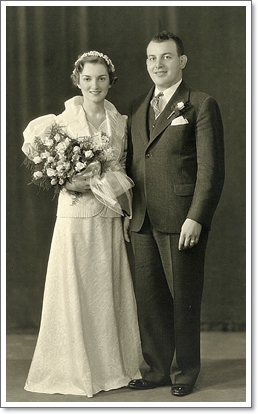 As I sorted through the papers that my mother-in-law had saved through the years, I came to a letter written to her in 1936 by her soon to be mother-in-law, Hattie. Hoping the young couple liked the mixer she’d given them, Hattie sent best wishes for a “long happy wedded life.” Wondering why such a mundane letter had been saved for 83 years, I read on. “May there be lots of love, joy and contentment in your home,” she continued, “forgiving each other as God forgives you.” Praying that my in-laws would have a long and “sweet contented life,” Hattie signed the letter “One who wishes you well in everything, Mother.”
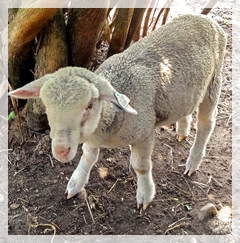 I was re-writing and updating my prayer list when I came to the names of several prodigals. Some of their names have been on that list for nearly two decades; during that time, they’ve been in and out trouble, jail, and rehab. Having wasted most of their lives, each one of them one would qualify as the poster child for lost causes. I thought of not adding their names to my new list. “After all, what’s the point?” I wondered.
 In her book Almost Everything, Anne Lamott describes a young mother who, after surviving a grueling battle with cancer, saw its return a few years later. As her friends tried to reassure her with cancer survival stories, the woman cheerfully announced, “Oh, God’s got it!” Whether figuratively or literally, Lamott says she now wears those words on a necklace. I know that if I ever got a tattoo, I might choose the same words: “God’s got it!”
