OBITUARY OR LEGACY?

Those who are righteous will be long remembered. … They share freely and give generously to those in need. Their good deeds will be remembered forever. [Psalm 112: 6,9 (NLT)]

Live so that when the final summons comes you will leave something more behind you than an epitaph on a tombstone or an obituary in a newspaper. [Billy Sunday]

giant swallowtailMore than thirty years ago, a friend confided that she wanted her obituary to be a good one. A few years ago, explaining that she wanted an updated photo in case it was needed for her obituary, she asked me to take her picture. Although she was in excellent health at the time, this woman clearly understood the fragility of life. Sadly, she died unexpectedly just a few days ago.

When considering a “legacy,” we usually think in monetary terms, but a legacy can be anything given by or received from an ancestor, predecessor, or the past. It’s the body of work we leave behind when we’re gone and, in actuality, my friend was far more concerned with leaving a legacy of service and love than with the words of her obituary! She wasn’t trying to impress others, pad her resume with good works, or serve her way into heaven. A woman of deep faith, she knew she was saved by grace not works. Nevertheless, she served the Lord she loved by loving and serving His people. Although she’d expressed concern about some of her denomination’s doctrine, she had no doubts about Jesus. The Holy Spirit was present in her life and she never missed an opportunity to be a blessing to others.

My friend was no saint—she was just another imperfect Christ follower struggling to make it through each day the best she could. Her life wasn’t easy and she had more than her share of heartbreak and disappointment. Nevertheless, as her obituary read, “She began and ended each day with the intent of making people smile and laugh. She accomplished that every day of her life. … In her wake, she left a trail of smiles, heartfelt laughter and love.”  Indeed, the world was a better place because of her and, as she had hoped, her obituary was filled with glowing words and the picture was a recent one. Her obituary’s words, however, will soon be forgotten. It is the humble way she served her neighbor and the seeds of faith, love, and joy she scattered wherever she went that will live on in the many lives she touched.

Our true legacy has nothing to do with wills, trusts, bank accounts or property titles; it begins with our relationship with God and ends with our relationship to His children. What we leave behind when we’re gone is determined by how we choose to live today! Do you want to be remembered with a long obituary or a legacy of love?

What does love look like? It has the hands to help others. It has the feet to hasten to the poor and needy. It has eyes to see misery and want. It has the ears to hear the sighs and sorrows of men. That is what love looks like. [Augustine]

And I heard a voice from heaven saying, “Write this down: Blessed are those who die in the Lord from now on. Yes, says the Spirit, they are blessed indeed, for they will rest from their hard work; for their good deeds follow them!” [Revelation 14:13 (NLT)]

Copyright ©2020 jsjdevotions. All rights reserved.

STEAMING THANKS

Give thanks to the Lord, for he is good, for his steadfast love endures forever. [Psalm 136:1 (ESV)]

If the only prayer you said in your whole life was, “thank you,” that would suffice. [Meister Eckhart]

dawnIn a letter to his brother, C.S. Lewis said that ”thanking the Giver” was the “completion of a pleasure” and expressed his sorrow that unbelievers had no place for the “steam” or “spirit…given off by experiences to go.”  As I walked early this morning and watched the sun come up over the pond, it looked like steam was rising off the water. It’s not really steam; called steam fog or evaporation fog, it has something to do with the warm moist layer of air over the water mixing with the cooler air from the land. Nevertheless, it made me think of Lewis’ words as I pictured our prayers of thanksgiving rising up like steam to God.
After ten men were healed of leprosy by Jesus, He told them to go and show themselves to the priests (the ones who could pronounce them free of the disease). In their rush to be declared clean, only one of them, a Samaritan, came back to thank our Lord. Although all ten certainly would enjoy being cured of this disfiguring disease that made them outcasts to society, did nine miss something of the joy in their healing and newfound health by failing to thank the Lord?

The occasion of Lewis’ thanks to “the Giver” was nothing special; he’d enjoyed dinner at a friend’s home the previous evening. Polite English gentleman that he was, I’m sure Lewis thanked his hosts. The capital “G” meant he was referring to God—the One truly responsible for the enjoyable dinner party, the food, his hosts, and the friendship he’d enjoyed. Like Lewis, I’m good about thanking my hosts at the time and often send a follow-up thank you note. Unlike Lewis, however, I’m not so good about then offering my thanks to God—the Giver who provided me with the fellowship of those friends. This morning, as I thanked God for an event I shared with church family yesterday, I thought of how that prayer really did complete the pleasure of the previous evening.

In all things, at all times, our thanksgiving should rise from us as steam does from a pond on a cool morning. Indeed, to be an unbeliever, to have no place to offer your thanksgiving, to have no God to acknowledge as the Giver of Gifts, must diminish one’s pleasure. Thanking God increases our joy; it’s like putting the whipped cream and cherry on top of a hot fudge sundae. Giving thanks is what completes the pleasure but what nine of those lepers missed.

To speak gratitude is courteous and pleasant, to enact gratitude is generous and noble, but to live gratitude is to touch Heaven.  (Johannes A. Gaertner)

Make a joyful noise to the Lord, all the earth! Serve the Lord with gladness! Come into his presence with singing! Know that the Lord, he is God! It is he who made us, and we are his; we are his people, and the sheep of his pasture. Enter his gates with thanksgiving, and his courts with praise! Give thanks to him; bless his name! For the Lord is good; his steadfast love endures forever, and his faithfulness to all generations. Dear Lord, open my eyes to the many small blessings of the here and now. [Psalm 100 (ESV)]

Copyright ©2020 jsjdevotions. All rights reserved.

THE PLEDGE

A man who makes a vow to the Lord or makes a pledge under oath must never break it. He must do exactly what he said he would do. [Numbers 30:2 (NLT)]

Every knee will bend to me, and every tongue will declare allegiance to me. The people will declare, “The Lord is the source of all my righteousness and strength.” [Isaiah 45:23b-24 (NLT)]

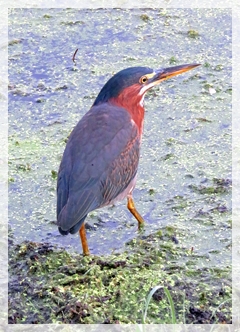
green heronEvery Tuesday, we begin our afternoon Bible study with prayer and by saying the Pledge of Allegiance to the Bible. The words we use are attributed to Homer Grice, a Southern Baptist minister, who wrote them for Baptist Vacation Bible Schools in 1925. He combined two verses from Psalm 119 into this simple vow and versions of it continue to be used by Vacation Bible and Sunday Schools, Christian homeschoolers, and even adult Bible studies. Because it reminded me of elementary school and standing by my desk with my hand across my heart, starting class with this pledge seemed rather childish at first. Once I carefully considered the words, however, I realized that saying this pledge always reminds me that the Bible is at the center of a Christian’s devotion to Jesus Christ. It was in Him that the Word became flesh and, through Scripture, God continues to speak to us today.
A pledge is a formalized promise but pledging allegiance to the Bible means more than simply promising to read it. The promise of allegiance indicates our loyalty and obedience to God’s holy word. The Bible is unlike every other book ever written—ones written to entertain, inform, explain, improve, or motivate us. Its author is God and its words are there to transform us! The Bible is more than words; it is the Word—the living breath of God. This simple pledge of allegiance reflects the importance of Scripture and its vital role in the life of a believer.

The pledge’s words mean that we honor and respect the Bible; we will let its words govern our thoughts, words, and actions. We vow that God’s words will be a lamp to light our way in this dark and difficult world so that we don’t get lost or step off His path. We promise to hide the Bible’s words in our hearts to keep us from sin (just as they did when Jesus was tempted in the wilderness). This pledge reminds us that studying God’s Word is a matter of the heart with these words: “I pledge allegiance to the Bible, God’s Holy Word. May it be a lamp unto my feet and a light unto my path and may I hide its words in my heart that I might not sin against God.”

I have hidden your word in my heart, that I might not sin against you. … Give me understanding and I will obey your instructions; I will put them into practice with all my heart. …Your word is a lamp to guide my feet and a light for my path. [Psalm 119:11,34,105 (NLT)]

Copyright ©2020 jsjdevotions. All rights reserved.

WHY PRAY?

You know what I am going to say even before I say it, Lord.… You saw me before I was born. Every day of my life was recorded in your book. Every moment was laid out before a single day had passed. [Psalm 139:4,16 (NLT)]

Satan dreads nothing but prayer. His one concern is to keep the saints from praying. He fears nothing from prayerless studies, prayerless work, prayerless religion. He laughs at our toil, he mocks our wisdom, but he trembles when we pray. [Samuel Chadwick]

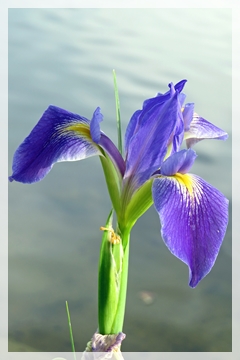
blue flag irisAs I offered prayers for a good biopsy report, it occurred to me that my prayer was too late. Already excised, the tissue had been sent to a pathologist; for all I knew, the report was written and waiting to be read by my physician. Was God going to rewrite the report? Any troublesome cells in my body had been there awhile. Most likely, the biopsy result was decided months ago so I probably should have been praying about it long before anyone knew a biopsy was needed. Since the pathologist’s report was determined long before my prayers, “Why bother to pray at all?” was the whisper of doubt in my mind.
I imagine I’m not alone in questioning the purpose and efficacy of prayer. When I question if my prayer right now can affect a report written two days ago, let alone a situation that probably has been months or years in the making, I am thinking in human terms: past, present, and future. While we can remember the past, we can only remember that which we know about, not what was hidden from us. We can see the present, but only that which is immediately in front of us and we are blind to the future. God, however, is infinite. Unlimited, He exists outside time or space. Omnipotent, He knows everything that has happened, everything that is happening now, and everything that will take place in the future. Before I was born, He knew the choices I would make, what those choices would mean, whether or not I would pray, and what I’d say in those prayers. He even knew I’d be having a biopsy, its results, and whether or not I’d pray about it. Having given me free will, He didn’t determine my choices; nevertheless, He knew the choices I’d make. Not only did He hear my prayers before I spoke them, He heard my prayers before I’d even thought about praying them.

While I know prayer changes people, I don’t know if prayer changes history. Rather than changing history, perhaps our history is already determined because God knows whether or not we will pray. Rather than changing history, perhaps prayer determines it. Did God change His mind about destroying the people of Nineveh because of their prayers? Or, even before sending Jonah to them, did He know that, having been warned, they would pray and repent so Nineveh would be spared?

Our vision is limited but God’s is not. Without twenty-twenty hindsight or a crystal ball allowing us to see the future, we’re not likely to understand the way He answers our prayers. Clearly, Jesus believed in prayer. He often prayed, taught the disciples to pray and we know of his anguished prayer in Gethsemane. God the Father knew every prayer Jesus offered, not because He determined them, but because He lives in a continuum of time and sees yesterday, today, and tomorrow as one. I think God already knows the prayers we’re going to offer tomorrow (even though we don’t) and that He has already set in motion whatever needs to be done to answer those prayers according to His will! I don’t understand how prayer works but I’m not going to allow uncertainty or doubts keep me from praying.

Let us pray!

I pray because I can’t help myself. I pray because I’m helpless. I pray because the need flows out of me all the time, waking and sleeping. It doesn’t change God. It changes me. [C.S. Lewis]

Don’t worry about anything; instead, pray about everything. Tell God what you need, and thank him for all he has done. Then you will experience God’s peace, which exceeds anything we can understand. His peace will guard your hearts and minds as you live in Christ Jesus. [Philippians 4:6-7 (NLT)]

Copyright ©2020 jsjdevotions. All rights reserved.

WE’VE BEEN WARNED

So you, too, must keep watch! For you don’t know what day your Lord is coming. Understand this: If a homeowner knew exactly when a burglar was coming, he would keep watch and not permit his house to be broken into. You also must be ready all the time, for the Son of Man will come when least expected. [Matthew 24:42-44 (NLT)]

He will come again to judge the living and the dead. [The Apostles’ Creed]

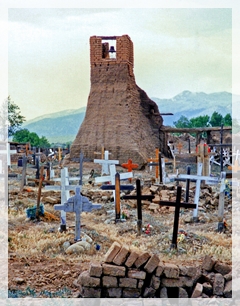
Taos NM In an attempt to avoid the day’s heat, I went walking immediately after breakfast, leaving the bed unmade and the dishes on the counter. Thinking I would tend to the bedroom and kitchen later in the day, I cleaned the lanai when I returned home. Just as I was finishing up, the gate house called: I had unexpected guests! One of my visitors is a “neatnik” and nothing about me or the house (except for the lanai) was neat or clean. In the few minutes between the gate’s call and their arrival, I managed to pull up the bedspread, throw the dishes in the sink, wipe the counter, slip on a fresh t-shirt, put on lipstick and don a baseball cap. I was thankful for the advance call that gave me just enough time to make things semi-presentable.

At least I had a few minutes warning to straighten up; we won’t get that much time when it really matters! The day of Christ’s second coming will be sudden and unexpected, with no cautionary alarms. While there will be signs, many people won’t understand them and most won’t heed them. There will be no call from the gatehouse asking if we want to give Him entry! We’ve been amply forewarned in Scripture; let’s not plan on an extra five minutes to clean up our act!

Putting aside the question of Judgment Day, how prepared are we for our own last day here on earth? Some of us may linger under Hospice care and be painfully aware of death’s imminence, but many will get little or no warning. Tornadoes hit, aneurysms burst, cars run red lights, and a heart attack can turn a wife into a widow within minutes. Even those with health issues often ignore the inevitability of death and many seniors act as if they’re immortal. They have no wills, powers of attorney, or advance healthcare directives and refuse to discuss funeral plans or decide which grand might like a special piece of jewelry. “There’s time enough for that later,” they say. The clock is ticking; how much warning do any of us need?

There are, however, far more important decisions than what songs will be sung at our funeral or who will get our things—decisions that need to be made now. Are we followers of Christ or not? When our final day comes, we won’t get an opportunity to discuss the options or make things right. When that last day arrives, there may be no warning: no opportunity for frenzied prayers and last minute repentance. We shouldn’t wait until the eleventh hour to choose God; after all, we could die at 10:30!

One of two things you must do; you must either receive Him or reject Him. You receive Him here and He will receive you there; you reject Him here and He will reject you there. [D.L. Moody]

None of us can hold back our spirit from departing. None of us has the power to prevent the day of our death. There is no escaping that obligation, that dark battle. And in the face of death, wickedness will certainly not rescue the wicked. [Ecclesiastes 8:8 (NLT)]

Copyright ©2020 jsjdevotions. All rights reserved.

THE RICH YOUNG MAN

The disciples were astounded. “Then who in the world can be saved?” they asked. Jesus looked at them intently and said, “Humanly speaking, it is impossible. But not with God. Everything is possible with God.” [Mark 10:26-27 (NLT)]

great blue heronThe book of Daniel makes reference to the resurrection of both the wicked and righteous, with the destiny of the one being shame and disgrace and the other being everlasting life. By the time of Jesus, many Jews believed in some sort of eternal life and that it would come by obedience to the Law. Matthew, Mark, and Luke tell of the rich young man who asked Jesus what good deed he must do to have eternal life. He wanted Jesus to check his resume of good works and, if found lacking, to give him a task that would assure his immortality.

Before answering, Jesus clarified that goodness only comes from God rather than things or actions and then told the man to keep the commandments. As if some were more important than others, the man asked which ones. After listing several commandments dealing with man’s relationship with man, Jesus summarized with the command to love your neighbor as yourself. The man proudly responded that he obeyed them all. Had he been truly honest about himself, he would have admitted his inability to keep the law perfectly and acknowledged that he couldn’t attain eternal life on his own merit. But, sure his ticket to eternity was safe in hand, the man asked what else he should do. When Jesus told him what needed to be done to be “perfect,” He didn’t mean faultless; the Greek word translated as “perfect” means goal or end. So, to achieve or perfect his goal of eternal life, Jesus told him to sell all of his possessions, give the money to the poor, and follow Him. Hearing this, the rich young man departed. In spite of his claims, he clearly didn’t love his neighbor as himself.

At first, it seems odd that Jesus didn’t mention the first four commandments—the ones having to do with man’s relationship to God. But Jesus could see into the man’s heart and knew the man loved his wealth far more than God or his neighbor. So, after he claimed to love his neighbor, Jesus asked him to put his money where his mouth was by giving his wealth to his neighbor!

That Jesus gave the rich man a requirement wasn’t unusual for a rabbi. When prospective students came to study with rabbis, the teachers often gave them a condition as a way of weeding out those students who really weren’t serious. The young man, however, hadn’t come to our Lord to learn; he’d come to be commended for his righteousness!

When people read this story, they often fear that it means Christians must live a life of poverty, but Jesus wasn’t setting financial requirements for salvation. His demand merely revealed what was in that rich man’s heart. He loved himself and his possessions far more than God or his neighbor. Although this encounter demonstrates the implications of discipleship, it never demands that we sell our possessions or live a life of asceticism. Jesus wasn’t teaching salvation through philanthropy; He was demanding that God be first place in our hearts.

Obedience to the commandments does not qualify any of us for eternal life; there is nothing we can do to merit the gift of salvation and eternal life. That only comes by grace through faith. Nevertheless, obedience to the commandments—loving God and loving our neighbor—is evidence of our faith. Is there something more important to you than loving God? What would Jesus ask you to relinquish? Do you love Him enough to do it?

Jesus replied, “‘You must love the Lord your God with all your heart, all your soul, and all your mind.’ This is the first and greatest commandment. A second is equally important: ‘Love your neighbor as yourself.’ The entire law and all the demands of the prophets are based on these two commandments.” [Matthew 22:37-39 (NLT)]

Copyright ©2020 jsjdevotions. All rights reserved.