THE LEIDENFROST EFFECT

I praise God for what he has promised. I trust in God, so why should I be afraid? What can mere mortals do to me? [Psalm 56:4 (NLT)]
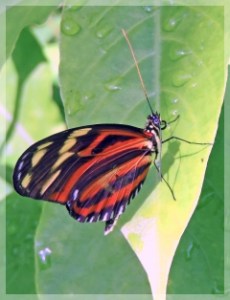
leidenfrost effect

Two businessmen were touring a foundry. When they entered the smelting area with its vats of molten metal, their guide said it was possible to safely pour that hot metal over someone’s hand if the hand was first dipped into water. When he asked if either gentleman cared to give it a try, the first man said, “I’ll just take your word for it.” The second man agreed and dipped his hand in a tub of water. When the molten metal was poured over the wet hand, it streamed off without causing him pain or injury. Although the first man said he believed the guide, the second one showed his faith in the man by acting on his belief.

Because of something called the Leidenfrost Effect, you really can dip your hand into water and then pour a stream of molten metal over it without pain or injury; a tiny layer of steam would insulate and protect your damp hand from the hot metal. Just because we could do it, however, doesn’t mean we should. The effect is short lived and I don’t suggest trying it at home!

I understand the Leidenfrost Effect and have seen it demonstrated; in theory, I believe in it. In actuality, however, I’d never trust it enough to give it a try! I’m like the Israelites during the Exodus. Although they witnessed God’s power over and over again in the plagues God visited on Egypt and when they safely crossed the Red Sea, saw the defeat of Pharaoh’s army, drank sweet water that once was bitter, gathered both quail and manna from heaven, and saw water spring from a rock, they continued to doubt. In spite of God demonstrating the truth of His promises throughout their journey, the Israelites spurned the God of miraculous provision while camped at Kadesh by refusing to enter Canaan, the land He’d promised to them. How much proof did they need that God would be true to them? Sometimes, even seeing isn’t enough to truly believe and trust.

It’s easy to have faith when the outcome is known. Our challenge is to believe and trust when the outcome is unknown or there is an element of risk, such as third degree burns or formidable foes. Because the power to believe a promise depends on our faith in the one who makes the promise, I wouldn’t have trusted the factory guide enough to put my wet hand under molten metal and, without trusting that God would be true to His promises, the Israelites wouldn’t obey Him!

Unlike the Israelites, do we have faith in the One who guides us through life? In the end, the difference between intellectual belief and actual faith is a willingness to take action: to step out in obedience. We have more proof of God’s faith, love, and power in Scripture than all the YouTube videos about the Leidenfrost Effect. Yet, there are many who probably would place their damp hands under molten metal before trusting their unknown fate to a known God! Isaac Watts said, “I believe the promises of God enough to venture an eternity on them.” What about you? Who do you trust? In whose hands have you rested your fate?

God never made a promise that was too good to be true. [Dwight L. Moody]

For the word of the Lord holds true, and we can trust everything he does. [Psalm 33:4 (NLT)]

Let us hold tightly without wavering to the hope we affirm, for God can be trusted to keep his promise. [Hebrews 10:23 (NLT)]

Copyright ©2020 jsjdevotions. All rights reserved.

“IN” NOT “OF”

I have given them your word. The world hated them, because they are not from the world, just as I am not from the world. I’m not asking that you should take them out of the world, but that you should keep them from the evil one. [John 17:14-15 (NTE)]

wild geraniumAlthough we’d originally planned on a birthday dinner out with friends, we ordered a take-out lunch, did curbside pickup, and celebrated by ourselves at an isolated picnic table in the park. Coronavirus meant that disinfectant wipes and hand sanitizer joined us instead of friends and family.
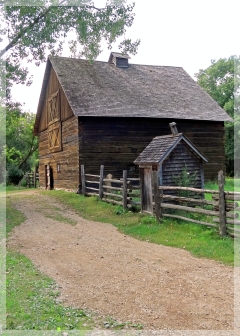
Yesterday was shopping day and my husband was at the grocery at 7:00 AM before most shoppers have gotten out of bed! He wore a face mask, observed social distancing guidelines, and frequently used hand sanitizer and bleach wipes. Upon his return, he showered while his clothing and mask were washed. I quarantined the boxed and canned goods on the floor of the spare bedroom, washed the produce, and disinfected the cold items before putting them into the refrigerator. Attempting to avoid contamination, there was a continual cycle of disinfecting and hand washing until everything was stowed. It’s probably overkill, but we don’t want COVID-19 to enter our home through carelessness. As I carefully disinfected the faucet, sinks, refrigerator, door knobs, kitchen counters and washed my hands yet again, I wondered if we’re as careful about keeping sin out of our lives as we are about this virus. While both are invisible, sin is even more devastating and deadly than any disease and, regardless of our age or underlying health, we’re all equally vulnerable!

We often hear it said that Christians are “to be in the world but not of the world.” Jesus wasn’t a recluse who spent the day exclusively in prayer and study. He walked, talked, taught, healed, and even socialized in the world with both the righteous and sinful, hypocrite and sincere, Jew and Gentile. Even though He was in the sinful world, however, Jesus was not of the world because He never allowed sin to contaminate Him. The vast majority of us are called to go out into the world as did Jesus rather than retreat to a contemplative monastic life. It is only when we are in the world that we can reach out to witness, teach, serve, share, heal, and love. It is only by being in the world that we can be Christ’s ambassadors: His hands and feet. But, once in the world, like Him, we are not to become part of it.

Some people describe being “in the world but not of it” like being in a boat on the water but making sure the water doesn’t get into the boat. I think it’s a bit like trying to function during a pandemic without getting infected. Of course, just as being incautious during a pandemic makes infection more likely, the more we splash around in the water, it’s more likely that some of that water will spill into the boat! It is only through God’s guidance that we can determine the line between in and of.

Jesus doesn’t want us to be contaminated by the sins of the world any more than we want to be contaminated by COVID! Are we as vigilant about avoiding dicey tempting situations as we are about crowds? Are we as wary of the media we allow into our homes as we are about packages and groceries? Are we as cautious about staying away from sin as we are about remaining six-feet away from our friends and neighbors? Do we shield ourselves from sin as readily as we don a face mask? Are we as careful about not contaminating ourselves with immorality as we are about not touching the grocery cart before it’s been disinfected? Do we wipe bad thoughts from our minds as thoroughly as we clean our kitchen counters? Are we as attentive to our prayers as we are about washing our hands?

Right now, we live in a hostile viral environment but we also live in a hostile sin-filled world. N95 masks, disinfectant wipes and hand washing won’t protect us from our most treacherous enemy: Satan. As careful as we might be about our exposure to COVID-19, what are we doing about reducing our exposure to the sins of the world? What kind of social distancing are we practicing when it comes to our real enemy?

What’s more, don’t let yourselves be squeezed into the shape dictated by the present age. Instead, be transformed by the renewing of your minds, so that you can work out what God’s will is, what is good, acceptable and complete. [Romans 12:2 (NTE)]

The warfare we’re engaged in, you see, isn’t against flesh and blood. It’s against the leaders, against the authorities, against the powers that rule the world in this dark age, against the wicked spiritual elements in the heavenly places. [Ephesians 6:12 (NTE)]

Copyright ©2020 jsjdevotions. All rights reserved.

HARD HEARTS (Soil – Part 1)

A farmer went out to plant his seed. As he scattered it across his field, some seed fell on a footpath, where it was stepped on, and the birds ate it. [Luke 8:5 (NLT)]

old world wisconsinIn the gospels of Matthew, Mark and Luke, we find Jesus telling the parable of the four soils in which the farmer’s seed falls on four types of ground and yields four different results. Although the same good seed is sown over the entire field, only one kind of soil will yield a good crop. Jesus isn’t giving a lesson about agricultural practices; the seed that is sown is God’s word and the soils represent the different responses we have to God’s word. The lessons taught are both for the sowers—those who teach, preach, or witness—and for the soil—the people who hear the Word.
Some of the farmer’s seed falls along a footpath. There the soil is packed down so hard that the seed can’t take root. At first, it seems like the farmer is at fault, but he was doing what farmers did at the time—sowing before plowing. In Jesus’ day, farmers’ plots were small and adjacent to one another’s plots. Wanting to avoid stepping on growing plants, there were pathways between the fields used by the farmers. As the farmer walked along the path, he’d scatter seeds with a broad sweeping motion of his hand. Inevitably, some seed would land on the footpath between the fields. Heavily used and neither plowed nor fertilized, its soil was hard packed and nothing would grow on it.

 It’s not enough for the word to be heard any more than it is for seed to fall on hard ground. In Scripture, faith and belief are products of the heart. Just as seed must germinate to grow, the Word must be accepted, but a hard heart, like hardened soil, cannot receive God’s word. Instead of birds, it is Satan who snatches the Word away.

We know what makes a footpath hard but what hardens hearts? I think of Herod Antipas who married his half-brother’s wife (forbidden by Mosaic Law). When John the Baptist denounced Herod’s illegal marriage, Herod arrested and imprisoned the prophet at his wife’s urging. Scripture, however, tells us that Herod respected John and liked to listen to him but, not wanting to recognize his own sin and repent, Herod didn’t allow John’s word to change him. Unrepentant sin caused both Herod’s and Herodias’ hearts to harden enough that John died a gruesome death.

In Pharaoh’s case, it was pride and arrogance that hardened his heart to the powerful God of the Israelites. It was setbacks and disappointments that hardened the heart of the Israelites when camping at Meribah. Ignoring God’s previous provision, the ungrateful people quarreled with Moses over the lack of water. Hearts can harden in times of prosperity, as well. God sent Jeremiah, Ezekiel, Hosea, and Zechariah to warn Israel and Judah about their hard hearts and the coming of God’s judgment but they didn’t change their ways. Distractions like fear and blame can cause hearts to harden enough for Satan to snatch away God’s word. Twice Scripture describes the hearts of the disciples as being “too hard to take it in” when they failed to let Jesus’ miracles of abundant provision grow into faith in His power. [Mark 6:52,8:17]

Hardened hearts dull our ability to perceive and understand God’s message, blind us to the value of the gospel, and keep us both ignorant of God and alienated from Him. As hearers of the Word, we must not let the enemy harden our hearts and, as sowers, we must keep spreading the seed; whether or not it is accepted is up to the soil! The good news, however, is that even the hardest soil can be broken and even the hardest heart can be softened.

Hardness of heart evidences itself by light views of sin; partial acknowledgment and confession of it; pride and conceit; ingratitude; unconcern about the word and ordinances of God; inattention to divine providences; stifling convictions of conscience; shunning reproof; presumption, and general ignorance of divine things. [Matthew George Easton]

Their minds are full of darkness; they wander far from the life God gives because they have closed their minds and hardened their hearts against him. [Ephesians 4:18 (NLT)]

Copyright ©2020 jsjdevotions. All rights reserved.

FORTITUDE

Let’s not get tired of doing what is good, for at the right time we will reap a harvest—if we do not give up. [Galatians 6:9 (ISV)]

Consider it pure joy, my brothers, when you are involved in various trials, because you know that the testing of your faith produces endurance. But you must let endurance have its full effect, so that you may be mature and complete, lacking nothing. [James 1:2-4 (ISV)]

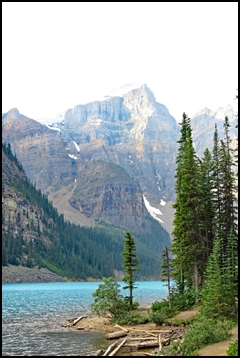
Moraine Lake - CanadaYesterday, I wrote about the sin of sloth, a sort of spiritual weariness; fortitude is considered its contrasting virtue. Taken captive in 605 BC and forced to trudge the 500 miles from Jerusalem to Babylon, Daniel is an example of fortitude. He lost his home, family, name, language, culture, nation, and possibly his manhood but the one thing he never lost was his faith in God. From the moment he arrived in Babylon, Daniel refused to compromise his principles by refusing to defile himself with prohibited food. Sixty-six years later, he was still determined to stay true to God. In spite of knowing he would be thrown to the lions for his actions, he ignored the law prohibiting praying to anyone but King Darius. Instead, Daniel opened his windows and, as he’d “always done,” prayed to the one true God while offering thanks and asking for God’s help. [Daniel 6:10-11]
A pastor friend was in her fifties when God called her to the ministry. After completing her Lutheran seminary studies and internship, she met all the additional ordination requirements except one: she needed “a call” or placement in a Lutheran church. Although she’d received a call and felt confident it was God’s plan, a problem remained. Caught in a sort of “catch-22,” the call was from a Methodist church for an ordained minister but she couldn’t be ordained without accepting a call from a Lutheran church! Urging her to be patient, the bishop assured her that the Methodists and Lutherans soon would come to a “full communion” agreement so her position with the Methodists would qualify as the required call. The wheels of bureaucracy moved slowly and the Bishop’s promise of “soon” dragged into years. While she worked in Christian education for the Methodist church, my friend was not yet ordained and her dream of becoming a pastor had been put on indefinite hold. In God’s time, however, the Lutherans and Methodists became full communion partners which, among other things, meant they could exchange clergy. Four years after her seminary graduation, my pastor friend was ordained by a Lutheran bishop in the Methodist church. It would have been faster to leave the right church (but “wrong” denomination) in search of the “right” denomination (but wrong church), but she didn’t. Instead, she exhibited fortitude by trusting God and staying where He put her.

Fortitude is not a word we use much today. The Roman Catholic Catechism calls it “the moral virtue that ensures firmness in difficulties and constancy in the pursuit of the good. It strengthens the resolve to resist temptations and to overcome obstacles in the moral life.” Our spiritual backbone, fortitude is a combination of endurance, courage, perseverance, strength, and faith. Simply put, fortitude is the grace God gives us when we so desperately need it.

As did my pastor friend several years ago, we’re probably asking, “How long?” We’re not the first ones to ask that question. It had to have been asked multiple times when a few years of refuge in Egypt turned into 400 years and slavery, an 11 day trek across the desert stretched into 40 years, 15 difficult years passed between David’s anointing and his kingship, Job’s suffering seemed to have no end, and Judah’s Babylonian captivity lasted 70 years. Rather than wondering, “How long?” let us pray as did Daniel: by offering thanksgiving and asking for God’s help. May God clothe us with fortitude and fortify us with His strength.

She clothes herself with fortitude, and fortifies her arms with strength. [Proverbs 31:17 (ISV)]

Copyright ©2020 jsjdevotions. All rights reserved.

A TERRIBLE TEMPTATION

O Lord, how long will you forget me? Forever? How long will you look the other way? How long must I struggle with anguish in my soul, with sorrow in my heart every day? How long will my enemy have the upper hand? [Psalm 13:1-2 (NLT)]

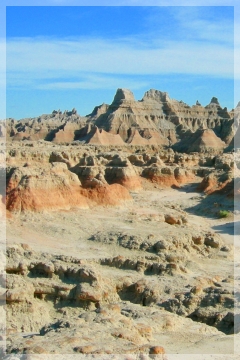
The BadlandsWhile some of us may have become couch-potatoes during his time of sheltering in place, that’s not truly the sin of sloth. Thought of as one of the seven “deadly sins,” sloth originally was two sins: acedia (meaning absence of care) and trisitia (meaning sorrow). A 4th century monk, Evagrius of Ponticus, listed them (along with gluttony, lust, greed, anger, vainglory, and pride) as the “terrible temptations” of life. Acedia and sadness were seen as particularly dangerous threats to the ascetic life of a monk living in the Egyptian desert, as was Evagrius. The monks easily could grow despondent, lonely, weary or discontented as they prayed, fasted, and labored in their harsh and isolated setting.
While not in a desert monastery, the new normal of COVID-19 can seem as desolate as one and tempt us with sloth’s spiritual lethargy. With the pandemic’s disruption of routine—the unstructured time, depressing news, monotony, isolation, financial challenges, uncertainty, and loss of purpose and community—acedia and tristia can set in as it did for those ancient monks. We may experience worry or fear, dullness to our prayers, emptiness in our hearts, unproductive study, an inability to give thanks in all things, and even apathy toward God’s word. Joy can seem but a distant memory.

Unlike wrath, lust or greed, sloth is subtle and difficult to spot until it has taken hold. During a dark time several years ago I struggled with sloth. Calling it compassion fatigue, I was emotionally spent and felt hopeless, discouraged, and despondent. I imagine I’m not the only person facing this “terrible temptation” again today.

Jesus told us the most important commandment was to love God but sloth keeps us from doing that. It makes us focus on ourselves and our emptiness rather than God and His abundance. When discussing this sin, the Catechism of the Catholic Church explains that “spiritual sloth goes so far as to refuse the joy that comes from God.” Sloth’s rejection of God’s gift is like a slap in His face—it’s no wonder Evagrius called it a “terrible temptation.”

David’s psalms indicate that he frequently experienced spiritual emptiness. In Psalm 13, we find him asking God, “How long?” not once, but four times in a row! Having lost the sense that God was there, life felt like an endless struggle; troubled and discouraged, he’d begun to doubt God’s plan. Yet, after asking God to “restore the sparkle to my eyes,” [13:4] he finished the psalm with words of trust and even joy.

In times like these, the enemy tries to steal our zeal, keep us from experiencing the joy of the Lord, and sabotage our sense of purpose with spiritual lethargy and inner emptiness. Whether or not sloth will be allowed to linger, however, is our choice. Like David, let us trust in God (even when it seems He isn’t there) and persevere in praying for relief from our emptiness and despair. He will restore the sparkle to our eyes!

But I trust in your unfailing love. I will rejoice because you have rescued me. I will sing to the Lord because he is good to me. [Psalm 13:5-6 (NLT)]

The Lord is my strength and shield. I trust him with all my heart. He helps me, and my heart is filled with joy. I burst out in songs of thanksgiving. [Psalm 28:7 (NLT)]

Copyright ©2020 jsjdevotions. All rights reserved.

FOLLOW ME

Then he said to the crowd, “If any of you wants to be my follower, you must give up your own way, take up your cross daily, and follow me. [Luke 9:23 (NLT)]

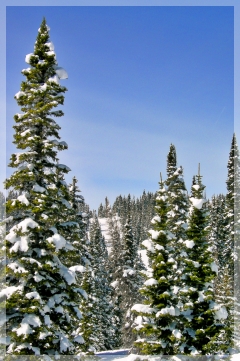
steamboat springs ski areaIt’s been five years since I’ve skied but I still remember that the three scariest words I ever heard when on the slopes were, “Follow me, Nonnie!” My grands loved to venture off the groomed runs into the bumps and through the woods. On my own, I never would have chosen to leave the main trail but, because I loved those little guys, I faithfully followed behind as they maneuvered between the trees and over the moguls.

Although my grands boogied joyfully off trail, I was far more hesitant. The children’s perspective was far different than mine. As they snaked through the trees, they saw the openings between them but my tendency was to focus on the pines blocking my path rather than the gaps between them. Seeing the moguls as fun friends rather than evil enemies, my grands stayed relaxed and loose and absorbed the bumps they encountered. On the other hand, seeing the moguls as adversaries, I stiffened in anticipation of trouble. Moreover, the little guys weren’t afraid of falling and, when they did, they just laughed, picked themselves up, and continued downhill. Although I rarely fell, my mind was filled with all the “what ifs” of falling: embarrassment, injury, or worse!

Life is a lot like skiing off trail into the heavy powder, bumps and trees. We can choose to see the difficulties in front of us rather than notice ways to get beyond them. If we keep our eyes focused on God, He’ll show us the way through, between or around the obstacles of life. Instead of stiffening up when we see the bumpy challenges ahead, we can choose to remain flexible and ready to absorb the impact when jolted around by life. When we trust God, He’ll give us the strength and ability to get through the moguls on life’s trail. We can be afraid of falling, humiliation or failure, or accept that missteps, disappointment, and loss are part of life. Resting secure in God’s love when we follow His ways, we won’t be afraid of crashing.

If I hadn’t followed my grands when they called, I would have missed some of the best times I’ve had with them. Enduring moguls, sore knees and occasional face plants in the snow were worth it. Our Heavenly Father has more in store for us than some thrills while skiing off trail. We certainly don’t want to miss all that He has to offer simply because we’re afraid of a few bumps and tumbles! Trust Him; He’s got a great plan. Just be sure to follow Jesus when he calls. Like skiing with the grands, it will be worth it when you do!

Jesus spoke to the people once more and said, “I am the light of the world. If you follow me, you won’t have to walk in darkness, because you will have the light that leads to life.” [John 8:12 (NLT)]

My sheep listen to my voice; I know them, and they follow me. [John 10:27 (NLT)]

Copyright ©2020 jsjdevotions. All rights reserved.