
For I can do everything through Christ, who gives me strength. [Philippians 4:13 (NLT)]
 “What would you do if you knew you could not fail?” the bumper sticker asked. That’s the sort of query that used to be posed to beauty pageant contestants. Their answers typically had to do with curing cancer, attaining world peace, or solving the problems of illiteracy, poverty and hunger. Of course, we’d all like to be able to wave a magic wand and solve the world’s difficulties. Unfortunately, it’s not that easy.
The question, however, continued to intrigue me. Is there something I would do if there was absolutely no possibility of failure? Would I even want to? Would there be joy in achievement if there were no struggles, no hurdles to jump and no problems to solve? There’s no sense of victory in playing a game when the opponent doesn’t present a challenge. The value of a diploma would be cheapened if we never had to study for final exams. The sense of satisfaction at a job well done would be diminished if we never had the possibility of failure. Failure is part of God’s training plan. The risk of failure brings us closer to God and reminds us that we can do nothing without faith in Him.
When Paul wrote the Philippians that he could do all things through Christ, did he mean he would be successful in every endeavor? Rather than a statement of self-reliance or guaranteed success, Paul was declaring his reliance on Christ. He wasn’t denying the possibility of adverse circumstances or failure; he was affirming his faith.
If we knew we couldn’t fail in an endeavor, we’d have no need for faith. Furthermore, the possibility of success or failure should never keep us from obediently following God’s direction. While the risk of failure should never stop us, lack of faith will. As long as His Spirit is in us and we are walking in His footsteps, whether we succeed or fail, we will not fail the test of faith!
What would I do if I knew I couldn’t fail? Exactly what I’m doing now—sometimes successfully and other times not, but always in obedience to Him.
Our greatest fear should not be of failure but of succeeding at things in life that don’t really matter. [Francis Chan]
 In the New Testament, the Greek word commonly translated as “worship” is proskyneō. While it came to mean kneeling down, prostrating oneself, showing reverence toward, and worshiping, its roots are thought-provoking. Coming from the Greek pro (to or toward) and kyneō (to kiss), its literal meaning is “to kiss towards!” Knowing his Greek, a pastor said of proskyneō: ”I like to think of our worship in church as being sons and daughters of God blowing kisses to our Father.” I thought of his words when I welcomed the kisses my children and grands blew to me on our recent Zoom call.
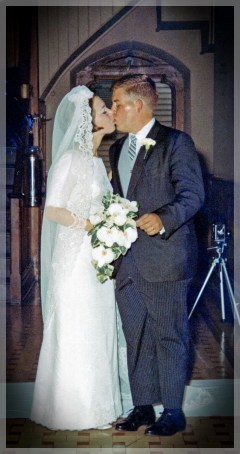 While being in lockdown for months may have given some couples a chance to reconnect, that connection wasn’t welcomed by all. Once their mandatory 10-week lockdown was lifted, Italian lawyers reported a 30% surge in couples starting divorce proceedings and both China and Saudi Arabia showed a similar rise when couples emerged from quarantine. For some couples, 24/7 togetherness for weeks on end exacerbated typical martial issues like money, housework, drinking, child care, screen and phone time, and dirty dishes in the sink. With the additional stressors of homeschooling, job loss or working at home, apprehension about the future, and trying to navigate safely in a COVID-19 world, even the best marriages have been tested.
 “Work expands to fill the time available for its completion,” is what’s known as Parkinson’s Law. Writing those words in 1955, Parkinson wasn’t talking about deadlines; he was taking aim at the British Civil Service and government bureaucracies that become less efficient as they increase in size. Nevertheless, later studies have shown that without strict time constraints, we tend to waste time and work takes longer than necessary to complete.
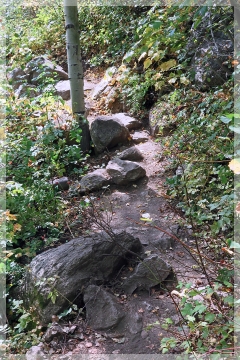 In an article about how our post-pandemic new normal will evolve, the author suggested a process for businesses to identify what needs changing in their post COVID-19 world. As a way of illustrating their method, there was an aerial photograph of a college campus quad. Before designing the walkways for this large green area surrounded on four sides by university buildings, the landscape architects simply sodded the field and observed how the students used the grassy expanse. After a while, the beaten down grass indicated the students’ preferred traffic patterns and it was on those favored paths that they finally placed paved walkways. At first glance, the asymmetric sidewalks seemed random but, once the process was explained, the strange arrangement of paths made sense. It was easy to see how they accommodated people’s tendency to take shortcuts and cut across corners.
 Although God passed along some very detailed commands, the people of Israel frequently refused to obey them and, in Judges 17-18, we see what happens when people do whatever seems right in their own eyes. After stealing 1,100 pieces of silver from his mother, Micah hears her curse the thief. Fearful of her curse, he confesses and returns the money. After blessing Micah to remove the curse, his mother dedicates the money to the Lord. In honor of her thieving son, however, she gives 200 of those coins to a silversmith for the fashioning of an image (a figure carved from wood overlaid with silver) and an idol (a figure cast from molten silver). Micah then sets up a shrine for the prohibited items, adds some household idols of his own, makes an ephod (a priestly garment), and installs his son as his own personal priest. This was wrong in so many ways: not only were people expressly forbidden from making either carved images or molten idols but only a Levite could serve as a priest!
