Then Jesus told them, “A prophet is honored everywhere except in his own hometown and among his own family.” And so he did only a few miracles there because of their unbelief. [Matthew 13:57-58 (NLT)]
 Although Jesus performed many miracles, when compared to the illusions performed by various well-known magicians, they aren’t all that impressive. Jesus emerged from the tomb on the third day but David Blaine buried himself alive in a plexiglass coffin under a 3-ton water-filled tank for seven days and nights! Calling Lazarus out of the tomb after several days was impressive but only his family and some mourners were there to see it. When David Blaine emerged from the 6-ton block of ice in which he’d been encased for over 63 hours, thousands in Times Square were there and even more watched it on television. Granted, Blaine fell short of his 72-hour goal but the man knows how to draw crowds! Couldn’t Jesus have done something similar?
The disciples saw Jesus walk on water but magician Criss Angel did the same thing on national TV. Jesus appeared in a locked room after His resurrection but Criss Angel has passed through a glass window (without breaking it) and both a metal door and an iron gate. Jesus had Peter take a coin out of a fish’s mouth but David Blaine turned a cup of coffee into a cup of money. Feeding several thousand with a boy’s lunch pales in comparison to David Copperfield making the 225-ton Statue of Liberty disappear. Quietly transforming water into wine isn’t nearly as impressive as illusionist Cyril Takayama removing his head or David Copperfield making an airplane disappear.
Of course, the difference between Jesus and those magicians is that the men are mere illusionists and Jesus was God. Those magicians and their tricks only seem miraculous because we don’t understand how they’re done. Miracles done by Jesus had nothing to do with misdirection, deception, trickery, or sleight of hand. Without worldly explanation, they truly were supernatural. Nevertheless, wouldn’t Jesus have gathered more followers if He’d been more of a showman?
Couldn’t Jesus have done something more dramatic and remarkable in Nazareth than a few healings and a display of wisdom in the synagogue? People unimpressed by his background might have been awestruck if He’d made a camel disappear, pulled shekels from children’s ears, or cut a disciple in half. No matter how spectacular the miracles, however, the people’s skepticism would have blinded them to His message. The lack of belief in Nazareth didn’t mean Jesus couldn’t perform miracles; it simply meant He wouldn’t because there was no point. Some people are unwilling to believe no matter what they see.
The magician’s end purpose is to create illusions for money, fame, and entertainment—none of which were Jesus’ purpose. He performed miracles only out of compassion, to illustrate a lesson, or to establish his credentials as God. Frequently, He even asked people to say nothing about them. Miracles were a small part of His ministry because Jesus knew that miracles alone make a poor basis for faith.
Jerusalem was filled with people that Passover week some 2,000 years ago. Surely some of the populace there had been fed by Him, received his healing touch, or witnessed Him perform a miracle or two. If they hadn’t been eyewitnesses, many more had heard about His miracles. Nevertheless, on that Friday when Pilate asked if he should release Barabbas or Jesus “who is called Christ,” we don’t read of anyone in the crowd trying to drown out those who called for the release of Barabbas. They weren’t calling for Jesus because seeing was not enough to make them believe.
Men can see the greatest miracles and miss the glory of God. What generation was ever favored with miracles as Jesus’ generations was? Yet that generation crucified the Son of God! [Tom Wells]
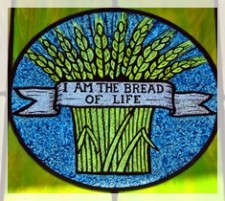
 Matthew and Mark tell of a second time Jesus fed a multitude. Jesus had been north of Galilee in Tyre and Sidon before going south to the Sea of Galilee and on to the region of the Ten Towns or Decapolis. Once there, a huge crowd assembled and set up camp around Jesus as He healed and preached. After three days on the hillside, the crowd ran out of provisions and Jesus voiced His concern. Just like the first time they were faced with a hungry crowd, the disciples don’t know what to do, even though the solution was standing right in front of them. After they found seven loaves and a few fish, Jesus miraculously turned that into a feast for 4,000 men (plus women and children) with seven large reed baskets of food remaining!
 Other than His resurrection, the feeding of the 5,000 is the only one of Jesus’ miracles recorded in all four gospels. Wanting some quiet time, Jesus and the disciples went by boat to a remote area near Bethsaida. Because the crowd followed them, Jesus spent the rest of day healing and teaching. When the disciples asked Jesus to send the people home so they could eat, Jesus said to feed them. All four accounts agree that only five loaves and two fish were available, that 5,000 men (along with women and children) ate as much as they wanted, and that the left-overs filled a dozen wicker hand-baskets.
 Last week, a devotion I read asked, “What is the worst sin?” How would you answer it? While the “Seven Deadly Sins” (pride, greed, lust, envy, gluttony, wrath, and sloth) are all wrong, I’m not sure they belong at the top of the list. Would it be idolatry, murder, stealing, or adultery? What about the heinous sins of mass murder, genocide, torture, or the abuse of children?