

For everyone has sinned; we all fall short of God’s glorious standard. Yet God, in his grace, freely makes us right in his sight. He did this through Christ Jesus when he freed us from the penalty for our sins. For God presented Jesus as the sacrifice for sin. People are made right with God when they believe that Jesus sacrificed his life, shedding his blood. [Romans 3:23-25 (NLT)]
I thought of Mr. Fearing in John Bunyan’s allegory The Pilgrim’s Progress when a friend told me about her mother who was nearing the end of her life. Although a Christian, she believed there was something in her distant past for which she couldn’t be forgiven. Even though her family reassured her that Jesus died for her sins and God is faithful to His promises, she still seemed fearful of taking that final journey home.
In Bunyan’s tale, Mr. Fearing’s story is told by his guide to the Celestial City, Mr. Great Heart. Even though Fearing escaped the Swamp of Despondence, he seemed to carry that despondence in his mind everywhere he went. When Fearing came to the gate where it said, “Knock and the door will be opened to you,” he was afraid to knock. Sure that he was unworthy of entrance, he stood back and allowed others to take his place whenever the door opened. When he eventually had the gumption to timidly knock, Fearing fainted in unbelief when the door was opened for him.
Accompanied by Mr. Great Heart, Mr. Fearing continued on his journey. He effortlessly hiked straight up the Hill of Difficulty, showed no fear when he encountered lions, and easily walked down into the Valley of Humiliation. When the travelers had to pass through Vanity Fair (a place ruled by Beelzebub and filled with evil temptations), Mr. Fearing had no difficulty staying on the Way and, while others fell asleep in the Enchanted Ground (the land of spiritual lethargy), Fearing stayed alert. But, believing himself unworthy of God’s grace, his shame kept him from enjoying the blessings God provided on the journey and caused him to be afraid of death and the journey’s end.
Mr. Fearing wasn’t afraid of difficulties, danger, or challenges to his faith but, because he had doubts about his welcome in the Celestial City, he was terrified of death and Hell. His fear was that of his final acceptance—that God would reject him! Sure that he’d drown and never see the face of the King he’d traveled so far to meet, he was afraid to cross the River of Death: the only way to the Celestial City. Both Fearing and my friend’s mother eventually crossed that river and were welcomed because all of their sins had been forgiven.
As Good Heart related the story of Mr. Fearing to Christiana and her fellow pilgrims, they shared their fears about their own salvation—fears that many of us may share. Bunyan experienced this same fear; in his autobiography, he said that early in his conversion Satan tempted him to unbelief by declaring his sins unpardonable. Bunyan’s reply to the enemy simply was, “Well, I will pray.”
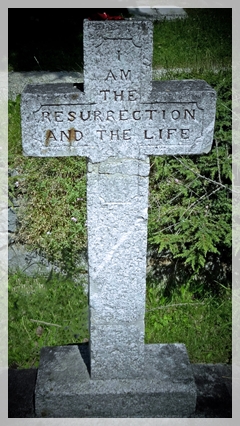
Indeed, it’s difficult to believe in God’s extravagant grace: that, as soiled and unworthy as we are, we’ve been washed clean in the blood of the Lamb. Let us remember—the burden of our sins fell off at the foot of the cross! God didn’t sacrifice His son for us because we deserved it; He did out of love for us! Jesus Christ died for us while we were still sinners, not saints! When we fear our welcome in God’s heavenly realm, let us do as did John Bunyan: let us pray!
 First published in 1678, John Bunyan’s The Pilgrim’s Progress is the second best-selling book of all time (the first being the Bible). In this religious allegory, the reader follows the adventures and trials of Christian (Part I) and his wife Christiana and their children (Part II) as they journey from the City of Destruction toward the Celestial City.
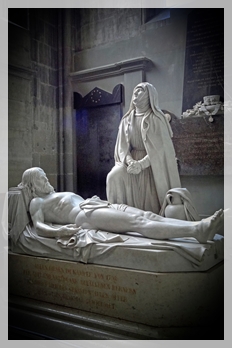 As Mary stood in the shadow of the cross, did she recall Simeon’s words when he held the infant Jesus in his arms? His prophecy came true that day at Calvary; as she watched her son endure such torture, it truly must have felt as if a sword had pierced her very soul. Jesus was supposed to be the glory of His nation but there He was—dying the death of a criminal. Mary didn’t understand why her beloved boy had to perish and she certainly didn’t know that He’d be back in three days. Imagine her sorrow and the emptiness in her heart as she witnessed her son’s agony.
 There’s a therapeutic riding center across the highway from one of the churches we attend. Along with horses, barn cat, and dog, they have a rooster. No matter what the time of day we’re there, that rooster crows. Every time I hear that bird’s loud “cock-a-doodle-do!” I remember Jesus’s words to Peter and ask myself, “Have I denied my Lord today?”
 When I was a little girl, I once went to mass with my Roman Catholic cousins. Before leaving for church, my mother pressed two shiny quarters into my hand. “For the offering,” she reminded me. Part way through the service, long-handled offering baskets were extended down each row and people dropped their offering envelopes and money into them. “Who will know?” I thought as I reached into my pocket and pulled out just one quarter for the offering. Almost immediately, another basket came down our row. “God saw me!” I thought in a panic. “God knows I was holding out on Him and now the priest has sent the basket back.” I quickly reached into my pocket for the second quarter. As I dropped it into the basket, I heaved a great sigh of relief; I was safe from Hell for at least one more day. My only consolation was that I clearly wasn’t the only sinner; other people had dropped money into that second basket. Looking back, I think the second basket probably was for a special offering of some kind. To my child’s mind, however, that second basket was for those of us who hadn’t given God what belonged to Him.
 Some things never change and, aside from death, it’s said that taxes are the only other sure thing in our lives. Along with a poll (or head) tax, the Romans had a variety of other taxes including customs taxes, property taxes, import and export taxes, crop taxes, toll bridges, sales tax, and special taxes when there was a war or building project to finance. Sounds a bit like nowadays! Yesterday was April 15, the day the IRS demanded what is theirs. When you put “the” and “IRS” together you get the word “theirs” and, once we’ve filed our taxes, it sure feels like the government considers most of what’s ours to be theirs!
