THE WEEDS

Just as the weeds are sorted out and burned in the fire, so it will be at the end of the world. The Son of Man will send his angels, and they will remove from his Kingdom everything that causes sin and all who do evil. And the angels will throw them into the fiery furnace, where there will be weeping and gnashing of teeth. Then the righteous will shine like the sun in their Father’s Kingdom. Anyone with ears to hear should listen and understand! [Matthew 13:40-43 (NLT)]

thistleFollowing the Parable of the Sower and the Soils, Jesus told another parable about the coming of the Kingdom. In the Parable of the Weeds, after the farmer plants wheat, his enemy sows weeds in the same field. Jesus’ hearers would have known the weed likely was darnel. Called wheat’s “evil twin,” it looks and behaves much like wheat. When wheat is consumed it gives life but, when darnel is consumed, this inedible look-alike causes nausea and even death. Sowing weeds in a field was an act of sabotage and Roman law specifically prohibited doing so with darnel. When nations went to war, agricultural vandalism was a common practice. Olive trees were cut down, grape vines destroyed, and fields were salted so nothing would grow.

When the farmer’s workers ask to pull out the weeds, they are told to wait. Because both the weeds and wheat are deeply rooted, pulling up the weeds would uproot the wheat, as well. Not wanting to destroy the good by removing the bad, the farmer decides to wait until harvest time when the weeds can be better identified and separated without damaging the wheat. At that time, the wheat will be put in the barn but the weeds will be burned.

While the farmer in the Parable of the Soils represents those who share the gospel, the farmer in this parable is Jesus. The field is the world and the enemy is Satan, whose strategy is to invade, infiltrate, penetrate, and take control of the field. Even though he knows he’s lost the war, Satan wants to inflict as much damage as possible until his final defeat. Christ’s followers are the wheat and, even though they look much like wheat, the weeds are unbelievers. The harvest comes near the end of the age when the angels will come with their sickles and winnowing forks to bring in the harvest. While the righteous will come into the Kingdom, the sons of the evil one will be punished and thrown into the fires of hell.

Focusing on the final judgment, the parable tells us that what seems uncertain now will be unmistakable at the end of the age and God’s enemies will be removed! This parable repeats the good news of the Parable of the Soils: in spite of opposition and interference from its enemy, God’s Kingdom will prevail! If there is any doubt in your mind, just read the book of Revelation. Sickness, famine, war, hatred, pestilence, hypocrisy, natural disaster, genocide, abuse, violence, idolatry, deception, calamity, and even noxious weeds do not have the last word—Jesus Christ does!

I’ve read the last page of the Bible, it’s all going to turn out all right. [Billy Graham]
I heard a loud shout from the throne, saying, “Look, God’s home is now among his people! He will live with them, and they will be his people. God himself will be with them. He will wipe every tear from their eyes, and there will be no more death or sorrow or crying or pain. All these things are gone forever.”… And he also said, “It is finished! I am the Alpha and the Omega—the Beginning and the End. To all who are thirsty I will give freely from the springs of the water of life. All who are victorious will inherit all these blessings, and I will be their God, and they will be my children.” [Revelation 21:3-4,6-7 (NLT)]

Copyright ©2023 jsjdevotions. All rights reserved.

PLANT GENEROUSLY

Then Jesus said to them, “If you can’t understand the meaning of this parable, how will you understand all the other parables? The farmer plants seed by taking God’s word to others.” [Mark 4:13-14 (NLT)]

The Synoptic gospels (Matthew, Mark, and Luke) all repeat Jesus’ parable of the Sower and the Soils. As the farmer sows his seeds, some lands on the packed soil along the footpath. The birds steal the seeds so nothing takes root. Some seeds land on a thin layer of dirt over underlying rock. Although the seeds quickly sprout, without deep roots, they wither and die. Other seeds land among the thistles and thorns. Although they take root, the fast-growing weeds crowd them out. Only the seeds that fall on fertile soil take firm root, grow into maturity, and bear fruit. Rather than teaching Agriculture 101, by comparing those soils to the various ways God’s message is received, Jesus was teaching about evangelism.

The parable’s farmer scattered his seeds without determining beforehand which soil would be most receptive. In the same way, when we sow the seeds of God’s word, there’s no quick way to determine if or when that seed will take root and grow. Moreover, sometimes those seeds might lie dormant for years until conditions are optimal for them to take hold. For example, lodgepole pine seeds actually need the intense heat of fire to explode their seed cones before they can germinate. In the same way, the seed of God’s word may lie dormant until a person’s life goes up in flames.

As for the seeds on the footpath and the birds and other animals who might eat them—when they deposit their feces, those seeds may end up in a more receptive environment. In fact, passing through the belly of an emu actually helps germinate the seeds of an Australian plant with the wonderful name of Snottygobble. Even if our testimony is rejected, it may inadvertently get passed on to a more receptive person!

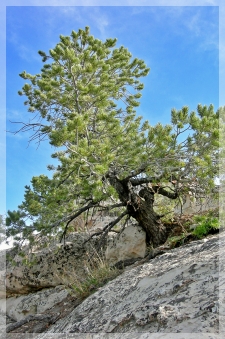
As for the shallow rocky soil—leaves could fall on it, decompose, and add nutrients and depth to the soil while rain might keep the plants from withering and dying. Having seen trees growing out of mountain sides and wildflowers peeking up through sidewalk cracks, I know that seeds can take root in the most unlikely places. Just as it’s possible for seeds to grow in adverse conditions, it’s possible that the word of God can soften even the hardest of hearts! As for the thorny weeds—what if someone came along and did some weeding or hungry goats or pigs (who apparently like thorny vines) passed by and ate the weeds? Beautiful flowers can grow in the midst of weeds!

Even in good soil, some seeds might never germinate. While the synagogue in Jesus’ hometown of Nazareth should have been fertile ground for Him, it wasn’t. His message there ended with a furious mob wanting to kill him! Yet, in the unlikely soil of the Samarian city of Sychar, Jesus met a woman of questionable morals who realized He was the Messiah and brought the village’s people to meet Him. The city of Corinth, with its cults of pagan gods, 1,000 prostitutes, temple to Aphrodite, and reputation for drunkenness and debauchery, didn’t seem to be fertile soil and yet the Apostle Paul planted a successful church there. Indeed, God’s word can take root in the most unlikely places.

While Jesus knew how people would respond to Him, we don’t. None of us can accurately predict if, how, or when the seed of God’s word will be received. In 2005, without knowing if the seeds would germinate, scientists planted thirty-five 2000-year-old date palm tree seeds excavated from Israeli archaeological sites. Even though it took those ancient seeds two millennia to sprout, against all odds, seven of them took root and are now producing fruit!

Rather than trying to analyze the soil or waiting for optimal growing conditions, our job as God’s farmers is to continue sowing good seeds whenever and wherever we can. Eventually, some will fall on fertile soil! God will take care of the harvesting and sorting when the right time comes.

The Parable of the Soils tells us that, regardless of hardened hearts, superficiality, competing pressures, and even failure, the promised harvest is “a hundred times as much as had been planted.” Without a doubt, in spite of setbacks and challenges, God’s Kingdom will prevail, but only if we continue to plant those seeds!

It’s what you sow that multiplies, not what you keep in the barn. [Adrian Rogers]

Remember this—a farmer who plants only a few seeds will get a small crop. But the one who plants generously will get a generous crop. [2 Corinthians 9:6 (NLT)]

Copyright ©2023 jsjdevotions. All rights reserved.

UNITED WE STAND

canada geeseI appeal to you, dear brothers and sisters, by the authority of our Lord Jesus Christ, to live in harmony with each other. Let there be no divisions in the church. Rather, be of one mind, united in thought and purpose. [1 Corinthians 1:10 (NLT)]

Seeing a couple of first-timers at our church, I went over with programs and introduced myself. From the well-worn Bibles they carried, I surmised they weren’t new believers. The man explained that they’d been seeking a new church in our town since leaving their church five years previously. When he asked to see information about our church, I explained that our Scripture-based statement of beliefs and vision statement were on our web site. Responding that he had studied them but still had several questions, I assured him our pastor would be happy to speak with him after service. Asking me if the church had a formal statement of belief regarding the Rapture, he wanted to know whether it was pre, mid, or post-Tribulation. Never pausing for an answer, he added that he was a Calvinist, as well. Wondering if he was looking for a church or a theological debate, I was tempted to split hairs and ask if he was a four or five-point Calvinist or possibly a “hyper-Calvinist” but, fortunately, the service began. From his pointed questions, I understood why the couple had failed to find the “perfect” church in five years of searching!

In the past, Christians often settled their religious differences with bloodshed; nowadays, we just start another denomination! According to the Center for the Study of Global Christianity at Gordon-Conwell Theological Seminary, as of 2019, there were 45,000 Christian denominations in the world! For the most part, the major differences among them have to do with baptism, predestination, and the Eucharist. Other issues of contention include everything from the nature of Mary to the interpretation of Revelation.

Many doctrinal differences are inconsequential—not unimportant—but inconsequential when it comes to our saving belief in Christ. If we truly believe that we are saved by God’s grace through faith in Jesus Christ, the questions of juice or wine, immersion or sprinkling, day of worship, type of music, women in the pulpit, marital status of clergy, and whether Christ’s presence in the Eucharist is actual, figurative, or symbolic, really have no bearing on our salvation!

The Bible doesn’t speak to every issue and several verses are open to a variety of interpretations. If knowing things like the timing of the Rapture or which Bible translation God wants us to use were essential to our salvation, our infinitely wise God would have made it crystal clear to His church. When it comes to the essentials, there’s no misunderstanding His meaning with Jesus’ words: “I am the resurrection and the life. Anyone who believes in me will live, even after dying,” and  “I am the way, the truth, and the life. No one can come to the Father except through me.” [John 11:25,14:6] If the Apostle Paul managed to find common ground with unbelievers, surely we can find common ground with our brothers and sisters in Christ!

As for that couple—since they made a speedy exit after service, our church must not have met their dogmatic requirements and I suspect no church ever will. Whether we’re Roman Catholics, Pentecostals, Charismatics, Protestants, Evangelicals, Calvinists, Orthodox, or independents, we’re not likely to agree on every theological point—not with the person sitting beside us at church or even the clergy conducting the service! Nevertheless, as brothers and sisters in Christ, let our focus remain on where we do agree—on loving God, loving others, and following Jesus.

Make every effort to keep yourselves united in the Spirit, binding yourselves together with peace. For there is one body and one Spirit, just as you have been called to one glorious hope for the future. There is one Lord, one faith, one baptism, one God and Father of all, who is over all, in all, and living through all. [Ephesians 4:3-6 (NLT)]

Copyright ©2023 jsjdevotions. All rights reserved.

HIS PRESENCE

During the forty days after he suffered and died, he appeared to the apostles from time to time, and he proved to them in many ways that he was actually alive. And he talked to them about the Kingdom of God. [Acts 1:3 (NLT)]

COMMUNION CUPBy now, the visiting family has returned home; the jelly beans, Peeps, and chocolate eggs have been eaten; the Easter lily has wilted; the baskets and bunny décor are back in their boxes; and the hardboiled eggs are long gone. While Easter has been put away for another year, its message didn’t end with the resurrection.

The resurrection miracle continued for the next forty days during which Jesus was seen, not just by the disciples, but by hundreds of people. Able to appear in a locked room, the resurrected Jesus seemed less limited by time and space than when He was a man. Although Scripture tells us that He wore the scars of His crucifixion, He talked, walked, ate, drank, and could be touched just like anyone who hadn’t endured crucifixion, death, and burial. Can you imagine what it was like for those fortunate enough to spend time in the presence of the resurrected Jesus? No wonder their faith was so strong that they were willing to endure terrible persecution and horrific torture rather than deny their Lord.

While we can only imagine what it was like when people were in the presence of the risen Christ 2,000 years ago, we can come close to that experience when we share in the Lord’s Supper. Most Communion liturgies include Jesus’ words, “Do this in remembrance of me,” and, upon hearing those words, we recall that last supper in the upper room and Jesus’ sacrifice for our sins. Nevertheless, I think we do the Eucharist a disservice when we think of it as little more than a rite to remember an event long past.

Although most Christians believe that Jesus is present in some way during the Eucharist, there is serious disagreement about how and in what form His presence takes; theologians have argued this point of contention for centuries and will continue to do so until the end of time. Nevertheless, while they disagree on things like transubstantiation and consubstantiation, they do agree that in some mysterious way the Lord is present when we eat the bread, drink the wine, and remember His death and resurrection. About this conundrum John Calvin wrote, “It is a mystery too sublime for me to be able to express, or even to comprehend; and to be still more explicit, I would rather experience it, than understand it.”  C.S. Lewis wisely added, “The command after all, was ‘Take and eat,’ not take and understand.”

One day, we will dine with Jesus in His kingdom but, until then, when we celebrate the Lord’s Supper we are as close to touching the body of the resurrected Jesus as we will be here on earth. When we eat that bread and drink that wine or juice, it’s almost like breaking bread with Jesus in Emmaus, being with the disciples in that locked room Easter morning, or having breakfast with Him beside the Sea of Galilee.

In actuality, the miracle of Jesus’ resurrected presence didn’t end when He ascended into heaven forty days after Easter. In some inexplicable way, He’s with us every time we celebrate the Eucharist.

We should come to the Lord’s table with the confident expectation of meeting Christ there, of receiving there a blessing. [Rev. Chas. A. Savage]

And be sure of this: I am with you always, even to the end of the age. [Matthew 28:20 (NLT)]

Look! I stand at the door and knock. If you hear my voice and open the door, I will come in, and we will share a meal together as friends. [Revelation 3:20 (NLT)]

Copyright ©2023 jsjdevotions. All rights reserved.


HALLELUJAH

Praise the Lord, all nations! Extol him, all peoples! For great is his steadfast love toward us, and the faithfulness of the Lord endures forever. Praise the Lord! [Psalm 117 (ESV)]

giant swallowtail vbutterflyAs a way of emphasizing the penitential nature of Lent, hymns with alleluia or hallelujah were not sung at our church during Lent’s forty days.  With the exception of Palm Sunday’s All Glory, Laud, and Honor, the hymns for the last six weeks were rather slow, somber, and introspective and I missed the more joyful upbeat hymns I enjoy. Easter service, however, opened with Christ the Lord is Risen Today and the twenty “Alleluias” we sang in five verses made up for their long absence.
If you’re not familiar with this beautiful hymn, check it out. YouTube has an outstanding rendition done by the Tabernacle Choir accompanied by full orchestra, a trumpet ensemble, and bell choir. This hymn’s alleluias are Easter’s version of the cascading of glorias in Christmas’ Angels We Have Heard on High. Regardless of your musical talent (or lack of it), you can’t help but join in singing them! Without benefit of choir, bells, or orchestra, our congregation’s joyful alleluias (some of which were off key) weren’t on a par with those of the Tabernacle. Nevertheless, because they were heartfelt, they were welcome music to God’s ears!

Having enjoyed singing those alleluias, I wondered what exactly was meant by the word. “Alleluia” comes from an ancient Hebrew word combining hālal, which means to praise or glorify, and yâ, a contraction for God’s name of Yahweh. When the Hebrew Scriptures were translated into Greek, ”hallelujah” was derived from the Hebrew spelling of the word; ”alleluia” simply is the Latin transliteration of the Greek. In Scripture, we usually find the original Hebrew of hālal yâ translated as “Praise the Lord,” which isn’t entirely accurate. In Hebrew, hālal  is an imperative command (rather than a suggestion) and the more accurate translation would be “You must praise the Lord!”

Since we are commanded to praise the Lord, what exactly is praise? While praise and thanks are closely linked, they are not quite the same thing. Thanks is gratitude for what has been done or given while praise exalts the doer or giver. Thanks is when it finally rains after weeks of drought and praise is for a God who holds the incredible power of wind, rain, thunder, and lightning in His almighty hands. Thanks is for the newborn baby and praise is for the God who miraculously packed all the makings of a human being (including a soul) into two small cells! I’m thankful when I see a beautiful sunrise but praise is when I silently sing the old hymn’s words, “When morning gilds the skies, My heart awaking cries: May Jesus Christ be praised!” Praise is an acknowledgement of the excellence, goodness, capability, power, authority, and perfection of God’s character, traits, and works. It is thanking, honoring, exalting, magnifying, applauding, proclaiming, and celebrating Him. We praise God not just by singing alleluias, but in our everyday words, actions, and thoughts.

While praise usually comes from a grateful heart, there are no qualifiers in Scripture’s “hallelujahs.” The call to praise is not dependent upon circumstances. We must praise the Lord, not because He is good to us (or those we love); we are to praise the Lord because He is a good God!

Perhaps, because there isn’t a better word encompassing the meaning of hallelujah in any other language, people from all over the world have borrowed hallelujah/alleluia from the original Hebrew. While it may be spelled differently, “hallelujah” sounds very much the same in almost every language.

“Hallelujah” appears twenty-four times in Psalms and four in Revelation. In Psalms, those hallelujahs come from earth but, in Revelation, they come from heaven. Someday, we will join a heavenly chorus of believers from every nation and the unified sound of our heavenly hallelujahs will be even louder and more beautiful than those of the Tabernacle Choir!

Then I heard what seemed to be the voice of a great multitude, like the roar of many waters and like the sound of mighty peals of thunder, crying out, “Hallelujah! For the Lord our God the Almighty reigns. [Revelation 19:6 (ESV)]

Copyright ©2023 jsjdevotions. All rights reserved.


MISSING EASTER

Then when Judas, his betrayer, saw that Jesus was condemned, he changed his mind and brought back the thirty pieces of silver to the chief priests and the elders, saying, “I have sinned by betraying innocent blood.” They said, “What is that to us? See to it yourself.” And throwing down the pieces of silver into the temple, he departed, and he went and hanged himself. [Matthew 27:3-5 (ESV)]

Do not abandon yourselves to despair. We are the Easter people and hallelujah is our song. [Pope John Paul II]

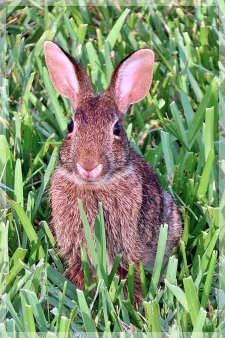
rabbitJudas wasn’t the only one who betrayed Jesus that Thursday night. With his three denials, Peter also betrayed our Lord. Both men were filled with remorse but neither man could undo what had been done. One never lost faith and hung in there; the other lost faith and hung himself. One stayed around for the resurrection to see the living Christ and to experience Jesus’ forgiveness; the other missed his opportunity for redemption when he gave up all hope. One became the humble willing servant of the Lord and the rock of the church; the other one’s name lives on in ignominy and is synonymous with betrayal and treason.

Judas betrayed the Lord for thirty pieces of silver (the same amount paid to compensate the master of a slave who was gored to death by an ox). Did Judas think that by returning the money he could undo what was done? By no longer profiting from his treachery, did Judas think he’d be free from guilt? I often wonder what would have happened had Judas waited a few more days. Jesus forgave Peter. If Judas had waited and truly repented, would Jesus have forgiven him as He did Peter? While Judas’ sin was great, it was not unforgivable! But Judas missed Easter by killing himself in despair and disgrace.

As for the leading priests and elders—they didn’t care about Jesus’ innocence. Giving no thought to the wrong they committed, they debated what to do with this blood money. By Jesus’ day, Deuteronomy’s law that a temple offering earned from prostitution was detestable to the Lord was applied to any money gained illicitly. Although these “holy” men had no problem orchestrating an innocent man’s murder with money from the Temple treasury, as sticklers for the law, they wouldn’t return the now tainted money to the treasury. Did they think using the silver to purchase a defiled piece of property in the Hinnom Valley would diminish their guilt? Referred to as a garbage dump in Jeremiah 19, this land had been desecrated by idol worship. The field became known as Aceldama (meaning “field of blood”) and was used to bury strangers who died while visiting Jerusalem.

Like Judas, the leading priests and elders missed Easter. Although they were the ones most qualified to recognize Jesus’ fulfillment of the Messianic prophecies, they refused to see what was right before them—both before and after Golgotha. When the tomb was found empty, rather than consider the meaning of such a miracle, they denied its truth and bribed the guards to say the disciples stole Jesus’ body.

Did you miss Easter yesterday? I don’t mean the Easter Bunny or the brightly decorated baskets, colored eggs, chocolate rabbits, elaborate brunch, jelly beans, lilies, ham dinner, or Peeps. Did you miss the significance of Easter—the message of love, forgiveness, hope, and salvation? Judas and Jerusalem’s religious leaders certainly did. They missed the first Easter and all of the possibilities it brought.

If you missed the resurrection message of Easter, there’s still hope. While it’s too late for Judas and Jerusalem’s leaders, it’s not too late for you. There’s no need to wallow in guilt or remorse. Today can be your Easter! Today, the Holy Spirit can bring about your very own resurrection. The redemption of Easter can be experienced any day of the year!

Our old history ends with the cross; our new history begins with the resurrection. [Watchman Nee]

Jesus said to her, “I am the resurrection and the life. Whoever believes in me, though he die, yet shall he live, and everyone who lives and believes in me shall never die. [John 11:25-26 (ESV)]

Copyright ©2023 jsjdevotions. All rights reserved.