
Therefore, this is what the Sovereign Lord says: “Look! I am placing a foundation stone in Jerusalem, a firm and tested stone. It is a precious cornerstone that is safe to build on. Whoever believes need never be shaken. [Isaiah 28:16 (NLT)]
Together, we are his house, built on the foundation of the apostles and the prophets. And the cornerstone is Christ Jesus himself. We are carefully joined together in him, becoming a holy temple for the Lord. Through him you Gentiles are also being made part of this dwelling where God lives by his Spirit. [Ephesians 2:20-22 (NLT)]
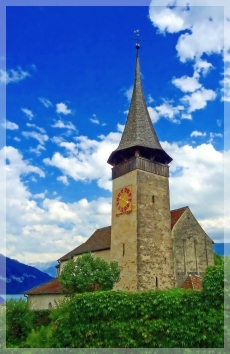 The cornerstone metaphor continues into the New Testament with both Paul and Peter referring to Jesus as the cornerstone of our faith. Nowadays, cornerstones are structurally unneeded and a growing number of commercial buildings no longer have them. Symbolic rather than functional, many serve as time capsules holding material relevant to the building and the year it was built. Because commercial buildings so frequently change hands, even the custom of inscribing the building’s name on a cornerstone is disappearing. The latest practice is a freestanding cornerstone/time capsule resting on a pedestal placed in a prominent part of the building. That way, a new stone can replace the old one every time the building’s owner changes.
While cornerstones may be superfluous to a modern structure, there is nothing superfluous about Jesus as our cornerstone. Moreover, He can’t be exchanged for a newer version or sold to the highest bidder. While buildings may change owners, our owner remains God and we are both His children and His servants. Our cornerstone does not serve as a time capsule of 1st century Judah; Jesus is our living stone and as relevant today as He was 2,000 years ago.
Both Paul and Peter carry the building metaphor further by calling us the stones in God’s temple. Unlike the temple in Jerusalem, this isn’t an earthly building with walls and a roof. Nevertheless, it has a cornerstone in Jesus. Since a cornerstone connects two different walls, the metaphor illustrates how Jesus connected both Gentiles and Jews into one cohesive church.
Peter likens us to living stones and Paul says we are built on the foundation of the apostles and prophets. Let that image sink in for a moment and consider those foundation stones: people like John the Baptist, Paul, Peter, and John. Others in that foundation are less famous but no less essential: people like Lydia, the cloth merchant who housed Paul; Tabitha (Dorcas), the generous seamstress who came back from the dead; the eloquent Apollos, one of the first Christian apologists; the devoted Mary Magdalene; Aquila and Priscilla, the tentmakers who opened their home to Paul; the generous Phoebe, a deacon at the church in Cenchreae; Silas, who sang with Paul when they were prisoners; and Paul’s fellow missionary, Barnabas. Through the centuries, others were added to the structure: defender of the Trinity, Athanasius; Martin Luther, the father of the Reformation; theologian and philosopher, Augustine of Hippo; the martyred Archbishop of Canterbury, Thomas Beckett; Bible translators John Wycliffe and Martin Tyndale; Pilgrim’s Progress author John Bunyan; reformer John Calvin; founder of Methodism, John Wesley; and the “Saint of Auschwitz,” Polish priest Maximilian Kolbe. Set beside these well-known Christians are people whose names we wouldn’t recognize; nevertheless, they too are the stones of the church. Think about it—people just like us are being set into this same edifice with the likes of apologist C.S. Lewis, humanitarian Mother Teresa, Olympian Eric Liddell, evangelist Billy Graham, and the “Prince of Preachers” Charles Spurgeon! We are living stones being mortared into place, shoulder to shoulder, with the apostles and prophets who went before us! We are the temple of God and its cornerstone is Jesus Christ!
 In the Old Testament, “cornerstone” as a metaphor for the Messiah is found in Psalms, Isaiah, and Zechariah. In Zechariah 10, the prophet describes Israel’s need for purification because of their idolatry, fortune-tellers, and false prophets. Holding the nation’s leaders responsible for these transgressions, Zechariah says the people are like lost sheep without a shepherd. Proclaiming the arrival of the ”Lord of Heaven’s Armies” who will look after the flock, the prophet says he’ll come from Judah and describes him as a cornerstone, tent peg, and battle bow.
 After telling the Parable of the Two Sons, Jesus told one about the Evil Farmers. As parables go, it’s pretty easy to follow. The landowner (God) builds a vineyard (Israel), sets up a protective wall (the Law), and leases it to tenant farmers (religious leaders). When he sends his emissaries (faithful priests and prophets) to collect his rent, the farmers ignored, mistreated and even killed them. The landowner, thinking the farmers would respect his son (Jesus), sends him to the vineyard. Wanting the estate for themselves, the farmers murder him. When Jesus asked his listeners (who were the chief priest and elders) what the landowner would do to the famers when he returns to his land, they responded that he’d kill the tenants and lease the vineyard to new farmers who would honor him with his share of the crop.
 “It’s all about getting a second chance!” said the back of the man’s T-shirt. I then saw the dog paws printed on both sides of the message and realized his shirt was advertising a dog rescue organization. Nevertheless, the shirt’s words made me think of the parable Jesus told the Pharisees about two sons. The vineyard owner told his sons to go work in the vineyard. The first son rudely refused but the second son respectfully promised he’d do the work. As it turned out, the defiant son had a change of heart and went to work in the vineyard while the second seemingly dutiful son never did. Jesus then asked the Pharisees which of the two sons had done his father’s will. Of course, they had to say that the first son, in spite of his initial rebellion, was the obedient one.
 The Synsepalum dulcificum is a West African fruit better known as the “taste berry” or “miracle fruit.” This almost tasteless red berry can make lemons, Dijon mustard, Brussels sprouts, pickles and even vinegar taste sweet. A protein in the berry temporarily binds to the tongue’s taste buds and causes sour or acidic foods to taste sweet. Miracle fruit tablets, powder, freeze-dried berries and plants can be purchased from several websites. Along with suggesting using the berry as a way to get fussy eaters to eat their fruits and vegetables, sellers suggest hosting “flavor-tripping parties” where guests get a berry and a strange buffet of foods like sauerkraut, kimchi, radishes, grapefruit, cheap tequila, goat cheese, vinegar, and Tabasco sauce. Why anyone would want to alter the delicious flavors of kiwi, pineapple, strawberries, Granny Smith apples, grapes, or tomatoes is beyond me and I certainly have no desire to drink pickle juice or Sriracha chili sauce.
 Many years ago, I was facing a difficult decision about a project. In spite of praying, pondering, searching Scripture for direction, and consulting with wise advisors, I was still in a quandary. Nothing brought me closer to a clear answer to my dilemma. Although it seemed like a good idea (at least in theory) and I felt like I should want to be part of it, doubts kept nagging at me. Wanting God to make known His will, I prayed the words of Psalm 143:10: “Teach me to do your will, for you are my God. May your gracious spirit lead me forward on a firm footing.”
 Devotions of the Heart