NOT SEEING THE CAMELS FOR THE GNATS

What sorrow awaits you teachers of religious law and you Pharisees. Hypocrites! For you are careful to tithe even the tiniest income from your herb gardens, but you ignore the more important aspects of the law—justice, mercy, and faith. You should tithe, yes, but do not neglect the more important things. Blind guides! You strain your water so you won’t accidentally swallow a gnat, but you swallow a camel! [Matthew 23:23-24 (NLT)]
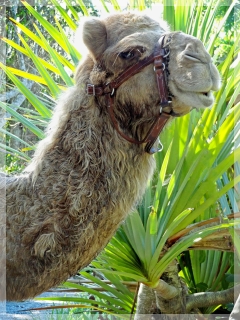
camelJesus criticized the Pharisees for their meticulous tithing of herbs and spices while missing the more important aspects of the law. While both gnats and camels were forbidden food, in a wonderfully graphic hyperbole, He compared the way they poured their wine through a strainer to avoid accidentally swallowing a gnat (the smallest of prohibited “unclean” animals) while actually swallowing a camel (the largest)! Feeling self-righteous over their adherence to minor details, the Pharisees entirely missed the foundational principles of the Law: loving God and loving others.

Although the law demanded the tithing of produce, the Pharisees in Jesus day debated whether that applied to all the herbs and spices. One group determined it didn’t apply to black cumin but, in later years, the tithing of cumin was again required when the tithing of mint wasn’t. While this seems much ado about nothing, I’m not sure we’re that much different from the Pharisees. We’re probably not splitting hairs about herbs or accidentally ingesting a gnat, but it’s easy to become fixated on the details (tithing, attire, drinking, church attendance, rituals, sex, smoking) while missing the bigger issues like materialism, impatience, anger, pride, selfishness, callousness, lust, duplicity, and prejudice as well as justice, mercy, and faith. If we haven’t neglected church attendance, committed adultery, murdered anyone, robbed a bank, pummeled someone with our fists, or watched porn, we feel complacent and self-righteous. Like the Pharisees, we might not be doing the wrong things, but are we putting into practice the right ones?

It is in Christ’s character that we find the Christian virtues: things like humility, wisdom, self-control, courage, perseverance, patience, peace, joy, self-denial, gentleness, compassion, moderation, kindness, mercy, goodness, integrity, faithfulness, and love. Noting that “things will go swimmingly” for the first week, C.S. Lewis suggested making a serious attempt to practice the Christian virtues for at least six weeks. By then, he noted, we’ll have taken “the first step toward true humility” and discovered some rather unpleasant truths about ourselves. “No one knows how bad he is,” said Lewis, “until he has tried very hard to be good.”

It didn’t cost the Pharisees much to strain out a gnat or tithe their herbs and it doesn’t cost us much to obey the letter of the law. Justice, mercy, and faith, however, came at a cost to the Pharisees as the Christian virtues do to us. What good was it for the Pharisee to tithe his dill to the priests but refuse a crumb to the destitute leper begging at the temple steps? What good is it for us to donate ten percent of our money when we won’t give ten minutes of our time to someone in need? Putting into practice Christian virtues is a great deal more difficult than putting ourselves into a pew in a Christian church.

Because they were more concerned about appearing pious than actually being men of virtue and integrity, Jesus continued his denunciation of the Pharisees by comparing them to a cup that is clean on the outside but filthy inside! Like the Pharisees, it’s much easier to avoid scandalous sins – to appear righteous to our neighbors – than to actually be godly people – to be clean both on the outside and inside! Just a week of consciously practicing Christian virtues can be humbling; that’s all it took for me to realize how dirty my cup actually is!

Now is the hour we should humbly prostrate ourselves before God, willing to be convicted afresh of our sins by the Holy Spirit. [Watchman Nee]

What sorrow awaits you teachers of religious law and you Pharisees. Hypocrites! For you are so careful to clean the outside of the cup and the dish, but inside you are filthy—full of greed and self-indulgence!  You blind Pharisee! First wash the inside of the cup and the dish, and then the outside will become clean, too. [Matthew 23:25-26 (NLT)]

Copyright ©2020 jsjdevotions. All rights reserved.

HIS CRAFTSMANSHIP

dawnThe heavens proclaim the glory of God. The skies display his craftsmanship. Day after day they continue to speak; night after night they make him known. They speak without a sound or word; their voice is never heard. Yet their message has gone throughout the earth, and their words to all the world. [Psalm 19:1-4 (NLT)]

As I looked at the morning sky, I had to agree with the psalmist: the heavens do proclaim the glory of God. My photo can’t do justice to the magnificence of today’s sunrise. Although I had a good night’s sleep, like many of us during this time of isolation, loss, and unrest, my soul was weary. Nature, however, has a way of restoring weary souls and the vibrant colors of the breaking day lifted my spirits. They reassured me of God’s eternal power and divinity.

It’s not just the skies that display God’s amazing craftsmanship. From the smallest insect to the largest mountain and the heavens above, God continually reveals himself through his amazing creation. His power and might are visible in oceans, mountains, blizzards, rainstorms, lightening, and even mighty hurricanes like Laura. Yet, one look at a spider’s web, butterfly’s wings, dandelion puff, or violet tells us He has a gentle touch as well.

Although life sometimes feels random, illogical, and unpredictable (as it does right now), nature assures us that God is not arbitrary, capricious, unthinking or careless. A Creator who made flowers that lure bees with nectar and pollen so they’d be pollinated and the bees could then make honey definitely had a plan. The God who gave every one of us a unique set of fingerprints and every zebra a distinctive design of stripes without repeating himself is limitless and certainly attentive to detail. A master at creativity, He gave us eggs that turn into chicks, legless tadpoles that become hopping frogs, acorns that grow into giant oaks, and enabled water and wind to wear away rocks. He knows what He’s doing!

Creation is more than a witness to God’s eternal power and divinity; it tells us about Him. Without a doubt, the designer who covered a rat with armor and made an armadillo, assembled the wildebeest from what appear to be spare parts, fashioned the long snout of the anteater, and provided kangaroos with built-in pockets has a sense of humor and believes in laughter. The One who gave us the sound of waves crashing on the beach, the smell of a pine forest, the feel of a gentle breeze, and the fragrance of sweet honeysuckle and gardenias wants us to enjoy His creation. When He decorated our world, God boldly used every color on his heavenly paint palette and His abundance is evident in the fall colors, rainbows, orchids, painted buntings, and glacial lakes He’s given us to enjoy.

Not every sunrise is as flamboyant as was this morning’s nor is every sunset as gaudy as was last night’s. Nevertheless, one look at the sky is more than enough to assure us of God’s existence. Rest assured that the One who painted spots on the ladybug, gave the peacock his showy tail, and put the sweet taste into strawberries has not forgotten His children. Let us open our eyes to His creation and sing the words penned by Maltbie Babcock more than 100 years ago: “This is my Father’s world; Oh let me not forget that though the wrong seems oft so strong, God is the ruler yet!” As fallen and broken as the world seems, it still belongs to God! He’s at large and in charge!

Forbid that I should walk through Thy beautiful world with unseeing eyes: Forbid that the lure of the market-place should ever entirely steal my heart away from the love of the open acres and the green trees: Forbid that under the low roof of workshop or office or study I should ever forget Thy great overarching sky: Forbid that when all Thy creatures are greeting the morning with songs and shouts of joy, I alone should wear a dull and sullen face.

For ever since the world was created, people have seen the earth and sky. Through everything God made, they can clearly see his invisible qualities—his eternal power and divine nature. [Romans 1:20a (NLT)]

Copyright ©2020 jsjdevotions. All rights reserved.

UNDETERRED (Part 3 – Mark 10:46-52)

Lots of people told him crossly to be quiet. But he shouted out all the louder, “Son of David – take pity on me!” [Mark 10:48 (NTE)]

hibiscusWhen Bartimaeus called out to Jesus, the crowd surrounding him kept telling him to be quiet. Not about to be deterred, the blind beggar just shouted louder. Another man in Jericho was as determined as Bartimaeus: the short and much disliked publican named Zacchaeus. When the little man couldn’t shove his way through to the front of the crowd to catch a glimpse of Jesus, he climbed up a tree (an extremely unseemly behavior for a man of his position).

There are many other stories of such dogged determination to see Jesus. In spite of the disciples reprimanding them for bothering Jesus with their children, some parents persevered in getting their little ones blessed by Him. We have the sinful woman who followed Jesus into a Pharisee’s house so that she could wash His feet with her tears and anoint them with her perfume. That she hadn’t been invited to dinner didn’t stop her from worshiping the Lord. In spite of trying to keep His whereabouts in Tyre a secret, a Syrophoenician woman doggedly tracked down Jesus. When she fell at His feet and pled for her daughter’s healing, the disciples urged Jesus to send her away. Refusing to leave, she even dared to debate with Jesus about her request (inappropriate behavior for a woman of any nationality)! The woman with the bleeding disorder was so intent on touching the rabbi’s cloak that she broke Jewish law and risked public humiliation and severe punishment to get to Him. Two blind men were so determined to see that they followed Jesus right into the house where He was staying. Consider the four friends who carried their paralyzed friend to Jesus only to find the doorway blocked. Unwilling to accept defeat, they cut a hole in the roof and lowered the man down to the Lord.

Bartimaeus and the rest of these people were not about to be deterred from coming into the presence of the Lord. Are we anywhere that resolute in worship, study, praise, and prayer? Would we fight our way through a crowd, climb a tree, refuse to leave, risk humiliation or punishment, go where we weren’t welcome, or cut a hole in someone’s roof? They did and their determination was rewarded. Jesus heard Bartimaeus’ plea, visited Zacchaeus, blessed the children, forgave the sinful woman, and healed the Gentile woman’s daughter, the bleeding woman, the blind men, and the paralyzed man.

While questioning our determination to be with Jesus, we also might ask ourselves if we might be like the ones who hinder or discourage people from coming to Christ. Are we like those who shushed the blind beggar, elbowed Zacchaeus, scolded the parents, wanted to send away the Syrophoenician woman, reminded the sinful woman she wasn’t welcome, shut the door, or blocked the entryway? Do we openly welcome the very people Jesus came to save: the socially unacceptable, weak, troubled, different, disenfranchised, vulnerable, and unclean? Let us be like those who, upon hearing Jesus’ call, said to Bartimaeus, “Cheer up. Come on,” and led the blind man to the Lord!

Then they too will answer, “Master, when did we see you hungry or thirsty, or a stranger, or naked, or sick, or in prison, and didn’t do anything for you?” Then he will answer them, “I’m telling you the truth: when you didn’t do it for one of the least significant of my brothers and sisters here, you didn’t do it for me.” [Matthew 25:44-45 (NTE)]

Copyright ©2020 jsjdevotions. All rights reserved.

HIS CLOAK (Part 2 – Mark 10:46-52)

So throwing off his cloak, he sprang up and came to Jesus. Then Jesus said to him, “What do you want me to do for you?” The blind man said to him, “My teacher, let me see again.” Jesus said to him, “Go; your faith has made you well.” Immediately he regained his sight and followed him on the way. [10:50-52 (NSRV)]

eastern bluebird

There is so much packed into the seven verse story of Bartimaeus that it justifies a closer look. Let’s back up just a few verses in Mark 10 to when, after reminding Jesus that they’d given up everything to follow Him, James and John asked for a favor. When Jesus inquired what they wanted, the disciplines said they desired privileged places in His coming Kingdom. In stark contrast, Bartimaeus didn’t ask a favor; instead he pled for mercy and asked only for his sight. The blind man got his request but the selfish disciples didn’t. If we have unfulfilled prayers, perhaps we should consider what we’re asking—are they favors for our advantage or pleas for God’s mercy?

If we back up a few more verses in Mark’s gospel, we come to when Jesus was just starting his journey toward Jerusalem and a young rich man approached Him. While he was sure he’d kept all the commandments, the man sensed something was missing so he asked Jesus what he needed to do to inherit eternal life. When Jesus told him to sell his possessions, give the proceeds to the poor, and come follow Him, the man’s face fell in disappointment. Treasuring his possessions more than eternal life, he departed.

In another contrast, we have Bartimaeus, the blind beggar who followed Jesus immediately and without question. It’s easy to think the sightless beggar left nothing behind when he followed Jesus but we’d be wrong. Mark adds an interesting detail—when Jesus called to Bartimaeus, the man threw aside his cloak before jumping up and going to Him. That cloak, a wide vest reaching to the ankles, was far more than an outer garment worn during the day. A man’s cloak was so valuable that it could be used as collateral for a loan. Mosaic Law, however, prohibited a lender from keeping it overnight because a cloak often was the only shelter, bed, pillow, or blanket a man had at night. Bartimaeus’ cloak was more than a coat; it was his home. While begging, he would have been sitting on his cloak with its lower part spread out in front of him to collect any coins dropped his way.

Throwing aside his cloak was an act of faith. That piece of clothing (and whatever money may have been on it) was all Bartimaeus had and as valuable to the beggar as all the rich man’s possessions were to him. The moment Bartimaeus threw it aside, the cloak and money were as good as gone—either stolen or kicked aside along the road. Whether blind or sighted, any man would be in dire straits without a cloak, but Bartimaeus did what the rich man couldn’t and left all he had to follow Jesus!

Bartimaeus left his cloak, John and James left their father, Simon Peter and Andrew left their fishing nets, Matthew left a lucrative job as a publican, and Paul left a promising career as a Pharisee but the rich young man wanted to take his old life with him. Thinking that we can keep our old lives while following Jesus is a little like expecting to stay dry when we jump into the pool! It just can’t be done!

When God becomes your only source, you don’t need plan B or C. He is more than enough! [Buky Ojelabi] 

Then Jesus told his disciples, “If any want to become my followers, let them deny themselves and take up their cross and follow me. For those who want to save their life will lose it, and those who lose their life for my sake will find it. [Matthew 16:24-25 (NSRV)]

Copyright ©2020 jsjdevotions. All rights reserved.

SON OF DAVID (Part 1 – Mark 10:46-52)

When Bartimaeus heard that Jesus of Nazareth was nearby, he began to shout, “Jesus, Son of David, have mercy on me!” [Mark 10:47 (NLT)]

columbine

Jesus and his followers were among the crowd of pilgrims passing through Jericho on their way to Jerusalem to celebrate Passover and the city was teeming with people. Picture the scene as pilgrims, donkeys, carts, and even sheep slated for sacrifice moved along the road. With people talking, animals bleating and braying, children running back and forth, and beggars calling out for alms, it was difficult for those following Jesus to hear Him speak.

Sitting by the road, in the midst of this confusion, was the blind beggar Bartimaeus. When he heard that Jesus was in the crowd, Bartimaeus stopped begging for alms and pled for mercy, crying out, “Son of David! Jesus! Take pity on me!” When people tried to quiet him, the beggar just shouted louder. Over the din of the crowd, this man’s desperate cry was enough to make Jesus stop. Of course, Jesus made it a practice to stop for the lost, outcast, and hurting. Just as He halted for the bleeding woman desperate for his healing touch and the tax man desperate enough to climb a tree, Jesus stopped for Bartimaeus and called the beggar to Him.

Throwing his cloak aside, the blind man stumbled his way through the crowd to find Jesus. When Jesus inquired what he wanted, Bartimaeus immediately asked for his sight. It was restored instantly and Mark’s gospel tells us the once blind beggar followed Jesus down the road toward Jerusalem.

One thousand years earlier, God had promised David that one of his descendants would be the Messiah: the one who would reign forever as the head of God’s kingdom. By Jesus’ day, the term “Son of David” was a title for the Messiah. Other Messianic prophecies promised that the Messiah would heal the sick, bring hearing to the deaf, make the lame walk, and give sight to the blind. Bartimaeus may have been blind but he recognized Jesus as the Messiah when he called Him “Son of David” and without hesitation asked for his sight. Acknowledging the man’s blind faith, Jesus said, “Your faith has saved you.” Indeed, had he not called out in faith, he would have remained a blind beggar until his dying day.

The blind man who received sight contrasts with the sighted religious leaders Jesus would soon meet in Jerusalem and call “blind guides” and “blind fools.” It’s ironic that a blind beggar, sitting in the dirt by the road, understood the prophecies and recognized the Messiah when the sighted couldn’t even see who was right in front of them!

The scroll of Isaiah the prophet was handed to him [Jesus]. He unrolled the scroll and found the place where this was written: “The Spirit of the Lord is upon me, for he has anointed me to bring Good News to the poor. He has sent me to proclaim that captives will be released, that the blind will see, that the oppressed will be set free, and that the time of the Lord’s favor has come.” He rolled up the scroll, handed it back to the attendant, and sat down. All eyes in the synagogue looked at him intently. Then he began to speak to them. “The Scripture you’ve just heard has been fulfilled this very day!” [Luke 4:17-21 (NLT)]

Copyright ©2020 jsjdevotions. All rights reserved.

THE POSSIBILITY OF FAILURE

For I can do everything through Christ, who gives me strength. [Philippians 4:13 (NLT)]

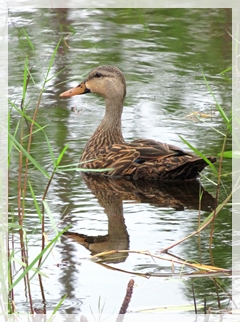
mottled duck“What would you do if you knew you could not fail?” the bumper sticker asked. That’s the sort of query that used to be posed to beauty pageant contestants. Their answers typically had to do with curing cancer, attaining world peace, or solving the problems of illiteracy, poverty and hunger. Of course, we’d all like to be able to wave a magic wand and solve the world’s difficulties. Unfortunately, it’s not that easy.

The question, however, continued to intrigue me. Is there something I would do if there was absolutely no possibility of failure? Would I even want to? Would there be joy in achievement if there were no struggles, no hurdles to jump and no problems to solve? There’s no sense of victory in playing a game when the opponent doesn’t present a challenge. The value of a diploma would be cheapened if we never had to study for final exams. The sense of satisfaction at a job well done would be diminished if we never had the possibility of failure. Failure is part of God’s training plan. The risk of failure brings us closer to God and reminds us that we can do nothing without faith in Him.

When Paul wrote the Philippians that he could do all things through Christ, did he mean he would be successful in every endeavor? Rather than a statement of self-reliance or guaranteed success, Paul was declaring his reliance on Christ. He wasn’t denying the possibility of adverse circumstances or failure; he was affirming his faith.

If we knew we couldn’t fail in an endeavor, we’d have no need for faith. Furthermore, the possibility of success or failure should never keep us from obediently following God’s direction. While the risk of failure should never stop us, lack of faith will.  As long as His Spirit is in us and we are walking in His footsteps, whether we succeed or fail, we will not fail the test of faith!

What would I do if I knew I couldn’t fail? Exactly what I’m doing now—sometimes successfully and other times not, but always in obedience to Him.

Our greatest fear should not be of failure but of succeeding at things in life that don’t really matter. [Francis Chan]

Examine yourselves to see if your faith is genuine. Test yourselves. Surely you know that Jesus Christ is among you; if not, you have failed the test of genuine faith. [2 Corinthians 13:5 (NLT)]

Three different times I begged the Lord to take it away. Each time he said, “My grace is all you need. My power works best in weakness.” So now I am glad to boast about my weaknesses, so that the power of Christ can work through me. That’s why I take pleasure in my weaknesses, and in the insults, hardships, persecutions, and troubles that I suffer for Christ. For when I am weak, then I am strong. [2 Corinthians 12:8-10 (NLT)]

Copyright ©2020 jsjdevotions. All rights reserved.