
But the Lord said to her, “My dear Martha, you are worried and upset over all these details! There is only one thing worth being concerned about. Mary has discovered it, and it will not be taken away from her.” [Luke 10:41-42 (NLT)]
 My father always had a fixed itinerary for everything he did and, for him, a schedule, once made, was set in stone. Unless it was on his agenda, he never stopped to “smell the roses.” Whenever we vacationed, he had a list of sites to visit and things to accomplish for each day. For example, as soon as we arrived at the Japanese Tea Garden in San Francisco’s Golden Gate Park, he got out his list and, without even pausing to view the flowers or drink any tea, crossed off the park, and announced, “Well, that’s out of the way; now we’re off to the top of the Mark!” Once there, our cursory look out its windows at the city went much the same way and we rushed off the next destination on his itinerary. Had we visited in Jerusalem in Jesus’ time, rather than stopping to listen to Him speak from the hillside, we’d have rushed off to see the Pool of Siloam or Jacob’s well in Sychar!
I thought of my father’s version of sightseeing when visiting the bird sanctuary. We were oohing and aahing at a mother owl feeding her owlets only a few feet away. As a young man approached, we started to point them out but, without even turning his head, he quickly strode past. This swamp is one of southwest Florida’s “must see” destinations but, apparently, like my father, the fellow was anxious to cross it off his list and get on to the next thing. He missed an “Aha” moment (along with the herons, wood storks, alligators and blue flag iris) and will probably tell people his walk wasn’t worth the entrance fee.
Being the promised Messiah was a heavy assignment and Jesus knew he had a limited time on earth, yet we never read of him being in a hurry, rushing somewhere, or not stopping when someone called to him. Rather than grab a quick falafel at a first century fast-food stand, He stopped and dined in people’s homes. He didn’t rush by those who needed healing. While on the way to Jairus’ house to heal the man’s daughter, he paused long enough to heal a bleeding woman. He was never too busy to answer questions and he seized any opportunity to share God’s love and forgiveness. After chatting with the woman at the well, he interrupted his travels to stay with the Samaritans for two more days. Although large crowds followed him, he always found time for prayer and little children. He taught, preached, and healed, but he never was too busy to stop.
Our lives should be more than a “to do” list of events, destinations, and achievements. Granted, we need plans and goals, but we should be willing to adjust our schedules and revise our plans. Rather than think of life’s interruptions as distractions, we could consider them as opportunities presented by God. He gave roses a lovely aroma for a reason; perhaps it’s so we’ll stop to smell them! At the age of 56, my father, a man who never stopped to smell those roses, died of a massive coronary. There’s a lesson to be learned from his sudden death—the time to smell the roses is now! If we don’t, we’ll miss out on more than just a few “Aha!” moments when on vacation. We may miss precious opportunities with family, friends, and God. Isn’t that what Jesus was telling Martha so long ago?
As we journey through life, Lord, slow us down and stop us when necessary. Don’t allow us to become so intent on some distant objective that we forget to cherish the scenery, people, and opportunities we encounter along the way. May we always welcome interruptions that allow us to serve you, share your love, or appreciate your bountiful gifts.
Never lose an opportunity of seeing anything that is beautiful; for beauty is God’s handwriting—a wayside sacrament. Welcome it in every fair face, in every fair sky, in every fair flower, and thank God for it is a cup of blessing. [Ralph Waldo Emerson]
Look here, you who say, “Today or tomorrow we are going to a certain town and will stay there a year. We will do business there and make a profit.” How do you know what your life will be like tomorrow? Your life is like the morning fog—it’s here a little while, then it’s gone. [James 4:13-14 (NLT)]
Copyright ©2022 jsjdevotions. All rights reserved
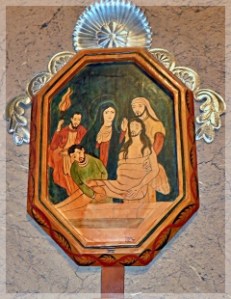 Not all of the Sadducees and Pharisees were disinterested in the truth. Consider Nicodemus, a man who was both a Pharisee and a member of the Sanhedrin, the Jewish ruling council. Drawn to Jesus because of His miracles, the Pharisee visited Him alone during the night. That his approach seems furtive implies Nicodemus was hesitant to let others know of his visit. Nevertheless, he approached Jesus with respect, an open mind, and honest questions. Although some Pharisees said Jesus got His power from Satan, Nicodemus began by acknowledging that Jesus’ miracles testified He came from God. Recognizing that Jesus came from God, however, was not enough. Jesus’s response was, “Unless you are born again, you cannot see the Kingdom of God.” Jesus, of course, was speaking of spiritual rebirth but Nicodemus’ response implies he took Jesus’ words literally when he pointed out the impossibility of an old man re-entering his mother’s womb to be born again.
 We reject all shameful deeds and underhanded methods. We don’t try to trick anyone or distort the word of God. We tell the truth before God, and all who are honest know this. If the Good News we preach is hidden behind a veil, it is hidden only from people who are perishing. Satan, who is the god of this world, has blinded the minds of those who don’t believe. They are unable to see the glorious light of the Good News. They don’t understand this message about the glory of Christ, who is the exact likeness of God. [2 Corinthians 4:2-4 (NLT)]
 We don’t know if John the Baptist recognized Jesus as his distant cousin when the two men met on the banks of the Jordan. Although they were the same age and their mothers were related in some way, with John in the desert and Jesus in Nazareth, it’s not likely they knew one another. If they did, Jesus probably seemed nothing more than an ordinary person to John at the time.
 When the angel promised John’s birth to Zechariah, it was ordained that the child would be named John, that he would be a Nazarite, and that he would prepare the people for the coming of the Lord. After that, other than his circumcision, the only thing we know about John’s youth is that he “grew up and became strong in spirit. And he lived in the wilderness until he began his public ministry to Israel.” [Luke 1:80] We know that Zechariah lived in the hill country of Judea and church tradition places his home in Ein Karem near Jerusalem. Considering Zechariah’s and Elizabeth’s advanced ages, they probably didn’t live to see their boy become a man. Nevertheless, they would have been sure their son knew of his divine calling and made provisions for his care.
 Since it was Easter, along with the oatmeal raisin cookies I made for Sunday treats, I brought a bowl of pastel-wrapped Hershey candy for the little ones. As I placed the candy on the hospitality table, I recalled the last time I had chocolates at church. It was several years ago at our Colorado mountain church. Even though it wasn’t Easter or Valentine’s Day, along with Bibles, the pew book racks were filled with chocolate kisses that morning.
 Devotions of the Heart