TATTOOS – Part 1

Do not cut your bodies for the dead, and do not mark your skin with tattoos. I am the Lord. [Leviticus 19:28 (NLT)]
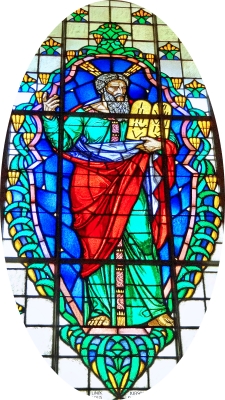
Moses - Meiringen - Michaelskirch
Since Leviticus 19:28 seems to prohibit tattoos, some people mistakenly believe that that it’s a sin for a Christian to be tattooed. My attention was drawn to this specific verse because a friend’s parents had cautioned him throughout his youth that a tattoo would keep him out of God’s kingdom.

Even though the word “tattoo” appears in most Bible translations of this verse, Scripture makes no specific reference to tattoos as we understand them today—a permanent mark or design on one’s body made by depositing pigment beneath the surface of the skin. The original Hebrew word was kethobeth; appearing just this one time, it appears to mean incised writing. Whether this was a scar from cutting (previously mentioned in this verse), a brand, or a mark using dye is unclear. The English word “tattoo” comes from tatau, tatatau, and similar words found in the tribal cultures of Polynesia and didn’t even enter the English language until 1771 when Captain James Cook (and his freshly tattooed sailors) returned from their first South Pacific voyage. Published in 1611, the King James Bible more correctly translates kethobeth as “mark.”  We really don’t know if Leviticus 19:28 was a blanket prohibition of all body markings or just certain types nor do we know if it applied to all circumstances or just specific ones like mourning, idolatry, or blasphemy.

Nevertheless, we’re curious about the various prohibitions in the Mosaic law and often wonder about God’s reasoning behind them. Many laws that seem quite arbitrary, like that in Leviticus 19:28, may well have been to distinguish the Israelites from the pagan customs they left in Egypt and would encounter in Canaan. Archeology indicates that ritualistic cutting was common in the Canaanite, Hittite, and Mesopotamian cultures when mourning the dead or honoring their gods. In their false belief that drawing blood called the attention of the gods, 1 Kings 18 tells us the prophets of Baal, “following their normal custom,” cut themselves with knives and swords “until the blood gushed out!” after they failed to call down fire from heaven.

Since we can’t understand God any better than an ant can understand us, trying to determine His reasoning behind many of the Torah’s laws is an exercise in futility. Moreover, obedience to God’s word isn’t dependent upon our understanding; His laws are to be obeyed simply because He is God and we are not. If the Israelites were presumptuous enough to ask God’s justification for the 613 mitzvot (commandments) in the Torah, His answer would have been the same one our parents gave us when we whined about curfews, TV time, proper attire, and being nice to our annoying little brother: “Because I said so!” God doesn’t need to justify His reasoning to His children any more than did our parents to us!

Heeding his parents’ caution about tattoos, my friend never got one but his grandchildren have! I assured him that their body ink has no bearing on their final destination. While many of the Old Testament laws are guidelines for knowing how to love God and our neighbor, they are not the standard by which Christians measure their conduct. We wear garments made of two or more kinds of fabric, trim our beards and side burns, consume dairy and meat in the same meal, and eat things like bacon, shrimp, and shellfish—all of which defy the Torah’s laws, yet no one claims any of those things will keep us out of the Kingdom and neither will tattoos!

When Jesus died on the cross, He put an end to the Old Testament law (even the one about body markings). As Christians the only law we are under is that of Christ: to love God with our heart, soul, and mind and to love our neighbors as ourselves!


Before the way of faith in Christ was available to us, we were placed under guard by the law. We were kept in protective custody, so to speak, until the way of faith was revealed. … The law was our guardian until Christ came; it protected us until we could be made right with God through faith. And now that the way of faith has come, we no longer need the law as our guardian. [Ephesians 3:23, 24-25 (NLT)]

Copyright ©2023 jsjdevotions. All rights reserved.

DRIFTING

So we must listen very carefully to the truth we have heard, or we may drift away from it. [Hebrews 2:1 (NLT)]

Lake Brienz-Switzerland
We had an elderly friend who frequently visited us at our lakeside cottage. An avid reader but a poor swimmer, she loved to relax and read in a small rubber raft while floating on the water. Inevitably, she’d drift off and, finding it difficult to paddle against the current and return to the dock, she’d call on the children to swim out and tow her back to safety. Eventually, tiring of their towing job on a breezy day, they took a length of rope and tied it to both raft and dock. The rope was long enough to allow our friend to float around but short enough that she never got too far away from home. I thought of her when I read the caution in Hebrews 2:1 to carefully listen to the truth lest we drift away from it.

Like the Hebrews, many in the church at Colosse were drifting away into dangerous waters. Rather than drifting into apostasy (the abandonment of their belief in Jesus) as were the recipients of the letter to the Hebrews, the Colossians were drifting into the equally dangerous waters of heresy (adhering to a belief contrary to church doctrine). Sitting near the intersection of several major highways, Colosse was exposed to a wide variety of beliefs and philosophies. Rather than waves of persecution, these new Christians were being pushed along by the popular, but false, teachings of the day. Various un-Biblical philosophies and beliefs were being integrated into doctrine and wreaking havoc in the church. Just as my children brought my friend back to the dock, Paul’s letter was his way of returning the church to sound doctrine.

From Paul’s letter, it appears that some teachers were peddling something akin to Gnosticism—a belief that some people possessed secret superior knowledge that was hidden from most other believers. Thinking that all matter (including the body) was evil, they affirmed the deity of Jesus but denied His humanity. Others seemed to embrace a fusion of Christianity and Judaism that included Jewish dietary laws and the observance of Jewish holy days. Some Colossians espoused a spiritualistic teaching requiring them to worship angels before connecting with God. Still others adopted a legalistic version of Christianity with man-made requirements like pious self-denial, special rituals, and possibly circumcision. Calling them “empty philosophies and high-sounding nonsense,” Paul pointed out that those beliefs came from human thinking and demons rather than Christ.

When those false theories and ideologies were merged into the tenets of the new church, there was just enough of Scripture’s truth in them to make them sound right. Even in the 21st century, it’s easy to get caught up in new philosophies or trendy ideas and different “empty philosophies and high-sounding nonsense” continue to be preached today.  As Tim Challies said, “This world is a murky madness of true and false. For every doctrine we know to be true, there seems to be a hundred pretenders.” Like the Colossians, we must be on guard for those pretenders—those who add to, ignore, dismiss, or edit Scripture along with any who are more interested in filling their wallets than saving souls, more intent on pleasing mankind than God, or claim to have been called by God to preach words outside of Scripture.

To avoid drifting away from the truth found in Jesus, rather than tethering ourselves to a dock as did my friend, we must tether ourselves to God; instead of using a rope, we use His word as found in the Bible. Simply put, sound doctrine comes solely from God. Its authority comes only from God’s Word and is consistent with all of Scripture (rather than a verse taken out of context).

Whatever is only almost true is quite false, and among the most dangerous of errors, because being so near truth, it is the more likely to lead astray. [Henry Ward Beecher]

But you must continue to believe this truth and stand firmly in it. Don’t drift away from the assurance you received when you heard the Good News. … Don’t let anyone capture you with empty philosophies and high-sounding nonsense that come from human thinking and from the spiritual powers of this world, rather than from Christ. [Colossians 1:23,2:8 (NLT)]

Copyright ©2023 jsjdevotions. All rights reserved.

WHAT CAN PEOPLE DO TO ME?

For God has said, “I will never fail you. I will never abandon you.” So we can say with confidence, “The Lord is my helper, so I will have no fear. What can mere people do to me?” [Hebrews 13:5-6 (NLT)]

peony

While 21st century Christians might not recognize the source of the two verses quoted in Hebrews 13:5-6, the recipients of that epistle certainly did. As Jews who converted to Christianity, they were familiar with the Hebrew Scriptures. The first verse (found in Deuteronomy 1:6 and 8), were relayed by Moses to all of Israel and then specifically to Joshua. After Moses’ death, God personally made the same promise to Joshua in Joshua 1:9.

The second verse cited can be found in Psalms 118:6 and 56:4 and 11. While we don’t know who authored Psalm 118, we know that Psalm 56 was penned by David and was about running from Saul and being seized by Philistines in Gath. Any Hebrew in Paul’s time would know these quotes and the full context in which they were used.

Rather than facing battle with the Canaanites, fleeing from Saul’s army, or being in the hands of the enemy, the original readers of this epistle were new believers who faced persecution from both Rome and their fellow Jews. Having already endured public ridicule, beatings, imprisonment, excommunication from their synagogues, confiscation of their property, and flight from their homes, yet another wave of persecution loomed on the horizon at the time this epistle was written. Discouraged and disheartened, these new Christians were losing heart. Fearful, many contemplated abandoning their belief in Jesus and returning to Judaism.

Wanting to prevent them from apostasy, the epistle’s author encouraged these Jewish converts to remain steadfast in their new faith. Rather than disparaging Judaism, he fortified their faith by showing how Hebrew Scripture pointed the way to the Messiah and how Jesus fulfilled its Messianic promises. He explained that Jesus was superior to the Levitical priesthood, that His sacrifice was better than any required by the Law, and that the new covenant was better than the old. It is when encouraging his readers to stay strong in the faith that the letter’s author refers to these two Old Testament verses.

The last part of the second quote asks, “What can mere people do to me?” Clearly, people had done a great deal of harm to those Hebrew Christians in the past and worse soon would follow. Moreover, just as Christians were persecuted in the 1st century, they continue to be persecuted in parts of the world today. The epistle’s author, however, wasn’t delusional; he knew the people to whom he wrote were not safe from harm at the hands of their fellow man! A closer look at the full verse never says Christ’s followers won’t suffer. Hebrews’ author was telling those new Christians not to be afraid because God was beside them; his words are as relevant today as they were 2,000 years ago. His confidence came from knowing that our lives and future are in the hands of a God who loves us and has pledged Himself to us.

No matter how dire the circumstances, we aren’t alone. While our adversaries are mere mortals, standing beside us is God and His love for us outweighs the hatred of men. In the end, all of the adversities and suffering of this world pale in comparison to the resurrection blessings that await us. The worst thing people can do is kill our bodies. No person, however, can touch our souls!

Don’t be afraid of those who want to kill your body; they cannot touch your soul. Fear only God? But not a single sparrow can fall to the ground without your Father knowing it. And the very hairs on your head are all numbered. So don’t be afraid; you are more valuable to God than a whole flock of sparrows. [Matthew 10:28-31 (NLT)]

Copyright ©2023 jsjdevotions. All rights reserved.

IN THE YEAR OF OUR LORD

In the beginning [before all time] was the Word (Christ), and the Word was with God, and the Word was God Himself. [John 1:1 (AMP)]

I am the Alpha and the Omega, the First and the Last, the Beginning and the End [the Eternal One]. [Revelation 22:13 (AMP)]

tri-colored heronVarious events leave an indelible mark on our personal history and we have our “befores” and “afters” with which we mark time. It might be BP for “before Parkinson’s,” AM for “after marriage,” BS for “before sobriety,” or AC for “after cancer.” When we had little ones, our time was marked by BC (before children) and AD (after diapers)! Of course, for most of the world, the designations BC and AD have to do with the calendar and delineate whether the time was before or after Christ.
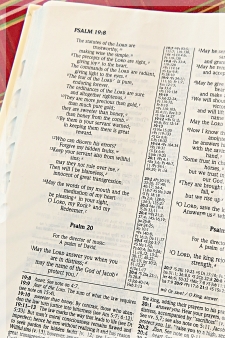

When just a child, I knew BC meant “before Christ” but mistakenly thought AD meant “after death.” As a result, I wondered where that left the thirty-three years He walked the earth. Was that DC—“during Christ?” AD actually is an abbreviation for anno Domini Nostri Jesu Christi, Latin for “in the year of our Lord Jesus Christ” (“in the year of our Lord,” for short), so those thirty-three years belong on the AD side of the timeline.

The BC/AD system was a byproduct of an attempt by the First Council of Nicaea (AD 325) to unify the church by setting the date of Easter as the first Sunday following the full moon following the spring equinox. Computations determining the date were recorded in documents known as Easter tables. But, with no universally accepted way of dating the years, some calendars were based on the founding of Rome and others on the reign of Roman Emperor Diocletian. As a result, depending on the dating system, Easter’s date varied by as much as five weeks. Wanting to unite the church in their celebration of the most important event in Christianity, a monk named Dionysius Exiguus introduced the concept of AD in 525 when he anchored his Easter table on the year of the Lord’s birth. It was, however, several centuries before his system became commonplace.

In 731, the English monk Bede was the first author to use Dionysius’ AD system in his history of the English people. Bede also was the first person to use BC to designate how many years prior to Christ’s birth an event occurred. In the ninth century, the Roman Emperor Charlemagne adopted the BC/AD system throughout his empire and, by the fourteenth century, most of Christendom had adopted it.

Although Dionysius never explained how he determined Jesus’ birth year, he probably consulted the early church writings of Clement of Alexandria and Eusebius of Caesarea to estimate the date. As it turns out, he miscalculated the year and most historians now believe Jesus actually was born four to six years earlier than Dionysius thought. Nevertheless, error or not, whether we use BC and AD or the more “politically correct” BCE (before the common era) and CE (common era), our calendars are anchored in Christ’s incarnation!

Aside from our calendars, while there was a time before Jesus appeared in Bethlehem, there never really was a time before Christ. Moreover, what I didn’t understand as a girl is that, while time has passed since Jesus walked the earth, there never has been a time “after” Him. Jesus always existed and forever will exist. He was here at the beginning of time, He is here now, and He will be here at the end; He is the Alpha and Omega. In actuality, it always has been AD—anno Domini—the year of our Lord.

For Christians, perhaps the most important dividing line is a very personal BC—before Christ. Different for each of us, it is the moment we accepted Christ as our Lord and Savior. It is our real birth (rather re-birth) day and, from that moment on, we truly live in AD—the year of our Lord.

For just as in Adam all die, so also in Christ all will be made alive. [1 Corinthians 15:22 (AMP)]

Copyright ©2023 jsjdevotions. All rights reserved.

TRUTH OR FICTION?

All scripture is breathed by God, and it is useful for teaching, for rebuke, for improvement, for training in righteousness, so that people who belong to God may be complete, fitted out and ready for every good work. [2 Timothy 3:16-17 (NTE)]

Bible
I didn’t mean to spoil anyone’s holiday last month when writing about some common Christmas misconceptions in “The Real Story.” Like many others, I display historically inaccurate nativity scenes, sing “We Three Kings,” attend live nativities and Christmas pageants, and never will tire of the little ones, in their crooked tinsel halos, singing “Happy Birthday, Jesus!” Even when not historically accurate, Christmas practices like these have become a beautiful part of our traditional celebration of the Lord’s birth. That devotion’s purpose was to point out that, since  God’s story needs no embellishment, we need to know the difference between legend, tradition, and truth if our witness is to be effective.

It’s crucial to know what Scripture says because it’s not just Christmas traditions that can blur the line between truth and fiction. For example, even though Dan Brown’s bestseller The Da Vinci Code  is entirely fiction, there are many people who believe it to be reality-based. While adding sex, intrigue, and conspiracy to the story of God’s redemption of mankind made for a best seller and popular movie, it’s a poor substitute for the truth found in God’s word! We can’t rewrite Jesus to make Him more human nor can we rewrite His message to make it fit our purposes. As Christians, we must be wary of hoaxes and untruths in any sort of media, whether they purport to be fiction or not.

Several years ago, a woman in our study group asked to lead the day’s prayer from a popular devotional. Because the book’s author originally claimed the book’s words came directly from Jesus, this woman believed she was directly quoting the Lord in the prayer and gave its words the same authority as Scripture. The problem wasn’t in the prayer’s insipid words, it was in the author’s claim of divine revelation—that they were Jesus’ words. None of us can speak for God and that prayer’s words were the author’s, not the Lord’s. If our witness is to be effective, we must know the difference between Spirit-led ideas and God’s word. No matter how inspiring, we must never put our words (or those of anyone else) in Jesus’ mouth. If we want to know what He has to say, the Bible (rather than a devotional) is where we should look!

In another small group, we were discussing the crucifixion when Joseph of Arimathea was mentioned. Scripture only tells us that he was a wealthy member of the Sanhedrin who obtained Jesus’ body from Pilate and, with Nicodemus, prepared it for burial before laying the Lord in his own tomb. One group member, however, related how Joseph later brought the gospel to Britain along with the Holy Grail and, when he stuck his staff into the ground, it miraculously turned into a thorn tree overnight. While Joseph was mentioned by early church historians and in apocryphal and non-canonical accounts, no additional details were ever found credible. He wasn’t even associated with the Holy Grail until his name appeared in a 12th century verse romance and the first mention of his evangelizing Britain wasn’t made until the mid-13th century! As for the Holy Grail—Scripture makes absolutely no mention of a Holy Grail because there was none; like this story of Joseph of Arimathea, it is nothing more than a mythical legend. Nevertheless, many Christians continue to confuse legend with gospel truth.

Because it is authoritative, true, and complete, Scripture alone is the basis for our faith, doctrine, and witness. Proverbs 30:5-6 and Deuteronomy 4:2 and 12:32 all speak to Scripture’s sufficiency with their warnings to neither add to nor take away from God’s word. Moreover, in spite of skeptics’ claims, every book that God intended to be in the Bible is there. Rather than being lost or hidden, any “missing” books were rejected because they were fallible religious/historical books rather than the inspired inerrant Word of God.

As Jesus’ witnesses, we are expected to “tell the truth, the whole truth, and nothing but the truth!” Of course, to do that we must know the truth and we can only do that by doing what the Bereans did—test what we hear and read by searching for the truth in Scripture!

And the people of Berea were more open-minded than those in Thessalonica, and they listened eagerly to Paul’s message. They searched the Scriptures day after day to see if Paul and Silas were teaching the truth. [Acts 17:11 (NLT)]

Copyright ©2023 jsjdevotions. All rights reserved.

CARPE DIEM – THE NEW YEAR

Look here, you who say, “Today or tomorrow we are going to a certain town and will stay there a year. We will do business there and make a profit.” How do you know what your life will be like tomorrow? Your life is like the morning fog—it’s here a little while, then it’s gone. [James 4:13-14 (NLT)]

Hibiscus trionum - Flower-of-an-Hour
Several years ago, a young woman with Parkinson’s told me, “Every day I wake up, I realize that I’m the best I ever will be and it’s only downhill from here.” Rather than complaining, she was explaining how that knowledge made her determined to seize and delight in each day. Unlike her, I’m not suffering from a degenerative disease (other than age); nevertheless, her words continue to haunt me. No matter how healthy or happy we may (or may not) be today, we have no guarantee that tomorrow will be any better. Life is precarious and our tomorrows are uncertain. Yet, we so often squander the hours and days we’re given.

We regularly called a friend whose remaining time was counted in weeks. Having exhausted all treatment options, he was painfully aware of being on a steep downhill run. Like the woman with Parkinson’s, however, he refused to let that knowledge steal his joy in the present. In fact, his awareness of life’s fragility seemed to give him more appreciation of every moment with which God blessed him. Thankful for every morning he saw, he was determined to make that day his best one by rejoicing in its simplest gifts. Of course, being a man of faith, he knew that death does not have the final word and had no fear of what lay ahead of him. Nevertheless, until that time came (as it did last week), he continued to seize the day with all the joy and gusto he could muster.

A new year is fast approaching and, as I started making plans for 2023, I thought about the uncertainty of our tomorrows, not just for my friend, but for all of us. Why do we waste a single breath with anger, regret, resentment, or complaint? Why do we fritter away even five seconds in self-pity or worry when they should be spent in thankfulness and joy? Why do we see the day’s imperfections with twenty/twenty vision when we’re blind to the day’s blessings? The old saying, “Today is the first day of the rest of your life!” is only partially true. We all have expiration dates and today well could be the last day of our lives here on earth. Shouldn’t we make it the best one we’ll have?

Perhaps we can learn from the Hibiscus trionum. Called “Flower-of-an-Hour,” each flower blooms during a single sunny day and remains open only a few hours. Nevertheless, the flower makes the most of its brief time by turning to the sun, getting pollinated, providing pollen and nectar for bees and butterflies, and sharing its leaves with caterpillars and rabbits. Why don’t we make the most of our time in the sun? It shouldn’t take cancer or Parkinson’s to make us realize that today is the best day of our lives! It is the day the Lord has made—the precious day the Lord has given us in this precarious world—and we should rejoice in each and every moment of it!

Father, forgive us when we fail to make the most of the days with which you have generously blessed us. Help us to seize today with joy and thanksgiving and be glad in it. No matter what the future may bring, may each day be our best one ever!

The past, the present and the future are really one: they are today. [Harriet Beecher Stowe]

This is the Lord’s doing, and it is wonderful to see. This is the day the Lord has made. We will rejoice and be glad in it. [Psalm 118:23-24 (NLT)]

Lord, remind me how brief my time on earth will be. Remind me that my days are numbered—how fleeting my life is. [Psalm 39:4 (NLT)]

Copyright ©2022 jsjdevotions. All rights reserved.