
Joash did what was pleasing in the Lord’s sight throughout the lifetime of Jehoiada the priest. … But after Jehoiada’s death, the leaders of Judah came and bowed before King Joash and persuaded him to listen to their advice. [2 Chronicles 24: 2,17 (NLT)]
 Earlier this week, I wrote of the Levites’ failure to protect Judah from idolatry but one Levite stands out in his loyalty to God and commitment to the temple: Jehoiada the priest. When Judah’s King Ahaziah died, his mother, Queen Athaliah seized Judah’s throne. The daughter of Ahab and Jezebel, she was as evil as her parents and tried to kill all of her son’s heirs. Unknown to her, Ahaziah’s infant son Joash was hidden by his aunt and survived. Raised by the high priest Jehoiada, the boy’s existence was kept secret while the priest plotted to put him on the throne. When the boy was seven, Jehoiada made a pact with five army commanders who covertly travelled throughout Judah to summon the Levites and leaders to a meeting at the Temple.
At that meeting, Jehoiada declared that the king’s son should reign. Once he introduced Joash, the rightful heir, the men planned to depose his wicked Athaliah. As they guarded the child, he was anointed and the crown placed on his head. After presenting him with a copy of the law, Joash was proclaimed king, Queen Athaliah was slain, the temple of Baal demolished, and its pagan priests killed.
With this successful rebellion, Jehoiada led the people and the new king in rededicating themselves to the Lord. The temple was restored, the priests and Levites again followed David’s instructions, and the gatekeepers returned to the temple. Unfortunately, after Jehoiada’s death, Joash made the same mistake his ancestor Rehoboam did—the young king listened to the wrong people and followed bad advice. The nation returned to idolatry, the temple fell into disrepair, and the temple’s treasures were used to pay tribute to the King of Aram. As the Chronicler wrote: “Because of this sin, divine anger fell on Judah and Jerusalem.” [24:18] The Lord’s judgment took the form of an invasion by the Arameans.
Sadly, even though the Judeans cleaned the temple of idols, they never scoured the idolatry from their hearts and the story only gets worse. The Lord sent prophets advising Judah to repent but they wouldn’t listen. Then, when Jehoiada’s son, Zechariah, prophesized that they were headed for destruction, Joash added murder and desecration of the temple to his sins. He had the son of the priest who saved his life stoned to death in the temple courtyard. Later, during battle with the Arameans, Joash was wounded, but his wounds were not what killed him. He died at the hands of his servants in retaliation for the murder of Jehoiada’s son, Zechariah.
Joash was a puppet king and only as good as his advisors. He may have held the book of law in his hands but he never placed it in his heart. As a result, Joash was dependent on man’s word rather than God’s. Let us learn from this story and take our advice from God rather than man.
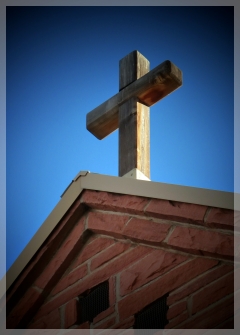 The Levites (descendants of Jacob’s son Levi) were set aside for religious service. While all priests were Levites, not all Levites were priests. The most sacred tasks, like offering the sacrifices and conducting ceremonies, were reserved for the priests (kohanim) who were descendants of Aaron; the rest of the Levites supported the priests in their duties.
 Evil is anything that contradicts the nature of God and it’s easy to see Satan’s presence in malevolent acts like terrorism, genocide, slavery, torture, and human trafficking. The enemy, however, is usually far more subtle. Evil also includes things like anger, pride, fretfulness, immorality, pettiness, selfishness, deceit, envy, spite, unforgiveness, hatred, hypocrisy, envy, jealousy, greed, and unkindness. Although we’re more likely to find them in our hearts than genocide or murder, they’re not as easy to recognize. Because it’s easier to see the evil done by others than it is to face the evil in our hearts, we don’t spot Satan when he comes slithering into our lives.
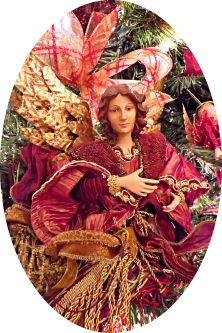 Angels taking on bodily form and appearing to people certainly wasn’t an everyday occurrence. Although they are God’s messengers, the message angels bring can be good news or bad. While they may help God’s people as they did for Elijah and Daniel, angels also execute God’s judgment as they did when striking down the firstborn males in Egypt. I suspect Gabriel looked fiercer and more powerful than the elegant sweet angels hanging on our Christmas trees. When he arrived unannounced in the empty Temple sanctuary, Zechariah was overwhelmed with fear and, when he suddenly appeared in an empty room in Nazareth, Mary was troubled and perplexed. Not knowing whether he was on a mission of judgment or mercy, it’s no wonder both Zechariah and Mary were fearful. Gabriel began his visits by telling them both not to be afraid.
 In all probability, you’re not having more than 5,000 guests for dinner today and they won’t be dining al fresco on a hillside. Nevertheless, John’s description of that miraculous meal sounds a bit like Thanksgiving dinner at any number of homes today. There will be lots of people and more than enough to eat but, instead of all the leftovers being gathered in baskets, we’ll pack them into storage containers made by Rubbermaid, Glad, Tupperware, and Pyrex.
 When a friend won a trivia contest because she knew the day and year Elvis Presley died, I asked how she recalled the exact date. She replied, “I remember because August 16, 1977, was the day I traded one king for another one—it’s the day I accepted Jesus!” Indeed, it is an important date for her to remember. I don’t know when my mother-in-law became a Christ follower but my father-in-law marked his acceptance of Jesus with his baptism at the age of 17 (in 1925). I only know this because my in-laws kept a certificate attesting to his baptism in their safe deposit box along their birth certificates, passports, voter registrations, social security cards, and marriage certificate.
 Devotions of the Heart