
He [the Lord] destroyed the whole valley—all the cities, the people living in the cities, and all the plants in the valley. Lot’s wife was following behind him and looked back at the city. When she did, she became a block of salt. [Genesis 19:25-26 (ERV)
 If I ran the world, I wouldn’t be plagued with arthritis and my husband wouldn’t have a bum leg that prevents him from skiing and snowshoeing. As long as I’m fantasizing, calories wouldn’t count, we’d always have fresh powder on the slopes, and ski boots would be comfortable. If I ran the world, floors would mop themselves but, chances are, I’d end up like Mickey Mouse in the movie Fantasia and find myself overwhelmed with uncontrollable brooms, buckets and a flood. As the cartoon mouse learned, power without wisdom can make for a mess. Fortunately, God hasn’t resigned from His role and I concede that His plan is always better than mine. I’ve come to recognize that even when we understand God’s plan, even when we know His plan is the right one, and even when we finally accept it, we may not necessarily like it very much.
When we were children, we moved from giant crayons to skinny ones, from Mega blocks to Lego sets, from cardboard picture books to chapter books, and from training wheels to a twelve-speed bike. We happily accepted those transitions because they meant we were growing up. Somewhere along the line, however, those transitions stopped being so welcome. They simply meant we were growing older—going from twenty-twenty vision to trifocals, from a full head of hair to a bald pate, from endless energy to afternoon naps, or from running marathons to having a knee replacement.
To everything God has given a season, but it’s not always easy to transition from one season to another. Being somewhere between training wheels and a wheel chair, I’m having difficulty accepting that it’s time to move to a new season. The last two months have been ones of prayer, contemplation, acceptance and a few melancholy tears that have led us to decide to sell our mountain home; regrettably, this was our last winter here.
The Colorado town in which we’ve spent the last twenty-five winters isn’t Sodom and, while a helicopter will drop Easter eggs down on it this Saturday, neither fire nor burning sulfur will pour down when we depart. Like Lot’s wife, however, I will find it hard to not to look back. While I won’t turn into a pillar of salt, I will shed a fair number of salty tears. Like Lot’s wife, I’m not ready to leave and start a new chapter in my life. But, like Lot, I will accept God’s direction to move on.
I really have no cause for complaint. There are far worse things than spending our winters in sunny southwest Florida. We will return to our beautiful mountains, cherished friends, and beloved Colorado church family in the summer and fall, but as tourists and not townies. On the plus side, this transition will allow us to make a fuller commitment to our Florida community, church and friends. To everything there is a season and no season lasts a lifetime. Recognizing that one season’s time has passed, we must joyfully move on to the next. When we submit our lives to God’s plan, every one of life’s seasons can allow us to better serve His purposes.
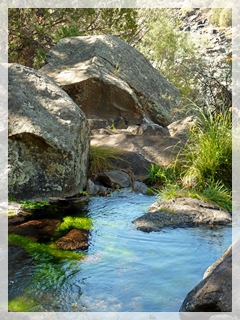 Jehovah Rapha, the “Lord who Heals You,” was the name of God proclaimed to the Israelites through Moses at Marah. Indeed, a God who could make the blind see, the lame walk, the lepers clean and raise Lazarus from the dead can heal any physical ailment.
 We’d taken my daughter and grand-daughter to a magic show and both my husband and grand had participated in two rather impressive illusions. On the way home, we three adults tried to figure out how each trick had been done. We explored various scenarios that might explain how the $50 bill with my husband’s signature on it ended up in the middle of an uncut orange, in a paper bag, and in a locked box that was in another locked box across the stage. We also tried to figure out how the magician used an elaborate series of mathematical calculations to know the age of our grand’s dog in dog years. (The dog, not there and being 105 in dog years, was most definitely not your average dog.) While we pondered various scenarios, my grand piped up, “Stop trying to figure it out. It was magic!” While it was an entertaining show, we know it wasn’t magic; it was just a carefully orchestrated and well-executed series of tricks. Nevertheless, we continued to want to know how each had been done. There is something about us all that wants to make sense of that which makes no sense. Sometimes, however, that can’t be done.
 It’s springtime in the mountains and I’m thrilled to see that it’s snowing. Although I was hoping for at least one more powder day on the mountain, that’s not why I’m pleased. I’m happy because, once again, everything looks pristine and clean. You see, March’s warmer temperatures and sunshine have been busy melting the nearly 300 inches of snow we’ve had this season. As that white stuff gradually disappears, ugliness is uncovered. Hidden under those mounds of snow is four months’ worth of unsightly litter, pollution, exhaust and smoke residue, scoria and gravel. That filthy accumulation is now making its appearance along the roadways. As the snow recedes along the footpaths, it’s not just lost mittens, discarded tissues and cigarette butts that emerge but also the dog dirt and moose and elk pellets from the animals who have ventured onto the trails. As beautiful as springtime in the mountains can be, this ugliness is part of what we call “mud season.” Today’s snow covers it all up again and I can briefly forget the filth hiding beneath it. It’s sort of like sweeping dirt under the carpet or painting over handprints on the wall; although the grime is still there, it doesn’t bother us because it can’t be seen.
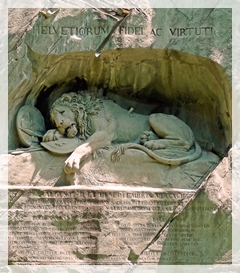 I don’t know about you, but I’m about ready to unplug the televisions until after the elections in November. It doesn’t matter which party or which candidate, the conduct and rhetoric has become nearly unbearable. Today’s Bible reading took me to Matthew 5 and the Beatitudes—those declarations of blessedness given by Jesus at the beginning of His Sermon on the Mount. I couldn’t help but contrast His words with the behavior of our politicians, their supporters and the news media. I then remembered A.W. Tozer’s observation that, if we were to take the Beatitudes and turn them inside out, we’d have the “very qualities which distinguish human life and conduct.”
 Devotions of the Heart