WHY THEM?

Now at this time Jesus went off to the mountain to pray, and He spent the whole night in prayer to God. When day came, He called His disciples and selected twelve of them, whom He also named apostles (special messengers, personally chosen representatives): Simon, whom He also named Peter, and his brother Andrew; and [the brothers] James and John; and Philip, and Bartholomew [also called Nathanael]; and Matthew (Levi, the tax collector) and Thomas; and James the son of Alphaeus, and Simon who was called the Zealot; Judas [also called Thaddaeus] the son of James, and Judas Iscariot, who became a traitor [to the Lord]. [Luke 6:12-16 (AMP)]

We know Jesus prayed all night before choosing His Apostles. What made Him select those twelve men for His inner circle? Perhaps Andrew and John, having previously been disciples of John the Baptizer, were primed for the arrival of the Messiah but why did Jesus choose Andrew’s brother Simon/Peter and John’s brother James? Jesus called John and James the “Sons of Thunder,” implying they were bold, rash, and quick to anger. Why would Jesus choose them rather than men more even-tempered and less impetuous? For that matter, why four fishermen instead of students of the Torah? You don’t have to know how to cast a net to go fishing for people!

Smelling better than a fishermen but carrying the odor of corruption with him, as a tax collector, Matthew was forbidden to testify in court. Nevertheless, he was chosen to testify for Christ!  Why did Jesus select Simon the Zealot? Zealots were agitators who wanted to overthrow the Roman government. Did Jesus need a radical activist in His entourage? A zealot’s sworn enemies were people like Matthew—Jews who collaborated with Rome. Yet, Jesus selected them both!

At least Jesus’ choice of Bartholomew (also called Nathanael) made more sense; Jesus called him “a man of integrity” when they first met. That Thomas was a twin or Philip came from Bethsaida hardly seem reasons for their selection. While we know both James’ (known as ”the younger” or “the lesser”) and Judas/Thaddaeus’ fathers’ names and that that Judas Iscariot was from Karioth, we don’t know why Jesus chose them either.

While Acts tells us the remaining eleven set qualifications for Judas Iscariot’s replacement, we don’t know why Jesus chose this odd assortment of men to be His inner circle of twelve. None of them were theologians or scholars; most probably were fishermen. Other than Matthew’s record keeping skills, it’s hard to see any special skills they brought to Jesus’ ministry. After all, you don’t have to know how to cast a net to go fishing for people! Why these nobodies rather than someone noteworthy or well-known? While it was prayer that determined Jesus’ selection, what about these twelve caused God to select them as the core of Christ’s church?

Twelve men, remarkably unexceptional—twelve men just like you and me. Jesus, however, wasn’t looking at their CVs; He was looking at their hearts! Rather than expertise, experience, or accomplishments, He was looking for possibility. He didn’t care who they’d been or what they’d done in the past; what mattered was who they could become and what they could do in the future. Jesus provided them with all they needed to become the people they needed to be.

The Apostles didn’t have funding, organization, church buildings, choir, websites, apps, hymnals, or even the New Testament and yet, that first Pentecost, the remaining eleven and Matthias (who replaced Judas) brought 3,000 into the new church through the power of the Holy Spirit. Because they believed in the risen Christ, twelve ordinary men accomplished the extraordinary through the power of the Holy Spirit. Just think what we could do if only we would try!

Jesus came near and said to them, “All authority has been given to me in heaven and on earth. Go, therefore, and make disciples of all nations, baptizing them in the name of the Father and of the Son and of the Holy Spirit, teaching them to observe everything I have commanded you. And remember, I am with you always, to the end of the age.” [Matthew 28:18-20 (CSB)]

Copyright ©2025 jsjdevotions. All rights reserved.

YOUR WELFARE IS TIED TO THEIRS (Jeremiah 29 – Part 3)

But seek the welfare of the city where I have sent you into exile, and pray to the Lord on its behalf, for in its welfare you will find your welfare. [Jeremiah 29:7 (ESV)]

pipevine swallowtail butterflyJeremiah told the exiles to work and pray for their captors. He explained that it was the shalom (well-being, peace, health, success, safety, and welfare) of their captors that they would ensure Judah’s shalom. For a people who’d been torn from their homeland and Temple, I expect it was difficult to understand how seeking Babylon’s prosperity would help them; but, it did!

While Daniel and his three friends diligently looked out for Babylon’s interests, I suspect they used their high government positions to protect the interests of their countrymen at the same time. We know that Daniel encouraged Nebuchadnezzar to show mercy to the oppressed. After seeing Shadrach, Meshach, and Abednego emerge unscorched from the fiery furnace, Nebuchadnezzar proclaimed that anyone who spoke against their God “would be torn limb from limb” and their houses turned into “heaps of rubble.” It probably was Daniel who precipitated the exiles’ return by showing Cyrus Isaiah’s 150-year-old prophecy naming him as the one who would make possible the Jews’ return to Jerusalem. By serving their captors, they also served their people.

When the first exiles returned to Judah, Cyrus stipulated that the financing for rebuilding the Temple would come from the royal treasury! In addition, he returned all the silver and gold that Nebuchadnezzar plundered from the Temple. Cyrus not only allowed the returnees to take their accumulated wealth with them but he also encouraged donations from those who remained. That Jewish wealth was substantial because the total of their gifts to the Temple was 61,000 gold coins, 6,250 pounds of silver, and 100 robes for their priests! A nation that hadn’t prospered wouldn’t have financed the Temple or allowed nearly 50,000 people, over 8,000 head of livestock, Nebuchadnezzar’s plunder, and that amount of personal wealth to leave! As their captors thrived, so did the exiles.

20 years later, Ezra returned to Judah with the second group of exiles. King Artaxerxes authorized and financed that trip by giving Ezra everything he needed along with silver and gold for an offering to Israel’s God. Like Cyrus, Artaxerxes allowed those returning to take their personal wealth and any donations with them to Judah. Moreover, the king instructed his provincial treasurers to supply Ezra with supplies (7,500 pounds of silver, 500 bushels of wheat, 550 gallons of both wine and olive oil, and an unlimited supply of salt)!

When a neighboring provincial governor opposed the rebuilding of the Temple, Persia’s King Darius prohibited their interference and decreed that additional financial support for the exiles would come from the taxes collected in that province—money originally destined for the royal treasury. A nation in financial straits never would have foregone tax revenue; as Persia thrived, so did Judah!

Nehemiah’s job was to ensure the health and safety of King Artaxerxes. When he asked to return to Judah and rebuild Jerusalem’s walls, the king granted his trusted servant’s request and provided him with the necessary lumber from the royal forests. It was the wealth and well-being of the Persian Empire that allowed for the restoration and well-being of Judah.

In the story of Esther, we see the nation’s well-being tied to that of the Jews in a different way. Had Mordecai not foiled the plot to murder Xerxes, Esther would have been a dead king’s widow and completely powerless. Her position as queen is what enabled the two Jews to foil Haman’s evil plot of Jewish genocide. That royal edict to kill all the Jews was not limited to the province of Babylon. It extended throughout the Persian Empire—all the way into Judah where the first exiles had settled. Had Esther not intervened, David’s line could have ended. After Haman was impaled on a pole, it was Mordecai who took his position as prime minister. Esther and her uncle used their positions “for the good of his people” and spoke up “for the welfare of all their descendants.” Again, the shalom of the Jews was closely linked to the shalom of their captors and pagan king!

While Jeremiah 29:7 was a specific command for a specific situation, we see a similar principle voiced in the New Testament. Jesus told us to pray for our persecutors and oppressors. Even in adverse circumstance, we are to be agents of peace and good will. We are to contribute positively to the society in which we live. Wherever God has placed us, as His people, we are to seek the peace and welfare of those around us. Whoever they may be, we are to love our neighbors; it is in their shalom, that we will find ours!

You have heard that it was said, “You shall love your neighbor and hate your enemy.” But I say to you, Love your enemies and pray for those who persecute you, [Matthew 5:43-44 (ESV)]

First of all, then, I urge that supplications, prayers, intercessions, and thanksgivings be made for all people, for kings and all who are in high positions, that we may lead a peaceful and quiet life, godly and dignified in every way. [1 Timothy 2:1-2 (ESV)]

Remind them to be submissive to rulers and authorities, to be obedient, to be ready for every good work, to speak evil of no one, to avoid quarreling, to be gentle, and to show perfect courtesy toward all people. [Titus 3:1-2 (ESV)]

Copyright ©2025 jsjdevotions. All rights reserved.

SEEK THEIR WELFARE (Jeremiah 29 – Part 2)

And work for the peace and prosperity of the city where I sent you into exile. [Jeremiah 29:7a (NLT)]

rue anenomeJeremiah’s instructions to work and pray for the welfare of Babylon was a unique and completely unprecedented concept in the ancient world. Rather than praying for retaliation and Babylon’s collapse, God commanded them to pray for their Babylonian captors and work for the peace and prosperity of the land! Rather than rebels and a source of trouble and insurrection, the exiles were to become reliable and valuable members of the community. It seems they took God’s command to heart.

Mere youths when they were taken to Babylon, Daniel, Shadrach, Meshach, and Abednego were trained for royal service. Learning the culture, literature, and languages of Babylon (Sumerian, Assyrian, and Babylonian) was no easy task and learning the 600 to 1,000 symbols used in the writing of cuneiform was even harder. Nevertheless, Nebuchadnezzar found no others with the same abilities as the four Judean captives and they rapidly came to positions of power and influence. Calling Daniel chief among his “wise men,” Nebuchadnezzar kept him at court and put the other three in charge of the province of Babylon. Daniel continued to faithfully serve both Babylonian and Persian kings into his eighties.

The book of Esther tells of the Jewish woman who became King Xerxes’ queen. Her uncle Mordecai served as a palace official at the king’s gate. When he overheard a plot to assassinate the king, Mordecai reported it to Esther who reported it to the king and the plot was foiled. Later, Mordecai served as Xerxes’ prime minister.

Consider the men who led the exiles back to Judah. We don’t know what Sheshbazzar and Zerubbabel did in captivity and, since people seemed to have both Babylonian/Persian and Hebrew names, they may have been the same man. In any case, he/they most likely served the king in an official capacity because Cyrus entrusted him/them with all the Temple’s treasures and tasked him/them with rebuilding Jerusalem’s temple and serving as Judah’s provincial governor. 80 years later, after faithfully serving as a scribe in the court of Artaxerxes, Ezra led the second group of exiles back to Judah. Prior to rebuilding Jerusalem’s walls and serving as Judah’s governor, Nehemiah ensured the health and safety of King Artaxerxes by acting as his cup-bearer.

While these people faithfully served their pagan captors, they never forgot their God. Daniel and his friends refused to defile their bodies by eating food prohibited to Jews and they willingly risked their positions and lives to stay true to Jehovah. Daniel continued to openly pray to Jehovah even when it was prohibited and his three friends refused to bow down to an idol. As loyal as Mordecai was to Xerxes, he was more loyal to God’s law and refused to bow down to Haman as if he were a god. Esther displayed her Jewish faith when she told Mordecai and the people to fast and pray before she broke Persian law by approaching the king. Although Sheshbazzar/Zerubbabel, Ezra, and Nehemiah were born in Babylon and never saw the land of their fathers, they knew Judah was their homeland and Jehovah their God.

Obedient to the Lord’s command to seek the welfare of their captors, the exiles accepted their 70 years of captivity and made the best of a bad situation. Having lost their Temple, the ability to make sacrifices, and their freedom, they never lost their God. They developed a system of synagogues, retained their Jewish identity, and continued to live out their faith. Surrounded by unbelievers, Daniel and the others lived, worked, and flourished in an ungodly culture. Nevertheless, they never allowed their pagan surroundings to undermine their relationship with the Lord. Although the Babylonians and Persians were their captors, they always belonged to God!

We may not live as captives in a foreign land but, like these Biblical heroes, we are surrounded by unbelievers in what also could be called an ungodly culture. The Judean exiles met the challenge, will we?

Don’t copy the behavior and customs of this world, but let God transform you into a new person by changing the way you think. Then you will learn to know God’s will for you, which is good and pleasing and perfect. [Romans 12:2 (NLT)]

Do not be overcome by evil, but overcome evil with good. [Romans 12:21 (ESV)]

Copyright ©2025 jsjdevotions. All rights reserved.

BAD NEWS, GOOD NEWS (Jeremiah 29 – Part 1)

This is what the Lord says: “You will be in Babylon for seventy years. But then I will come and do for you all the good things I have promised, and I will bring you home again. For I know the plans I have for you,” says the Lord. “They are plans for good and not for disaster, to give you a future and a hope.” [Jeremiah 29:10-11 (NLT)]

snowy egretJeremiah 29 consists of two letters written by the prophet to the exiles in Babylon. The first (29:1-28) was sent to the recently deported elders, priests, and prophets as well as to King Jehoiachin, his mother, and the officials, craftsmen, and artisans who’d been taken as Nebuchadnezzar’s captives several years earlier. Countering the message of the false prophets promising a quick return to Jerusalem from Babylon, Jeremiah bluntly told the exiles that Israel’s captivity would last seventy years. This was unwelcome news and, preferring to believe comforting lies rather than the painful truth, people accused Jeremiah of being crazy and a false prophet. The second letter in this chapter addresses one of his accusers.
It was important for the exiles to understand both the reason for and the duration of their captivity and, unlike the phony prophets, Jeremiah was not about to give them false hope. If the deportees continued believing their exile would be brief, they’d fail to make lives for themselves in Babylon. Not wanting anything to hinder a swift departure, they wouldn’t acquire possessions, practice their trades, commit to marriage and children, or work the land. Moreover, the false hope of a speedy return to Jerusalem could cause the exiles to provoke their captors. Nebuchadnezzar was not about to tolerate insurrection and God wanted His people to thrive in captivity, not be destroyed in a rebellion! Rather than fall into despair at Jeremiah’s news, the Lord told His people to move on with their lives and put down roots in Babylon—to build homes, plant gardens, marry, and have children.

Jeremiah’s prophecy of a lengthy captivity didn’t leave the exiles without hope. Both their exile and release had been foretold and, once Israel repented and returned to the Lord, their captivity would end. The Lord promised to bring his people home after their seventy years of judgment; He would gather them and restore them to their land. Promising them “a future and a hope,” God’s plan for His people was for their welfare, not disaster. The promised future and hope, however, went far beyond a return to Judah and the restoration of Jerusalem. In Jeremiah 30 to 33, in what is called “The Book of Consolation,” we find prophecies that go far beyond Judah’s immediate situation and point to the Messianic Age and both the first and second comings of Christ!

While we never may be captives in a pagan country as were the Judeans, we can find ourselves feeling like “captives” in a location we’d rather not be, a situation we don’t like, or doing what we’d rather not be doing. The loss of a spouse, child, job, financial security, or physical ability can exile us to a “new normal” and leave us feeling like victims in a tragic story. God didn’t want the Israelites defined by their tragedy nor does He want us to be defined by ours. Like the exiles, we have a choice of how we respond to the calamities, heartbreaks, and loss that are part of this fallen world. We can give into bitterness, anger, self-pity, and despair or we can settle into our new normal, make the most of a bad situation, and claim God’s promise of  “a future and a hope.” God did not forget the Judeans in their exile and He will not forget us in ours!

The day will come, says the Lord, when I will do for Israel and Judah all the good things I have promised them. In those days and at that time I will raise up a righteous descendant from King David’s line. He will do what is just and right throughout the land. In that day Judah will be saved, and Jerusalem will live in safety. And this will be its name: ‘The Lord Is Our Righteousness.’ [Jeremiah 33:14-16 (NLT)]

Copyright ©2025 jsjdevotions. All rights reserved.

A MATTER OF CHOICE (Part 2)

And Mary said, “Behold, I am the servant of the Lord; let it be to me according to your word.” And the angel departed from her. [Luke 1:38 (ESV)]

When writing about the Annunciation of our Lord, I came upon some articles by women who take offense at the story of Jesus’ conception. Interpreting Mary’s response as involuntary, they picture the angel Gabriel’s visit to Mary as some weird sort of supernatural rape. This is inconsistent both with Scripture and God as we know Him. The Archangel didn’t say, “Surprise, you’re pregnant!” and leave nor did he physically impregnate her. Read the words as reported by Luke; Gabriel told Mary what would happen, not what had already occurred. It was only after Mary asked how the angel’s words would be fulfilled and Gabriel explained that the Holy Spirit would make it possible that she accepted God’s invitation to motherhood. It was then that the miraculous power of God—the “Most High”—came upon her.

The God we know from Scripture is one of choice: it was He who gave us free will. Although God pursues, seeks, and invites us, it remains our choice to accept or reject Him. Jesus called the people to follow Him, but not everyone who heard His invitation did. When the people of the Gerasenes asked Jesus to leave, that’s exactly what He did. In Jesus’ parables about banquets to which the invited guests refused to come, the host accepted their refusals and simply invited others to the feast. God gave us free will and He will not violate this gift. No one, not even the virgin Mary, was ever forced to partake of God’s grace.

Although some would have us think that Mary was powerless in Gabriel’s presence, she was the one with the power. It was Mary who decided if she would accept God’s call. Calling God a “sovereign gentleman,” writer Mark Ballenger makes the point that, like a true gentleman, God waited for Mary’s verbal consent before the Holy Spirit came upon her!

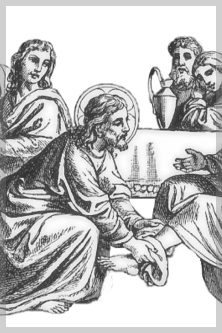
When people object to Mary calling herself the “Lord’s servant”, they are confusing being servile (mindlessly doing what is ordered) with consciously choosing to serve. There is nothing demeaning or weak about being a servant. After all, Jesus was God but He “emptied himself, by taking the form of a servant, being born in the likeness of men.” [Philippians 2:7] The One who calls us to be servants, is the same One who served us! He laid aside His majesty to wash His disciple’s filthy feet and He laid aside His divinity to suffer and die for all of mankind. If God can selflessly serve us, there is nothing demeaning about our serving Him!

Mary was far more than an incubator for God. We remember her not because she had the womb in which Jesus grew; we remember her because she freely chose to be a faithful and obedient servant to God. God could not have carried out His plan of salvation without Mary’s consent and cooperation. Let us remember that God cannot continue to carry out the plans for His Kingdom without our consent and cooperation. Like Mary, we are called to be God’s servants. Whether we accept His invitation, however, is entirely up to us.

But whoever would be great among you must be your servant, and whoever would be first among you must be slave of all. For even the Son of Man came not to be served but to serve, and to give his life as a ransom for many. [Mark 10:43-45 (ESV)]

Copyright ©2025 jsjdevotions. All rights reserved.

ON MARCH 25 (Part 1)

So the Word became human and made his home among us. He was full of unfailing love and faithfulness. And we have seen his glory, the glory of the Father’s one and only Son. [John 1:14 (NLT)]

If we were living in England or any of its colonies between 1155 and 1752, today would be New Year’s Eve. Back then, the British Isles used the Julian calendar. Named after Julius Caesar, the calendar year originally began January 1. After the fall of the Roman Empire, however, the new year’s onset gradually changed to the first day of spring. While starting a new year in the dead of winter seemed counter-intuitive, beginning it on March 25, the date of both the spring equinox and the Christian Feast of the Annunciation of Christ’s Birth, seemed a more logical way to start the year.

The Julian calendar, however, miscalculated the adjustments needed for leap years as well as the date of the spring equinox. Wanting Christians to celebrate Easter on the correct date, Pope Gregory instituted a new liturgical calendar with a better way of calculating leap years in 1582. Called the Gregorian calendar, January 1 was set as the beginning of the year. While March 25 no longer marked the equinox, it remained the date of the Annunciation. Although much of Roman Catholic Europe adopted Gregory’s calendar, Protestant England resisted and continued to follow the Julian calendar until finally adopting the Gregorian one in 1752.

While no longer New Year’s Day, for those in liturgical churches, tomorrow (March 25) is known as the Annunciation of our Lord. Commemorating the angel Gabriel’s visit to the Virgin Mary, it is a celebration as much Protestant as it is Roman Catholic. The Annunciation was celebrated as far back as the fourth or fifth century and its March date was set in the seventh.

Let’s not forget that the story of Jesus didn’t begin in Bethlehem; it began in Nazareth nine months prior to that night. It was when Mary became pregnant that God became incarnate—a human being made of flesh and blood. Granted, He was only two cells fused together at first. Nevertheless, that zygote had everything in it to become the man Jesus. It divided again and again, the embryo grew, the cells began to differentiate, and the fetus developed everything needed to live outside His mother. Since sin-filled man was incapable of going to God, on that day, our perfect God came to us. Fully God and fully man—that baby boy forming in Mary’s womb was the promised Messiah and savior of mankind!

While Jesus’ incarnation is the core of our Christianity, it is difficult to understand and, for some people, impossible to believe. Nevertheless, the God who spoke the world into creation, created night and day, scattered the stars through the sky, filled the oceans with water, and populated the earth with living plants and animals could certainly manage to plant a fetus in a womb without going through the ordinary steps. When Mary assented to God’s will, Jesus was conceived through the power of the Holy Spirit!

Of course, since we really don’t know when Jesus’ birth took place, we don’t know the date of His conception. Nevertheless, having grown up in a liturgical church, I find a richness and strength in remembering and celebrating events in the life of Christ (even if the dates are wrong). Luke’s gospel account of Gabriel’s visit to Mary seems more appropriate in this spring season of new beginnings and fresh starts than in winter, a time of dormancy. On what I hope to be a beautiful spring day for you, please take the time to read the account of this blessed miracle found in Luke 1:28-36. Remember to thank God for His entry into the world as a man so that He could save humanity.

Jesus Christ became Incarnate for one purpose, to make a way back to God that man might stand before Him as He was created to do, the friend and lover of God Himself. [Oswald Chambers]

Without question, this is the great mystery of our faith: Christ was revealed in a human body and vindicated by the Spirit. He was seen by angels and announced to the nations. He was believed in throughout the world and taken to heaven in glory. [1 Timothy 3:16 (NLT)]

Copyright ©2025 jsjdevotions. All rights reserved.