
Oh, that I had wings like a dove; then I would fly away and rest! I would fly far away to the quiet of the wilderness. How quickly I would escape—far from this wild storm of hatred. [Psalm 55:6-8 (NLT)]
 The skink is a reptile that looks as if it can’t decide whether it’s a lizard or a snake. As one scampered away down the boardwalk, it looked more lizard-like than usual because it was missing the pointed end of his long tail. Like many lizards, if a predator manages to catch a skink by the tail, the tail will break off. Since the detached tail continues to wiggle, the predator gets distracted which allows the lizard to escape. Even though a raccoon, snake, or hawk had appropriated its tail, that skink escaped to see another day. Although skinks don’t have much with which to defend themselves, with their detachable tails (caudal autonomy), God provided them with an effective mode of escaping trouble!
Like the skink, we all want to be able to escape when disaster occurs. The Department of Transportation designates evacuation routes in case of a hurricane and public buildings mark exits and stairwells so we can flee in case of fire, but we wish to escape from more than storms and burning buildings. We want to flee from things like chronic pain, stage-4 cancer, paralysis, Parkinson’s, or MS. We wonder where the emergency exit is when caregiving for a spouse disabled by stroke, an elderly parent with dementia, or a child with cerebral palsy. Where do we go to flee from a loved one’s addiction, the loneliness of widowhood, overwhelming debt, a troubled marriage, or the consequences of our failings? There are, however, no detachable tails or specially marked exits for those situations.
Adam and Eve ran from God after eating the forbidden fruit, the pregnant Hagar ran away from Sarai’s harsh treatment of her, Jonah ran the opposite way when God told him to go to Nineveh, and Elijah tried to escape Jezebel’s wrath by fleeing to Beersheba. Running and hiding, however, didn’t keep God from finding them and setting them back on the path He set for them. Unlike the skink, they couldn’t turn tail (or leave their tails behind) and run away; neither can we. Although some people try to flee their difficulties through abandonment, denial, addiction, or emotional detachment, their troubles eventually catch up with them. Instead of escaping like a skink, we have to turn around and face our troubles head on as did Adam, Eve, Hagar, Jonah, and Elijah.
While God doesn’t promise to fix our problems, He does promise we’ll not face them alone. Unlike the skink whose only defense is a detachable tail, God has provided us with His armor, the power of prayer, the Holy Spirit, and our brothers and sisters in Christ.
Heavenly Father, when we want to flee, please give us the strength and courage to meet our challenges face to face. We know we can’t do it alone but, with you, all things are possible.
Don’t pray to escape trouble. Don’t pray to be comfortable in your emotions. Pray to do the will of God in every situation. Nothing else is worth praying for. [Samuel M. Shoemaker]
 With its declaration of one all-powerful infinite God, Jewish tradition holds that the Shema’s first verse “Hear, O Israel: The Lord our God, the Lord is one,” is the most important and, as such, demands greater concentration so the eyes are closed or covered by the right hand during its recitation. The Talmud traces this practice back to Rabbi Judah the Prince (135 – 219 AD) who often interrupted his lectures to recite the Shema. Whenever he did so, the rabbi placed his hands over his eyes as a way of disconnecting from his surroundings.
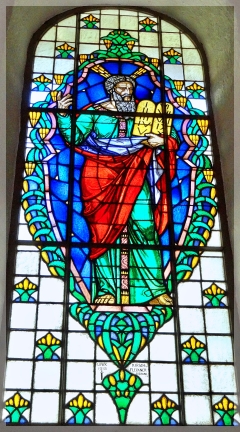
 In its entirety, the Shema consists of three sections: Deuteronomy 6:4–9, Deuteronomy 11:13–2, and Numbers 15:37–41. The second paragraph of the Shema repeats the first one’s commands regarding the binding of God’s words to hands and forehead, writing them on the doorways and gates, teaching them to the children, and talking about them throughout the day. The primary theme of this paragraph, however, is that the promised land and the people’s enjoyment of it depended on their faithfulness to God. As long as they loved God and served Him with heart and soul, the people and land would be blessed but, if they turned aside to serve other gods, God’s wrath would result and things would not go well for the people or their land. In this warning, that is repeated again and again throughout the Old Testament, we see the fundamental Jewish belief that reward and punishment are based on the fulfillment of God’s commandments.
 My morning’s reading took me to Deuteronomy 6 and the words that Jesus cited as the first, and most important commandment. Known as the Shema and found in verses 4 through 9, it is the essential declaration of the Jewish faith. Its name comes from the first Hebrew word of the verse, shema, which means “hear.” Observant Jews recite its words twice a day (morning and evening), on the Sabbath and religious holidays, and as the last words before death. The Shema is so entrenched in Judaism that a story is told about Rabbi Yitzhak Herzog who, in 1946, went searching for Jewish children who’d been hidden by Christians during the Holocaust. As he walked through European convents, monasteries, and orphanages, the rabbi would start to recite the Shema. He easily found the Jewish children because they immediately joined in saying the sacred words.
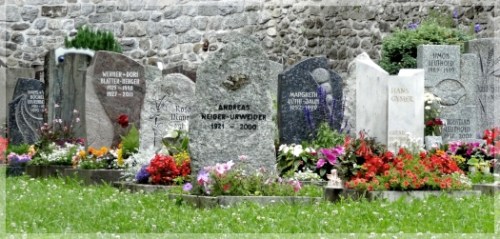 Many of the younger generation don’t know that yesterday’s Memorial Day originally was called Decoration Day and originated in the years following the Civil War. With some 620,000 dead from that conflict, communities began holding tributes to the fallen soldiers by reciting prayers and decorating their graves with flowers, flags and wreaths. The practice of leaving flowers at gravesites may have begun with the ancient Greeks who believed that, if the flowers took root and grew, the fallen had found peace or happiness in the afterlife.
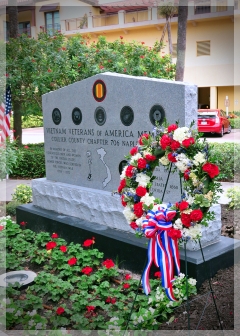 Contrary to popular belief, the purpose of our long holiday weekend is not to celebrate the end of school or the beginning of summer. More than a day for picnics and play, this is a day to honor those men and women who died while serving our country. Just as we stop to give thanks for our nation’s blessings on Thanksgiving, Memorial Day is the time we should stop to give thanks for the people who sacrificed their lives to makes those blessings possible.
 Devotions of the Heart