
For you are all children of God through faith in Christ Jesus. And all who have been united with Christ in baptism have put on Christ, like putting on new clothes. There is no longer Jew or Gentile, slave or free, male and female. For you are all one in Christ Jesus. [Galatians 3:26-28 (NLT)]
 Pastor Chris recently shared a devotion she read in which the author gives his office globe a gentle spin each morning. After a moment or two, he places a finger on the globe, stops its revolution, and prays for the people wherever his finger lands. Chris said she’s adopted this practice but, to make it more than a quick uninformed prayer, she does some research on the country’s needs and religions to guide her petitions.
Sounding like an interesting prayer discipline, I thought I’d give it a try. I don’t have a globe to spin but, since my hairdresser just returned from visiting her family in Albania, I thought I’d pray for her native land (a nation about which I knew nothing). Located just north of Greece, the Association for Religion Data Archives [ARDA] reported that about 59% of Albanians identify as Muslim and nearly 38% as Christian with the Christians almost evenly divided between the Roman Catholic and Orthodox churches. Less than 2% of the population identify as Protestant or other.
Although about 97% of Albania’s population claims to believe in God, few would have dared admit that 50 years ago! In 1967, communist Albania officially became an atheist country with a constitutional ban on all religious belief. Participation in any religious ceremony was a punishable offense, clergy of all faiths were jailed or killed, believers were ruthlessly persecuted, and churches and mosques were turned into factories. Possession of a Bible or Quran was prohibited and even making the sign of the cross could land someone in jail. With the fall of communism, the ban on religious observance was lifted in December 1990 and, in 1991, thousands of Christian missionaries flooded into Albania.
I learned that a fair amount of ignorance and arrogance came with those missionaries and we can learn a valuable lesson from their mistakes. Thinking they were the first to bring the gospel to Albania, most missionaries didn’t know that Albania’s Christian roots went back to the first century when Paul brought the gospel to Illyricum and Titus went to Dalmatia. That was today’s Albania! Evidence of Christian families in the Albanian city of Durrës in 58 AD leads scholars to believe Paul and Titus also visited there.
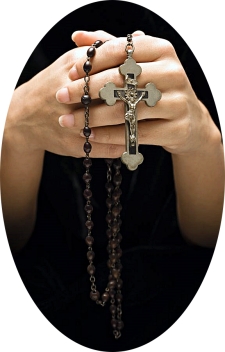
The uninformed evangelists didn’t know that Christianity thrived in Albania for twenty centuries until God was outlawed in 1967 or that 40% of the nation had a Christian background. They didn’t know that some priests had continued to baptize, say the liturgy, and have prayer vigils in secret and that many suffered for doing so! The evangelical missionaries were completely unfamiliar with Orthodox Christian or Roman Catholic traditions. When people showed their foreign visitors the icons, missals, rosaries, and crosses they’d kept hidden (at great risk) for over 25 years, they were told to put away their idolatrous items and to stop being superstitious by making the sign of the cross! Rather than build on these believers’ displays of faith, uninformed missionaries rejected them outright.
The Orthodox priests often found the supposedly non-denominational Christian groups unwilling to work with them. Unfamiliar with their ancient traditions and liturgy, many of the evangelical missionaries viewed them with suspicion. Of course, it went both ways. The Orthodox, unfamiliar with denominational Protestants, Evangelicals, Mormons, Jehovah’s Witnesses, Christian Scientists, Adventists, and Unitarians, lumped them all together in one category of “heretical cults” and often resisted efforts to hand out their Bibles. Ignorance, arrogance, and prejudice on both sides impaired Christian witness.
On the plus side, some groups were sensitive to the history of Albania and successfully worked in conjunction with the local churches. Today, in an effort to combat misperceptions, exchanges are done between the Orthodox and Roman Catholic seminaries and the Evangelical Bible Institute in Albania.
If we ever hope to introduce Christ to the world and spread God’s word, Christians everywhere need to overcome their ignorance of other people, cultures, traditions, and faiths—even when they seem very different from ours. Saying he did everything to spread the blessings of the gospel message, the Apostle Paul told the Corinthians that he tried to find common ground with everyone in his effort to save them.[1 Cor. 9:22-23] We can do nothing less! Rather than Christians competing with one another, we need to understand that we’re all on the same side—the side of Jesus!
There’s nothing like face-to-face contact and the developing of relationships for breaking down walls of prejudice. We have to start seeing one another as brothers and sisters from whom we can learn and grow. We shouldn’t let our arrogance or ignorance, and even our differences or different beliefs create walls that nourish fear or uncertainty of the other. As Christians we have to love the other through encountering them, and trying to understand who they are and what they believe. [Fr. Luke A. Veronis]
 Last month we took a driving trip through Virginia and North Carolina to enjoy the fall colors in the Blue Ridge and Smoky Mountains. While taking a train ride along the Nantahala River Gorge, we commented on the beautiful vines covering the hillside. Our seat-mate told us this lovely looking plant is a destructive weed called kudzu. Native to Asia, this semi-woody vine was introduced to the U.S. back in 1876 during the Philadelphia Centennial Exposition. Originally advertised as an ornamental plant, kudzu’s ability to grow up to a foot day (and up to 60-feet a year), overtake, grow over, and smother just about anything in its path, has given it a new name: “the vine that ate the South.”
 Saul, a man willing to kill his son rather than concede his error in making a foolish vow, wasn’t quite as eager to fulfill other vows he made. Later, he promised his daughter (along with exemption from taxes and military service) to the man who killed Goliath. While the vow prohibiting his men from eating came from his desire for revenge, this one may have come from fear. It was the king’s job to lead his men into battle and Saul, as the tallest man and the only one with bronze armor like Goliath’s, was the obvious choice to take on the Philistine. Perhaps Saul hoped the promise of wealth, honor, and a place at the king’s table would be incentive enough for someone else to volunteer to face the Philistine. For 40 days Goliath had taunted Israel but there were no takers until David.
 Last week, when writing how Jephthah’s reckless vow caused his daughter’s death, I remembered how Saul’s equally foolish vow nearly cost his son’s life. While Israel was at war with the Philistines, Saul and his 600 men were camped near Gibeah. Israel was seriously out-numbered by the better-armed Philistines and, because their enemy controlled the pass at Micmash, Saul’s troops could proceed no further. Although the rest of Saul’s men were afraid, Jonathan and his armor bearer were confident that the Lord was with them. Tired of the hopeless standoff with their enemies, the two snuck out of camp and headed toward the Philistine garrison. After passing through two treacherous cliffs and scaling a steep slope, they entered the enemy outpost and, outnumbered ten to one, killed them all.
 Skeptics love to ask how God could allow Jephthah to offer up his daughter as a burnt sacrifice. First, let’s note that it never says God approved of his sacrifice. In fact, Scripture makes it clear that such a sacrifice was abhorrent to the Lord. In His wisdom and mercy, God even provided a way out if someone made a rash or unrealistic vow. Leviticus 27 explains that such a vow could be purchased back with a 20% penalty and describes how valuations were to be determined. Although Jephthah displayed knowledge of Israel’s history when negotiating with the Ammonites, he showed his ignorance of God and God’s law with his rash vow. Moreover, there is no reason to think his daughter was sacrificed in the Tabernacle. It’s more likely that such a horrific event would have been part of a pagan ceremony.
 Like Christians, Hindus believe that, when the body dies, the soul does not. Unlike Christians, however, Hindus believe that, after death, the soul lives on in an astral body until it is reborn in another physical body. This cycle is continually repeated until the soul reaches a certain state of perfection (moksha) and is released from the bondage of birth and death. At that time, like a drop of water that eventually merges into the ocean, the soul will finally merge into God and become one with its creator. Of course, once absorbed by the sea, the drop would cease to exist.
