
The Lord is my shepherd; I have all that I need. [Psalm 23:1 (NLT)]
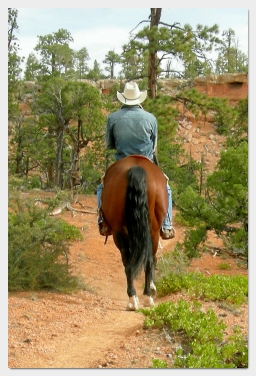 In A Gentle Thunder, author Max Lucado compares the hero of the Bible, the shepherd, with the hero of the American west, the cowboy. They both herd livestock, their home is the range, and they sleep under the stars. The difference, says Lucado, is that the shepherd knows and loves his sheep because he leads them to be shorn. The cowboy, however, doesn’t get attached to his cattle because he’s leading them to slaughter! While several cowboys drive a herd of cattle and know one another’s names, just one shepherd leads a flock of sheep and it is their names that he knows!
Lucado’s comparison got me thinking about the cowboy heroes of my youth: Marshalls Matt Dillon and Wyatt Earp, widower Lucas McCain (the Rifleman), gunfighter-for-hire Paladin, and the Lone Ranger with his trusty sidekick Tonto. They were larger than life heroes. Along with being excellent shots, they lived by a strict moral code, fought for law and order, and only used their fists or weapons in the cause of justice. I seriously doubt those cowboys bore much resemblance to the real thing.
The masked Lone Ranger stands out in my memory. He and Tonto rode through the West, doing good deeds and fighting evil. The stories were formulaic and, when the townspeople were in dire straits, our heroes would save the day. With the “William Tell Overture” playing in the background, they would ride into town, guns blazing, and rescue the good citizens from the forces of evil. Then without waiting for thanks, they’d ride off into the sunset with Rossini’s music in the background. We’d hear the Lone Ranger call, “Hi-yo, Silver” and someone would ask, “Who was that masked man?”
We no longer face the challenges of frontier life: desperadoes, stagecoach robberies, cattle rustling, hijacked stage coaches, gunfights, claim jumping, or evil land barons. Nevertheless, we need to be rescued from more realistic problems: fear, worry, poor choices, illness, anger, broken marriages, estranged families, doubt, indebtedness, addiction, disabilities, loss, and the challenges of care giving. Sadly, no cowboy in a white hat is going to ride to our rescue and the solution won’t occur in a thirty-minute time slot. Nevertheless, sometimes we seem to think Jesus will do just that (only without the silver bullets and white hat).
Fortunately, as Lucado points out in his book, we don’t have a cowboy; we have a shepherd. Unlike the Lone Ranger, He doesn’t travel around until He comes upon someone in trouble and, unlike Paladin, we don’t have to hire Him. Moreover, He never rides off into the sunset after helping us. Like a good shepherd, Jesus is always with each and every one of us. Being the sheep of His pasture, however, doesn’t mean we won’t encounter predators, pests, harsh environment, storms, or sickness. We’ll occasionally stumble, wander off, or be tempted by poisonous weeds. Having a shepherd means that we’re never alone in those trials. We don’t need to wait for a hero to save the day because our savior is in the day with us! The few times the Lone Ranger was caught, he never was unmasked and no one except Tonto knew his identity. As Christians, however, we know the identity of our shepherd. If we truly follow Him, we’ll never need a cowboy to save the day.
We need a shepherd. We don’t need a cowboy to herd us; we need a shepherd to care for us and to guide us. He’s not a cowboy, and we aren’t cattle. He doesn’t brand us, and we’re not on the way to the market. He guides, feeds, and anoints. And Word has it that he won’t quit until we reach the homeland. [Max Lucado]
 When Jesus finished the Sermon on the Mount, the crowds were astounded at his teaching because, unlike the scribes and Pharisees, He taught with “authority.” When the people wondered at Jesus’ authority, they weren’t referring to His ability to speak confidently and persuasively. The Greek word translated as “authority” was exousia which meant power or right; the people wondered at Jesus’ authorization to say the things He said. Rather than teach on their own authority, most rabbis taught on the authority of earlier sages. The Moody Bible Commentary depicts them as virtual “walking footnotes” who merely cited famous teachers and repeated what had been said before by others.
 While summer is hurricane season here in Florida, early spring is “sinkhole season.” For most property owners, a sinkhole is little more than a headache but, for some, it means the loss of their homes and possibly their lives. Seven weeks ago, two families north of here lost their homes and belongings as the earth collapsed beneath them, leaving a chasm at least 40-feet wide and 60-feet long. Back in 2013, a man went to sleep and literally disappeared as he, his bed and then his entire bedroom vanished into the earth; his body was never recovered.
 I couldn’t tell if my vague sense of unrest was because something was missing or there was something I needed to do. I couldn’t articulate it but I knew it was there and, as the days went by, the sense of disquiet continued. I simply asked God to reveal whatever was troubling me; perplexed, I didn’t know what else to pray. Fortunately, the Holy Spirit did!
 I can’t understand why a young mother lies on her deathbed when an elderly Alzheimer’s victim whose mind is long gone remains in this world. I will never comprehend why one person suffers a debilitating disease for years and another person breezes through life with nary an ache or pain. I wonder how a young family can be wiped out in a car accident when the drunk driver who caused the crash survives without a scratch. I will never grasp why some people are in such despair that they take their lives while others bravely fight to take each breath. I don’t know why one child is born with multiple birth defects when his sibling is the picture of perfect health or why one child is abused and another one is cherished. Life often seems incredibly unfair!
 We know little about Jesus’ childhood and young adulthood. Born in Bethlehem, He was circumcised and given His name eight days later. Forty days after His birth, Mary and Joseph took Him to the Temple in Jerusalem in accordance with the command to consecrate every firstborn male to God. Sometime after that, He received gifts from the Magi, His family fled to Egypt, and they returned to Nazareth after Herod died. That’s all we know of His childhood until He was twelve and the precocious youngster stayed behind in Jerusalem to discuss spiritual matters with the teachers there. After Mary and Joseph found Him in the Temple courts, He dutifully returned home to Nazareth with them. Although we know that Jesus learned Joseph’s construction trade and that he started his ministry around thirty, we know nothing of the years between twelve and thirty except that He was obedient to His parents and “grew in wisdom and stature and in favor with God and all the people.” [Luke 2:52]
 Devotions of the Heart