HOW DO WE DO IT?

Speak to each other in psalms and hymns and spiritual songs, singing and chanting in your heart to the Lord, always giving thanks for everything to God the father in the name of our Lord Jesus the Messiah. [Ephesians 5:19-20 NTE)]

lotus flowerJoe Btfsplk was a character in Al Capp’s Lil’ Abner comic strip. With a last name that sounds likes what’s known as a “raspberry” or “Bronx cheer,” the poor man had a dark cloud of perpetual bad luck hanging over his head. Btfsplk no longer appears in the comics but I think his dark cloud of misfortune has settled over the head of a dear friend I’ll call JB (in honor of Capp’s luckless character). Since JB’s retirement, if something could go wrong, it has and, as soon as one challenge resolves, another one appears. When I saw the photos from his most recent mishap, JB looked as if he’d been tossed around in a giant rock tumbler filled with broken glass and boulders.

I later learned that one of his wounds became infected (meaning a hospital stay) and, upon his release, JB fell and suffered a ruptured Achilles tendon! A modern-day Job, the poor guy can’t catch a break!

JB, like Job, could be described as an honorable and upright person who fears God. Fortunately, JB doesn’t have a group of friends (like Job’s) who blame his misfortunes on his unrepented sins. Nevertheless, like Job, JB probably wants to know the why of his continual trials. But, as a Bible-reading Christ follower who’s read the book of Job, JB understands that only our sovereign God knows why life unfolds as it does.

Paul’s words to the Ephesians were to always give “thanks for everything to God the Father” but, when considering JB’s trials, I wonder how it can be done. Were I under the dark cloud that seems to plague him with an unending downpour of challenges, I wonder if I could give thanks for it all. While giving thanks in some or most things is doable, the Greek word Paul used was pas which meant the entirety—every kind of circumstance. Rather than just the good or even tolerable stuff of life, we are to give thanks for the whole shebang (trials and all)!

It’s not as if Paul said those words flippantly. Like JB, his life was filled with trials and adversity. He suffered through more than his share of floggings, beatings, shipwrecks, imprisonment, persecution, physical infirmity, and pain. Giving thanks in such ordeals and trouble seems impossible until we look at Paul’s words leading up to today’s verses in which he said to “be filled with the Spirit!” [5:18] He also called on the power of the Spirit with his closing words to the Ephesians: “Just this: be strong in the Lord, and in the strength of his power.” [6:10] He told Philippians something similar: “I have strength for everything in the one who gives me power.” [4:13]

On our own, we might be able to put on a good front—grit our teeth, “grin and bear it,” or wear a martyr’s face while grumbling inside—but we need the power of the Holy Spirit to have a heart that is thankful to God in all things. It is by the Spirit’s power that we can focus on God, on His love, wisdom, and many blessings so that, knowing that He sees the future while we see only the present, we can submit to His sovereign plan with thanks and even joy.

I don’t think Paul’s words mean we have to be happy every time we end up in the ER, are diagnosed with cancer, or lose a loved one. The many psalms of lament show us that grief, anguish, and pain can coexist with gratitude. Rather than denying our pain, sorrow, or suffering, giving thanks during our trials reminds us that beauty, joy, and good still exist in spite of them. We can move from lament to gratitude because there always is something for which we can be thankful in every situation—even if it’s only that whatever happened wasn’t worse! We know that God is present and that He will strengthen, comfort, protect, and guide us through the dark storms of life and, for that, we can be thankful.

Admittedly, being thankful in all circumstances is not easy. Even famed evangelist Charles Spurgeon struggled. “I have not always found it easy to practice this duty; this I confess to my shame,” said the man known as the ‘Prince of Preachers.’ “When suffering extreme pain some time ago,” continued Spurgeon, “a brother in Christ said to me, ‘Have you thanked God for this?’ I replied that I desired to be patient, and would be thankful to recover. ‘But,’ said he, ‘in everything give thanks, not after it is over, but while you are still in it, and perhaps when you are enabled to give thanks for the severe pain, it will cease.’ I believe that there was much force in that good advice.” Indeed, there is!

Always celebrate, never stop praying; in everything be thankful (this is God’s will for you in the Messiah Jesus). [1 Thessalonians 5:16-18 NTE)]

Copyright ©2025 jsjdevotions. All rights reserved.

IT’S CURTAINS

Teach us to realize the brevity of life, so that we may grow in wisdom. [Psalm 90:12 (NLT)]

Death never takes the wise man by surprise; He is always ready to go. [Jean de La Fontaine]

powderpuffSeveral years ago, two friends joined the ranks of widowhood within a week of one another. Because her husband surrendered to cancer several months earlier by stopping all treatment, one woman was not surprised when she joined the club. The other woman, however, went to bed a wife and awoke the next morning to find herself a widow. Despite his looking the picture of health, her husband, having suffered a fatal stroke while she slept, lay dead on the kitchen floor.

Although Ira Byock is a palliative care physician and a leading advocate for improving end of life care, his book The Four Things That Matter Most is as much about living well as it is about dying. The four things referenced in the book’s title are four simple phrases: Please forgive me. I forgive you. Thank you. I love you. While we may think we’re simply restating what should be evident to those around us, we must never underestimate the power of those words.

We’d like to picture a peaceful ending with family gathered around our bedside and the opportunity to say and hear whatever needs to be said or heard, but that’s probably not the way our last act of life will be staged. Even though I knew my mother’s cancer would defeat her, when I walked out of her hospital room that afternoon, I never suspected that she’d be in a coffin when next I saw her! When I said farewell to my father after a holiday visit, I never expected that, while pheasant hunting in a cornfield, he’d die of a massive heart attack less than three weeks later. My father-in-law was airlifted to a trauma center and died there before any of us even knew he’d been in a car accident. Neither life nor death go according to plan!

In their last moments, did either of those husbands regret having left something unspoken? When their caskets were closed, did their family members weep because of words they’d left unsaid? Because they had warning, I’d like to think the first man and his family expressed their forgiveness, thanks, and love. As for the second husband—while gasping his last breath, did he wish he’d said “I love you!” before his wife went to bed? Do his children regret not apologizing for something or failing to express their love and appreciation for all he did? Does his wife wish she’d told him how much she loved him before going upstairs that night? Does she regret their previous day’s spat or wish she’d thanked him for his incredible patience?

Why should we wait until the curtain is closing before saying the important things? Any forgiveness to request or extend, any thanks to offer, and any words of love to share should not wait for the final act. We may not even know the play is closing, the people to whom we want to speak may not be present, or conversation may not be possible.

Please forgive me. I forgive you. Thank you. I love you. While it may be stating the obvious when we utter those words, being obvious doesn’t mean they don’t need to be said or heard. They’re all things that shouldn’t wait to be expressed until we or the people we love are at death’s door. If Lazarus or his sisters left anything unsaid the first time he died, I imagine they didn’t after his resurrection. Unlike Lazarus, however, we don’t get a second chance at dying and, unlike Martha and Mary, we don’t get a second opportunity to say farewell to our loved ones.

Please forgive me. I forgive you. Thank you. I love you. We don’t know when the curtain will close. Is there anyone to whom we should say those words before it does?

Everyone knows they’re going to die, but nobody believes it…If we did, we would do things differently. … Forgive yourself before you die, then forgive others. [Morrie Schwartz in “Tuesdays with Morrie” by Mitch Albom]

Lord, remind me how brief my time on earth will be. Remind me that my days are numbered—how fleeting my life is. You have made my life no longer than the width of my hand. My entire lifetime is just a moment to you; at best, each of us is but a breath. [Psalm 39:4-5 (NLT)]

Copyright ©2025 jsjdevotions. All rights reserved.

IN PRAISE OF HIS WORD

I will meditate on your precepts and fix my eyes on your ways. I will delight in your statutes; I will not forget your word. … The law of your mouth is better to me than thousands of gold and silver pieces. … How sweet are your words to my taste, sweeter than honey to my mouth! [Psalm 119: 15-16, 72, 103 (ESV)]

The more you read the Bible; and the more you meditate on it, the more you will be astonished with it. [Charles Spurgeon]

BiblesPsalm 119, the longest of the psalms, is a song in praise of the Word of God. Since we don’t read this psalm in its original Hebrew, we fail to appreciate its intricate construction. Each of its twenty-two sections begin with a letter of the Hebrew alphabet in sequence. Each of the eight verses in those twenty-two sections begin with the letter that introduced it. For example, the first word of the first section begins with alef, as do the next seven verses. In the second section, every line begins with beth. The psalm continues that way up to the 22nd (and last) section where every line begins with the final letter of the Hebrew alphabet, tav.

Using a variety of synonyms (such as words, ways, precepts, testimonies, commandments, path, and law), the psalmist mentions God’s word no less than 183 times! Believed to have been written by David, Jeremiah, Daniel or Ezra, the psalm’s author refers to himself as God’s servant and claims to praise God seven times a day. Whoever it was, penning a 176-line song about delighting in God’s word as an acrostic was a true labor of love.

I thought of this psalm when reading author Ann Voskamp’s description of the joy with which a nomadic tribe in Northern Kenya reacted when Bibles arrived in their village. Packed in cardboard boxes, God’s Word arrived on the back of a camel and was greeted by more than a thousand Rendille tribespeople along with dozens of their distant neighbors. After waiting 30 years for this day, the Rendille finally had Scripture’s words written in their own language. Having written praise songs specifically for the celebration, the women sang, “We give thanks to the Lord. The Word of God is like a pillar in our life. We give thanks to the Lord for this day for it is the first time we have the Bible in our own language.” Voskamp described how several women even slept with their Bibles under their pillows, “because it was treasured. They had nothing more valuable or priceless in their entire lives than God’s Word.”  For these followers of Christ, their newly translated Bibles were better than “thousands of gold and silver pieces.”

Unlike the Rendille people, we’ve had God’s word in our own language since William Tyndale’s translation of the New Testament in 1525; ten years later, the entire Bible was available in English. As the best-selling book of all time, Lifeway reports that about 85% of American homes have a Bible and the average household owns between four and five! While I suspect those Rendille tribespeople regularly read their Bibles, the Barna Group found that only about 35% of Americans ever read any of it and 36% of Americans never read at all! Yet, last year, the American Bible Society found that 71% of Americans are curious about the Bible and/or Jesus. There seems to be a disconnect here! If we’ve got questions about cooking, investing, bitcoins, or a medical condition, we research those topics. But, when we’re curious about the Bible or Jesus, those four plus Bibles in our homes remain unopened!

Both the psalmist and Rendille tribespeople celebrated God’s beautiful gift of Scripture. Finding it as “sweet as honey” and better than gold, they treasured this lamp to their feet and light for their path. After witnessing the Rendille’s enthusiastic response to the Bibles’ arrival along with their gratitude and joy in the Word, Voskamp asked herself, “How many Bibles do I have that are on my shelf collecting dust? Do I treasure God’s Word like this?”

Hers is a valid question and one we all should ask ourselves. Do we cherish and appreciate God’s word as did the author of Psalm 119? Do we receive God’s love letter to His people with the enthusiasm of the Rendille people? We should! After all, other than Jesus, it is the best gift God gave to man! Scripture’s words belong in our hearts rather than collecting dust in our bookcases!

I venture to say that the bulk of Christians spend more time in reading the newspaper than they do reading the Word of God. [Charles Spurgeon]

Oh how I love your law! It is my meditation all the day. Your commandment makes me wiser than my enemies, for it is ever with me. … Your word is a lamp to my feet and a light to my path. … Therefore, I love your commandments above gold, above fine gold. [Psalm 119:97-98, 105, 127 (ESV)]

Copyright ©2025 jsjdevotions. All rights reserved.

GARDEN OR SWAMP?

For everything there is a season, a time for every activity under heaven. A time to be born and a time to die. A time to plant and a time to harvest. A time to kill and a time to heal. A time to tear down and a time to build up. A time to cry and a time to laugh. A time to grieve and a time to dance. [Ecclesiastes 3:1-4 (NLT)]

We enjoy walking in the local Botanical Garden as well as the nearby Corkscrew Swamp. Although both offer plenty of photo ops and pleasant strolls in God’s creation, the Garden offers more color and variety than a swamp any day. Nevertheless, as much as I enjoy the Garden’s beauty and serenity, I feel more at home in the swamp.

While the Botanical Garden always has an abundance of showy colorful orchids, the swamp’s “super ghost orchid” has blossoms for only a few weeks each year. Even then, you need binoculars or a spotting scope to view its delicate (and not very impressive) flowers. At various times of the year, the swamp has wildflowers like blue flag iris, morning glories, and string lilies but they pale in comparison to the variety of exotic flora found in the Garden all year long. If the swamp’s flowers were in a beauty contest with the Garden’s flamboyant blooms like the passion flower or flaming glory bower, they’d easily lose.

Carefully designed by world-famous landscape architects and impeccably maintained by staff and volunteers, the Botanical Garden speaks of order, design, and perfection; nothing ever seems amiss. The Garden’s plants are beautifully pruned, fertilized, and fussed over. Weeds are quickly pulled and, should a plant wither or die, a lovely new one quickly replaces it.

In contrast, the swamp, with no apparent plan to its layout or plants, is a hodgepodge of flora, fauna, and water that changes almost daily. Completely dependent on rain for its existence, its animals and plants are left to the whims of the weather and Mother Nature. No one pulls the weeds, deadheads the flowers, shapes the trees, or brushes away dead leaves. Lightening and hurricanes take a heavy toll on the swamp’s plant life and, when conditions aren’t favorable, plants wither and die while animals move elsewhere. Dead trees eventually fall and, unless they’re blocking the trail, wherever they land is where they remain.

Try as I might, my life will never have the exquisite perfection of a Botanical Garden. In truth, it resembles the unpredictable and disordered swamp more than any garden. Perhaps, that’s why I enjoy it so much. The swamp is imperfect, changeable, and full of surprises. I never know what flowers will be in bloom, what birds will appear, or if I’ll see alligators, snakes, raccoons, or deer. The only thing I know for sure is that the swamp never disappoints; it always is wonderful and wild in its own unique way!

Life, like the swamp, is chaotic, disorganized, and a little dangerous; nevertheless, it is magnificent! As much as we might prefer it to be as ordered, serene, and pristine as a botanical garden, it isn’t! We’re sure to encounter life’s versions of thistles, mosquitoes, fungus, poison ivy, and animal scat. Nevertheless, along the way, there will be blessings like the swamp’s Roseate Spoonbills, sunflowers, deer, Scarlet Hibiscus, butterflies, and tiny green tree frogs! Like the swamp, we’ll have seasons of abundance and scarcity, downpours and drought, growth and dormancy, health and affliction, blessings and misfortune, beginnings and endings, and even occasional hurricanes. Life comes with its share of muck, weeds, pests, predators, storms, and vulnerability to circumstances beyond our control. The only sure thing is that God is with us during it all!

It’s ironic that our local Botanical Garden is in what used to be a swamp. The 250,000 yards of fill created after two lakes were dug in 2008 sculpted the property into the splendid showplace it is today. Someday, we will trade in our earthly swamp for God’s heavenly garden—a garden far more magnificent than any earthly garden—one with no disease, death, sorrow, pain, or weeds. Until then, we must be satisfied living in the crazy and wonderful swamp we call life. As we walk through it, we brush off the spider webs, avoid the scat on the trail, stay clear of the alligators, and look for the swamp’s gifts. Confident in the swamp’s creator, we find joy and contentment in the unique beauty of our somewhat confusing and chaotic journey. Thank you, God, for this amazing holy mess we call life!

They will never again be hungry or thirsty; they will never be scorched by the heat of the sun. For the Lamb on the throne will be their Shepherd. He will lead them to springs of life-giving water. And God will wipe every tear from their eyes. … He will wipe every tear from their eyes, and there will be no more death or sorrow or crying or pain. All these things are gone forever. [Revelation 7:16-17, 21:4 (NLT)]

Copyright ©2025 jsjdevotions. All rights reserved.

THE BRILLIANT THINGS

This is the day that the Lord has made; let us rejoice and be glad in it. [Psalm 118:24 (ESV)]

What would you do if you were six and your father said that your mom is in the hospital because she finds it hard to be happy and “did something stupid”? That question is answered in Duncan Macmillan and Jonny Donahoe’s one-act play, Every Brilliant Thing. In their play, that boy, now a grown man, tells the audience that he made of list of everything that was “brilliant” about the world—everything worth living for—and left it on his mother’s pillow. Reflecting a six-year old’s priorities, the list included ice cream, Kung-Fu movies, laughing so hard you shoot milk out your nose, burning things, construction cranes, and “me.” Although she returns the list with its spelling corrected, the boy’s mother never comments on it. Nevertheless, he keeps adding to his list. Although his mother eventually takes her life, the narrator tells how his list took on a life of its own and eventually saved him from his own depression and suicidal thoughts.

Throughout the play, the audience learns of additions to the list—everything from peanut butter, water fights, and sunlight to peeing in the sea with nobody knowing, someone lending you a book, cycling downhill, and completing a task. Sort of a theatrical and secular version of Ann Voskamp’s One Thousand Gifts, Every Brilliant Thing is a poignant reminder of the importance of noticing and naming the little “brilliant” things in our lives—to step out of ourselves to take in the small blessings with which God blesses us every day—to pause and feel God’s love in a stranger’s smile, a nurses’ gentle touch, the sound of children’s laughter, the smell of lemon zest, the taste of a fresh-baked warm chocolate chip cookie, a mockingbird’s serenade, a compliment, or the smell of a campfire! No one’s list is the same nor should they be.

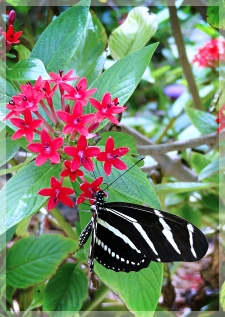
Nearly three years ago, Voskamp’s book inspired me to start my own list of “gifts” (what Macmillan and Donahoe called “brilliant” things). But, like the play’s narrator, I put it aside after a while. Although there were moments I thought, “That’s one for the list,” I rarely added them and they were forgotten. It wasn’t until my most recent bout with depression and pain that I resumed adding to it. Of course, I couldn’t add to the list without making a point of opening my eyes to God’s presence in the ordinary stuff of life. Some were big things like taking Communion or learning that my girls are visiting in a few weeks. Most things, however, are pretty mundane—the aroma of night-blooming jasmine, the two standard poodles that sit regally beside their person as he chauffeurs them around the community in his golfcart, Savannah Guthrie’s  book Mostly What God Does, whipped cream on a cup of hot cocoa, and monarch butterflies. There’s nothing extraordinary about these “brilliant” things; nevertheless, they bring a smile to my face and remind me of God’s presence in all things.

Although our cups overflow with God’s blessings, it’s been said that joy comes in sips rather than gulps. May we always remember that it wasn’t in the storm that Elijah heard God—it was in His whisper. Indeed, God whispers to us in the seemingly insignificant but “brilliant” things of life. Let us take note of each and every one!

There is not one little blade of grass, there is no color in this world that is not intended to make men rejoice. [John Calvin]

You serve me a six-course dinner right in front of my enemies. You revive my drooping head; my cup brims with blessing. Your beauty and love chase after me every day of my life. I’m back home in the house of God for the rest of my life. [Psalm 23:5-6 (MSG)]

Copyright ©2025 jsjdevotions. All rights reserved.

RESOLUTIONS

Search me, O God, and know my heart; test me and know my anxious thoughts. Point out anything in me that offends you, and lead me along the path of everlasting life. [Psalm 139:23-24 (NLT)]

The tradition of New Year’s resolutions goes back over 4,000 years to the ancient Babylonians (whose new year began in mid-March with the spring equinox). During their 12-day celebration called Akitu, they either crowned a new king or reaffirmed their loyalty to the old one. To ensure the gods’ favor, they promised to return borrowed items and pledged the repayment of all their debts.

Around 46 BC, Julius Caesar altered the calendar and began the year in January to honor the two-faced Janus—the Roman god who could look back into the past and forward into the future at the same time. Romans believed that the rest of the year would go pleasantly if that was how they spent its first day. Trying to spend January 1st as happily as possible, there were games, feasts, gifts, sweet treats, and plenty of wine while complaint, gossip, and quarrels were avoided. By making sacrifices to Janus and promising to live a better life, Romans believed the year ahead would bring prosperity and success.

Did you spend yesterday as pleasantly as possible—with no spats or spite? Did you start the new year with a resolution or two? While pledging to become a better person in the coming year or promising to return borrowed items and pay one’s debts are good goals for 2025, the majority of our New Year’s resolutions usually have something to do with health, exercise, or diet.

Before resolving to floss, eat more vegetables, or run a 5K, we should pray and ask God what He would like to see us change. “Search me, O God,” is what could be called a dangerous prayer because, when we ask God to search, we should be ready for what He finds. Chances are that it will have nothing to do with developing better dental or nutrition habits.

Asking God to examine our innermost being is like asking Him to perform exploratory surgery in search of sin. While a surgeon may not find a malignancy, God is sure to find plenty of areas in our lives that need excising or change. In medicine, a surgeon usually removes a malignancy if it is found. In God’s hospital, it’s a little different. If He finds disease or malignancy in our hearts, after pointing it out, He expects us to repent and turn away from it.

According to Drive Research, only 9% of those who make New Year’s resolutions successfully keep them all year. Sadly, our spiritual goals can fail as readily as the non-spiritual ones. For 20 years, one Christ-following friend has resolved to read the Bible, cover-to-cover; so far, she’s not gotten past Leviticus! Perhaps we’d do better if we remember that we can’t change by ourselves. While will-power alone might keep us away from Dunkin’ Donuts or Krispy Kreme (at least for a while), it’s not enough when we’re combating spiritual enemies. Fortunately, we are empowered by the Holy Spirit and, through Him, all things are possible—even reading the Bible.

Let us remember that Jesus is in the business of transformation. He transformed water into wine, the blind into the sighted, the lame into the strong, and the diseased into the healthy. He changed the churning sea into calm water, a few morsels of food into a feast, and the dead into the living. Jesus’ miracles of transformation continue today. He turns darkness into light, anger into peace, fear into hope, animosity into love, selfishness into generosity, mourning into joy, shame into honor, and sinners into saints. If you’re still not sure what your resolution should be, you can always borrow Jonathon Edward’s: “Resolution One: I will live for God. Resolution Two: If no one else does, I still will”

May you have a blessed new year.

The object of a new year is not that we should have a new year. It is that we should have a new soul. [G. K. Chesterton]

And I will give you a new heart, and I will put a new spirit in you. I will take out your stony, stubborn heart and give you a tender, responsive heart. And I will put my Spirit in you so that you will follow my decrees and be careful to obey my regulations. [Ezekiel 36:26-27 (NLT)]

 Copyright ©2025 jsjdevotions. All rights reserved.