
Then Jesus said to his disciples, “Those who want to come with me must say no to the things they want, pick up their crosses, and follow me.” [Matthew 16:24 (GW)]
 “I’m so busy!” If there’s even a remote possibility that we might be asked to do something we’d rather avoid, we can cut off the request at the pass by starting the conversation with those words. It’s the perfect out. On the other hand, when said to us, we can’t argue with it.
Both Luke and Mark tells the story of four men who weren’t too busy to carry their paralyzed friend on a pallet to see Jesus in Capernaum. Once there, they were unable to get their friend through the mass of people crowding into the house where Jesus was preaching. Undeterred by the crowd, they hauled the paralyzed man up to the roof, dug a hole through the thatch, and lowered him down to the room. Determined to bring the paralyzed man to Jesus, these friends weren’t too busy, even when helping him became a major undertaking and an engineering feat!
Consider Job’s friends—despite their business and family obligations, they weren’t too busy to drop everything and travel from their homes to offer him solace. These men didn’t just stop by to leave a covered casserole and offer quick condolences; they silently sat with Job for seven days. While there were errors in their theology, their intentions were good.
Mark tells us about a blind man in Bethsaida whose friends brought him to Jesus and begged the Lord to touch and heal him. The man regained sight because his friends weren’t too busy to bring him to the Lord. Consider the seven men the early church commissioned to serve the needs of the widows in their midst. These men already had jobs and other obligations but Stephen, Philip, and the others weren’t too busy to take on an extra task for the church.
No matter how filled our calendars are, we all manage to find time to do the things important to us. Even though Martha was busy preparing supper for Jesus and the disciples, she could have found time to listen to Jesus. It’s simply a matter of priorities. How much of our busyness is necessary and how much is needless or unproductive? How much of our time is spent working ineffectively, keeping busy while accomplishing nothing, or giving undue importance to trivialities? Are we intentional about the way we spend our time? While God doesn’t expect us to give an automatic “yes” to every request, He probably doesn’t want an automatic “no” either and “I’m busy” is just an easier way of saying, “No!”
Being busy can hinder more than our relationships with people; it hinders our time with God! No matter what’s on our schedule, we must never be too busy for Him as was Martha. Yet, we often start our prayers with that very complaint or answer His call with that response. He knows exactly how busy we are and how we spend (or waste) our time and energy. We need to listen and pray before deciding we’re too busy for friends, family, or God. Even though He runs the entire universe, God is never too busy for us; how can we possibly think we’re too busy for Him? Jesus told us the greatest commandment was to love God and the next was to love our neighbor as ourselves. May we never find ourselves too busy to do either one!
One reason we are so harried and hurried is that we make yesterday and tomorrow our business, when all that legitimately concerns us is today. If we really have too much to do, there are some items on the agenda which God did not put there. Let us submit the list to Him and ask Him to indicate which items we must delete. There is always time to do the will of God. If we are too busy to do that, we are too busy. [Elisabeth Elliot]
 Like his cousin Jesus, John’s impending birth was announced by the angel Gabriel, it took God’s intervention to take place, and his name and calling were determined before he was conceived. The angel Gabriel told Zechariah that, “in the spirit and power of Elijah,” John was “to make ready for the Lord a people prepared.” When John was circumcised, Zechariah prophesied that John would “go before the Lord to prepare his ways, to give knowledge of salvation to his people in the forgiveness of their sins.”
 Occasionally, I’ll spot a partially open moonflower (Ipomoea alba) during an early morning walk at the park. While the Moonflower’s cousin the Morning Glory opens wide to welcome the sunlight, the Moonflower prefers darkness. It’s only when the sun sets that it opens to a large trumpet-shaped bloom. Rather than competing during the day with brightly colored flowers for pollinators like bees and butterflies, Moonflowers enjoy pollinators like bats and moths at night. As the morning sun rises, the Moonflower again rejects the light and rolls up into itself.
 When Moravian missionaries first arrived in the Arctic, they found no single word in the Inuktitut language for forgiveness. That doesn’t mean the Inuit people didn’t let go of past wrongs, just that they didn’t have a single world for doing so. Since forgiveness is an essential concept in Christianity, the missionaries wanted a single word that captured the kind of forgiveness found in Psalm 103. Using Inuktitut words, they came up issumagijoujungnainermik meaning “not-being-able-to-think-about-it-anymore.” This 24-letter multi-syllable word beautifully describes the God who will “cast all our sins into the depths of the sea” [Micah 7:19], who vows to “forgive their iniquity, and…remember their sin no more,” [Jeremiah 31:34], and who promises to blot out our transgressions and not remember our sins.[Isaiah 43:25]
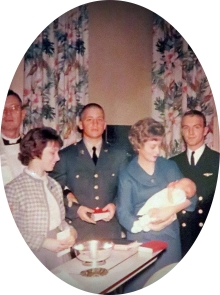 Earlier this week, I wrote about my nephew Johnny’s baptism in my mother’s hospital room. Because she was at death’s door, my brother took emergency leave and he and I served as the baby’s sponsors in Baptism (or Godparents).
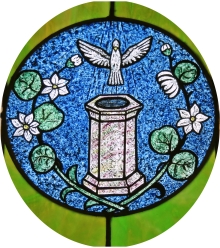 In 1962, my 2-month-old nephew Johnny and his parents traveled 1,500 miles for his Baptism. Because my mother was hospitalized (and soon would be dead), the sacrament took place at her bedside. This was the only time Johnny and his grandmother met and the last time my sister saw our mother alive.
 Devotions of the Heart