
Put on your new nature, and be renewed as you learn to know your Creator and become like him. In this new life, it doesn’t matter if you are a Jew or a Gentile, circumcised or uncircumcised, barbaric, uncivilized, slave, or free. Christ is all that matters, and he lives in all of us. [Colossians 3:11 (NLT)]
 Jerusalem and Samaria may only have been about 40 miles apart but centuries of hostility separated them. Both politics and religion alienated the Jews from the Samaritans—much as they did Catholics from Protestants in Northern Ireland during the violence plagued decades of The Troubles. Because of the enmity between the people, even though the shortest path from Judea to Galilee was through Samaria, most Jews detoured east to avoid Samaria entirely. John 4:4, however, tells us that Jesus “had to” pass through Samaria. The word used was edei meaning “it was necessary.” Why?
We certainly know Jesus didn’t take that shortcut through Samaria because He was in a hurry. After meeting the woman at Jacob’s well, He lingered there for two more days. It would seem that route was necessary because Jesus and the disciples had a divine appointment in the Samaritan village of Sychar. The appointment wasn’t just with the woman but also with the townspeople who would hear His message and come to believe.
While Jesus rested at the well, the disciples went into town to buy food. Because the gospels aren’t in chronological order, we don’t know if this happened before or after another Samaritan village had spurned the disciples and James and John had suggested raining fire upon it. [Luke 9:53] This time, however, the Samaritans welcomed them. After the disciples successfully obtained food, the village begged Jesus and His men to stay. That divine appointment clearly prepared the disciples for the command Jesus later gave at His ascension: “You will be my witnesses, telling people about me everywhere—in Jerusalem, throughout Judea, in Samaria and to the ends of the earth.” [Acts 1:8] Did that divine appointment also include a valuable lesson about not judging an entire people by the bad actions of a few?
Whether it’s because of politics, history, language, race, religion, ethnicity, past grievances, or simply because we don’t know them, we tend to dislike people who are different from us. Thinking in terms of “them” and “us” we define others by our differences. Perhaps it’s time to start with our similarities: we all are children of God! We’re told to love our enemies but how can we do that if we don’t know them? Animosity begins someplace but, then again, so does relationship. Maybe we’ll find “they” aren’t our enemies at all!
The best way to destroy an enemy is to turn him into a friend. [F.F. Bruce]
 My husband, son, and sixteen-year old grandson were talking after dinner and reminiscing about Grandpa J, my husband’s father. A man of faith and fun, love and laughter, honesty and honor, he truly was one-of-a-kind. Having died shortly after my grand’s birth, the boy only knows his great-grandpa through photos and some wonderful stories that just seem to get better with time. The conversation gradually turned to the family business, started by Grandpa J nearly sixty-five years ago in the family’s garage. Although my grand had heard some of the stories, others were new and he listened intently.
 She washes her hands with soap and water but, doubting the brown liquid coming from the faucet (water that’s unsafe to drink) could rid her hands of germs, my friend also uses hand sanitizer. She’s not in a third world country but at a Native American pueblo less than a half hour from a major American city. One third of its residents live in “poverty” and the rest aren’t much better. Several generations live together in overcrowded homes, no one has appliances like washers, dryers or dishwashers, and cell service is iffy at best. In spite of all they lack, the people she meets are kind and generous. Never apologetic for their homes, they welcome her and always offer food and bottled water; proud of their heritage, they invite her to their feasts. Serving this indigenous nation in a medical capacity, she tries to shake off the feeling of guilt as she pulls into her driveway. She knows that her ethnicity is much of the reason she enjoys a life easier than theirs.
 In another Pearls before Swine comic (drawn by Stephen Pastis), we see Goat, in the middle of the desert, on the phone with Rat. “My car broke down and I’m stranded in the middle of nowhere. Can you help me?” asks Goat. “Sure,” answers Rat, “I’m sending you thoughts and prayers.” In the last frame, Rat says to Pig, “It’s so much easier than getting up.”
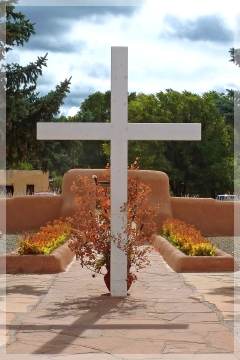 This pandemic may have may have postponed the Olympics but it hasn’t delayed the National Day of Prayer. Today’s observances, however, will look quite different from previous ones. There won’t be any prayer breakfasts or luncheons and large groups won’t assemble in parks, churches or on courthouse steps. Instead, churches will stream their services and religious leaders from across the county will participate in a national broadcast to be aired tonight from 8 to 10 PM ET (see their website or Facebook page for details). Because of the many “virtual” events planned, today’s observance actually could be this day’s largest prayer gathering.
 With each new day feeling like yesterday, we decided to watch the 1993 movie Groundhog Day. In it, the discontented TV weatherman Phil Connors, played by Bill Murray, is trapped in a time loop and keeps reliving February 2. At first, he takes advantage of never having to reap the consequences of his selfish actions but grows tired of his hedonistic life. When the predictability of the day causes boredom, depression, and cynicism to set in, he commits suicide several times—only to wake again and again on the same February 2. Eventually, Phil comes to grips with his situation and decides to make the most of it. Among other things, he learns to to play jazz piano, speak French, memorize the life story of everyone in town, sculpt ice, and master the art of flipping cards into an upturned hat. As he betters himself, he begins to better the lives of the people around him. The time loop eventually ends when the changed man finally gets the day right by caring more about others than himself.
 Devotions of the Heart