FOR OUR ENEMIES

O Lord, oppose those who oppose me. Fight those who fight against me. … Make their path dark and slippery, with the angel of the Lord pursuing them. [Psalm 35:1,6 (NLT)

Let death stalk my enemies; let the grave swallow them alive, for evil makes its home within them. [Psalm 55:15 (NLT)]

great blue heronA few nights ago, I had some unwelcome visitors—worry and anger—and they wouldn’t let me sleep. I responded to their visit with prayer and yet it seemed God had closed His office for the night. We’d just received an accusatory and demanding “do this or else” letter from an attorney and my prayers had been as accusing and vindictive as was the letter. No wonder God turned a deaf ear to them.

Throughout much of King David’s life, he was beset by enemies: Philistines, Babylonians, Moabites, Ammonites, King Saul, and even his own son Absalom. As a result, many of his Psalms include what are known as imprecatory prayers in which he asks God to punish and destroy his enemies, sometimes in quite horrible ways. Although David was asking God to settle the matter of evil, I find it hard to reconcile his words with Christianity’s love, forgiveness, meekness and peace. As Christians, no matter how much we dislike someone or how malicious or nasty he (or she) happens to be, we are never to curse them or wish evil upon anyone. In fact, Jesus tells us to do the exact opposite—we are to love, pray for and bless those who curse us. Moreover, we are to submit to God’s sovereignty and pray that His (not our) will be done. The only way to be at peace with God is to be at peace with his children.

I’ve encountered opposition several times, but having flesh and blood adversaries or enemies is new to me. Our integrity has never been questioned before this and I was wounded, confused and irate. I knew I had to pray for our legal enemies and, while I didn’t curse them with imprecatory prayer, I certainly wasn’t blessing them either. As I prayed that they would be reasonable, see the light, change their minds, concede the error of their ways, and go away quietly, I was really praying about me, not for them. Again, it seemed that God was deaf to my pleas. It took me awhile before I understood that my real enemy wasn’t human; he was right there in my mind, tormenting me with outraged, vengeful and worrisome thoughts. It was not until I stopped thinking of these people as foes and started to pray blessings for them that I felt God again open His door to me and my prayers. As I prayed for them, for their health and happiness and even their prosperity, my anger subsided and my worry disappeared.

While I think we’ve acted honorably and been honest and forthright, I’m sure the other party is as sure they’re justified in their accusations and demands. In actuality, the truth probably lies somewhere in between. I’ll leave it to the lawyers and God to figure out a sensible and peaceful solution. I’ve already lost one night’s sleep over this; I’m not about to lose my soul, as well. As for me, I’m going to love, forgive and pray blessings for my enemy and, if need be, even turn the other cheek.


Bless those who persecute you. Don’t curse them; pray that God will bless them. … Never pay back evil with more evil. Do things in such a way that everyone can see you are honorable. Do all that you can to live in peace with everyone. Dear friends, never take revenge. [Romans 12:14,17-19a (NLT)]

But to you who are willing to listen, I say, love your enemies! Do good to those who hate you. Bless those who curse you. Pray for those who hurt you. If someone slaps you on one cheek, offer the other cheek also. If someone demands your coat, offer your shirt also. Give to anyone who asks; and when things are taken away from you, don’t try to get them back. Do to others as you would like them to do to you. [Luke 6:27-31 (NLT)]

Copyright ©2017 jsjdevotions. All rights reserved.

THE BENEFIT OF DOUBT


When you talk, do not say harmful things, but say what people need—words that will help others become stronger. Then what you say will do good to those who listen to you. [Ephesians 4:29 (NCV)]

crinium lily

“What did she mean by that?” we might wonder. We know better than to make insensitive, unkind, or inappropriate remarks but what about when we think we’ve heard those same kinds of comments? Unfortunately, what we perceive is not necessarily what was meant or said. Sometimes, we over analyze the things we hear: the words chosen, the way they’re said, and even the speaker’s tone of voice. We may assign unkind intentions or hidden meanings that aren’t there. When we do that, we can easily find offense where none is intended.

Let’s face it, we all have had “foot in mouth” disease and said the wrong thing or the right thing the wrong way more than once. We’ve used poor choices of words, been politically incorrect, forgotten something we were supposed to remember or mentioned something we should have forgotten. We’ve called people by the wrong names and probably even asked a heavy-set woman when the baby’s due! We didn’t mean to hurt anyone; we were just being the imperfect people we are! I suspect most people are like me, not anywhere near clever enough for veiled messages and double meanings. Nevertheless, I can analyze someone else’s remarks as if they’ve spent hours choosing their words and practicing their delivery. When I think about it, if I’ve felt hurt or offended by another person’s words, it’s usually because of my own insecurities.

I never intend to say rude or thoughtless things but, unfortunately, it sometimes happens. Lord, let your Holy Spirit keep my foot out of my mouth. When in doubt, remind me that silence is always a good option. Just as I want others to give me the benefit of the doubt when I speak carelessly, show me how to be willing to do the same thing. May your Holy Spirit help me assume innocent intentions on the part of those whose words upset or offend me. Guide me so that I not only speak with love but listen with love, as well.

This does not mean that love is gullible, but that it does not think the worst (as is the way of the world). It retains its faith. Love is not deceived … but it is always ready to give the benefit of the doubt. [Leon Morris, in his commentary on 1 Corinthians 13]

Love patiently accepts all things. It always trusts, always hopes, and always endures. [1 Corinthians 13:7 (NCV)]

Copyright ©2017 jsjdevotions. All rights reserved.

IT SEEMED LIKE A GOOD IDEA

Fools think they are doing right, but the wise listen to advice. [Proverbs 12:15 (NCV)]

Grand Tetons - rubber rabbit brushAfter it was returned by the Philistines, the Ark of God had been neglected in Kiriath-jearim for twenty years. Fresh from victories over the Philistines, David decided to bring the Ark back to its rightful home in Jerusalem. It certainly seemed like a good idea at the time. Unfortunately, ignoring the law’s clear instructions that the Ark could only rest on poles and carried on the shoulders of Levites, David had it placed on a cart pulled by oxen. The oxen stumbled, the cart tipped, and Uzzah reached out to steady it. Under Hebrew law, touching the sacred Ark was a capital offense and Uzzah was immediately struck dead. The Ark should never have been on a cart and it was David’s disobedience and carelessness that caused the man’s death. Nevertheless, David’s reaction was to get mad at God.

How many times do we have what seems like a good idea that turns out bad? We try to do the right thing the wrong way and then get mad at God when things don’t turn out well. How many times have other people been hurt because of our haste, overconfidence, or ignorance? David had wisely consulted the Lord on military strategy against the Philistines. Yet, when it came to moving the sacred Ark, he consulted only his officials, the officers in his army, and the people. Was it pride at his military victories that keep David from consulting God about this endeavor? Remembering that our Father knows best, let’s learn from David’s mistake and seek God’s advice in all of our actions.

Lord, no matter how noble the goal, stop us when we barge on ahead without consulting you. Keep us from both reckless action and thoughtless inaction; show us how to act carefully and prudently. Remind us that easy answers are rarely as easy as we think them to be. Please don’t let our idea of a solution ever create a greater problem.

Commit your actions to the Lord, and your plans will succeed. [Proverbs 16:3 (NCV)]

Copyright ©2017 jsjdevotions. All rights reserved.


WE NEED HELP!

But I need something more! For I know the law but still I can’t keep it, and if the power of sin within me keeps sabotaging my best intentions, I obviously need help! I realize that I don’t have what it takes. I can will it, but I can’t do it. I decide to do good, but I don’t really do it; I decide not to do bad, but then I do it anyway. My decisions, such as they are, don’t result in actions. Something has gone wrong deep within me and gets the better of me every time. [Romans 7:17-20 (MSG)]

butterfly weedWe all know the speed limit, but most of us break it. Obviously knowing a law is not enough to make us obey it. We know the guidelines for a healthy lifestyle, but most of us still eat and drink more than we should and exercise far less than recommended. Evidently, self-determination is not enough to make us behave as we should. We may believe in Jesus, but we still succumb to sin. Clearly, calling oneself a Christian doesn’t create an invisible shield against temptation and bad behavior.
If someone as devout as the Apostle Paul struggled with sin and couldn’t overcome it on his own, we are in good company. As Paul found, knowing God’s law is not sufficient and struggling to obey it on our own is unsuccessful. Like Paul, we will continually struggle with the attraction of sin. It’s not easy to repent and tougher to forgive. It’s challenging to love our neighbors and even harder to love our enemies. Having faith is only easy when we already know the results. Try as hard as we can, honesty, humility, and obedience seem to escape us while pride, anger and deceit rush in to take their place. Being God’s child is a life-long process. We will continue to be a work in progress for the rest of our lives. Willpower is not enough; we cannot do it on our own.

We must follow Paul’s example and call on the Holy Spirit to give us the power we need to change. God promises he will be there! Every time we fall (and, like Paul, we will fall many times), God will be there to pick us up.

“I told myself not to do it, but I didn’t listen!” [Neighbor girl’s excuse to her grandmother]

I am not what I ought to be, nor what I wish to be, nor what I hope to be – I can truly say that I am not what I once was – a slave to sin and Satan. And I can heartily join with the apostle and say that “by the grace of God I am what I am! [John Newton]

I’ve tried everything and nothing helps. I’m at the end of my rope. Is there no one who can do anything for me? Isn’t that the real question? The answer, thank God, is that Jesus Christ can and does. He acted to set things right in this life of contradictions where I want to serve God with all my heart and mind, but am pulled by the influence of sin to do something totally different. [Romans 7:24-25 (MSG)]

Copyright ©2017 jsjdevotions. All rights reserved.

CEASE FIRE

Then Solomon said, “Don’t kill the child! Give it to the first woman—she is its real mother.” [1 Kings 3:27 (GNT)]

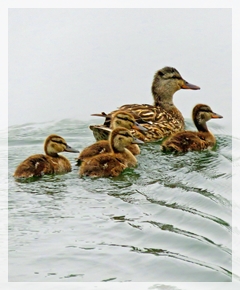
mallard - baby duckingsImmediately after finishing yesterday’s devotion about conflict and prayer, I received a call from a friend whose 11-year old granddaughter, Anna, has osteosarcoma (bone cancer). Having undergone chemotherapy for the past two months, she is scheduled for surgery this week. In the best case scenario, her knee and part of her femur will be removed and replaced by a metal prostheses; the worst case scenario involves complete amputation of the leg. In either case, more chemo and at least six to twelve months of physical therapy will follow.
As distressed as this grandfather is by his grand’s cancer, he is even more upset by her parents’ behavior. Divorced several years ago, they decided upon an “every other week” type of joint custody. Although this often sounds like a win-win solution, court battles about custody issues have continued since the divorce. Rather than a good compromise, their custody agreement is more like an, “If I can’t have her all of the time, neither can you!” sort of thing. Their story reminds me of the two women claiming to be the mother of the same infant who came to King Solomon to settle their dispute. As the women argued, King Solomon called for his sword and ordered that the child be cut in half so that each one could have a part of him. “No!” screamed one mother who said to give him to the other woman so that he could live. “Go ahead,” said the other woman since that way neither mother would have the baby. Solomon immediately knew the identity of the real mother—the woman who was willing to give up her own flesh and blood so that he could live. Real parents are willing to sacrifice their happiness for the sake of their children, even if that means losing them. Now, with a seriously ill youngster, instead of putting aside their differences and forming a united wall of protection around their daughter, Anna’s parents brought their dispute not just into the court but also into the hospital. Because tempers flared and things got so contentious, only that week’s custodial parent can be with the girl in hospital.

Yesterday, I wrote about turning to Scripture and prayer as a way of handling disputes. In this case, although counselling and the courts haven’t worked, Scripture and prayer haven’t been tried. It is in God’s word and prayer that these parents would find true wisdom, strength and the directions to sacrifice, forgive, and love in the way that the mother in Solomon’s court did. I know both of Anna’s parents love her but they are unwilling to put aside their anger, resentment, and selfish desires for the sake of their child. Instead of being sliced in half by a sword, an eleven year old girl is being torn apart by two adults who are more interested in winning every dispute than they are in finding a way to live in peace and bring healing to their daughter. So invested in winning, they can’t see the real loser in their hateful war. Unfortunately, while their situation is extreme, Anna is not the only child of divorce being used as a pawn in her parents’ game of revenge.

Father in Heaven, forgive us when we look to our needs and desires instead of to you. Watch over and strengthen, not just Anna, but all children caught in the middle of their parents’ battles. May we all learn to call to you in prayer, turn to your word for wisdom, be willing to sacrifice our desires for the good of others, and continually act with forgiveness and love.

Above everything, love one another earnestly, because love covers over many sins. [1 Peter 4:8 (GNT)]

Ask God to bless those who persecute you—yes, ask him to bless, not to curse. … If someone has done you wrong, do not repay him with a wrong. Try to do what everyone considers to be good. Do everything possible on your part to live in peace with everybody. … Do not let evil defeat you; instead, conquer evil with good. [Romans 12:14,17-18,21 (GNT)]

Copyright ©2017 jsjdevotions. All rights reserved.

HUMBLING

The Lord detests the proud; they will surely be punished. … Pride goes before destruction, and haughtiness before a fall. First pride, then the crash—the bigger the ego, the harder the fall. [Proverbs 16:5,18 (NLT)]

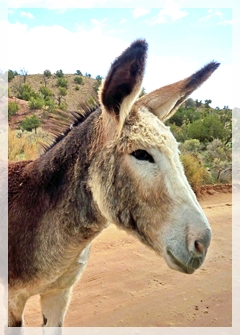
donkeyWhile reading C.S. Lewis’ The Horse and His Boy, I couldn’t help but think of the proud Babylonian King Nebuchadnezzar. He was so full of himself that he erected a 90-foot golden statue and then demanded that people fall down and worship it as a sign of loyalty to him. When interpreting one of the king’s dreams, Daniel told Nebuchadnezzar that he would be driven from human society and only regain his kingdom when the king learned that heaven, not man, rules. The king was warned to change his evil behavior. In spite of the caution and even though he’d seen the power of the Israelites’ one true God when Shadrach, Meshach, and Abednego survived the fiery furnace, Nebuchadnezzar didn’t change his ways. While looking down from his rooftop and surveying the wonders of Babylon, he expressed pride in his accomplishments and congratulated himself on his mighty power. Before the words were even out of his mouth, a voice from heaven pronounced judgment upon him. The king developed what is known as boanthropy, a psychological disorder in which one becomes delusional and thinks he or she is a cow. The high and mighty king was driven from society and lived and ate like an animal for the next seven years.

In The Horse and His Boy, instead of a king, the reader meets the pompous Prince Rabadash, the tale’s villain. Fancying himself a great warrior, he set off to seek revenge on a Narnian queen who spurned his advances. After being defeated in battle, the captured prince was told to forget his pride and anger and accept the mercy offered by Narnia’s kings. Even though he replied with an arrogant tirade, another chance to change his evil ways was offered to the proud prince. While responding with even more invective, Rabadash’s last words came out as braying. Unlike Nebuchadnezzar, who only thought he was an animal, the prince actually became one—a donkey.

Both true and fictional stories can help us understand God and life. After all, even Jesus made up stories with his parables. It is no mere coincidence that Rabadash’s fate resembles that of Nebuchadnezzar. C.S. Lewis considered pride to be the “great sin”—the sin that leads us to what he called “the complete anti-God state of mind” and the sin that leads us to all other sins. Pride causes us to look down on things and people (as it did with both Nebuchadnezzar and Rabadash) instead of looking up to God. It was only when the humbled king looked up at heaven that he returned to sanity and only when thousands had looked down at the four-legged prince that he regained his body.

Envy is private, lust and anger can be concealed, and selfishness and greed can be disguised as the virtues of prudence and fortitude. Things like pride, arrogance, contempt and conceit, however, are rather obvious and there is a sense of poetic justice to both men’s public humiliation. By the time they returned to their normal states, their subjects had witnessed them either acting like a cow or looking like a donkey. Behind the prince’s back while alive (and openly once dead), he was known as Prince Rabadash the Ridiculous. Although the Bible makes no mention of it, I can only imagine that the people of Babylon must have snickered when they saw the once powerful and proud king grazing in the fields, his hair long and matted and his untrimmed nails looking like claws.

God hates it when we’re proud and yet we all suffer from pride. Although Jesus took our punishment for that sin (and every other one), we often find ourselves recipients of some of God’s divine discipline when we err and stray. As for pride, God seems to have fitting and often public ways of knocking us down a peg or two when necessary. If we don’t keep ourselves humble, we can be pretty sure that God will do it for us. Like Nebuchadnezzar, we may find ourselves ostracized from society or, like Rabadash, looking like an awful lot like an ass.

Every Christian has a choice between being humble or being humbled. [Charles Spurgeon]

As the Scriptures say, “God opposes the proud but gives grace to the humble.” So humble yourselves before God. Resist the devil, and he will flee from you. Come close to God, and God will come close to you. Wash your hands, you sinners; purify your hearts, for your loyalty is divided between God and the world. … Humble yourselves before the Lord, and he will lift you up in honor. [James 4:6b-8,10 (NLT)]

Copyright ©2017 jsjdevotions. All rights reserved.