
There are different kinds of gifts, but they are all from the same Spirit. There are different ways to serve but the same Lord to serve. And there are different ways that God works through people but the same God. God works in all of us in everything we do. Something from the Spirit can be seen in each person, for the common good. [1 Corinthians 12:4-7 (NCV)]
 Yesterday, when I compared vultures to mankind, I did vultures a disservice. Although unattractive, smelly, and with rather disgusting eating habits, vultures play a valuable role in keeping our ecosystem healthy and clean by disposing of rotting carcasses and preventing the spread of disease.
When in Tanzania, we came upon a committee of Rüppell’s vultures gathered by an impala carcass. The animal had collided with a vehicle and lay by the roadside—perfectly intact but clearly dead. The birds, however, weren’t eating and seemed to be waiting patiently while dinner lay right in front of them. When we asked our guide why they weren’t dining, he explained they were just waiting for the arrival of more vultures (but not out of politeness). The waiting vultures, while well-equipped to stick their heads into an animal’s carcass, didn’t have strong enough beaks to tear into its unbroken hide. They were awaiting the Lappet-faced Vultures who, with their strong beaks, could tear open the impala’s tough hide and through tendons and other coarse tissue to expose its insides. Being the larger dominant birds, the Lappets eat first. Once done, plenty of food remains deeper in the carcass for the medium-sized vultures like the Rüppell’s who, with their bald heads and necks are perfectly designed for getting down and dirty into the remains. Once they’re done, the Hooded Vultures get to eat. With their smaller heads and beaks, they are perfectly designed to extract the last bits of meat found deep in the animal’s remains. Last to dine is the Bearded Vulture. Unlike its cousins, this vulture has a feathered head making it ill-suited for eating flesh; fortunately, it likes the bones. When each vulture has done its part, their job of cleaning up the carcass is complete. When we wondered how all the different vultures managed to find this one dead animal, we were told that the White-backed Vulture has excellent eye sight and will “wheel” in the sky as a sort of dinner bell to alert all the others. Unable to tear open a carcass, it eats with the Rüppell’s.
There are twenty-three different species of vultures and God has equipped each one of them in a slightly different way. They all have the same assignment—to be nature’s garbage men—but each is equipped to do that in different ways. The White-backed Vulture signals, the Lappet-faced Vultures get the job started, the Rüppell’s do the dirty work, the Hooded-Vultures pick the bones, and the Bearded Vultures finish the job. Each vulture needs to do its part if their joint mission is to be accomplished.
God gave the vultures their assignment and, in Matthew 28:19-20, He gives us ours: “So go and make followers of all people in the world. Baptize them in the name of the Father and the Son and the Holy Spirit. Teach them to obey everything that I have taught you.” Within that greater assignment of expanding God’s Kingdom, however, we each have a distinct position to fill and a gift that will enable us to fulfill it. Like the vultures, the church cannot survive unless everyone uses his or her gift but, unlike the vultures, our gifts are rarely as obvious as a strong beak or a bald head.
While the Holy Spirit has gifted us, it is our obligation to determine the nature of His gift. In all of his discussion of spiritual gifts, however, the Apostle Paul gave no directions for recognizing those gifts. Perhaps he felt no need for guidance because recognizing our gift really isn’t so terribly difficult. All we really need to do is ask ourselves where we can best serve. Are we the guys with the big strong beaks or the ones who pick the bones clean? When we find the place where we can best serve effectively, we will have discovered our spiritual gift and we can get to work using it to further God’s kingdom.
Each of you has received a gift to use to serve others. Be good servants of God’s various gifts of grace. [1 Peter 4:10 (NCV)]
The most important thing is that I complete my mission, the work that the Lord Jesus gave me—to tell people the Good News about God’s grace. [Acts 20:24 (NCV)]
Copyright ©2019 jsjdevotions. All rights reserved.
 In writing about the Sinner’s Prayer yesterday, I wondered if, by saying it, a new believer gets the false impression that his responsibility ends with a prayer when, in fact, it has just begun! Justification takes only a moment but sanctification takes a lifetime. Addressing the guilt of our sins, justification is when, by the grace of God, we are made righteous through God’s grace and our faith. It’s as if we’re guilty criminals, standing in God’s courtroom, and God pardons us. Telling us our debt to society has been paid, He sets us free. While it’s easy to walk out of the courthouse, it’s not so easy to alter the behavior that led to our life of crime. Like any felon, we need to change our ways, which is where sanctification comes in. Rather than the reformation of a criminal, it is the transformation of a sinner.
 Several years ago, my husband came upon a wonderful opportunity to buy a business in another state. He also knew a talented young man capable of running it there. Rather than simply buying the business and hiring the fellow as CEO, my husband loaned him money so that he could buy a share in the business. A firm believer in having what he calls, “skin in the game,” my husband found that partners in a business care about its success far more than any employee ever will. When he and his partner retired, they sold the business to the employees through an ESOP program—now everyone working there is a partner and has “skin in the game.”
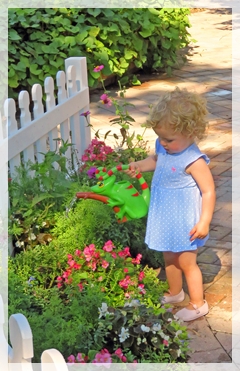 Upon retirement, many people consider their productive years over. Having been a CEO in a major corporation, a friend’s father felt worthless without his corporate identity. Prior to retirement, he could call any number of powerful people and get a meeting simply because of his position but, without his title, he felt like a nonentity. His previous business triumphs couldn’t sustain him and he saw no victories in the future. Unfortunately, many seniors who found their identity in their career, corporate title or paycheck are at loose ends when retirement comes along. Some of my friends who were homemakers aren’t much different from those in the business world. It’s just that they found their identity in motherhood and their self-esteem in their children’s achievements. Now, with an empty nest and adult children living their own lives far away, they feel unnecessary. Like my friend’s father, they are looking back at who and what they’ve been rather than forward to who and what they can be.
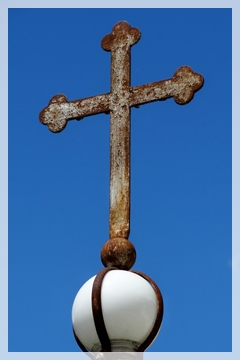 We’ve left our old church and have been house-of-worship hunting. At first, it was like trying various hotels once a week to discover one of good quality with the right character, location and features for us. Having found a good prospect, we returned several times, signed up for a community service opportunity, and joined a Bible study. Now, it’s more like we’re renting a house; we’re meeting the neighbors, becoming familiar with the community and getting an idea of what a long-term stay would be like. Nevertheless, we’re still just temporary residents and have no ties. As we settle into this new church, however, our prayer is that it will feel enough like home that we’ll want to join it, which is a commitment somewhat like buying a house (but without the mortgage and closing costs.)
 Devotions of the Heart