
Let no one say when he is tempted, “I am being tempted by God,” for God cannot be tempted with evil, and he himself tempts no one. But each person is tempted when he is lured and enticed by his own desire. [James 1:13-14 (ESV)]
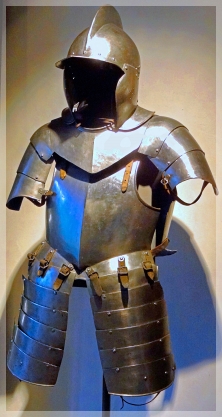 Back in in 1586, during the Eighty Years’ War, Sir Philip Sidney was fighting for the Protestant cause against the Spanish when he noticed another soldier was without leg armor. Believing that he shouldn’t be better protected than his men, Sidney gave the man his cuisses (armor that covered the thigh). During the Battle of Zutphen, Sidney was fatally wounded in his thigh during the final charge and, three weeks later, he died of gangrene from the injury. While heroic, his death was avoidable if the man had worn his complete set of armor!
In Greek mythology, Achilles was the son of Thetis, a powerful sea goddess. When a seer told her that Achilles would be a great warrior but would die young, Thetis dipped her infant son in the river Styx to make him invincible. The boy became invulnerable everywhere but at his heel where his mother held him. Although Achilles was a great warrior, the god Apollo was angry with him. Knowing of his unprotected heel, Apollo directed a soldier’s arrow to the warrior’s one vulnerable spot and Achilles was killed in battle by that well-aimed arrow. Because of this myth, an “Achilles’ heel” has come to mean a person’s only weakness.
I tell these stories because both Sir Philip Sidney and Achilles were missing part of their protective covering and the Apostle Paul made it clear that the full armor of God is necessary if we are to defeat Satan. Let’s not fool ourselves, just as Apollo knew about Achilles’ unprotected heel, Satan knows exactly where to attack us! The area we leave unprotected is the place where Satan will strike.
While he doesn’t use arrows, canon balls, or bullets, Satan has an arsenal of weapons at his disposal. After bombarding Job with loss of family, finances, status, and health, he continued the attack with intense pain, depression, and doubts about God’s goodness. Satan mistakenly thought God was protecting Job with a fence of prosperity but the man remained impervious to Satan’s arrows because he was wearing God’s spiritual armor.
Satan may have failed with Job but he was successful with others. Finding a chink of pride and self-reliance in David’s armor, Satan tempted him to take a census. Knowing that David’s Achilles’ heel was his eye for the ladies, Satan tempted him with the beautiful but married Bathsheba. Whether it was Judas’ lust for money or a Zealot’s disappointment in the Messiah’s role, Satan knew where his weakness lay and entered Judas through that missing piece of armor.
We all have a weak spot (or spots). After all, even Superman’s Achilles’ heel was kryptonite! For some of us, it is doubts about God’s goodness, pride, fear, unforgiveness, or a wandering eye. For others, it is love of money, a quick temper, a critical tongue, or chronic impatience. What is your Achilles’ heel? Be alert; Satan knows exactly what and where it is and will do his best to take you out of action with what he hopes to be a fatal shot.
Although God’s armor is tailor-made for us, it does us no good if we fail to put all of it on. Are you missing a piece of God’s armor?
He [the devil] will attack you sometimes by force and sometimes by fraud. By might or by sleight he will seek to overcome you, and no unarmed man can stand against him. Never go out without all your armor on, for you can never tell where you may meet the devil. He is not omnipresent, but nobody can tell where he is not, for he and his troops of devils appear to be found everywhere on this earth. [Charles Spurgeon]
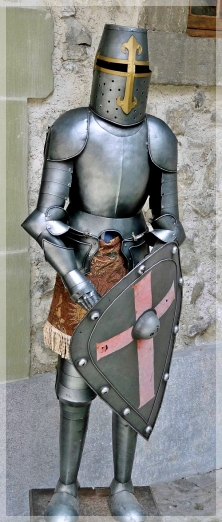 As a young child, I loved singing “Onward, Christian Soldiers” in Sunday school. My enthusiasm for the hymn waned as I grew older and learned about the evil and horrors of the Crusades and the World, Korean, and Vietnam wars. With its mention of war, soldiers, mighty armies, battles, and foes, the hymn seemed to glorify war. Even though the martial imagery comes from Biblical texts, the hymn’s combination of soldiers marching into battle and Jesus (the Prince of Peace) has caused controversy and some denominations have eliminated it from their hymnals.
 Described as a “preaching genius…like no other preacher you have ever heard,” the late Rev. Fred Craddock was well-known for including stories in his sermons. He told one that took place during the early 60s in a diner in the deep South. Although the white Craddock sat in a booth and was served with courtesy and consideration, he silently watched the diner’s manager treat a Black man at the counter with rudeness, disdain, and open contempt. Although offended by the man’s racist behavior, Craddock remained silent. It was when he walked out of the diner after finishing his meal that the preacher heard a rooster crow. A signal of his betrayal, the crowing told the preacher that, by ignoring one of the “least of these”, he’d ignored Jesus! His silence was as much a betrayal of the Lord as were Peter’s denials!
 Having previously warned people that not everyone who claimed to follow Him would enter the Kingdom, Jesus told the Parable of the Sheep and Goats in which He likened the last judgment to a king separating the sheep from the goats at the end of the day. Placing the sheep to His right and the goats to His left, the King invites the sheep into the Kingdom. The reasoning behind His selection is disarmingly simple: “For I was hungry, and you fed me. I was thirsty, and you gave me a drink. I was a stranger, and you invited me into your home. I was naked, and you gave me clothing. I was sick, and you cared for me. I was in prison, and you visited me.” [Matthew 25:35-36] Having failed to do those things, the goats are sent into eternal punishment.
 The email from my dentist asked, “Would you recommend us?” When I answered in the affirmative, I was hyperlinked to a site that added my five-star rating to that of other patients. The following day, I received a longer survey regarding my recent visit. Once done, it again asked if I would recommend his services and requested use of my name in an on-line testimonial. It’s clear that my dentist wants more than feedback; he wants the public approval of his patients. Although I like him, I like my privacy more, so I declined!
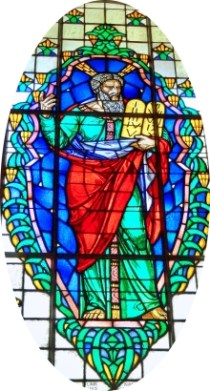 There are 613 commandments in the Torah/Pentateuch (the first five books of the Bible). But, as seen in Jesus’ interaction with the lawyer who wanted “neighbor” defined, there was room for interpretation. For example, what exactly does it mean to “honor” one’s parents? When Deuteronomy 11:18-20 says to bind “these words” to one’s hands and forehead and place them on doorposts and gates, exactly what words and how was it to be done? Work on the Sabbath is prohibited in twelve places but is the command limited to the few types of work mentioned? For that matter, what defines work?
 Devotions of the Heart