SLEEPLESS NIGHTS

Glen Canyon - Lake Powell
Don’t worry about anything; instead, pray about everything. Tell God what you need, and thank him for all he has done. Then you will experience God’s peace, which exceeds anything we can understand. His peace will guard your hearts and minds as you live in Christ Jesus. [Philippians 4:6-7 (NLT)]

“What keeps you awake at night?” he asked. The questioner, however, wasn’t interested in my husband’s snoring or my reaction to caffeine or spicy foods. He wondered what things weigh heavy enough on my heart that I’m kept from peaceful sleep.

While a venti latte in the late afternoon can keep me awake and I may take a midnight trip to the bathroom, other than my recent bout with bronchitis or when I’m in physical pain, not much robs me of a night’s sleep. It wasn’t always that way. There was a time when things like worry, resentment, disappointment, fear, regret, and even despair overwhelmed me enough to deprive me of sleep. Nowadays, I’ve found that resting in God’s word has a way of pushing aside my concerns better than any lullaby or sleep aid.

Unfortunately, it took me way too many years to understand that things like anxiety, apprehension, and angst simply push God out of His rightful place. Even though I knew better, I felt responsible for the happiness and success of everyone I loved. I thought I had to be perfect (or as near to perfect as possible) to be loved by God or man and I worried because perfection was unachievable. Some nights, I also brought a bag of remorse, guilt, and grief to bed along with my concerns and cares. Instead of counting sheep, I would catalogue regrets, troubles, offenses, and misgivings.

It took a few crises to knock me to my knees where I belonged—praying instead of worrying and surrendering to God instead of trying to be Him. Once I resigned as ruler of the universe, I finally found the peace Jesus promised that had seemed so elusive. Understanding that God does a much better job of running lives than I ever could, I turned it all over to Him. After all, He’s up all night anyway so there’s no reason both of us should stay awake!

Better than melatonin, chamomile tea, or lavender aromatherapy is the reassurance found in God’s word that God is firmly in control and He is bigger than all of our burdens combined. Our job is to hand those burdens over to the Lord and leave the rest up to Him! As for regrets, the Apostle Paul told the Philippians that he focused on forgetting the past and looking forward to what lay ahead. [3:13] We should do the same. If God can forgive us, we can graciously accept His forgiveness and forgive ourselves. If He can say “over, done with, and gone” about our offenses, then we can do the same for others.

Now, instead of sheep, problems, fears, or regrets, I count my blessings! Even if the day went every which way but right, there’s always something for which to be thankful—even if it’s that tomorrow is another day! If I ever happen to find myself wakeful, I figure it’s the Lord telling me the day’s work isn’t done and there’s something about which I need to pray.

What keeps you awake at night? Is there a Bible verse that might help you sleep better? Resting in God’s word probably is more effective than many of those sleep medications on the market and there are no undesirable side effects! Like those prescription meds, however, there is a warning—you can get dependent upon God’s word. Indeed, the peace that passes understanding is addictive!

God, you have made us for yourself, and our hearts are restless till they find their rest in you. [Augustine]

In peace I will lie down and sleep, for you alone, O Lord, will keep me safe. [Psalm 4:8 (NLT)]

Copyright ©2022 jsjdevotions. All rights reserved.

SHIFTING SANDS

Dome house - Cape RomanoAnyone who listens to my teaching and follows it is wise, like a person who builds a house on solid rock. Though the rain comes in torrents and the floodwaters rise and the winds beat against that house, it won’t collapse because it is built on bedrock. But anyone who hears my teaching and doesn’t obey it is foolish, like a person who builds a house on sand. When the rains and floods come and the winds beat against that house, it will collapse with a mighty crash. [Matthew 7:24-27 (NLT)]
5-miles south of Marco Island, Florida, the remains of the Cape Romano dome house are a perfect illustration of Jesus’ parable about building on a solid foundation. When completed in 1982, the 2,400 sq. ft. house was on Tice Island and about 100 feet from the water. Consisting of six interconnected dome-shaped modules, it was eco-friendly and state-of-the-art. Completely self-sustaining, it had solar panels, generator, satellite TV, a 23,000-gallon cistern that collected water runoff, a water filtration system, and even air conditioning. While its rounded domes survived the hurricane force winds of Andrew in 1992, in the years following, water levels began to rise and destabilize the house’s foundation. After 2005’s Hurricane Wilma, the domes began leaning as the shifting sands eroded their foundation. As the beach retreated, the domes appeared to be marching into the Gulf and, by 2013, they were standing in 6-feet of water. After Hurricane Irma in 2017, two of the domes collapsed into the sea. The remaining domes now sit about 300 feet offshore. When the house was built in the 1980s, two other large houses stood on the island. But, like the dome house, they were no match for Florida’s storms that sucked the sand beneath them right back into the Gulf of Mexico; they, too, are a thing of the past!

Before erecting this house, the owner built a prototype in Tennessee to test his design and it still is standing. Since sand from the beach was used for the concrete, the sand was analyzed to make sure it had the proper aggregate for construction. The problem, however, wasn’t with the concrete or the domes’ unique design; the problem was with the choice of foundation! Rather than bedrock, it was sand!

The Sermon on the Mount concludes with the parable of The Wise and Foolish Builders. Israel is known for torrential rains that cause floods and, when the winter rains came, the Jordan River would pour into the sea causing it to overflow its banks. While the sand around the Sea of Galilee was hard on the surface during the hot summer months, a wise builder would not be fooled those conditions. He’d dig down as far as ten feet below the surface to reach the bedrock for the foundation of the house. The foolish builder, however, takes the easy way and doesn’t dig down to the bedrock. Like the homes on Tice Island, both homes would look secure in good weather. It was only when the storms hit that the difference would become obvious. Houses built on the bedrock can withstand floods and erosion while those built on sand won’t.

Having been raised by a builder, Jesus knew His topic well but He wasn’t giving a lesson in construction. Many of His listeners had built their lives on surface righteousness—one of cursory adherence to the letter of the Law without actually building a deep faith in and obedience to God. No matter how carefully they observed the outward rituals of Judaism, without an inner relationship with the Lord, they had no foundation. They’d built something that looked good on the outside but was weak on the inside and would not stand strong during life’s tempests and turmoil.

It’s inevitable that one or more storms will pummel us and challenge our foundation and this parable still applies to us. Foolish builders choose to build their lives on worldly things like the false gods of wealth, status, looks, power, and self. However, their lives will crumble and collapse when those things disappear. As with the dome house, it may not occur all at once but it will happen. Because wise builders build their lives on faith in the unchanging Lord and His Word, they can withstand life’s challenges. If our foundation is laid in the bedrock of Jesus and Scripture, while battered and bruised, we will remain standing.

When the homes on Tice Island originally were built, they looked sturdy—but looks are deceiving. Without a firm foundation, they couldn’t stand; neither can we! How firm is your foundation?

Therefore, this is what the Sovereign Lord says: “Look! I am placing a foundation stone in Jerusalem, a firm and tested stone. It is a precious cornerstone that is safe to build on. Whoever believes need never be shaken. [Isaiah 28:16 (NLT)]

Copyright ©2022 jsjdevotions. All rights reserved.

JUST ASKING

Jesus replied, “I tell you the truth, you want to be with me because I fed you, not because you understood the miraculous signs. But don’t be so concerned about perishable things like food. Spend your energy seeking the eternal life that the Son of Man can give you.” [John 6:26-27 (NLT)]

Although people flocked to Jesus, many came for His miracles and what He could do for them rather than for His message. After all, He gave sight to the blind, calmed storms, gave excellent fishing instructions, cured the paralyzed, freed people from demons, healed the sick, raised the dead, turned water into wine, made money appear in the mouth of a fish, and fed thousands with next to nothing. After Jesus fed the multitude, the people recalled the Messianic prophecy of Deuteronomy 18:18 that God would raise up a prophet like Moses and they wanted to make Him king. They didn’t understand that the kingdom of the Messiah would be a spiritual, not a political, one. Rather than seeing Jesus’ miracles as God’s stamp of approval on Him and coming to Jesus out of faith, they came to Him looking for more. As if feeding lunch to over 5,000 hadn’t been enough, they wanted an even greater miracle on a par with the manna Moses provided for the Israelites. Even though Jesus fed 5,000 men for a day, Moses fed millions for decades!

Jesus, however, corrected them. The manna wasn’t from Moses—it was from God. Moreover, that manna only lasted one day—the true bread from heaven, the bread Jesus offered, would last for eternity. Jesus wasn’t there to sustain life with something perishable but to give life with something everlasting!

Seeing Jesus as a miracle worker and a political king, the crowd followed Him. How do we see Him and why do we come to Him? Do we come for spiritual reasons or worldly ones? We may not expect Jesus to provide the food and drink for our next party but are we seeking Him for other things we think we can get from Him? By joining a church, are we seeking friends, contacts, or status? Do we have a personal agenda like politics, business relationships, or help from the parish? Are we motivated to seek Jesus in pursuit of wealth, success, comfort, emotional experience, or a miraculous fix of a problem?

Do we look to Jesus for our advancement or to advance His kingdom? Do we want to be glorified for what we do or glorify Him with what we do? Do we want to feel loved and or do we want to love Him and His children? Are we seeking an emotional high rather than spiritual growth? Do we seek power, influence, or recognition rather than a life of service and humility? Do we want His joy without our obedience or His forgiveness without our repentance?

Like the woman at the well, do we want His water so we don’t have to walk to the well and fill our jugs? Like the people who followed Jesus to Capernaum, do we want Him to miraculously satisfy our daily physical needs? Are we little better than Judas and following Him for the pieces of silver preached in the prosperity gospel? Are we looking for material possessions and wealth or spiritual gifts and the Fruit of the Spirit? Do we seek Him for what He can do for us or for who He is? Do we look to Jesus to take whatever is in His hand or do we come to offer Him what is in ours? Just asking…

True Christianity is to manifest genuinely Christ-like behavior by dependence on the working of the Spirit of God within, motivated by a love for the glory and honor of God. [Ray C. Stedman]

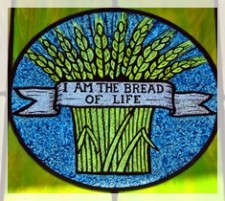
I tell you the truth, anyone who believes has eternal life. Yes, I am the bread of life! Your ancestors ate manna in the wilderness, but they all died. Anyone who eats the bread from heaven, however, will never die. I am the living bread that came down from heaven. Anyone who eats this bread will live forever; and this bread, which I will offer so the world may live, is my flesh. [John 6:47-51 (NLT)]

Copyright ©2022 jsjdevotions. All rights reserved

THE BETRAYAL

Listen to my prayer, O God. Do not ignore my cry for help! Please listen and answer me, for I am overwhelmed by my troubles. My enemies shout at me, making loud and wicked threats. They bring trouble on me and angrily hunt me down. … Oh, that I had wings like a dove; then I would fly away and rest! [Psalm 55:1-3,6 (NLT)]

mourning dove
Psalm 55 describes a time in David’s life when he was being attacked by his enemies. Crying out to God, he wished for the wings of a dove so he could escape those who were hunting him down. What is unusual in this psalm is that David’s enemies were not adversaries like Philistines, Moabites, Ammonites, or Amalekites; the attack came from “my equal, my companion and close friend.” Commentators tend to place this psalm during the rebellion led by Absalom, David’s son. The friend about whom David speaks probably was Ahithophel. Once David’s trusted counselor, Ahithophel switched his loyalty to Absalom who was attempting to overthrow David’s kingship.

My brother-in-law was the picture of health until he was betrayed, but not by his best friend. His body betrayed him with Parkinson’s disease. Instead of deceit and arrows, he was attacked by muscle rigidity, poor balance, lack of coordination, muscle weakness, difficulty swallowing and speaking, dizziness, urinary problems, trouble standing and walking, fatigue, irregular blood pressure, depression, and finally mental decline. David eventually defeated his adversary; my brother-in-law did not. He surrendered last year as did my sister the previous year when her body overpowered her with the complications of multiple sclerosis. Rather than a child or friend, their bodies attacked them; even so, David’s words could have been theirs.

As I read David’s psalm this morning, I thought of friends who, like David, wish they could run from their troubles and escape to a safe place where their enemy couldn’t follow. Unfortunately, wherever they run their enemy follows because, as with my brother-in-law and sister, the traitor is their body. Recently, a friend with MS was unable to join my husband for coffee because his legs “wouldn’t cooperate” and he couldn’t get into his car! Two of the men with him at coffee have spouses whose bodies have conspired against them with dementia. Sadly, they are not the only ones we know whose bodies are progressively betraying them. Whether it’s MS, ALS, Parkinson’s, Alzheimer’s, rheumatoid arthritis, osteoporosis, COPD, cancer, the aftereffects of a stroke, or some other incapacitating disorder, David’s words could easily have been written by them or anyone else with a chronic condition.

As much as David wanted to escape his troubles and flee, he couldn’t and, as much as people suffering from a debilitating physical condition would like to escape theirs, it can’t be done either. Rather than fleeing from his situation, however, David called God into it and expressed confidence that the Lord would hear his voice. In the end, his prayer of despair became one of faith. Sure that God would sustain him in his trouble, David submitted the situation to the will of God. When faced with insurmountable trouble, prayer is all we have. For a believer, prayer is all that is needed because we know that God already has saved us!

Heavenly Father, we offer prayers for those who are suffering from debilitating ailments. Fortify their faith in the challenging days they face and reassure them of your presence. Give them courage to face their difficult tomorrows, however many or few they may be. When their battle is over, gently carry them to your heavenly place of rest where pain is no longer experienced and bodies are no longer broken.

He will swallow up death forever! The Sovereign Lord will wipe away all tears. He will remove forever all insults and mockery against his land and people. The Lord has spoken! [Isaiah 25:8 (NLT)]

For we know that when this earthly tent we live in is taken down (that is, when we die and leave this earthly body), we will have a house in heaven, an eternal body made for us by God himself and not by human hands. We grow weary in our present bodies, and we long to put on our heavenly bodies like new clothing. For we will put on heavenly bodies; we will not be spirits without bodies. [2 Corinthians 5:1-3 (NLT)]

Copyright ©2022 jsjdevotions. All rights reserved.

MIRIAM 

While they were at Hazeroth, Miriam and Aaron criticized Moses because he had married a Cushite woman. They said, “Has the Lord spoken only through Moses? Hasn’t he spoken through us, too?” But the Lord heard them. [Numbers 12:1-2 (NLT)]

roseThomas isn’t the only Bible personality who gets a bad rap. Consider Miriam, the resentful sister who, along with Aaron, attacked Moses for marrying a Cushite woman. The implication in their complaint is that it was a recent union; perhaps Moses’ wife Zipporah was dead. The Cushite woman may have been one of the many non-Israelites who joined the Hebrews in their exodus from Egypt. That she wasn’t an Israelite shouldn’t have been an issue to them since Zipporah had been from Midian. The land of Cush, however, was used to describe Black Africa and the siblings may have been disparaging the woman’s dark complexion. Moses’ new wife, however, wasn’t the real issue. Miriam and Aaron simply were jealous of their brother and, since they couldn’t find fault with his leadership, they spitefully chose to criticize his choice of wife.

Appointed by God as Moses’ spokesman, Aaron served as high priest and Miriam was God’s prophet. Although they assisted their brother, Moses was the indisputable leader. God spoke with him face-to-face and, as God’s spokesperson, he became Israel’s law-giver. Unsatisfied with their roles, however, the siblings wanted equal authority with their brother. When God heard their hostile words, He upheld Moses’ position as His chosen leader. As the instigator of the complaint and mini-rebellion, Miriam received the brunt of the punishment and was given a skin condition and required to stay outside the camp for seven days! (A Biblical form of “time out.”)

Whenever Miriam is mentioned, I first think of the jealous, spiteful, complaining, and possibly racist sister of Aaron and Moses. Miriam, however, also was the caring and concerned big sister who kept an eye on her baby brother as he lay in a basket floating on the edge of the Nile. It was she who approached Pharaoh’s daughter and innocently offered to find a Hebrew nurse for the hungry infant. It was her quick thinking that reunited the boy with his birth mother. She probably continued to be Moses’ link between Pharaoh’s palace and his Jewish family for several years. It was the prophetess Miriam who led the women in song and dance as they proclaimed God’s victory over Pharaoh right after the Israelites safely passed through the Red Sea. Loving sister, poetess, and prophet, and yet I remember her as an envious disgruntled woman.

Fortunately, we don’t define most of the Bible’s characters by their failures and shortcomings. Even though Aaron shared in Miriam’s complaint, we remember him as Moses’ right-hand man. We remember David as the giant killer rather than a murderer and adulterer, Rahab as the woman who saved Israel’s spies rather than a pagan prostitute, John Mark as the author of a gospel rather than the man who deserted Paul, and Solomon as a wise king rather than the man who disobeyed God by amassing horses, foreign wives, and a huge amount of wealth.

Church tradition holds that Thomas carried the gospel message to Parthia or India where he was martyred, so he didn’t define himself by his doubt. As the one who spoke powerfully on Pentecost, healed the lame, and preached before the Sanhedrin, the Apostle Peter didn’t define himself by his failures and I’d like to think that, when Miriam returned to camp, she didn’t define herself by hers either. I know God didn’t because, when He spoke to the people through the prophet Micah, He joined Miriam’s name with those of Aaron and Moses and said, “For I brought you out of Egypt and redeemed you from slavery. I sent Moses, Aaron, and Miriam to help you.” [6:4]

From their accomplishments, it seems that, rather than defining themselves by their failures, they learned from them. What about us? How do we define ourselves? None of us are perfect and we probably have a long list of failures, missteps, and transgressions. God has forgiven us; have we forgiven ourselves? Each day, God gives us a clean slate—let us erase the past and confidently move forward to be better person today than we were yesterday and a better person tomorrow that we are today!

You must learn, you must let God teach you, that the only way to get rid of your past is to make a future out of it. God will waste nothing. [Phillips Brooks]

This means that anyone who belongs to Christ has become a new person. The old life is gone; a new life has begun! [2 Corinthians 5:17 (NLT)]

No, dear brothers and sisters, I have not achieved it, but I focus on this one thing: Forgetting the past and looking forward to what lies ahead, I press on to reach the end of the race and receive the heavenly prize for which God, through Christ Jesus, is calling us. [Philippians 3:13-14 (NLT)]

Copyright ©2022 jsjdevotions. All rights reserved.

WHO KNOWS?

This is the message we heard from Jesus and now declare to you: God is light, and there is no darkness in him at all. [1 John 1:5 (NLT)]

The Word gave life to everything that was created, and his life brought light to everyone. The light shines in the darkness, and the darkness can never extinguish it. [John 1:4-5 (NLT)]

yinyangAn old Chinese parable tells of a poor farmer whose only horse runs away. His friends commiserate over his bad luck and ask how he’ll plow his field. The farmer answers, “Who knows? We shall see.” Two days later, the horse returns along with several wild horses. When the farmer’s friends congratulate him on the good fortune of now having a stable full of horses, the farmer replies, “Who knows? We shall see.” The following week, while trying to tame the horses, the farmer’s son breaks his leg in three places. The farmer’s friends offer condolences and wonder how he’ll get his work done with his son unable to walk and help. The farmer answers, “Who knows? We shall see.” When a war breaks out, the emperor’s men arrive and conscript all the young men in the village. With his leg in a cast and needing crutches, the farmer’s son is considered unfit for battle and remains in the village. As his neighbors watch their sons leave home, they congratulate the farmer on his stroke of luck. He replies, “Who knows? We shall see.” Although the son’s leg eventually heals, he has a bad limp. The farmer’s neighbors express their sympathy for such trouble. “Who knows? We shall see,” he again replies. By the time the war is over, all of the village’s boys have died in battle but, with his several horses and a son now able to help, the farmer can plow several fields and has grown wealthy. When the villagers congratulate him on his good fortune, the farmer replies, “Who knows? We shall see.”

This 2,000-year-old tale reflects Taoist stoicism and the belief in Yin Yang—everything in the universe consists of two complementary yet opposing forces. There is no good or bad, only that which appears to be so. The resigned farmer is subject to fate and it is only his attitude over which he has control. Associated with this philosophy is the Yin Yang symbol: two equal parts of white and black comma-shapes with a black dot in the white side and a white dot in the black one. It represents the belief that opposites cannot exist without one another—white cannot exist without black nor could light exist without dark. In the same way, good cannot exist without bad nor can bad exist without good. Rather than good and bad being at war, they are in a constant state of flux; there is a little bad in all that’s good and a little good in all that’s bad.

While it is comforting to think there are no absolutes and that life is just a balance of opposites, that’s not Biblical. We live in a world of absolutes and our triune God is absolutely righteous and the sovereign judge of all that’s evil. Moreover, not all things change—our God is immutable and Jesus is the same today as He was yesterday and will be tomorrow. If Christians had a symbol similar to that of Yin Yang, it wouldn’t show equal forces with neither side struggling for dominance. It would have the light consuming the darkness. Good and evil are not balanced—they are at war and good won the war when Christ died and rose from the dead! There is no dot of darkness in God’s light.

If this were a Christian parable, the imperturbable farmer wouldn’t answer, “Who knows? We shall see.” Rather than being complacent and merely accepting his fate, he would find purpose in it. He’d echo the Apostle Paul’s words, “In all things I give thanks, knowing that I can be content in all circumstance because my strength is in Christ.” The Christian does not find peace in a philosophy—he finds peace in the person of our triune God. Like the Taoist farmer, he doesn’t know what the next day will bring or how it all fits together but, unlike that farmer, he knows who is writing the story and how the story eventually will end!

Jesus spoke to the people once more and said, “I am the light of the world. If you follow me, you won’t have to walk in darkness, because you will have the light that leads to life.” [John 8:12 (NLT)]

Copyright ©2022 jsjdevotions. All rights reserved.