
For truly, I say to you, until heaven and earth pass away, not an iota, not a dot, will pass from the Law until all is accomplished. Therefore whoever relaxes one of the least of these commandments and teaches others to do the same will be called least in the kingdom of heaven, but whoever does them and teaches them will be called great in the kingdom of heaven. [Matthew 5:18-19 (ESV)]
 While we now know what is meant by an iota and dot, jot and tittle, or yod and kots, we wonder what Jesus means by “the least of these commandments!” If the smallest letter is as important as the largest and the smallest flourish on the smallest letter in Scripture was not to be eliminated, how can there be a “lesser” commandment? The confusion again comes from reading an English translation of a Greek rendering of the original Hebrew. Jesus probably was using a popular Jewish idiom “mitsvot kalot” meaning “light” commandments, rather than “mitsvot ketanot,” meaning less important or small commandments. While this seems a bit like splitting hairs, it reflects Jewish thinking in Jesus’ day when a distinction was made between “light” and “weighty” commandments when comparing one to another.
The rabbis regarded Deut. 22:6-7, a law prohibiting taking a mother bird if you happen upon her in a nest with eggs or young in it, as the least or lightest commandment. They regarded the one about honoring one’s parents in Ex. 20:12 and Deut. 5:16 among the greatest or weightiest. If you look at those very two different commandments, one of which seems more important than the other, you’ll find they both promise a reward for obedience—a long life in which things will go well. These are the only two commandments promising a specific reward and, with both the light and weighty commandments promising the same reward, the rabbis taught that each was to be obeyed.
People were to be as conscientious about heeding a light or minor commandment as they were of obeying a weighty or major one. Reflecting this thought, the late 1st century Jewish teacher Simeon ben Azzai taught, “Be quick in performing a minor commandment as in the case of a major one, and flee from transgression; For one commandment leads to another.” Two completely unrelated commands that both offered the same reward illustrated the importance of the entire law and Jesus’ words reiterated that same concept!
With His words, Jesus was making it clear that the Pharisees and scribes didn’t have a monopoly on zealousness for Scripture. Although He often was accused of being against the law, Jesus’ disagreement with the religious leaders of His day wasn’t with the law; it was with their addition of hundreds of man-made petty rules that were elevated to the level of God’s word. In true rabbinic fashion, they even added extra rules to the “lightest” commandment, adding that it only applied to wild birds and didn’t apply if the mother bird was just hovering over the nest (unless her wing touched the nest)!
Jesus’ reference to these laws further emphasizes what He said about the yod and kots—that God’s law is changeless, eternal, and complete. His reference to these two specific laws shows God’s concern for both significant and seemingly insignificant acts and makes it clear there is no such thing as a “little sin.” It also points to God’s compassion and love. Since He cared enough for His creation to give a commandment protecting the welfare of a baby birds, consider how much more He cares for the welfare of His own children—the ones made in His image!
Let us remember that, when Jesus freed us from the burdensome commands of the Old Testament Law, He did not free us from God’s law.
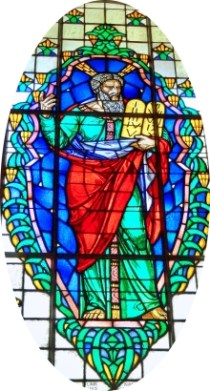 There are 613 commandments in the Torah/Pentateuch (the first five books of the Bible). But, as seen in Jesus’ interaction with the lawyer who wanted “neighbor” defined, there was room for interpretation. For example, what exactly does it mean to “honor” one’s parents? When Deuteronomy 11:18-20 says to bind “these words” to one’s hands and forehead and place them on doorposts and gates, exactly what words and how was it to be done? Work on the Sabbath is prohibited in twelve places but is the command limited to the few types of work mentioned? For that matter, what defines work?
 When a nomikós (Scripture lawyer, an expert in religious law) tested Jesus by asking what he must do to inherit eternal life, the Lord countered with his own question, “What does the law say?” When the man responds with the words of Deuteronomy 6:5 and Leviticus 19:18, Jesus says he’s answered correctly. Wanting clarification, he then asks, “Who is my neighbor?” His query tells us the nomikós is more interested in the letter of the law than its spirit. Apparently, he wouldn’t want to waste any love on someone who wasn’t his neighbor or miss loving someone who was! Jesus answers the man’s question with one of his best-known stories—the Parable of the Good Samaritan.
 After pointing out Jesus as the “Lamb of God,” some of John the Baptizer’s disciples left John to follow Jesus. Later, John’s remaining disciples reported that Jesus was baptizing (it actually was His disciples) and wanted to know whose purification ritual of baptism was valid. With many turning from John to Jesus, the Baptizer’s disciples were confused, concerned, and probably a little envious. Apparently, they forgot that John’s original mission was that of forerunner—the one who would prepare the way for the Messiah and point the way to the Lamb of God. Knowing that he wasn’t the bridegroom but only His friend, the Baptizer humbly affirmed his position by telling his disciples that Jesus must become more prominent while he became less and less important. J.C. Ryle likened the Baptizer’s role to that of a star growing paler and paler as the sun rises until the star completely disappears in the light of the sun. John clearly understood that he was to fade in the light of the Son.
 Spiritual gifts build God’s Kingdom in a variety of ways including teaching, outreach, speaking, counseling, discipleship, serving, practical assistance, visitation, and prayer. Our gifts were given for the common good of Christ’s church and we need one another’s gifts for the body of Christ to function. Within the church, some gifts, like shepherding, evangelism, or leadership, are easily noticed while others, such as mercy, giving, intercession, and faith may be less obvious. While those gifted in service (the ability to see undone tasks in God’s work and get them done) often work behind the scene, the people gifted in hospitality (the ability to warmly welcome all people into home or church) are front and center Sunday mornings as they greet people by name and extend the hand of friendship to visitors.
 When writing about giving God the glory and how we are but instruments of God’s grace in the world, I recalled a quote by Mother Teresa having to do with being God’s pencil. Wanting to quote it correctly, I Googled it. Along with the quote, I came across several versions of a parable about a pencil. Of unknown origin, it has been around for more than twenty years. Nevertheless, the parable was new to me and this is my version of “The Parable of the Pencil.”
 Devotions of the Heart