
Other seed fell among thorns that grew up and choked out the tender plants so they produced no grain. [Mark 4:7]
 Some of the farmer’s seeds fell among the thorns (probably what we’d call thistles). Prolific seed producers, thorny plants like thistles can grow in the harshest environment. While they may have been cut down and no longer were visible to the farmer, their seeds and roots remained. With their deep roots, thistles are masters of survival and can flourish in adverse conditions. Stealing the moisture and sunlight from the plants around them, they stunt their growth and, if allowed to grow, can overtake a field.
The farmer’s seed was good, it took root, and started to grow but, because of the thistles, it never developed into maturity. The thistles represent the material concerns of the world—the cares, riches and pleasures that distract us from God’s word and, like a thistle’s roots, are deeply seated in our hearts. Rather than robbing us of water, sunlight, and nutrients, they stunt our growth by keeping us from God’s living water, the light of Christ, and the nourishment of His church. The busyness, distractions, and cares of life; the challenges of work and tending a family; the pursuit of wealth; the desire for possessions, status, amusement, contentment, and even revenge: all of these distract us from letting God’s Word bear fruit in our lives.
The faith of Judas was like a field with thistles. He heard the word and followed Jesus as a faithful disciple and yet he betrayed our Lord. We never know exactly why. Perhaps, it was simply for riches. John tells us he was a thief who stole from the disciples’ purse and we know he received money for his betrayal. Judas also may have been distracted by politics and a desire to be among the elite when Jesus defeated the Romans. Disillusionment may have set in when he realized that wouldn’t happen. Whatever it was, like a field of thistles, those distractions allowed Satan to enter him
In God’s perfect plan, there were no weeds and He didn’t mean for thorns or thistles to be in hearts, either. Weeds and sin both came with the fall. Ridding a field of thistles and other weeds is nearly impossible but, with diligence and hard work, it can be done. It takes continual inspection of the field and, once spotted, the weeds must be eradicated. The questions we must ask are simple ones. What are the thistles or thorns in my life? What is holding me back? What is keeping me from bearing His fruit? Is my faith genuine?
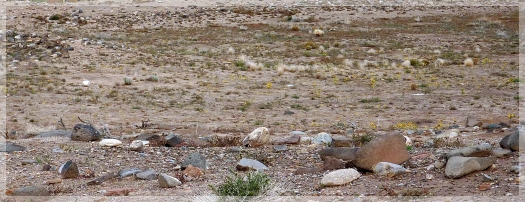 Other seed fell among rocks. It began to grow, but the plant soon wilted and died for lack of moisture. [Luke 8:6 (NLT)]
 Yesterday, I wrote about koinonia or what I called the art of Christian community. Writing about Christian fellowship, however, can be easier than actually living in it. Just as a family has a vast array of different personalities, temperaments, and gifts, so does the church. In fact, with our sheltering in place, social distancing, working from home, having children home all day, and parks, playgrounds, gyms, and beaches all closed, some of us might be having more difficulty maintaining a spirit of fellowship with one another in our own homes than in our churches!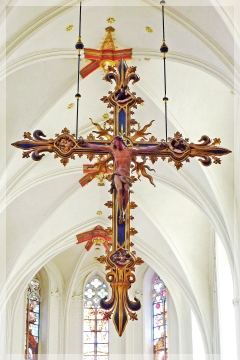
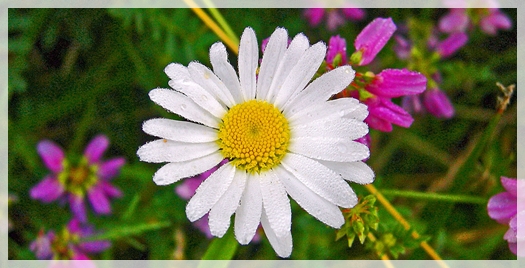 If any of you wants to be great, he must be your servant. If any of you wants to be first, he must be the slave of all. That’s how it is with the son of man: he didn’t come to have servants obey him, but to be a servant – and to give his life as “a ransom for many.” [Matthew 20:26b-28 (NTE)]
 Christians call it the Lord’s Supper, the Lord’s Table, the Sacrament, Holy Communion, or the Eucharist; some denominations consider it a “sacrament” while others call it an “ordinance.” While they may not agree on what to call it, they do agree that, during that last supper with His disciples, Jesus instituted or ordained its practice when He shared bread and wine, said the elements were His body and blood, and instructed the disciples to repeat the ceremony in remembrance of Him.
 Devotions of the Heart