BURDENS (Galatians 6:2-5 – Part 1)

Carry each other’s burden; that’s the way to fulfill the Messiah’s law. [Galatians 6:2 (NTE)]
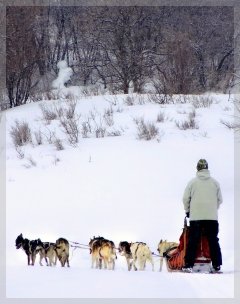
dog sleddingSince we tend to think of burdens as demanding and often unwelcome duties or responsibilities, we’re certainly not anxious to take on a burden, especially one that actually belongs to someone else! Yet, that is exactly what we’re told we must do if we are going to fulfill Christ’s mandate. And what is that command? To love one another in the way God loves us.

Nevertheless, the concept of carrying someone’s burden makes me think of beasts of burden like mules, donkeys, or oxen. I find it hard to associate the joy of Christianity with an image of myself as a pack animal lugging a heavy load for miles on rough terrain or an ox being poked with an ox goad while plowing a rocky field. Then again, recalling the Alaskan huskies kenneled just west of our favorite Colorado mountain town, I realize I might be thinking of the wrong beasts of burden.

For thousands of years, dogs like them have pulled people and goods long distances. Experienced mushers say that sled dogs are born loving to pull and it certainly seemed that way whenever we went dog sledding. When we arrived at their kennel, the dogs were quietly resting by their shelters or enjoying attention from their future passengers. Once the sleds and harnesses were taken from the storage shed, it was another story. The noise was nearly deafening as the dogs pulled at their chains and barked excitedly as if calling, “Take me!” While the teams were being harnessed and hooked up, the sleds had to be chained to posts to keep the eager dogs from pulling them out on the trail prematurely.

Mushers say teaching one of these dogs to pull is unnecessary—just put on a harness, hook him up, and the dog will do the rest! We barely needed to say “mush” to get them moving and it’s almost impossible to hold them back once they get started. For sled dogs, carrying a burden is joy rather than a chore; carrying one another’s burdens should be that way for a Christian, as well.

A non-believer tends to react to other people’s burdens the way a poodle would to the sight of a heavily loaded sled. Unlike a husky, it probably would whine about the cold and snow and resist being harnessed. If you managed to harness up a poodle, it probably would lie down and refuse to move and, if you ever got a team of them harnessed and moving, they’d certainly find no joy in running across the frozen tundra pulling a sled. Poodles probably can’t understand why huskies enjoy mushing but the love of sledding isn’t in their breeding. Non-believers can’t understand a Christian’s willingness to carry another person’s burden either but that’s because they’re not reborn in Christ. Rather than a genetic predisposition, it’s the Holy Spirit who enables us to love others enough to willingly and joyfully carry their burdens.

When thinking of those dogs so eager to pull us through the mountains, I realize that even substantial burdens can be borne without great difficulty, especially when it’s a team effort. Indeed, the burdens of our brothers and sisters are meant to be shared and, when shared, they cease to be a heavy load for anyone. For the Christian, carrying one another’s burdens isn’t a chore; it’s a privilege and a joy. One musher described his team this way, “They just live their life the way they love to live it…a life that they can be proud of.” Shouldn’t the same be said of us?

Whoever is spared personal pain must feel himself called to help in diminishing the pain of others. We must all carry our share of the misery which lies upon the world. [Albert Schweitzer]

I’m giving you a new commandment, and it’s this: love one another! Just as I have loved you, so you must love one another. This is how everybody will know that you are my disciples, if you have love for each other. [John 13:34-35 (NTE)]

Copyright ©2021 jsjdevotions. All rights reserved.

EXCUSES – Matthew 15:14-30 (Part 1)

Don’t excuse yourself by saying, “Look, we didn’t know.” For God understands all hearts, and he sees you. He who guards your soul knows you knew. He will repay all people as their actions deserve. … People who conceal their sins will not prosper, but if they confess and turn from them, they will receive mercy. [Proverbs 24:12, 28:13 (NLT)]

Excuses—we all make them but I don’t think God much likes them.

giant swallowtail butterflyIn 1 Samuel 15, after Samuel confronts Saul for disobeying God’s clear commands regarding the Amalekites, Saul makes excuses—first by denying his sin, then by justifying his disobedience, and finally by blaming others. It is only after Samuel tells him the consequences of his sin—the loss of his kingship—that Saul reluctantly admits the truth. In contrast, we have Nathan confronting David regarding his sinful behavior with Bathsheba and Uriah. Immediately after the rebuke, David confesses. It would have been easy for David to blame Bathsheba for seducing him, Uriah for hampering his cover-up scheme, or Joab for his part in Uriah’s death, but he didn’t. Acknowledging his guilt, the repentant David confessed.

In Jesus’ Parable of the Three Servants (told in Matthew 15:14-30), the master entrusts each servant with a share of his wealth proportionate to their abilities. When the master returns, he asks them for an accounting. In my NLT Bible, the reports from the two servants who faithfully fulfilled their responsibilities take only sixteen words each. The third servant, the one who buried his master’s money, uses forty words to make excuses for his failings. In fact, by calling his master a harsh man, the servant tries to cast some of the blame back on him. Nothing in the parable, however, leads us to think the master was overly demanding, hard to please, or cruel. The negligent servant was just making excuses. I wonder what would have happened if he’d simply echoed David’s words to Nathan: “I have sinned against the Lord.” [2 Samuel 13:13]

One of the hardest things for us to do is admit our sins without making any excuses. We frequently deny, minimize, refuse responsibility, cast blame, defend our motives, justify our actions, or even rationalize that it couldn’t be wrong since everyone else does the same thing. Whether we call it a momentary lapse or an error of judgment, wrong is wrong and a sin is still a sin. A sincere confession takes only six words but most excuses take forty or more! Remember—when we honestly confess, it’s not as if we’re telling God anything He doesn’t know. We confess so that we know! It’s only when we honestly acknowledge our sins as sins that we can repent of them and get right with God.

In failing to confess, Lord, I would only hide you from myself, not myself from you. [Augustine]

If we claim we have no sin, we are only fooling ourselves and not living in the truth. But if we confess our sins to him, he is faithful and just to forgive us our sins and to cleanse us from all wickedness. If we claim we have not sinned, we are calling God a liar and showing that his word has no place in our hearts. [I John 1:8-10 (NLT)]

Copyright ©2021 jsjdevotions. All rights reserved.

SECOND CHANCES

Then Jesus explained his meaning: “I tell you the truth, corrupt tax collectors and prostitutes will get into the Kingdom of God before you do. For John the Baptist came and showed you the right way to live, but you didn’t believe him, while tax collectors and prostitutes did. And even when you saw this happening, you refused to believe him and repent of your sins.” [Matthew 21:31b-32 (NLT)]

“It’s all about getting a second chance!” said the back of the man’s T-shirt. I then saw the dog paws printed on both sides of the message and realized his shirt was advertising a dog rescue organization. Nevertheless, the shirt’s words made me think of the parable Jesus told the Pharisees about two sons. The vineyard owner told his sons to go work in the vineyard. The first son rudely refused but the second son respectfully promised he’d do the work. As it turned out, the defiant son had a change of heart and went to work in the vineyard while the second seemingly dutiful son never did. Jesus then asked the Pharisees which of the two sons had done his father’s will. Of course, they had to say that the first son, in spite of his initial rebellion, was the obedient one.


The purpose of the parable was to convict the religious leaders of their phoniness. Claiming obedience and righteousness, they’d refused God’s invitation to repent delivered by John the Baptist. While saying they wanted to do God’s will, the Pharisees hadn’t. The scum of society, however, had believed and repented. When Jesus claimed that repentant sinners like tax collectors and prostitutes would get into the Kingdom of Heaven long before the Pharisees, they were shocked. You see, in God’s world, performance takes precedence over promise!

While immediate obedience is preferable, delayed obedience always beats phony obedience. Like the first son, some people prove to be far better than initially expected. Before we accepted Jesus, most of us didn’t show much potential. Truth be told, we probably were willful, selfish, mean, hypocritical and possibly immoral. Like the first son, however, we repented, mended our ways, and now work for our Father in Heaven. Unfortunately, like the second son, others prove false to their initial promise. There is, however, good news for those people whose intentions and promises haven’t materialized. Like the first brother, they too can repent, change their ways, and start working for their Father. Jesus’ words to the Pharisees tell them that the door to His Kingdom is closed to religious pretenders but open to even the vilest of repentant sinners.

The parables of the Two Sons and the Prodigal Son tell us that our God is a God of Second Chances! If there had been a cross on that man’s T-shirt instead of dog paws, the same words would have promoted Christianity! Indeed, “It’s all about getting a second chance!” in Jesus’ rescue organization! Best of all, He doesn’t stop at second chances. Our God is the God of Endless Second Chances, which is good news since it’s pretty much a guarantee that most of us will mess up our second chance and need several more!

So we are lying if we say we have fellowship with God but go on living in spiritual darkness; we are not practicing the truth. … If we claim we have no sin, we are only fooling ourselves and not living in the truth. But if we confess our sins to him, he is faithful and just to forgive us our sins and to cleanse us from all wickedness. [1 John 1:6,8-9 (NLT)]

Copyright ©2021 jsjdevotions. All rights reserved.

YOKE OR EASY BUTTON?

yoke - easy button

Then Jesus said, “Come to me, all of you who are weary and carry heavy burdens, and I will give you rest. Take my yoke upon you. Let me teach you, because I am humble and gentle at heart, and you will find rest for your souls. For my yoke is easy to bear, and the burden I give you is light.”  [Matthew 11:28-30 (NLT)]

Several years ago, an office supply company featured an “easy” button in its advertisements and you still can purchase one for less than $9. “Don’t stress it; press it,” their web site suggests. Apparently, when placed on your desk, you can show others how easy it is to find solutions to their problems. Wouldn’t it be nice if all we had to do was push a button to make things easy (or at least easier)?

Rather than a button, however, Jesus offers us a yoke: a wooden frame used as a sort of harness to join two draft animals so they can work together. Among assorted farm implements that once decorated our mountain home, we had the yoke pictured above. It hung upside down but that heavy wooden beam actually rested on the animals’ necks. Without any padding, it doesn’t look that easy to bear! If it is all the same to God, I’d much rather push an easy button than take on anything like a yoke! Fortunately, Jesus was speaking figuratively.

The heavy burden to which Jesus was referring was that of the Pharisees and their legalistic law-keeping that went far beyond God’s demands. For example, there were 39 major categories with hundreds of subcategories defining what constituted work on the Sabbath. While the Jewish way offered the yoke of the law without the power to be obedient, Jesus offered a yoke of faith empowered by the Holy Spirit!

Nevertheless, this passage also can be interpreted as Jesus being our burden sharer. While many things are too heavy for us to bear alone, nothing is too great for Him. By taking His yoke, we give up trying to do life on our own; instead of finding rest in a method, we find rest in a person: Jesus! His yoke is better than an easy button because it actually works! When yoked to Him our burdens are no longer our own!

Can you think of any kinder words than Jesus asking us to come to Him to find rest? Life isn’t easy but God never promised that it would be. Rather than an easy button, we have Jesus and His promise that life is doable with Him. Unlike the yoke that hung on our wall, His yoke is easy to bear and the burden is light. We never have to carry the heavy load of life on our own because He will share it with us. Better yet, since He is so much stronger, most of the weight will be on His heavenly shoulders.

Today, as I take on Jesus’ yoke and share life’s weight with Him, I recall the old Swedish proverb that says, “Shared joy is a double joy; shared sorrow is half a sorrow.”  Wearing His yoke will make my life much brighter and my burdens much lighter.

Give your burdens to the Lord, and he will take care of you. He will not permit the godly to slip and fall. [Psalm 55:22 (NLT)]

Don’t be afraid, for I am with you. Don’t be discouraged, for I am your God. I will strengthen you and help you. I will hold you up with my victorious right hand. [Isaiah 41:10 (NLT)]

Copyright ©2021 jsjdevotions. All rights reserved.

NEVER OBSOLETE 

Wisdom shouts in the streets. She cries out in the public square. She calls to the crowds along the main street, to those gathered in front of the city gate: “How long, you simpletons, will you insist on being simpleminded? How long will you mockers relish your mocking? How long will you fools hate knowledge? Come and listen to my counsel. I’ll share my heart with you and make you wise. I called you so often, but you wouldn’t come. I reached out to you, but you paid no attention. You ignored my advice and rejected the correction I offered.” [Proverbs 1:20-25 (NLT)]

When my little grands came to play, I’d dig out the Fisher-Price “little people” village that had been their parents. Being from the early 70s, it included a free standing phone booth and I had to explain what it was and why pay phones were necessary. Phone booths are so scarce now that I suspect Superman needs to find another changing room! I can’t remember when last I dialed a phone, let alone filled a fountain pen, used carbon paper or even a typewriter. Mimeograph machines, 45s, rabbit-ear antennas, 8-track, VHS, and cassette tapes are all long forgotten. 35 mm film has been replaced by digital technology, dictionaries by spell check, and that cumbersome 26 volume encyclopedia by search engines. If you don’t understand my references, you probably don’t have a landline phone or use an alarm clock, address book, pocket calendar or travel agent. You stream your music rather than play CDs, use a GPS rather than maps, and get your news on the Internet! It’s amazing how many things have become antiquated in just my lifetime. There is, however, one thing that hasn’t become obsolete in 3,500 years: the Bible!

The Bible isn’t some old book with no relevance to our modern lives; it is filled with stories that are as relevant to us today as they were thousands of years ago. Granted we have hybrid cars and iPads rather than donkeys and stone tablets, but mankind’s nature and desires haven’t changed in all these years. Instead of Bathsheba, it could be the pretty blond down the street and, instead of an apple, it might be that Gucci purse you can neither resist nor afford. Like Samson, we’re often tempted to brag and make poor choices in sweethearts and, like Jonah, we often are given tasks we don’t want. We must learn to set priorities as did Martha and to be as patient as Job. Like him, we may encounter overwhelming tragedy or, like David, face adversity, temptation, and loss. Responsibilities that seem overwhelming and endless will be thrust upon us as they were on Moses and, like Elijah, we’ll even get depressed and lonely.

The Bible is far more than a rule book; it’s life’s instruction manual. It’s a guide to finding God and knowing His will. Moreover, it gives us the benefit of thousands of years of other people’s experience. Of course, all that knowledge means nothing if we don’t apply its lessons to our daily lives.

Time can take nothing from the Bible. It is the living monitor. Like the sun, it is the same in its light and influence to man this day which it was years ago. It can meet every present inquiry and console every present loss. [Richard Cecil]

Be careful to obey all the instructions Moses gave you. Do not deviate from them, turning either to the right or to the left. Then you will be successful in everything you do. Study this Book of Instruction continually. Meditate on it day and night so you will be sure to obey everything written in it. Only then will you prosper and succeed in all you do. [Joshua 1:7-8 (NLT)]

Copyright ©2021 jsjdevotions. All rights reserved.

EXPECT TROUBLE

alligator - CREWThen Jesus, full of the Holy Spirit, returned from the Jordan River. He was led by the Spirit in the wilderness, where he was tempted by the devil for forty days. [Luke 4:1-2a (NLT)]

We must not count temptation a strange thing. “The disciple is not greater than his master, nor the servant than his lord.” If Satan came to Christ, he will also come to Christians. [J.C. Ryle]

One of my favorite trails is an old tram road through a maple-cypress swamp. After a short walk on a crushed shell path and a boardwalk, we come to a slightly raised grassy trail originally used for logging. It is on this narrow path, with water on both sides of it, that we frequently encounter an alligator sunning himself on the trail! Since it’s a swamp, we should expect gators, snakes, raccoons, otters, and birds but seeing an alligator directly in our path is disconcerting. More alarming, however, was when I stepped out of the car at another park and found an alligator sunning himself just a few feet away from my feet! A gator in the swamp should be expected but one in the picnic area is an unpleasant surprise (as are the alligators that occasionally move into the lake by our home or rest amid the flowers at the botanic garden).

Following his baptism, Jesus was led by the Holy Spirit into the wilderness. Had He been led to a pagan temple or the 1st century equivalent of a bar or gentleman’s club, Satan’s presence could be expected but you’d think the wilderness would be a temptation-free zone. Perhaps that’s why the Spirit specifically led Him there to be tempted—it’s a vivid reminder that we don’t have to be where we don’t belong or doing what we shouldn’t be doing to have Satan come looking for us. Going where the Spirit leads is no guarantee that Satan won’t try to follow. Like alligators, he’s no respecter of boundaries and will show up where least expected.

In various mythologies, evil supernatural beings like vampires can’t enter your house unless they’re invited inside. Make no mistake about it, Satan doesn’t wait for an invitation and he’ll show up when and where we least expect him. Eve didn’t ask that serpent into the garden nor did the naïve woman expect the evil one to lie. But, he lied to her, he lied to Jesus, and he’ll lie to us.

Here in Florida, we don’t have to be walking in a swamp to encounter danger; wherever there’s brackish or fresh water, alligators should be expected. Whether or not we see them, they’re there. The same can be said for Satan—he’s lurking somewhere near and we don’t have to be in the equivalent of a swamp. Satan and alligators are opportunistic and both will quickly lunge at prey should the opportunity arise. The gator’s preferred method of hunting, however, is to patiently stalk his prey, silently sneak up, and then attack. Satan works much the same way. We must walk cautiously whether in a swamp or a garden because no place is truly safe. When we happen upon a gator, we keep our distance, turn around, and go the other way. When we encounter Satan, with the power of the Holy Spirit, like Jesus, we’ll stand our ground, rest on the Word of God, and send him packing.

As the most dangerous winds may enter at little openings, so the devil never enters more dangerously than by little unobserved incidents, which seem to be nothing, yet insensibly open the heart to great temptations. [John Wesley]

When the devil had finished tempting Jesus, he left him until the next opportunity came. [Luke 4:13 (NLT)]

There he told them, “Pray that you will not give in to temptation.” [Luke 22:40 (NLT)]

Copyright ©2021 jsjdevotions. All rights reserved.