
Rejoice in our confident hope. Be patient in trouble, and keep on praying. [Romans 12:12 (NLT)]
Let all that I am wait quietly before God, for my hope is in him. He alone is my rock and my salvation, my fortress where I will not be shaken. [Psalm 62:5-6 (NLT)]
 A family of mockingbirds has moved into a nearby bush and they frequently serenade us from their vast repertoire of songs. Hearing their exuberant and joyful warbles is a perfect antidote to the sameness of life during this pandemic. While being charmed by their avian concerts, I thought of Emily Dickenson’s poem “‘Hope’ is a thing with feathers.”
What exactly is hope? In the world’s view, hope is like wishful thinking: an “I don’t know what will happen tomorrow, but I hope it will be something good!” attitude. We hope for a cure, a job, a raise, or a phone call without knowing if we’ll receive them. Worldly hope can fail us—the cure isn’t found, the job falls through, the raise doesn’t materialize, or the phone doesn’t ring. We live in a fallen world where we will be disappointed and our hopes often are dashed.
Biblical hope, however, never disappoints because it is based on God’s promises; it is confident that something will come to pass because God has promised it! We may hope our circumstances will improve while knowing they might not but that uncertainty about our circumstances or how God will answer our prayers doesn’t mean we don’t have hope. Ours is a living hope; while it looks to the future, it is grounded in the present. We put our trust in God because His promises became a reality in Jesus. We don’t have to dream of a better life tomorrow because Jesus had given us a better life today. Our Christian hope is a confident expectation that God will work “for the good of those who love God and are called according to his purpose for them.” [Romans 8:28] It tells us that eventually God will deliver us and that our salvation is secure.
Although raised in a Christian family, Emily Dickenson never made a public profession of faith in Jesus, explaining, “I feel that the world holds a predominant place in my affections. I do not feel that I could give up all for Christ, were I called to die.” She was, perhaps, more honest than many of us. Nevertheless, several of her poems reveal her Christian roots. I think she understood a Christian’s hope in her metaphor of hope as a bird. Just as a bird perches on a branch, hope rests in our soul. Like a bird, Christian hope sings its pleasing song endlessly and, undeterred by hardship, hope’s song sounds sweetest in a storm. The bird’s song can be heard from the coldest land to the strangest sea and Christian hope can be found from the bleakest of conditions to the most inexplicable of situations. Even in the harshest circumstances, the bird never asked anything of Dickenson and our hope, the hope offered by Christ, asks nothing of us. We can’t earn it or buy it; it is there for the asking if only we believe!
For many right now, this is a time of darkness and fear and it seems like hope has taken flight. It hasn’t! God doesn’t change—He’s still there—the promises He made yesterday hold true today. God promises to be with us—both on the hilltop and in the valleys. Promising provision, His grace is sufficient for us. Promising to empower us, He tells us that, when we are weak, He is strong. As I listen to the mockingbirds’ songs, it seems as if they know God’s eyes are upon them and that He will take care of them. [Matthew 6:26,10:29] They remind me to live with hope perched in my soul.
“Hope” is the thing with feathers –
That perches in the soul –
And sings the tune without the words –
And never stops – at all –
And sweetest – in the Gale – is heard –
And sore must be the storm –
That could abash the little Bird
That kept so many warm –
I’ve heard it in the chillest land –
And on the strangest Sea –
Yet – never – in Extremity,
It asked a crumb – of me.
[Emily Dickenson]
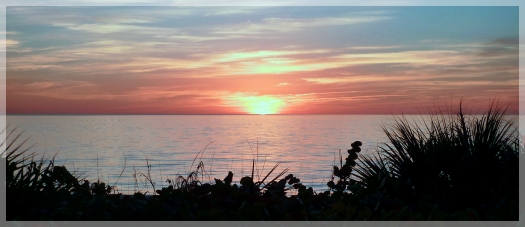 God makes a huge dome for the sun—a superdome! The morning sun’s a new husband leaping from his honeymoon bed, The daybreaking sun an athlete racing to the tape. That’s how God’s Word vaults across the skies from sunrise to sunset, melting ice, scorching deserts, warming hearts to faith. [Psalm 19:4-6 (MSG)]
 As a way of learning how to live the abundant life promised by Jesus, I am participating in a series of abundance exercises. In my first, I was to think of something God created and reflect on the different and incredible ways He expressed that creation. While at the zoo, I couldn’t help but notice God’s abundance in the diversity of His creatures: the speedy cheetah, the sluggish sloth, the crane’s sharp pointed beak, the giant anteater’s long tubular snout, the giraffe with its long legs and neck, and the python with neither legs nor neck! The gazelles’ long slender horns don’t resemble the muntjacs’ small antlers or the giraffes’ stubby ossicones; the zebras’ stripes were nothing like those on the bongo or ring-tailed lemurs; and the giraffes’ spots were different from those on the cheetah and serval. Even within each species, every animal had his own unique pattern of stripes or spots. The animals’ colors and coats ranged from the vibrant blue, gold and green feathers of the macaws to the brown-grey shell of the gopher tortoise and the heavy fur coat of the black bear. Because our zoo started out as a botanical garden 100 years ago, the setting was lush and we were surrounded by bright pink, yellow, blue, orange and white flowers along with mangroves, strangler figs, cypress, cactus, enormous banyans, and over 100 species of palm trees. God outdid himself when it came to flora and fauna. Having completed the week’s assignment in a matter of hours, it seemed too easy and I decided to notice God’s creativity throughout the week.
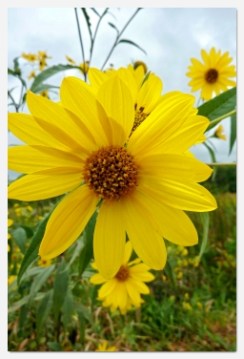 In a nutshell, compound interest is getting interest on interest; when it’s on money you have, your investment keeps growing. When it’s on money you owe, however, you pay interest on your interest and end up deeper in debt. The economics lesson is because of C.S. Lewis’s words that “Good and evil both increase at compound interest.” While Lewis then switches metaphors from the bank to the battlefield, Scripture often uses the metaphor of sowing and reaping for the same concept of the exponential growth of both good and evil.
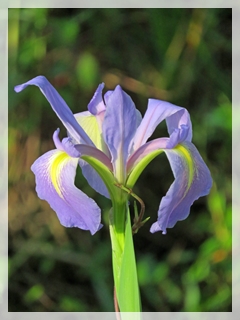 Dozens of birders have been gathering at the local bird sanctuary to catch a glimpse of a Hammond’s flycatcher. Since these birds look similar to other flycatchers, prefer the mountains to lowlands, and are rarely found within 1,000 miles of Florida, the bird in question could be an imposter. It’s just another little grey bird to me but, to birders, its identification is important. Although they’ll report their sightings to the Florida Ornithological Society, just looking like a Hammond’s isn’t enough. When the Society’s Records Committee meets in August, they will evaluate the submitted sketches, photographs, videos, recordings and detailed accounts of the bird’s behavior along with reports of the surroundings, sky conditions, temperature, and times when the bird was spotted to determine whether it truly is a Hammond’s.
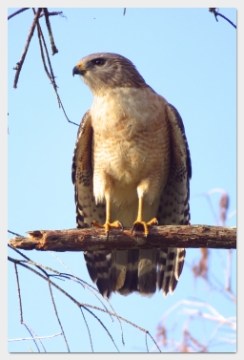 A red-shouldered hawk soared through the sky, swooped down, and settled in a tree just a few feet from us. After getting a photo, I walked back to a man we’d passed earlier on the boardwalk. His tripod and huge lens told me he was hoping to get some good shots and I let him know a Kodak moment was waiting on the side trail. He followed me back and my husband pointed out the impressive bird perched above him.
 Devotions of the Heart