
Jesus replied, “I tell you the truth, you want to be with me because I fed you, not because you understood the miraculous signs. But don’t be so concerned about perishable things like food. Spend your energy seeking the eternal life that the Son of Man can give you.” [John 6:26-27 (NLT)]
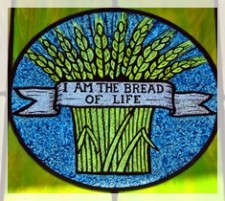
Although people flocked to Jesus, many came for His miracles and what He could do for them rather than for His message. After all, He gave sight to the blind, calmed storms, gave excellent fishing instructions, cured the paralyzed, freed people from demons, healed the sick, raised the dead, turned water into wine, made money appear in the mouth of a fish, and fed thousands with next to nothing. After Jesus fed the multitude, the people recalled the Messianic prophecy of Deuteronomy 18:18 that God would raise up a prophet like Moses and they wanted to make Him king. They didn’t understand that the kingdom of the Messiah would be a spiritual, not a political, one. Rather than seeing Jesus’ miracles as God’s stamp of approval on Him and coming to Jesus out of faith, they came to Him looking for more. As if feeding lunch to over 5,000 hadn’t been enough, they wanted an even greater miracle on a par with the manna Moses provided for the Israelites. Even though Jesus fed 5,000 men for a day, Moses fed millions for decades!
Jesus, however, corrected them. The manna wasn’t from Moses—it was from God. Moreover, that manna only lasted one day—the true bread from heaven, the bread Jesus offered, would last for eternity. Jesus wasn’t there to sustain life with something perishable but to give life with something everlasting!
Seeing Jesus as a miracle worker and a political king, the crowd followed Him. How do we see Him and why do we come to Him? Do we come for spiritual reasons or worldly ones? We may not expect Jesus to provide the food and drink for our next party but are we seeking Him for other things we think we can get from Him? By joining a church, are we seeking friends, contacts, or status? Do we have a personal agenda like politics, business relationships, or help from the parish? Are we motivated to seek Jesus in pursuit of wealth, success, comfort, emotional experience, or a miraculous fix of a problem?
Do we look to Jesus for our advancement or to advance His kingdom? Do we want to be glorified for what we do or glorify Him with what we do? Do we want to feel loved and or do we want to love Him and His children? Are we seeking an emotional high rather than spiritual growth? Do we seek power, influence, or recognition rather than a life of service and humility? Do we want His joy without our obedience or His forgiveness without our repentance?
Like the woman at the well, do we want His water so we don’t have to walk to the well and fill our jugs? Like the people who followed Jesus to Capernaum, do we want Him to miraculously satisfy our daily physical needs? Are we little better than Judas and following Him for the pieces of silver preached in the prosperity gospel? Are we looking for material possessions and wealth or spiritual gifts and the Fruit of the Spirit? Do we seek Him for what He can do for us or for who He is? Do we look to Jesus to take whatever is in His hand or do we come to offer Him what is in ours? Just asking…
True Christianity is to manifest genuinely Christ-like behavior by dependence on the working of the Spirit of God within, motivated by a love for the glory and honor of God. [Ray C. Stedman]
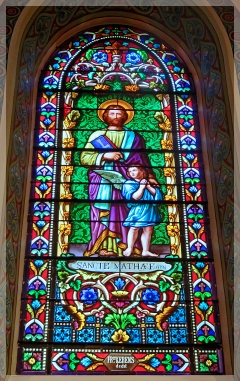 Although Mark and Luke call him Levi, there is no doubt that Levi and Matthew are the same man. He may have had two names, as did John Mark or was known by two different names as were Peter (Simon), Thomas (Didymus), Jude (Thaddeus), and Nathanael (Bartholomew). It simply may be that, like the Apostle Paul (Saul), he was known both by his Greek name of Matthew as well as his Hebrew one of Levi.
 When the people of Israel demanded a king, Samuel cautioned them about the price they would pay. In spite of his warnings, they wanted a king and got the taxation that came with the government they wanted. Even without a king, government continues to reach its hand into our pockets and today is the deadline for filing our 2021 income taxes! We actually got three extra days this year because Emancipation Day, a public holiday in the District of Columbia, fell on the 15th. Security, protection, administration, infrastructure, and a legal system all come at a cost and taxes are the price we pay for the government we have chosen.
 Before going grocery shopping, smart shoppers take an inventory of their cupboards to see what is missing. That’s fine when going to market, but it’s not a wise policy when we assess our lives. It’s far too easy to spend time thinking about what we don’t have instead of being thankful for what we actually do possess.
 When I came across this revised version of the 23rd Psalm, I was sure it was written by a cynic as a way of mocking God, Christianity, and many of today’s popular evangelists. Imagine my surprise when I learned that it was written in all seriousness by Charles Fillmore, the founder of Unity, a church within the New Thought movement. The “revised” psalm was published in Fillmore’s book Prosperity in 1938. Although we may associate the beginnings of prosperity or “health and wealth” theology with televangelists like Jimmy Swaggart and Jim and Tammy Bakker in the 1970s, the movement began in the late 19th century. Sadly, in one form or another, it still is preached today.
 Devotions of the Heart