
I am the Alpha and the Omega, the First and the Last, the Beginning and the End. [Revelation 22:13 (NLT)]
 Having forgotten the Greek alphabet he learned as a fraternity pledge, my husband asked the meaning of the symbols on the lecterns in the church sanctuary. On the left was A for alpha and, on the right, was Ω for omega: the first and last letters of the Greek alphabet. In Hebrew, those letters would have been aleph and tau. Among Jewish rabbis, using the first and last letters of the alphabet was a common way to express the whole of something, from its beginning to its end. Today’s equivalent expression would be “from A to Z” or “from soup to nuts.” Those Greek letters refer to three verses in Revelation in which Jesus claims to be the Alpha and Omega. They tell us that that, as part of our Triune God, Jesus was there at the beginning and He will be there at the end.
As for alpha: only God could exist before time even existed! Although Genesis starts with, “In the beginning,” God was already there! Since time, space, and matter are co-relative and God created space and matter, we know it was God who also created time. God never had a beginning because He is the beginning! He didn’t emerge from something; everything emerged from Him!
One of the basic laws of science is that neither mass nor energy can be created. Simply put, it can only be converted or broken apart and put together in a new way. Strictly speaking, mankind can’t create; we can only synthesize or transform by taking existing materials to make something new. We can’t create ice or steam but we can convert water into those things by freezing or boiling it. We can take that water (H2O) and combine it with carbon dioxide (CO2) and end up with carbonic acid (H2CO3) but we couldn’t create carbonic acid without the building blocks of hydrogen, carbon and oxygen. God, however, started from scratch; with no time, space or matter before Him, he created mass and energy. Making something from nothing boggles the mind but it’s the only answer that makes any sense—even to scientists!
Astronomy leads us to a unique event, a universe which was created out of nothing, and delicately balanced to provide exactly the conditions required to support life. In the absence of an absurdly improbable accident, the observations of modern science seem to suggest an underlying, one might say, supernatural plan. … The best data we have are exactly what I would have predicted, had I had nothing to go on but the five books of Moses, the Psalms, the Bible as a whole. [Arno Penzias]
Arno Penzias was the winner of the 1978 Nobel Prize in Physics. He and Robert Wilson discovered cosmic microwave background radiation. Their discovery supported the Big Bang theory of the creation of the Universe and showed that the Big Bang was not a chaotic random explosion. A highly fine-tuned explosion, it appears that some being guided it along.
The Apostle Paul said, “By faith we understand that the entire universe was formed at God’s command.” [Hebrews 11:3] I don’t think we need faith to know that anymore; it appears that science tells us the same thing. The writers of the Bible, however, didn’t know the theory of relativity, didn’t have telescopes telling them the universe is expanding, and had never heard of the Big Bang, thermodynamics, radiation afterglow, or variations in the temperature of the “great galaxy seeds” – they just knew the truth. Our great God is the Alpha!
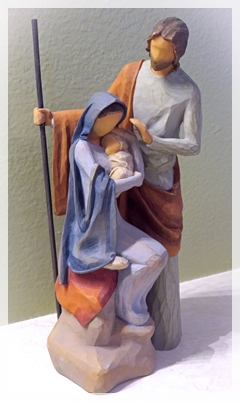 Although Epiphany celebrates the magi’s visit to the Christ child, for many people it simply marks the official end to the holiday season. It’s the day the tree goes down, lights are removed, and nativity scenes get stowed for another year. British tradition holds that if you haven’t removed the holiday décor by January 6, you must leave it in place all year long to avoid misfortune. I don’t know about misfortune but, in our community, you’ll face a fine if holiday lights or decorations remain after this week!
 In his gospel, Matthew writes of wise men from eastern lands who saw a ”star in the East.” This actually was a Greek term used in astrology at the time, en te Anatole, which meant “at the rising.” Now known as a heliacal rising, it describes a planet that rises above the eastern horizon shortly before dawn. Just moments after its appearance, it disappears in the sun’s glare. Better reflecting this astrological meaning, many Bibles translate the wise men seeing the star “as it rose.” While we’re not exactly sure what happened in the sky that drew the Magi to Judea, today’s astronomers have a pretty good idea.
 We know that within a few days of the angel’s visit that Mary went to her cousin Elizabeth’s home, but what of those first few days after the annunciation? Did Mary tell anyone or did she wait until she’d seen proof of Elizabeth’s pregnancy before she truly believed that she, too, was with child? Did she tell Joseph immediately or wait until she returned to Nazareth three months later?
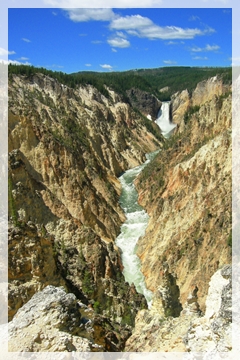
 We’re sure to notice God in the Grand Canyon, the multitude of stars in the night sky, or when watching two million wildebeest, zebra and gazelles migrate through the Serengeti. We sense Him in extraordinary or exotic things like the peacock’s splendid tail, Devil’s Tower, or spectacular sunsets and sunrises. But do we notice Him in the commonplace and unremarkable?
 “Watch out!” Jesus warned them. “Beware of the yeast of the Pharisees and Sadducees.” [Matthew 16:6 (NLT)]
 Devotions of the Heart