FEAR THE LORD

Above all, fear the Lord and worship him faithfully with all your heart; consider the great things he has done for you. However, if you continue to do what is evil, both you and your king will be swept away. [1 Samuel 12:24-25 (CSB)]

green heronWhen the nation of Israel was established, God said He’d be their king. But the people wanted an earthy king like the nations surrounding them so Saul became king. Samuel told Israel that, as long as they and their king walked with God, all would go well for the nation. Reminding the people to remember all the wonderful things God did for them, Samuel cautioned Israel. If they persisted in rebellion and disobedience, there would be serious trouble: they and their king would be banished (a prophecy of their eventual exile).

When Samuel told the Israelites to “Fear the Lord,” he was giving them a warning about fearing the consequences of sin and God’s wrath. To make his message crystal clear, Samuel prayed for thunder and rain as a way of demonstrating God’s wrath. A rain storm would seem a blessing to people in an arid land but it was harvesting time. Rain during harvest damages the crops and causes them to rot. Not a boon but a disaster, this unseasonal storm was a clear sign of God’s displeasure at Israel’s desire for an earthly king. It demonstrated that the same God who brought blessings to them when He parted the Red Sea, made the walls of Jericho fall, rained hailstones on the Amorites, and scattered the Philistines with a thunderstorm, could rain trouble upon them as well. It showed that God’s people could be punished for disobedience as easily as they’d been blessed for obedience. The Israelites were given good reason to fear the Lord.

Unfortunately, Samuel’s warnings (and those of the many prophets who followed) were not heeded and, as prophesied, the kingdom was swept away less than 500 years later. One of God’s Biblical names is Elohay Mishpat, the God of Justice; the fall of Israel and Judah was His judgment against injustice, evil, disobedience, and sacrilege.

What does “fear the Lord” mean to us today? The Hebrew word for fear is yârêʼ and, when used in Scripture, it refers to an appropriate attitude of reverence and awe before the Holy One. Fully understanding that sin has consequences, rather than regarding God with terror and anxiety, fear of the Lord means our recognition that we are mere mortals before our Creator and Sustainer—we are nothing more than small children before their father or common criminals before their judge. Recognizing that we are recipients of His mercy, grace, and love, “fear of God” means regard for His might, trust in His limitless love, awe of His majesty and power, loving reverence for His being, submission to His commands, repentance for our sins, and an overwhelming mindfulness of His existence in our lives. Fear of the Lord involves our trust and love toward the powerful One who both protects and punishes us.

Franklin D. Roosevelt said, “The only thing we have to fear is fear itself,” and, as followers of Christ, we have no need to fear sharing the gospel, natural disaster, the strange or unfamiliar, tomorrow, enemies, persecution, judgment, or even death. Like the Israelites of old, however, we are to fear the Lord!

The fear of the Lord is the beginning of wisdom, and the knowledge of the Holy One is understanding. [Proverbs 9:10 (CSB)]

And now, Israel, what does the Lord your God ask of you except to fear the Lord your God by walking in all his ways, to love him, and to worship the Lord your God with all your heart and all your soul? [Deuteronomy 10:12 (CSB)]

Copyright ©2025 jsjdevotions. All rights reserved.

MARVELOUS WORKMANSHIP

For ever since the world was created, people have seen the earth and sky. Through everything God made, they can clearly see his invisible qualities—his eternal power and divine nature. So they have no excuse for not knowing God. [Romans 1:20 (NLT)]

We were discussing when and how we came to believe in the existence of God. Those who’d been brought up in families of faith said there never was a time they weren’t aware of God’s presence. Others spoke of believing in God because He is visible in His creation—in flowers, majestic mountains, birds, sunrises and sunsets, the vastness of space, or the miracle of birth. One came to believe in God while attending Vacation Bible School with a neighbor and another met God through a campus ministry. After apologizing in advance for “grossing” us out, one woman shared her experience while in medical school.

Not a believer at the time, she was sure science explained everything that needed explaining until she dissected a human brain. As she cut into the tissue and started labeling parts, she began to wonder. While slicing through the 100 billion neurons of a man’s brain, she questioned where she’d find the part that loved stroking his wife’s hair, knew the sound of his children’s laughter, taught his boys how to play football, or built a dollhouse for his daughter. She wondered which of those billions of neurons learned the alphabet and times tables, struggled to learn Spanish, loved his parents, knew how to play the guitar, told jokes to his friends, called blue his favorite color, or enjoyed both the Beetles and Bach? With each slice she asked things like, “Is this the part that knew sorrow at his child’s death or joy at his daughter’s wedding? Where is the memory of his first bicycle, first kiss, or honeymoon?”

She held the most fascinating and complex organ of the body in her hands and knew the name and function of every part of it but she couldn’t find the answers to her questions. Touching this man’s brain, she knew him more intimately than anyone. Nevertheless, she couldn’t uncover what made him who he was. When she couldn’t find his essence—his very soul—she realized that man is greater than the sum of his parts. Understanding that inside us all there is something unique that cannot be seen, cut into, labeled, or even explained was her “Aha!” moment. It was then that she recognized something or someone far greater is in charge. That moment she finally believed in God—the creator of heaven and earth and all things in between.

When she finished speaking, there was dead silence in the room and she started to apologize again for talking about cadavers and dissections. We reassured her there was no need for apology. Her compelling story had not turned our stomachs; rather, the beauty of it had taken away our breath! We sat in stunned silence as we each reflected on this great and marvelous Creator God who reveals Himself in such wonderful and unique ways.

You made all the delicate, inner parts of my body and knit me together in my mother’s womb. Thank you for making me so wonderfully complex! Your workmanship is marvelous—how well I know it. You watched me as I was being formed in utter seclusion, as I was woven together in the dark of the womb. [Psalm 139:13-15 (NLT)]

Copyright ©2025 jsjdevotions. All rights reserved.

HE’S NOT TAME 

O clap your hands, all ye people; shout unto God with the voice of triumph. For the Lord most high is terrible; he is a great King over all the earth. [Psalm 47:1-2 (KJV)]

The Lord is great in Zion; and he is high above all the people. Let them praise thy great and terrible name; for it is holy. [Psalm 99:2-3 (KJV)]

lion - tanzania

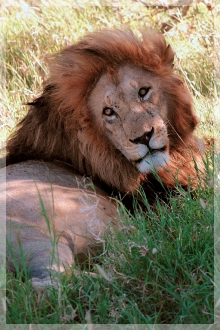
“He’s not a tame lion.” Anyone familiar with The Chronicles of Narnia by C.S. Lewis knows to whom this sentence refers. Throughout the seven Narnia books, that same thought is expressed in various ways when describing Aslan (the Christ-like character in the series). When the Pevensie children discover that Aslan is a lion, they ask if he’s safe. “Who said anything about safe?” is the reply. “’Course he isn’t safe,” adds Mr. Beaver, “But he’s good. He’s the King, I tell you.” A safe lion would be a tame lion because a tame lion has been trained. It’s predictable and can be managed, manipulated, controlled, and taught. Aslan, most definitely, is not tame but he is good and, at times, that fact is forgotten. Perhaps it is because, as Lewis explains: “People…sometimes think that a thing cannot be good and terrible at the same time.”

The Hebrew word describing God in the Psalms and translated as “terrible” in the King James, was yare, meaning “to be feared.” Most other modern translations use “awesome” or a similar less terrifying word. Back in the 1600s, when the King James version was first published, the type of “terror” associated with the word was a reverent fear of God. It conveyed both dread and terror as well as solemn awe and reverence—an appropriate response to a Being who is far greater and more powerful than any human could ever hope to be. When describing God (or Lewis’ lion Aslan), “terrible” means tremendous, awe-inspiring, formidable, intense, and fearsome. Our God is all that and more; what He isn’t is tame!

The children eventually understand that Aslan is intrinsically good and, because the lion is good, it doesn’t matter that he isn’t tame. The same goes for God! If we truly believe Him to be good, we can trust that everything He does is for our good. When life takes a bad turn, however, we tend to lose sight of God’s goodness and love. Forgetting that His inherent goodness and terribleness are inseparable, we allow challenging circumstances to steal our confidence in a good God. Like Aslan, God can’t be evil any more than He can be tamed.

Afraid of trusting an unpredictable, fearsome, and awesome God, we would prefer a God who is tame—one we could tell what to do along with when and how to do it. We wouldn’t need to please a tame God; He’d want to please us. He would coddle rather than challenge and beg rather than demand. A tame God would answer to us rather than hold us accountable to Him. Since a tame God would live to please our sinful nature, a tame God could not be good!

In Lewis’ books, the untamed but good lion brings the children into Narnia not to live bland or boring lives but to face foes, trials, and difficulties and become better for it. Nevertheless, they never face those challenges alone; Aslan is always there for them. In the same way, our awesome God does not call us to lead humdrum safe lives. He calls us to live far-reaching, uncompromising, purposeful, profound, and often challenging ones. Jesus told His disciples to take up their crosses and have lives of radical goodness and love; He tells us to do the same thing.

Our God is not tame, but He is good; He is untamed goodness and love!

Ascribe ye strength unto God: his excellency is over Israel, and his strength is in the clouds. O God, thou art terrible out of thy holy places: the God of Israel is he that giveth strength and power unto his people. Blessed be God. [Psalm 68:34-35 (KJV)]

Come and see the works of God: he is terrible in his doing toward the children of men. He turned the sea into dry land: they went through the flood on foot: there did we rejoice in him. [Psalm 66:5-6 (KJV)]

Copyright ©2025 jsjdevotions. All rights reserved.

HE’S BIGGER

Though you have not seen him, you love him; though not seeing him now, you believe in him, and you rejoice with inexpressible and glorious joy, because you are receiving the goal of your faith, the salvation of your souls. [1 Peter 1:8-9 (CSB)]

lion - tanzania

Although C.S. Lewis never intended the seven books in The Chronicles of Narnia series to be allegories, they are filled with Christian imagery and allusions. Having enjoyed reading (and re-reading) the Narnia books, I was pleased when the Pastor opened his sermon on “The Supremacy of Jesus” by quoting from it. In Prince Caspian, after a year’s absence from Narnia, Lucy encounters Aslan the lion (the Christ-like figure in the series) and says, “Aslan, you’re bigger.” The lion replies, “That is because you are older, little one.” When she asks, “Not because you are?” the lion assures her, “I am not.” He then explains, “But every year you grow, you will find me bigger.”

Only a year had passed in Lucy’s world since she last saw Aslan, but 1,300 years had passed in Narnia. Even so, in all that time, Aslan hadn’t gotten larger. As Hebrews 13:8 reminds us, “Jesus Christ is the same yesterday, today, and forever.” Indeed, God is unchangeable in His being, character, will, attributes, power, and promises.

Lucy’s misperception of Aslan’s size is not because she’s another year older or two inches taller. While we tend to think of growing as getting older or larger, growing in the spiritual sense is different. It’s a little like seeing people from a distance. From afar, they seem small but, as we grow closer to them, they seem to enlarge. Once face-to-face, we finally perceive how large they really are! Spiritual growth is coming closer to God so that we perceive how big He is and how small we are. Growth in our spiritual life doesn’t mean there is more of us; if anything, there is less of us and more of God! While God is immutable, our relationship with Him is not.

As we grow and mature spiritually, like Lucy, our perception of God will change proportionally. The more we move toward Him, the larger He becomes! We will come to see both our spiritual brokenness and the greatness of God’s mercy, our sinfulness and His immeasurable holiness, our weakness and His infinite power, our poverty and His limitless grace, our emptiness and His abundant love. As we accept our inadequacy and hopelessness, our small perspective of God changes and we begin to grasp the full extent of God’s wisdom, glory, power, and majesty. Indeed, our God is a big God!

Aslan played a prominent role in the first Narnia book so all four of the children know he exists. Nevertheless, upon their return to Narnia, they don’t see him. But, that doesn’t mean he wasn’t there. Lucy is the only one who finally sees him, perhaps because, unlike her siblings, she was the only one who believed Aslan would help them. For the other three children, Aslan remains invisible until, one by one, like Lucy, they start having faith in him. It’s been said that “seeing is believing.” In this case, it is the believing that allowed for the seeing! I expect that, as their faith increased, like Lucy, each sibling said, “Aslan, you’re bigger!”

And, so it is with Jesus. We must believe in Him to see Him and the more we trust Him, the bigger He gets!

Jesus said to her, “Didn’t I tell you that if you believed you would see the glory of God?” [John 11:40 (CSB)]

Jesus said, “Because you have seen me, you have believed. Blessed are those who have not seen and yet believe.” [John 20:29 (CSB)]

Now without faith it is impossible to please God, since the one who draws near to him must believe that he exists and that he rewards those who seek him. [Hebrews 11:6 (CSB)]

Copyright ©2025 jsjdevotions. All rights reserved.

IMAGE BEARERS

Then God said, “Let us make human beings in our image, to be like us.” … So God created human beings in his own image. In the image of God he created them; male and female he created them. [Genesis 1:26,27 (NLT)]

father and sonsIt’s often said, “Like father, like son,” and that was true of my father-in-law and his sons. Although they weren’t carbon copies of their dad, the boys shared several characteristics with the man who fathered them. In the same way, because God created us in His image, we share some of His characteristics. Of course, there are many important ways we are not like our Creator—He is all-knowing, eternal, all-powerful, and ever-present. Without a physical body, we don’t have things like God’s nose, hair color, or smile. Nevertheless, we do resemble Him in the spiritual, moral, and intellectual attributes of our nature that distinguish us from the rest of the animal world.

Although we share some of God’s attributes, we share them only to a limited extent. I can be a good person, be good-natured, be good at something, look good, feel good, do good, and even smell good. Nevertheless, I am not wholly good. Although I can be in love, love someone or something, act loving, profess my love, and be loved, I cannot be love. While my family claim that my recipes for barbecue sauce, California dream bars, and buttermilk pancakes are perfect, I am not (and never will be) perfect. I can distinguish righteousness from wickedness, have righteous indignation, act righteously, and feel both righteous and self-righteous, but I still sin. I can recognize wisdom, act wisely, and, on occasion, even give wise counsel, but I am not wisdom and, while I can know the truth, discern between truth and falsehood, and speak the truth, I am not truth.

On the other hand, God doesn’t stop at doing good, loving wholly, performing flawlessly, acting righteously, advising wisely, and speaking the truth—He is goodness, love, perfection, righteousness, wisdom, and truth personified! Nevertheless, imperfect as we mortals are, we should resemble our Creator in our words and actions. I’m not sure we always do.

God doesn’t play favorites. Every human being, regardless of race, nationality, ethnicity, politics, language, wealth, education, religion, social status, power, or gender has been created in the image of God. Do we treat our fellow image bearers with the respect, love, and compassion due to all of God’s children?

Since all people are in the image of God, all deserve to be treated with the dignity the image affords. [John H. Walton]

Every human life is a reflection of divinity, and…every act of injustice mars and defaces the image of God in man. [Martin Luther King, Jr.]

So all of us who have had that veil removed can see and reflect the glory of the Lord. And the Lord—who is the Spirit—makes us more and more like him as we are changed into his glorious image. [2 Corinthians 3:18 (NLT)]

Since you have heard about Jesus and have learned the truth that comes from him, throw off your old sinful nature and your former way of life, which is corrupted by lust and deception. Instead, let the Spirit renew your thoughts and attitudes. Put on your new nature, created to be like God—truly righteous and holy. [Ephesians 4:21-24 NLT]

Copyright ©2025 jsjdevotions. All rights reserved.

A CHANGE OF HEART

For you are not a true Jew just because you were born of Jewish parents or because you have gone through the ceremony of circumcision. No, a true Jew is one whose heart is right with God. And true circumcision is not merely obeying the letter of the law; rather, it is a change of heart produced by the Spirit. [Romans 2:28-29a (NLT)]

In 1962, my 2-month-old nephew Johnny and his parents traveled 1,500 miles for his Baptism. Because my mother was hospitalized (and soon would be dead), the sacrament took place at her bedside. This was the only time Johnny and his grandmother met and the last time my sister saw our mother alive.

Believing that children should be free to find their own way to God, my brother-in-law was opposed to infant baptism. Nevertheless, my father wanted that baby baptized as much as he wanted my mother to meet her first grandchild. Because children under 12 were not allowed to visit hospitals back then, he convinced my brother-in-law that a hospital baptism was the only way my mother could see and hold the little guy. The hospital was run by the Sisters of Charity so he knew the nuns wouldn’t deny his request for a bedside baptism (especially since he neglected to mention that the priest was Episcopalian rather than Roman Catholic). That we were Protestants, however, didn’t keep the nuns from joining us during the service.

Unfortunately, other than the funerals of his grandparents, Johnny’s baptism probably was the only time he came near a minister, church, Bible, prayer book, holy water, or even a nun. While his parents were good people, they never attended church and the boy had no religious education. By the time he was in his teens, the troubled youth was diagnosed with schizoaffective disorder. As often happens for people with severe mental illness, he self-medicated with drugs and alcohol. A vicious cycle began as the substance abuse exacerbated his mental illness and his disease increased the abuse.

Unable to stay on his meds and off drugs, he was a lost soul. When he wasn’t in jail, the hospital, or couch surfing through the homes of other users, Johnny lived on the streets. Sadly, it was on those streets that he died from a fentanyl overdose. While I can’t know what is in anyone’s heart, I doubt that Johnny believed in Jesus. Nevertheless, he was baptized; did that sprinkle of water mean he was saved?

As a sign of God’s covenant with Israel, all of Abraham’s descendants were to be circumcised. In Romans 2, however, Paul points out that, for the Jew, the true sign of belonging to God was not the ceremony of circumcision; it was a change of heart produced by God’s Spirit. It was God’s spiritual surgery upon the heart rather than the removal of one’s foreskin that made a Jew right with God. While there are parallels between baptism and circumcision, they symbolize two very different covenants. Nevertheless, while studying Romans and rereading today’s verse, I replaced “Jew” with “Christian” and “circumcision” with “baptism.” Indeed, Christianity has nothing to do with parentage nor does baptism bring salvation; salvation requires a change of heart.

The Book of Common Prayer (1958) calls baptism an “outward and visible sign of an inward and spiritual grace.” Without that “inward and spiritual grace,” I fear it is just a ritual. External actions like baptism, communion, genuflecting, making the sign of the cross, or church attendance are not what make us Christians. Salvation doesn’t come by works or sacraments; it comes through God’s grace through faith!

Assuming Johnny never came to know Jesus and be filled with His Holy Spirit, I fear that my nephew’s baptism didn’t make him a Christian any more than his hospital circumcision made him a Jew. While baptism is a step of obedience for every Christian, it does not save us. Our salvation is because of Jesus’ death and resurrection and is available only through faith in Jesus Christ. Let us all beware of trusting that baptism alone will bring us to heaven.

Tragically, some people believe they are going to heaven when they die just because a few drops of water were sprinkled over their heads a few weeks after their birth. They have no personal faith, have never made a personal decision, and are banking on a hollow ceremony to save them. How absurd. [Max Lucado]

If you openly declare that Jesus is Lord and believe in your heart that God raised him from the dead, you will be saved. For it is by believing in your heart that you are made right with God, and it is by openly declaring your faith that you are saved. [Romans 10:9-10 (NLT)]

Copyright ©2025 jsjdevotions. All rights reserved.