TRUE CHARACTER

I want to do what is right, but I can’t. I want to do what is good, but I don’t. I don’t want to do what is wrong, but I do it anyway. [Romans 7:18b-19 (NLT)]

smooth roseYears ago, we were acquainted with “Henry, dear” and “Mary, darling.” We called them that because we never heard them refer to one another any other way. They always were so sweet and charming in public that halos seemed to hover over their heads. My husband and I often wondered what they called one another behind closed doors and, as we got to know them better, we realized our wariness was well-founded. As noble as they appeared in public, there always seemed to be an ulterior motive behind their kindness and, while “Henry, dear” was patting your back, his other hand probably was reaching into your back pocket. While we never knew what they called one another in private, we knew that what the public saw was not what they actually got.

I thought of them the other day when watching A Beautiful Day in the Neighborhood, a movie about Fred Rogers. Having read books both by and about him, there truly was nothing artificial or superficial about the man; what you saw actually was what you got. Rogers once said, “The greatest gift you ever give is your honest self,” and that’s exactly what he did!

Recently, my day began with bad news and sped downhill from there. In my frustration, my words and actions were not those of a “church lady.” I may write Christian devotions but what you see is not always what you get and the Fruit of the Spirit was nowhere to be found on my tree! Whether in public or private, Mr. Rogers’ faith was evident in all that he did or said. Mine, however, frequently gets obscured by my reaction to circumstances beyond my control. Like the Apostle Paul, “I want to do what is right, but I don’t do it. Instead, I do what I hate.” [Romans 7:15]

Both Fred Rogers (and the movie) were clear that, just like the rest of us, he was no saint. The difference is that, while many of us seem to think we can become good people effortlessly, Fred Rogers actually worked at being the very best person that he could be. One of the ways he did that was through self-discipline. He faithfully read the Bible, reflected and prayed every day, and his prayers continued all day long. He was disciplined in the way he cared for his body with healthy habits. He was disciplined about meeting his commitments, remembering his friends, and expressing gratitude. It’s not that he didn’t have emotions; it’s that he was disciplined enough to choose safe outlets for the negative ones. It’s not that he didn’t know any four-letter words; he just was disciplined enough to use words like “mercy, me!” instead of them! Rogers understood that while circumstances may be beyond our control, our reaction to them is not. He was disciplined in his faith, obedient to God, and saw everyone as his neighbor and a valued child of God. He didn’t give lip service to the power of the Holy Spirit; He lived, breathed, trusted and depended on the Spirit.

The difference between the “Henry, dears” and “Mary, darlings” of the world and Fred Rogers is that while they wear masks so they’ll look like good Christians, Mr. Rogers developed the strength of character to be a good Christian! Through self-discipline and the power of the Holy Spirit, he actually became good (or at least a whole lot better than many of us). The church would call that process sanctification. We can’t do it by ourselves and God doesn’t do it for us; rather, it is combining our efforts with God’s power to grow more and more like Christ. Spiritual progress doesn’t happen overnight and sanctification is not a passive process; it requires effort, discipline and obedience. Only then will people be able to say of us, “What you see is what you get!”

And so, dear brothers and sisters, I plead with you to give your bodies to God because of all he has done for you. Let them be a living and holy sacrifice—the kind he will find acceptable. This is truly the way to worship him. Don’t copy the behavior and customs of this world, but let God transform you into a new person by changing the way you think. Then you will learn to know God’s will for you, which is good and pleasing and perfect. [Romans 12:1-2 (NLT)]

Copyright ©2019 jsjdevotions. All rights reserved.

OUR GATEKEEPER

Be careful what you think, because your thoughts run your life. [Proverbs 4:23 NCV]

Corkscrew SwampActing as gatekeepers for the temple in Jerusalem, the Levites opened and closed its doors and guarded it during the night. Among their many duties, they prohibited entry to anyone considered “unclean,” protected the temple from theft or desecration, watched the offering and tithe money, and maintained proper decorum within the temple. They also were the ones who imposed the death penalty on any who dared enter the temple illegally.

Although many churches have implemented security measures, we no longer have Levites at our church doors. Most of us, however, could use a similar gatekeeper to protect our minds (and mouths) from anything that could defile us. Like crashers at a party, negative thoughts can sneak into our heads. Once in, they tend to prop open the door so more negativity can follow. Anger often brings his pals animosity and resentment. Once fear steals in, worry slips in right behind him; doubt, regret and suspicion are sure to follow. Before we know it, bitterness and hatred have joined the party, along with envy, lust, and their old friend guilt. When our minds are filled with undesirable and unwelcome callers, there’s little room left for any positive thinking. Once those bad thoughts have gotten into our heads, they want to continue their damage by spilling out through our mouths.

The mind’s gatekeeper must be diligent, on duty 24/7, and refuse entry to any thoughts and feelings considered “unclean” or inappropriate. He’d maintain order in house and keep our thinking in line. On the lookout for hazards, he’d steer us away from situations that could bring trouble or temptation. Rather than kill temple trespassers who stepped beyond the warning stone, the gatekeeper would squash any negative words before they could escape!

Unfortunately, the books of Kings and Chronicles tell us that the Temple’s gatekeepers fell down on the job. They allowed the dwelling place of God to be defiled by idolatry and fall into disrepair. When King Hezekiah ordered the Temple’s purification, it took more than two weeks simply to clean it!

At the moment of Jesus’s death, the Temple was no longer the place of God’s presence. Because of Christ, God dwells within each one of us. Having provided each of us with a far better Gatekeeper in the Holy Spirit, Levites are no longer needed at our doors. We, however, must cede control to the Spirit so that He can do His job!

You should know that your body is a temple for the Holy Spirit who is in you. You have received the Holy Spirit from God. So you do not belong to yourselves. [1 Corinthians 6:19 (NCV)]

Those who live following their sinful selves think only about things that their sinful selves want. But those who live following the Spirit are thinking about the things the Spirit wants them to do. If people’s thinking is controlled by the sinful self, there is death. But if their thinking is controlled by the Spirit, there is life and peace.  …The true children of God are those who let God’s Spirit lead them. [Romans 8:5-6,14 (NLT)]

Copyright ©2019 jsjdevotions. All rights reserved.

AN ABOUT FACE

I am a pure-blooded citizen of Israel and a member of the tribe of Benjamin—a real Hebrew if there ever was one! I was a member of the Pharisees, who demand the strictest obedience to the Jewish law.  I was so zealous that I harshly persecuted the church. And as for righteousness, I obeyed the law without fault. [Philippians 3:5-6 (NLT)]

In writing about change yesterday, I couldn’t help but think of the Apostle Paul. He knew firsthand of God’s transforming power. When we first meet Paul, he’s going by his Hebrew name of Saul and looking on as Stephen (the first of Christ’s followers to give his life for the gospel) is stoned to death.
The slaying of Stephen led to a wave of persecution and Saul relentlessly went from house to house in search of Jesus’s followers so he could drag them off to prison. Full of religious zeal and eager to kill those who followed the Way, Saul asked the high priest for permission to go to Damascus so he could arrest Christ’s followers and drag them back to Jerusalem in chains. In short, Saul was brutal and violent and little more than a religious terrorist! It is on the road to Damascus, however, that Saul meets the risen Christ and has his amazing conversion [Acts 9]. Meeting Jesus face-to-face, being struck blind for three days, having Ananias lay hands on him, scales falling from his eyes, and Saul’s baptism make for a powerful story of redemption and truly testify that no person is beyond the saving grace of the Lord.

Nevertheless, old habits die hard and, as I wrote yesterday’s devotion, I wondered if Saul struggled as this once fanatical persecutor of Christians transformed into the great Christian evangelist. As a second-generation Pharisee, he thought of himself as a member of an elite group and anything foreign would have been detested. Wanting to keep himself free of any impurity, the old Saul would never associate with Gentiles or even any Jews who interpreted the law differently. Yet, the man who abhorred anyone different from him preached all over the Roman Empire, stressed unity between Jewish and Gentile believers, and became known as the Apostle to the Gentiles!

As a Pharisee, Saul had been meticulous to the point of obsession about obedience to both the written and oral Law. Yet, in an about face, he maintained that Jewish Christians no longer had to abide by those same regulations and that Gentile converts didn’t have to become Jews before becoming Christians. Understanding that it was the Holy Spirit rather than the Law that empowered holy living, Saul changed from thinking that strict obedience to the Law would make us right with God to knowing that we are only made right by grace through faith in Jesus.

Nevertheless, until meeting Jesus on the way to Damascus, Saul’s life had been wrapped around strict adherence to the Law. Did he have difficulty letting go of Pharisaic traditions like their elaborate hand washing ritual before meals, the conspicuous wearing of phylacteries and tassels, or fasting twice a week? Did the Jew who’d grown up loathing Gentiles cringe when he first sat down to eat with them? Until now, I hadn’t considered how difficult it had to have been for the Pharisee to become the Apostle. The man who wrote that “anyone who belongs to Christ has become a new person” [2 Corinthians 5:17] knew firsthand the truth of his statement. It is in his transformation that we see the power of Jesus to revolutionize a life! Through the power of the Holy Spirit, the persecutor of Christians became a preacher for Christ!

Yes, everything else is worthless when compared with the infinite value of knowing Christ Jesus my Lord. For his sake I have discarded everything else, counting it all as garbage, so that I could gain Christ and become one with him. I no longer count on my own righteousness through obeying the law; rather, I become righteous through faith in Christ. For God’s way of making us right with himself depends on faith. [Philippians 3:8-9 (NLT)]

Copyright ©2019 jsjdevotions. All rights reserved.

CAN WE CHANGE?

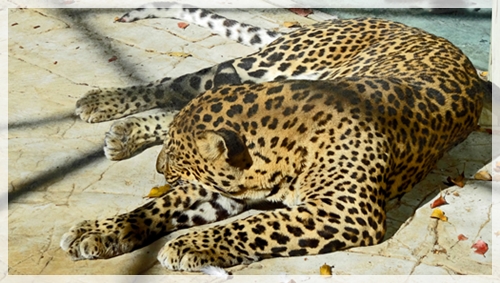
leopardCan an Ethiopian change his skin or a leopard its spots? Neither can you do good who are accustomed to doing evil. [Jeremiah 13:23 (NIV)]

What words of despair from Jeremiah! Yet, why would God send him to the people of Judah with the call to repent if there was no hope of change? Surely, He didn’t send His prophet on a fool’s errand!

We all have issues with sin. While it may not be theft or adultery, chances are it’s something like anger, envy, impatience, bigotry, hostility, selfishness, pessimism, or pettiness. “It’s just the way I’m built,” we say in way of excuse. While we may justify ourselves by saying our faults are simply our nature, they aren’t! Having recently gone through genetic testing, I didn’t see any genes for things like lust, short-temper, worry, nitpicking, intolerance, arrogance, discontent, or stinginess. When we confuse our learned behavior with innate behavior, we excuse the inexcusable. While we can’t change our skin color or blood type, we can change our habits.

The gift of habit is God given; indeed, we’re blessed that we can go through life without having to deliberately think through the details of every action. If we had to consciously consider how to brush our teeth, get dressed, tie our shoes, make coffee, or start the car, we’d never get anywhere in the morning. The gift of habit, however, can also be a curse when our habitual responses are not godly—when they entail things like bigotry, anxiety, deceit, pride, anger, self-centeredness, or jealousy. 19th Century preacher Charles Spurgeon likened the force of habit to a cobweb: at first, it’s easily broken. When it grows into a thread, however, it restrains us a bit and, when the thread changes into a cord, we find ourselves in a net. As the net hardens into iron and the iron into steel, we’re shut up in a cage of our own making with no way of escape.

In discussing Jeremiah’s question, Spurgeon emphatically states that the Ethiopian cannot change his skin but, he adds as emphatically, an Ethiopian’s skin can be changed. He explains that the God who turned “primeval darkness into light” and “changed chaos into order” can do everything and, should He choose to do so, He could easily change skin color and leopard spots. Far more important than changing appearances, however, God can transform human nature! The God who designed our hearts can make them new again. After all, change or re-birth is what Jesus is all about!

Jeremiah called the people to repent; the call to put off our old sinful nature and replace it with the new continues today. Although we can’t do it by ourselves, God doesn’t ask anything of us that we are incapable of doing. When we accept Jesus, the Holy Spirit produces fruit in our lives: love, joy, peace, forbearance, kindness, goodness, faithfulness, gentleness and self-control.  [Galatians 5:22-23] We may have to dig deep to find it but God’s fruit is there! Granted, it’s difficult to put away ingrained habits; change is neither easy nor fast. Nevertheless, though the power of the Holy Spirit, change is possible; we can take off the old and put on the new!

The God who made us also can remake us. [Woodrow Kroll]

Therefore, if anyone is in Christ, the new creation has come: The old has gone, the new is here! [2 Corinthians 5:17 (NIV)]

You were taught, with regard to your former way of life, to put off your old self, which is being corrupted by its deceitful desires; to be made new in the attitude of your minds; and to put on the new self, created to be like God in true righteousness and holiness. [Ephesians 4:22 (NIV)]

Copyright ©2019 jsjdevotions. All rights reserved.

JUST SORRY OR REPENTANT?

You do not desire a sacrifice, or I would offer one. You do not want a burnt offering. The sacrifice you desire is a broken spirit. You will not reject a broken and repentant heart, O God. [Psalm 51:16-17 (NLT)]

The fellow looked at me and apologized: “I’m sorry; I know I can be a real #@!%* at times!” I debated as to my response. While the polite thing would have been, “It’s OK, I understand,” that wouldn’t have been honest. His behavior wasn’t OK. We’re told in Proverbs 27:6 that wounds from a friend are better than an enemy’s kisses and, since he’d left the door wide open, I agreed with him. “I know you are. But you don’t have to be,” I gently added. “It’s your choice!” Apparently preferring an enemy’s kisses to my honest assessment, he shrugged his shoulders and left the room.

Although “sorry” and “repentant” often are used synonymously, they are not the same thing. My friend’s regret may have been heartfelt but repentance requires a change of heart. While sorry, he wasn’t ready to change his heart or his petulant behavior.

In John 8, we read about a woman caught in adultery. Facing a crowd ready to stone her to death, she surely regretted her behavior. After Jesus’s words caused the crowd to disperse, our Lord didn’t condemn her but He didn’t send her back to her paramour either. Clearly expecting repentance, He told her, “Go and sin no more.” [8:11] Whether or not she repented, we don’t know, but Jesus’s actions and words that day make two things clear. First, rather than wanting sinners to die, God wants them to repent and live! Second, forgiveness doesn’t mean tolerance.

Repentance has two requirements: turning from evil and turning to good. When we repent, we turn from sin to obedience, evil to good, selfishness to selflessness, deception to truth, vulgarity to civility, meanness to kindness, animosity to goodwill, dysfunction to function, and childishness to maturity. As Christians, we don’t repent because we’re afraid of fire and brimstone or that God will strike us dead. Out of our love for God, we consciously decide to become better by moving away from anything that offends Him toward something that pleases Him. The power to do that comes from the Holy Spirit.

Let us never confuse an apology, regret or even confession with repentance. It’s not enough to say, “I have sinned;” we must commit to making a change and not sinning again!

To do so no more is the truest repentance. [Martin Luther]

For the kind of sorrow God wants us to experience leads us away from sin and results in salvation. There’s no regret for that kind of sorrow. But worldly sorrow, which lacks repentance, results in spiritual death. [2 Corinthians 7: 10 (NLT)]

Prove by the way you live that you have repented of your sins and turned to God. [Matthew 3:8 (NLT)]

Copyright ©2019 jsjdevotions. All rights reserved.

FREE WON’T

Live like free people, but don’t use your freedom as an excuse to do evil. Live as those who are serving God. [1 Peter 2:16 (ERV)]

red-bellied woodpecker“Get Fuzzy,” a comic strip drawn by Darby Conley, chronicles the life of Rob and his somewhat eccentric pets: Bucky Katt, a temperamental feline with “cat-attitude,” and the gentle Satchel Pooch who frequently is the butt of Bucky’s jokes and the target of his bullying. In one comic, Satchel pondered the concept of free will. “Having free will means you also have the freedom to not,” says the dog, who then resolves, “I choose to exercise free won’t and not get mad.”

In studying the human brain, neuroscientists have discovered that there is a brief instant between when the brain tells the body to get ready to act and the action itself. That nanosecond is when our mind can implement its veto power—when it truly can exercise “free won‘t”!

We are usually so busy touting all of the things we’re free to do, that it is refreshing to consider the things we’re free not to do. Unfortunately, we don’t exercise that freedom nearly enough. Eve and Adam tasted the forbidden fruit, the Israelites worshipped a golden calf, David pursued Bathsheba, Jacob stole his inheritance, Judas betrayed Jesus, and Lot’s wife took a last look. Sadly, they didn’t exercise their freedom to say “No!” Admittedly, I frequently fail at implementing my “free won’t.”

The ability to not choose a thought or action is as important as the ability to choose them. We don’t have to indulge our every notion or whim. Remembering that we can veto as easily as we can approve, all of our choices should be conscious ones—ones where we deliberately choose between will or won’t.

Unfortunately, by the end of the comic strip, Satchel, who had been sorely vexed by Bucky, exclaims that, “I’m starting to get a little free maybe-the-*@#!-I-will after all!” His frustration sounds a bit like us when we try to exercise self-control solely on our own. Fortunately, unlike Satchel, we have a secret weapon: the Holy Spirit. Through God’s power, when tempted, we can exercise the freedom to not respond and make our free will become free won’t!

So, my brothers and sisters, we must not be ruled by our sinful selves. We must not live the way our sinful selves want. If you use your lives to do what your sinful selves want, you will die spiritually. But if you use the Spirit’s help to stop doing the wrong things you do with your body, you will have true life. The true children of God are those who let God’s Spirit lead them. [Romans 8:12-14 (ERV)]

Copyright ©2018 jsjdevotions. All rights reserved.