
God blesses those who work for peace, for they will be called the children of God. [Matthew 5:9 (NLT)]
Do all that you can to live in peace with everyone. … Don’t let evil conquer you, but conquer evil by doing good. [Romans 12:18,21 (NLT)]
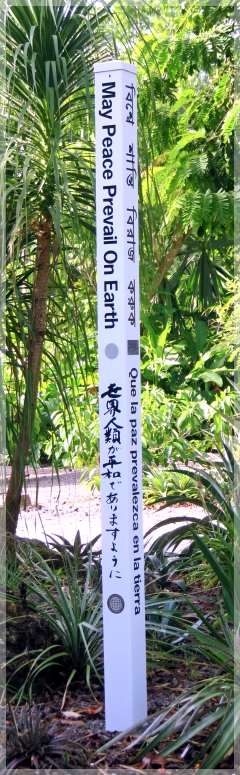 COVID kept us from the Botanic Gardens for well over a year. When we finally returned to one of our favorite places, we came upon a peace pole planted among the palms, bamboo and bromeliads. Although a similar pole is in the city park downtown, I don’t remember seeing one here when last we visited. These poles are just two of the more than 250,000 that have been erected in over 180 nations. Symbolizing the oneness of humanity, the words “May Peace Prevail on Earth” are written in eight different languages. The languages chosen for this pole were English, Arabic, Bengali, Chinese, Hawaiian, Hindi, Japanese, and Spanish—the languages of people who, like us, live at the 26th parallel north. Peace poles stand as a visual reminder to pray for peace on earth and to think, speak and act in the spirit of harmony and peace.
Forty years ago, the United Nations designated today as the annual International Day of Peace (commonly called World Peace Day). In 2011, the General Assembly unanimously voted to designate it as a day of cease-fire and non-violence. They ask every person and nation to halt hostilities and fighting for this one twenty-four-hour period. Unfortunately, I doubt the world can make one hour, let alone twenty-four, without aggression, hostility and bloodshed. Hopefully, you and I can go longer than twenty-four hours without conflict or violent behavior!
The causes of world conflict are many and, according to the UN, include poverty, social inequality, hunger, dwindling natural resources, water scarcity, environmental decline, disease, corruption, racism, and xenophobia (an intense fear of foreigners). This year’s theme, “Recovering Better for an Equitable and Sustainable World,” continues the UN’s focus on finding ways to overcome those causes. Indeed, as our world struggles to recover from what seems to be a never-ending pandemic, we can see how the underprivileged and marginalized have been hit the hardest. In the last eighteen months, we have seen both the best and the worst of our fellow travelers on this planet. This day is a reminder that instead of fighting with one another, we should join in fighting mankind’s common enemies!
As Christians, we have the peace of God—the peace that passes understanding—but we must be more than possessors of peace. Jesus calls us to be makers of peace but erecting a peace pole is not enough! We can start by bringing peace to our little corner of the world, beginning at home and then moving on to work, school, church and community. Our peacemaking efforts, however, can’t stop at the borders of our neighborhood or even our nation. We must take Christ’s message of peace out into the world by thinking, speaking, and acting in the cause of peace. While we each have an obligation to improve the various conditions that promote conflict, changing people’s circumstances is just a beginning. For true peace, the peace that is found in a relationship with God, we must change people’s hearts.
World peace, while a lofty goal, is not something I expect to see in my lifetime. Nevertheless, we each must do our part.
We hear much of love to God; Christ spoke much of love to man. We make a great deal of peace with heaven; Christ spoke much of peace on earth. [Henry Drummond]
 While the Jews to whom Jesus was speaking were thinking of political freedom and enslavement to people, Jesus was speaking of spiritual freedom and the enslavement of people to sin. Yet, even then, the Jews were wrong. They’d forgotten about being Pharaoh’s slaves in Egypt; being captives of the Moabites, Canaanites, Philistines, Midianites, Mesopotamians, and Ammonites during the time of the Judges; their Babylonian exile; Persian rule; Alexander the Great; the Ptolemies and Seleucids; and Rome’s occupation of their homeland. They hadn’t had freedom from foreign domination for centuries. Jesus’ answer, however, made it clear that He was speaking of spiritual freedom. His listeners’ hope for spiritual freedom wouldn’t be found in their ancestry; it would be found in Him—He was the Son who could set them free.
 In 2018, a woman posted a video on Facebook that was shared over 400,000 times in the next six days. It was of a little boy who had a unique way of reciting his ABCs—each letter was followed by a Bible verse that began with it. Rather than “A is for apple,” the youngster started with “Ask and it will be given to you; seek and you will find,” [Matthew 7:7] and finished with “Zion hears and rejoices.” [Psalm 97:8] In spite of the boy’s dark brown hair and East Texas drawl, the woman mistakenly identified him as blond-haired Prince George, third in line to the British throne. Originally posted in October of 2016, the video actually was of four-year-old Tanner Hemness from Tyler, Texas.
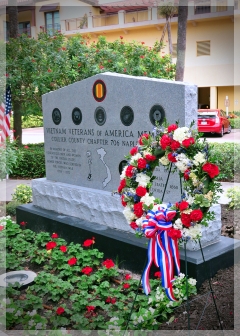 Contrary to popular belief, the purpose of our long holiday weekend is not to celebrate the end of school or the beginning of summer. More than a day for picnics and play, this is a day to honor those men and women who died while serving our country. Just as we stop to give thanks for our nation’s blessings on Thanksgiving, Memorial Day is the time we should stop to give thanks for the people who sacrificed their lives to makes those blessings possible.
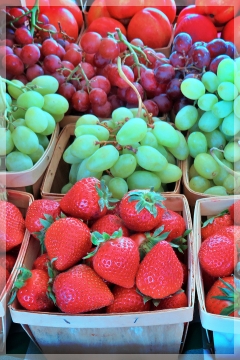 At sunset yesterday, the Jewish feast of Shavuot began. Originally known as Festival of Harvest or First Fruits, Shavuot is the second of the three pilgrimage festivals given to the Israelites. The first was that of Unleavened Bread (Passover) and the third was the Final Harvest or Ingathering (Sukkot or Tabernacles). Originally, all three festivals were tied to the harvest with Passover at the beginning of the barley harvest, Shavuot seven weeks later at the start of the wheat harvest, and Sukkot at the last harvest of the season. For a nation who’d left Canaan because of famine, spent four hundred years in a foreign land (much of it as slaves) and then another forty years as nomads, the promise of becoming a people with land of their own, who could plant and harvest for themselves, must have been almost inconceivable.
 Devotions of the Heart