
Examine yourselves to see if your faith is genuine. Test yourselves. Surely you know that Jesus Christ is among you; if not, you have failed the test of genuine faith. [2 Corinthians 13:5 (NLT)]
 How would we prove we are Christians? If we were Islamic converts to Christianity, seeking asylum in the United Kingdom or several other nations, an assessor would interview us to determine whether or not we actually are believers. Unfortunately, many of those doing the interviewing have no real understanding of Christianity themselves. Worse, as new Christians, we probably won’t know the answers to the sort of questions that are asked while those who are pretending to be Christian might have all the answers memorized. After all, back in Jesus’ time, the Pharisees had all the answers but were sorely lacking in faith. If we failed our interviews, we’d be subject to deportation. For a Christian, especially a Christian convert (an apostate), returning to one’s Islamic homeland could have dire (even fatal) consequences.
The following are actual questions asked by U.K. immigration officers. Can you answer them?
How many books in the Bible? 66—although the Catholic Bible has 73
How many books in the New Testament? 27
How many chapters in the book of John? 21
What is the date of Pentecost? Seven weeks after Easter
Who were the disciples? Simon Peter, Andrew, James son of Zebedee, John, Philip, Bartholomew, Thomas, Matthew, James son of Alphaeus, Thaddeus, Simon the Zealot, and Judas Iscariot
How did you do? Does knowing Bible minutiae define a true believer? If so, there are many (including me) who wouldn’t qualify. According to the American Bible Society and the Barna Group, only 60 percent of practicing Christians can name the first five books of the Bible, fewer know that Solomon was David’s son and less than half know that Elizabeth was John the Baptist’s mother. As Americans, we have no excuse for our lack of knowledge—nearly 90% of us own more than one Bible and we can openly gather in worship and Bible study. Consider the underground Christian church in Islamic nations—they must meet in secret and are lucky to have one or two Bibles shared by everyone.
If knowing Biblical details doesn’t prove one’s Christian faith, what does? If we had to do so, how would we prove our belief in Christ? Does church membership make us followers of Christ? Does being baptized make us true Christians? Does being raised by Christian parents make us believers? Instead, is it an unwavering love of God and belief in Jesus Christ as Lord and Savior that is proof of our faith? Is the real evidence found not in knowing Bible facts but rather in our repentance from sin, obedience to God, humility, active prayer life, exhibition of the fruit of the Spirit, devotion to God’s glory and the love we have for one another? I wonder—how well would I pass a test of faith? How well would you?
Your strong love for each other will prove to the world that you are my disciples. [John 13:35 (NLT)]
But the Holy Spirit produces this kind of fruit in our lives: love, joy, peace, patience, kindness, goodness, faithfulness, gentleness, and self-control. There is no law against these things! Those who belong to Christ Jesus have nailed the passions and desires of their sinful nature to his cross and crucified them there. Since we are living by the Spirit, let us follow the Spirit’s leading in every part of our lives. [Galatians 5:22-25 (NLT)]
Copyright ©2016 jsjdevotions. All rights reserved.
 The Philistine army, hoping to capture King David, raided the valley of Rephaim. Before responding to the attack, David stopped and asked God what action he should take. He didn’t present his battle plan for God’s consideration nor did he take action before receiving God’s instruction. God told David to go to battle, assuring him of victory over the Philistines. When the battle went as God had promised, David wisely did not take credit for the victory. “God did it!” he exclaimed, giving credit where credit was due. The Philistines, however, returned and raided the valley again. Although David had previously defeated them, he didn’t assume a similar victory the second time. Again, the shepherd king paused, looked to God for his battle plan and listened to His advice. This time, God gave him a new strategy, telling David to circle his army around behind the Philistines and wait for a sound like marching feet in the trees before attacking. David followed God’s advice and was victorious once again.
 I recently received an email from a Christian bookstore apologizing for one of their advertisements. Apparently, there had been objections to their “journaling” Bible ad, not because of the possible defacing of a Bible with doodles but because of the ad’s subject line: “Channel Your Inner Creative.” Customers protested their use of “inappropriate” New Age language. While the store’s goal had been to “embrace and celebrate the gift of creativity,” some people thought they were touting “channeling,” a New Age form of spiritualism. When channeling, people yield control of their discerning and reasoning faculties and enter a meditative or trancelike state in order to receive messages from a spiritual guide. When I first saw the ad, I gave no thought to its wording; I simply thought they were offering Bibles with extra wide margins so the reader could write notes or prayers on the pages. In their apology, the store promised to be “more vigilant and discerning” about their messaging. My first reaction upon receiving the apology was, ”Come on people—get a life!” I considered the complainers to be the kind of prissy judgmental people who give Christians a bad name.
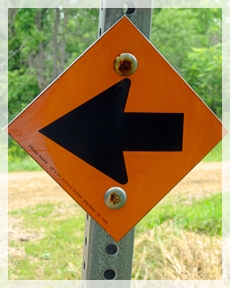 After the GPS flawlessly led us to our hotel in Orlando, we wondered how a satellite navigation system can keep track of countless cars and their various destinations. The following day, I looked at the GPS screen and the arrow indicating our position was several blocks east of us. It seemed to think we were driving over a golf course, across a canal and into a lake. Apparently, that eye in the sky is nowhere near as accurate as we’d originally thought. There are around 24 satellites orbiting at any one time to provide us with global positioning and we need to receive signals from at least three of them to get accurate directions. The line between the satellites and GPS must be unobstructed, so tall buildings, heavy woods, tunnels, mountains, and storms can all interfere with receiving a signal. We figured something had interfered with the satellites’ view of us. Later that day, after following its directions to Sea World, our faith in the system was shattered. As we passed Sea World’s clearly marked exit, we were told to continue five miles eastward and then go north. At that point, we consulted a map and turned around. Personally, I think we got someone else’s directions to an entirely different location! We were just one car among thousands of tourists using their GPS to guide them through the land of Mickey Mouse. Perhaps the system was overloaded and some other poor soul was being led to Sea Word when he probably wanted to go to the Magic Kingdom. Who knows? All I know is that I’m not getting rid of our maps anytime soon!
 I never thought attending a concert by the U.S. Army Field Band and Chorus would make me feel so out of touch with social media, but it did. It began when the audience was asked to choose the evening’s encore by voting on Twitter or Facebook. As the evening progressed, we learned that we could get the latest band news on Google Plus, see a live video stream on Periscope, watch webcasts on the band’s website, sign up for an email newsletter, see band videos on YouTube, tweet about them on Twitter, like and follow them on Facebook, view photos on their Flickr gallery, and purchase their music on Google Play. Since most of us had never even heard of Periscope, we stuck to watching them perform on stage rather than on our phones!
 Devotions of the Heart