
As they passed by in the morning, they saw the fig tree withered away to its roots. And Peter remembered and said to him, “Rabbi, look! The fig tree that you cursed has withered.” And Jesus answered them, “Have faith in God. Truly, I say to you, whoever says to this mountain, ‘Be taken up and thrown into the sea,’ and does not doubt in his heart, but believes that what he says will come to pass, it will be done for him. [Mark 11:20-23 (ESV)]
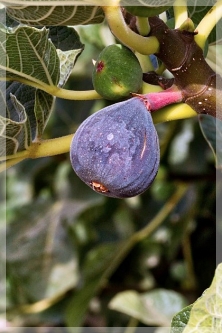 The next morning, while Jesus and the disciples walked from Bethany to Jerusalem for yet another confrontation with Judea’s religious leaders, the disciples saw the tree Jesus cursed the previous day. The disciples had witnessed Jesus cast out demons and still a storm with a just a word but, when they saw the withered and dead fig tree, they were amazed. Normally, trees die slowly from the top down but this tree instantly withered from the roots up. With dead roots, no amount of water or fertilizer would revive it. Having witnessed the tree go from abundance to ruin with just a word from the Lord, rather than asking Jesus to explain cursing the tree, the disciples focused on the speed with which the fig died.
Rather than focusing on spiritual hypocrisy and the significance of the dead fig, Jesus focused on how He performed the miracle and spoke about the power of genuine faith. This wasn’t faith in something vague like positive thinking or an object; it wasn’t faith in faith or faith in the power of prayer. He made it clear that the sole object of this faith must be God! After all, faith is only as good as the object in which it trusts and God is all-powerful, ever-faithful, and trustworthy to His promises.
Pause for a moment and consider—even though Jesus was God, He was living as a man with the limitations of humanity. By saying, “Have faith in God,” He displayed both His humanity and His dependence upon God. Jesus’ power to speak with authority, forgive sins, calm a storm, heal the sick, raise the dead, provide food for a multitude, and wither that fig tree came from His faith in God and the indwelling of the Holy Spirit.
Explaining the power of faith in God, Jesus told them that, with faith, they could move the mountain on which they were standing (the Mount of Olives) into the sea (probably the Dead Sea 15 miles away). Moving a mountain is even more inconceivable than killing a tree with a word but Jesus uses this hyperbole to emphasize that what is impossible with man can be accomplished through faith in the power of God!
We tend to say that prayer changes things—but it is God who does the changing! Although we speak of the power of prayer, prayer alone has no power; the power comes from God who hears that prayer. We often lament, “If only I had more faith!” The disciples even asked Jesus to increase their faith. Jesus, however, told them that the size of their faith doesn’t matter—even a mustard seed of faith is enough! (With a diameter of 1 to 2 millimeters, the mustard seed was used proverbially to represent the smallest of things.) It’s not the amount of faith that matters—as long as we put our faith completely in God’s power rather than ours. It’s not faith that moves those mountains—it’s God! Even if our faith is not great, our God is!

 In C.S. Lewis’ children’s fantasy novel The Lion, the Witch and the Wardrobe, the youngest child, Lucy Pevensie, happens upon an enchanted armoire and steps into the magical world of Narnia. Upon returning, she rushes to tell her siblings of her astonishing adventure. Hearing such a tall tale and finding no concrete proof of its truth, her older siblings assume the story to be a figment of her imagination. They take their concern over her falsehood to their wise elderly uncle. He cautions them to use logic and consider Lucy’s story carefully. He points out there are only three possibilities: either she’s lying, crazy, or telling the truth. After pointing out that lies usually are more plausible than Lucy’s inexplicable tale, he asks if she’s lied before. The children admit she’s always been truthful. After pointing out that none of Lucy’s behavior indicates mental illness, they all agree she can’t have gone mad. He then suggests that since she’s neither a liar nor crazy, they could consider the possibility that Lucy’s story is true.
 Our old friend Joe recently visited. Along with our friend Ric, he and my husband were partners in a manufacturing business in another state many years ago. Once a year, the three men would meet away from the business (with its phone calls and constant interruptions) to discuss their short-term and long-term business goals. While Ric and my husband were the legal, financial, and sales parts of the business, as a processing engineer, Joe oversaw manufacturing.
 I think the worst thing my parents could say was that they were disappointed in me. Knowing I hadn’t lived up to their high expectations, I’d hang my head in shame as they added, “We expected far better from you.” I never wanted to disappoint them but, unfortunately, like every child, I often did.
 If I were doing what accountants call a cost-benefit analysis of our living in Florida, the cost side would include venomous snakes, poisonous cane toads, hurricanes, alligators, sink holes, fire ants, and mosquitos along with humidity, allergies, high insurance, and seasonal traffic. On the other hand, the benefits would include never having to shovel snow, scrape sleet from a windshield, or drive on icy roads, along with the enjoyment of beaches, beautiful birds, colorful flowers, ocean breezes, “early-bird” specials, sunshine, no state income tax, and never-ending summer. While not one hundred times better, the pluses outweigh the negatives and make it worthwhile (at least for us)!
 Devotions of the Heart