BUT THERE’S A DRESS CODE! (Matthew 22:1-14 – part 2)

And he said to his servants, “The wedding feast is ready, and the guests I invited aren’t worthy of the honor. Now go out to the street corners and invite everyone you see.” So the servants brought in everyone they could find, good and bad alike, and the banquet hall was filled with guests. [Matthew 22:8-10 (NLT)]

mute swanIn Jesus’ Parable of the Wedding Dinner, after the initial guests refused to come, the king’s servants invited everyone they could find. Since it was a royal wedding, you’d expect the new guests to be dignitaries but everyone was to be called—regardless of social standing, race, nationality, wealth, or even moral character.

What seems like a beautiful example of God’s grace takes a turn when we learn that the king seems to have set a condition—a wedding garment must be worn. When I’m going to a wedding, it takes days (and probably a shopping trip or two) to put together the proper apparel and this was a royal wedding! People came from all walks of life and, with little time to prepare or purchase fancy clothing, we’re surprised when the king notices a man not wearing wedding clothes. Confronting the guest, the king asks how he could be there without proper attire. When the man has no reply, the king has him bound and cast into “the outer darkness.”

It’s easy to think the host’s problem is that the man is poor and has only rags to wear but the host’s anger seems so unlike Jesus that I was troubled by this part of His story. Scripture, however, never says the man was poor or dressed in tattered clothing and the speechless man, by never explaining himself or even asking how to get such a garment, seems to know he doesn’t belong at the feast.

By eating with sinners, touching lepers, healing on the Sabbath, and talking theology with a Samaritan woman, Jesus never seemed overly concerned with propriety or etiquette so it’s hard to think He took much notice of clothing. Some commentators speculate that the king must have furnished all of his guests with suitable apparel and that the man slighted the king by refusing to wear it. While it makes for a convenient explanation, there is no evidence of this being a Jewish custom so I’m not sure Jesus’ listeners would have understood it that way. Then again, perhaps “proper clothes” shouldn’t be taken too literally!

Rather than fabric and jewelry, could the wedding garment be the righteousness of Christ? By accepting the invitation, the evicted guest professed his belief, but the absence of a wedding garment testified to the falseness of his profession. A wedding garment would be the evidence of salvation—a way of life showing rebirth, repentance, and the works of righteousness. If we want to enjoy the feast, lip service is not enough; we must be righteous in character!

Jesus concludes the parable by saying, “For many are called, but few are chosen.” [22:14] God will not have an empty banquet hall and His invitation has been extended to all. He will, however, reject those who refuse His offer (as did the first invitees) along with those who are false in their acceptance (as was the man without the wedding garment.)

When sinners come in repentance, trusting in Christ, then He clothes them with the garment of salvation, with the robe of righteousness. This is the wedding garment that makes one presentable at the marriage supper. [Harry Ironside]

Not everyone who calls out to me, “Lord! Lord!” will enter the Kingdom of Heaven. Only those who actually do the will of my Father in heaven will enter.  [Matthew 7:21 (NLT)]

What good is it, dear brothers and sisters, if you say you have faith but don’t show it by your actions? Can that kind of faith save anyone? …  Just as the body is dead without breath, so also faith is dead without good works. [James 2:14,26 (NLT)]

Copyright ©2021 jsjdevotions. All rights reserved.

THE PARTY HAS STARTED (Matthew 22:1-14 – part 1) 

The Kingdom of Heaven can be illustrated by the story of a king who prepared a great wedding feast for his son. When the banquet was ready, he sent his servants to notify those who were invited. But they all refused to come! [Matthew 22:2-3 (NLT)]

canna - bandana of the evergladesIn explaining the nature of the Kingdom of Heaven, Jesus told a parable about a king who prepared a wedding feast for his son. Weddings are notable events but this was a royal wedding of great significance! Perhaps the most famous royal wedding was that of Princess Diana and Prince Charles in 1981. Broadcast all over the world, the wedding was viewed by 750 million people and 3,500 people attended the royal nuptials. In spite of the honor it was to receive an invitation from the Queen, not everyone who got one attended the festivities. The Presidents of the Republic of Ireland and Greece along with King Juan Carlos and Queen Sofia of Spain spurned the invitation for political reasons.
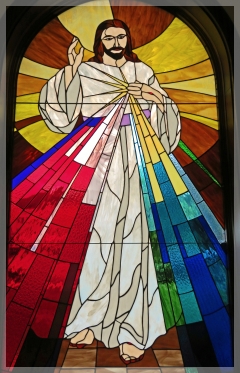
News of the royal wedding in Jesus’ parable would have spread all over the land and the guests already had received and accepted the first invitation (the 1st Century equivalent of a “save the date” card). When the feast was prepared, the king sent his servants to notify his guests that all was ready and the time had come. Unlike the few people who declined Queen Elizabeth’s invite, everyone invited by the king refused to attend: an inexcusable affront to the monarch. Nevertheless, in spite of his people’s deplorable behavior, the king was patient and sent out a third invitation.

A king’s invitation is more of a command than a request, but the people ignored his messengers; some were even abused or killed. When the people’s behavior went from insult to outright rebellion, the king reacted as would any king: by sending soldiers to kill the murderers and burn their town. With the wedding feast prepared but no guests, the king sent his messengers out to invite everyone they could find (both good and bad) until the banquet hall was filled.

Up to this point, the parable isn’t hard to understand. The marriage feast is the Messianic reign—the Kingdom of Heaven (or Kingdom of God since the two terms were synonymous). The King (God) had sent his messengers (the prophets, including John the Baptist) to invite His people (the Jews) to the wedding feast for His son (the Messiah). Since the original guests rejected His invitation, God extended his invitation to everyone (both good and bad Gentiles). His servants (the Apostles) would bring them into the banquet hall. The punishment of those who abused and killed his messengers along with the promised destruction and burning of their town points to Jerusalem’s fall and the destruction and burning of the Temple (the center of Judaism) by the Romans in 70 AD.

Matthew placed this parable immediately after the Parable of the Evil Farmers in which Jesus warned, “I tell you, the Kingdom of God will be taken away from you and given to a nation that will produce the proper fruit.” [21:43] This parable expands on that theme. For centuries, the Jewish people had been invited to the Messianic feast, but they were showing contempt for God’s grace by their refusal to attend.

When Luke relates a somewhat similar parable about a feast, we shouldn’t be surprised. Jesus taught for three years and, like any good teacher, probably repeated Himself from time to time. Both versions made it clear that, even if the initial guests refused to come, God’s plan would not be stopped. His Son would have a people who would enjoy the benefits of the Kingdom! The parable in Matthew’s gospel, however, carries an unmistakable message with its description of the king’s punishment. The parable then takes an unexpected twist. Just when it seems that all were welcome at the King’s banquet, not everyone who came was allowed to stay. More about that tomorrow!

The servant returned and told his master what they had said. His master was furious and said, “Go quickly into the streets and alleys of the town and invite the poor, the crippled, the blind, and the lame.” After the servant had done this, he reported, “There is still room for more.” So his master said, “Go out into the country lanes and behind the hedges and urge anyone you find to come, so that the house will be full. For none of those I first invited will get even the smallest taste of my banquet.” [Luke 14:21-25 (NLT)]

Copyright ©2021 jsjdevotions. All rights reserved.

THE KINGDOM

One day the Pharisees asked Jesus, “When will the Kingdom of God come?” Jesus replied, “The Kingdom of God can’t be detected by visible signs. You won’t be able to say, ‘Here it is!’ or ‘It’s over there!’ For the Kingdom of God is already among you.” Luke 17:20-21

holy name cathedralDepending on your Bible translation, the Kingdom of God is mentioned at least 68 times in the New Testament. Rather than “Kingdom of God,” Matthew usually used “Kingdom of Heaven.” All four gospels, however, are speaking of the same place. Matthew was a Jew and primarily writing for a Jewish audience. While we tend to interpret the third commandment about not misusing the Lord’s name to mean not using it irreverently, Jews have a much stricter interpretation. Believing God’s name too sacred to say aloud, by the 1st century, His name wasn’t even written or spoken in anything but prayer. Even today, many observant Jews substitute “G-d” rather than write the full name.
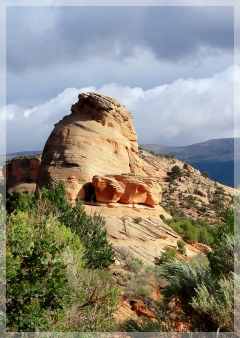
Because Jesus continually preached the Kingdom of God (or Heaven), the Pharisees asked Him when it would come. Like the rest of Judah, they were thinking of a materialistic kingdom—one with boundaries and a Jewish ruler—so they missed what was happening in front of them. Looking for a political rather than a spiritual fix, they couldn’t understand that the Kingdom had arrived and God was busy restoring it.

Jesus’ answer to the Pharisees sounds like He’s saying the Kingdom is present and yet He also told His disciples to pray for its coming. Rather than an involved theological explanation to explain a kingdom that was both here and pending, Jesus compared the Kingdom of God to a mustard seed that was planted in a field but hadn’t matured into its future glory. The Kingdom was “already” because believers were taking part in building it but it also was “not yet” because it wouldn’t reach its full expression until the future. To further explain the Kingdom, Jesus used a number of metaphors: a farmer scattering seed, yeast in dough, a fishing net, a merchant in search of fine pearls, treasure in a field, a king settling his accounts, a landowner hiring workers for his vineyard, a king’s wedding feast for his son, ten bridesmaids meeting the bridegroom, and a landowner with tenant farmers. Even then, His own disciples were still thinking of an earthly kingdom when they asked the resurrected Jesus, “has the time come for you to free Israel and restore our kingdom?” [Acts 1:6]

The Kingdom of God is not about going to heaven when we die; it’s about bringing God’s kingdom to earth. We pray, “May your Kingdom come soon. May your will be done on earth, as it is in heaven.” [Matthew 6:10] God is king of everything and everyone and, when He reigns in our hearts and minds, His Kingdom is already here. At the same time, His Kingdom is not yet here until its full realization when paradise is re-created in the New Jerusalem.

The Messiah has accomplished the work of redemption, the Spirit has been poured out, yet evil has not been eradicated, the general resurrection is still future, and the final state of God’s kingdom has not been established. In other words, the new era has begun–has been inaugurated–but it has not yet replaced the old era. [Dr. Peter Cockrell]

Jesus answered, “My Kingdom is not an earthly kingdom. If it were, my followers would fight to keep me from being handed over to the Jewish leaders. But my Kingdom is not of this world.” [John 18:36 (NLT)]

Copyright ©2021 jsjdevotions. All rights reserved.

CORNERSTONE, TENT PEG, AND BOW (Cornerstone – part 2)

From Judah will come the cornerstone, the tent peg, the bow for battle, and all the rulers. [Zechariah 10:4 (NLT)]

elephant toe - utahIn the Old Testament, “cornerstone” as a metaphor for the Messiah is found in Psalms, Isaiah, and Zechariah. In Zechariah 10, the prophet describes Israel’s need for purification because of their idolatry, fortune-tellers, and false prophets. Holding the nation’s leaders responsible for these transgressions, Zechariah says the people are like lost sheep without a shepherd. Proclaiming the arrival of the ”Lord of Heaven’s Armies” who will look after the flock, the prophet says he’ll come from Judah and describes him as a cornerstone, tent peg, and battle bow.

Nowadays, cornerstones are more ornamental or commemorative than functional. In the first century, however, the cornerstone was the first squared stone in the foundation of any structure. Determining the position of the rest of the foundation, every other stone in the wall was aligned to it and a properly set (or true) cornerstone was essential to the structural integrity of any building. The Messiah as cornerstone would be the first and most important stone in God’s Kingdom and would provide a reliable and firm foundation for His people.

While cornerstone is a familiar Messianic metaphor, tent peg and bow are not. At first, the image of the Messiah as a tent peg seems strange but, if you’ve ever pitched a tent, you know its purpose. Pounded into the ground, tent pegs are fastened to the ropes holding up the tent and must be set securely or the tent will sag, rip, or even collapse. Even today’s freestanding dome tents need tent pegs or stakes to keep them from blowing away in the wind. The tent peg is as important to a tent’s stability as a cornerstone was to a building’s. Just as the peg fastened the tent to the ground and kept it from collapsing, so the Messiah’s rule would secure Israel to Himself and keep His people upright.

The third metaphor is that of a battle bow: an offensive weapon symbolic of military power. As God’s warrior, the Messiah would fight to save His people. Whether it would be a physical or a spiritual battle is less clear. The bow, however, is associated with more than warfare; it is connected with God’s power in judgment and speaks of a Messiah who would deliver judgment.

We then come to the fourth term in this short verse: rulers. The original Hebrew had no punctuation and it’s unclear if this is a metaphor. Some commentators believe it refers to the Messiah and means that He will be the rulers of rulers. Many others disagree because the word translated as ruler was nagas which wasn’t used for a rightful king. It meant tyrants, taskmasters, or oppressors. Rather than a metaphor for the Messiah, they interpret this to mean that the Messiah would defeat every oppressor of His people. In either case, the people of Judah interpreted Zechariah’s words to mean the Messiah would wage physical war on the nations that oppressed them. The Messiah, however, wasn’t about an earthly kingdom and earthly oppressors. As Judah’s cornerstone, tent peg, and battle bow, the Messiah would wage war on the nation’s true enemy and oppressor—the tyrant Satan and sin. The Messiah would strengthen His people and, in His might, they would find salvation!

I will strengthen Judah and save Israel; I will restore them because of my compassion. It will be as though I had never rejected them, for I am the Lord their God, who will hear their cries. … By my power I will make my people strong, and by my authority they will go wherever they wish. I, the Lord, have spoken! [Zechariah 10:6,12 (NLT)]

Copyright ©2021 jsjdevotions. All rights reserved.

HOPE

It is the same way with the resurrection of the dead. Our earthly bodies are planted in the ground when we die, but they will be raised to live forever. Our bodies are buried in brokenness, but they will be raised in glory. They are buried in weakness, but they will be raised in strength. [1 Corinthians 15:42-43 (NLT)]

lake lucerne sailboatThe anchor, the Christian symbol of hope, is the most prevalent of all the Christian symbols found in the Roman catacombs. In fact, all of the symbols, paintings, mosaics, and reliefs found in the miles of labyrinth-like narrow tunnels and thousands of graves in the catacombs reflect hope in some way. Instead of the dark funereal images you might expect in an underground cemetery, the white walls of the Christian catacombs feature living things like flowers and birds along with Bible stories expressing hope in God’s plan of salvation. Prominent themes from the Old Testament include Daniel emerging untouched from the lions’ den and Shadrach, Meshach, and Abednego exiting unharmed from the fiery furnace. Frequently depicted are the stories of Noah, who escaped from the flood, and Jonah who was delivered from the sea monster. Continuing the theme of deliverance are many images of the good shepherd so frequently mentioned in Psalms. New Testament stories usually showed Jesus raising the dead (with over fifty representations of Lazarus), healing people, and feeding the multitude. The art of the catacombs is all about man’s hope in God’s deliverance, provision, and plan of salvation.
As I read about the displays of hope found in this ancient place of grief and death, I thought of my mother’s final days. I was only fifteen when I sat at her hospital bedside. Even though she knew her end was near, my mother had no tears. Instead of worry or fear, she radiated a sense of peace and hope. I recall my father reaching under the plastic of her oxygen tent, brushing back her hair, caressing her face, and saying, “You look like an angel tonight.” Indeed, no angel could have been more beautiful that she was that night. My mother smiled back at him and said in a voice filled with hope, “Maybe tomorrow, I’ll be with them!” She could say those words so confidently because my mother was a believer and, like those early Roman Christians, she knew Jesus and trusted the promises of God.

The stories and symbols found in those ancient catacombs remind us that, for a Christian, death is not something to fear. Going beyond the here and now, Christian hope reaches past the grave into the glorious tomorrow promised by God! Death, for a Christian is not an end but a beginning; it is like emerging from the trials of a lion’s den, fiery furnace, or whale’s belly unharmed. When that last breath is taken, the Christian simply pulls up anchor and sets sail for a new land—one where tears, pain, and sorrow are replaced by peace, joy, and praise. That is the hope seen in the art found in the catacombs of Rome and the hope I saw firsthand in a Detroit hospital room nearly sixty years ago.

Death to the Christian is the exchanging of a tent for a permanent palace. Here we are as pilgrims or gypsies living in a frail, flimsy home subject to disease, pain and peril. But at death we exchange this crumbling, disintegrating tent for a house not made with hands, eternal in the heavens. [Billy Graham]

And we believers also groan, even though we have the Holy Spirit within us as a foretaste of future glory, for we long for our bodies to be released from sin and suffering. We, too, wait with eager hope for the day when God will give us our full rights as his adopted children, including the new bodies he has promised us. [Romans 8:23 (NLT)]

Copyright ©2021 jsjdevotions. All rights reserved.


YOKE OR EASY BUTTON?

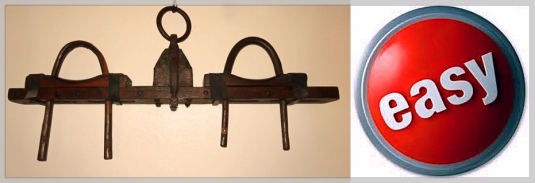
yoke - easy button

Then Jesus said, “Come to me, all of you who are weary and carry heavy burdens, and I will give you rest. Take my yoke upon you. Let me teach you, because I am humble and gentle at heart, and you will find rest for your souls. For my yoke is easy to bear, and the burden I give you is light.”  [Matthew 11:28-30 (NLT)]

Several years ago, an office supply company featured an “easy” button in its advertisements and you still can purchase one for less than $9. “Don’t stress it; press it,” their web site suggests. Apparently, when placed on your desk, you can show others how easy it is to find solutions to their problems. Wouldn’t it be nice if all we had to do was push a button to make things easy (or at least easier)?

Rather than a button, however, Jesus offers us a yoke: a wooden frame used as a sort of harness to join two draft animals so they can work together. Among assorted farm implements that once decorated our mountain home, we had the yoke pictured above. It hung upside down but that heavy wooden beam actually rested on the animals’ necks. Without any padding, it doesn’t look that easy to bear! If it is all the same to God, I’d much rather push an easy button than take on anything like a yoke! Fortunately, Jesus was speaking figuratively.

The heavy burden to which Jesus was referring was that of the Pharisees and their legalistic law-keeping that went far beyond God’s demands. For example, there were 39 major categories with hundreds of subcategories defining what constituted work on the Sabbath. While the Jewish way offered the yoke of the law without the power to be obedient, Jesus offered a yoke of faith empowered by the Holy Spirit!

Nevertheless, this passage also can be interpreted as Jesus being our burden sharer. While many things are too heavy for us to bear alone, nothing is too great for Him. By taking His yoke, we give up trying to do life on our own; instead of finding rest in a method, we find rest in a person: Jesus! His yoke is better than an easy button because it actually works! When yoked to Him our burdens are no longer our own!

Can you think of any kinder words than Jesus asking us to come to Him to find rest? Life isn’t easy but God never promised that it would be. Rather than an easy button, we have Jesus and His promise that life is doable with Him. Unlike the yoke that hung on our wall, His yoke is easy to bear and the burden is light. We never have to carry the heavy load of life on our own because He will share it with us. Better yet, since He is so much stronger, most of the weight will be on His heavenly shoulders.

Today, as I take on Jesus’ yoke and share life’s weight with Him, I recall the old Swedish proverb that says, “Shared joy is a double joy; shared sorrow is half a sorrow.”  Wearing His yoke will make my life much brighter and my burdens much lighter.

Give your burdens to the Lord, and he will take care of you. He will not permit the godly to slip and fall. [Psalm 55:22 (NLT)]

Don’t be afraid, for I am with you. Don’t be discouraged, for I am your God. I will strengthen you and help you. I will hold you up with my victorious right hand. [Isaiah 41:10 (NLT)]

Copyright ©2021 jsjdevotions. All rights reserved.