
Take to heart all the words of warning I have given you today. Pass them on as a command to your children so they will obey every word of these instructions. These instructions are not empty words—they are your life! By obeying them you will enjoy a long life in the land you will occupy when you cross the Jordan River. [Deuteronomy 32:46-47 (NLT)]
 Yesterday I wrote about the Song at the Sea or Song of Moses found in Exodus 15. There is another psalm known as the Song of Moses. Found in Deuteronomy 32, it was sung forty years after that first one, when the Israelites were again preparing to enter Canaan. With Moses’ death imminent, God had appointed Joshua as the nation’s new leader. Knowing that the people would turn their back on Him once in Canaan, the Lord met with Moses and dictated the words to this song. God’s words were ones of warning and Moses was to teach this song to the Israelites as a reminder of the consequences of disobedience.
Starting with praise for their “glorious God…a faithful God who does no wrong” [32:4], it moved into a brief history of the people and God’s faithfulness in bringing them out of bondage. Taking a prophetic turn, it then spoke of Israel’s future ingratitude, idolatry and apostasy, God’s resulting anger that “blazes forth like fire and burns to the depth of the grave,” [32:22] and the judgments of abandonment, disasters, famine, and terror that would be inflicted on Israel by their enemies because of their sin.
Even though the song ends on a note of hope, with God promising vengeance on Israel’s enemies and salvation for his people, it’s a grim prophecy and one we know comes true. We know that God’s clear warnings in this song were not heeded any more than His promise of victory in the first song was believed. We know of Israel’s idolatry and alliances with pagan nations, the divided kingdom, the northern kingdom’s defeat and removal to Assyria, and Judah’s fall and exile to Babylon. We know that, when the Jews finally return to Jerusalem, they are ruled by a foreign nation and that the temple will be destroyed and Judah cease to exist in 70 AD. We know that nearly two thousand years will pass before Israel again is a nation.
God is not like a sadistic teacher who springs a final exam on us without warning. Throughout Scripture, like a good parent, He’s warned his children about disobedience and its consequences. Will we heed His words? Will we learn from those who’ve walked before us?
 Following the Israelites’ successful passage through the Red Sea and the destruction of Pharaoh’s army, we find Moses and the people singing a song of deliverance and praise in Exodus 15. This beautiful and powerful psalm vividly describes the warrior God Yahweh hurling Pharaoh’s chariots and army into the sea. This is Moses’ song but he doesn’t figure in the account at all. A paean to the supremacy and unrivaled power of Jehovah, all of the glory is given to God.
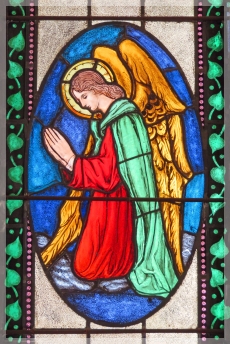 Sunday, we will light our Advent wreath’s fourth candle—the purple one known as the angel or love candle. We’ll read Nathan’s prophecy in 2 Samuel that David’s kingdom would continue forever. Although we know that David’s earthly dynasty ended some 400 years after Nathan’s words, God’s promise was fulfilled in Jesus—David’s direct descendant who now reigns forever. Jesus is tied to the Old Testament prophecies in two selections from Luke 1 in the angel’s words to Mary that her son, a descendant of David, would reign over Israel and His kingdom would never end and Mary’s beautiful song of praise known as the Magnificat in which she expresses her understanding that God is fulfilling His promises with the birth of her son.
 Last Sunday, my husband and I lit the candle of hope on our Advent wreath. This Sunday, we’ll re-light that one along with a second candle, the one we call the peace or Bethlehem candle. Because the Advent wreath custom has been adapted in a variety of ways through the years, there are several names for the candles and explanations for their symbolism that probably have more to do with the selling of wreaths, candles, and devotional booklets than with church tradition. There are no official names, meanings or rituals because an Advent wreath isn’t based on Scripture. It’s merely a tradition to help make this season more meaningful.
 Devotions of the Heart