
This is the day that the Lord has made; let us rejoice and be glad in it. [Psalm 118:24 (ESV)]
 What would you do if you were six and your father said that your mom is in the hospital because she finds it hard to be happy and “did something stupid”? That question is answered in Duncan Macmillan and Jonny Donahoe’s one-act play, Every Brilliant Thing. In their play, that boy, now a grown man, tells the audience that he made of list of everything that was “brilliant” about the world—everything worth living for—and left it on his mother’s pillow. Reflecting a six-year old’s priorities, the list included ice cream, Kung-Fu movies, laughing so hard you shoot milk out your nose, burning things, construction cranes, and “me.” Although she returns the list with its spelling corrected, the boy’s mother never comments on it. Nevertheless, he keeps adding to his list. Although his mother eventually takes her life, the narrator tells how his list took on a life of its own and eventually saved him from his own depression and suicidal thoughts.
Throughout the play, the audience learns of additions to the list—everything from peanut butter, water fights, and sunlight to peeing in the sea with nobody knowing, someone lending you a book, cycling downhill, and completing a task. Sort of a theatrical and secular version of Ann Voskamp’s One Thousand Gifts, Every Brilliant Thing is a poignant reminder of the importance of noticing and naming the little “brilliant” things in our lives—to step out of ourselves to take in the small blessings with which God blesses us every day—to pause and feel God’s love in a stranger’s smile, a nurses’ gentle touch, the sound of children’s laughter, the smell of lemon zest, the taste of a fresh-baked warm chocolate chip cookie, a mockingbird’s serenade, a compliment, or the smell of a campfire! No one’s list is the same nor should they be.
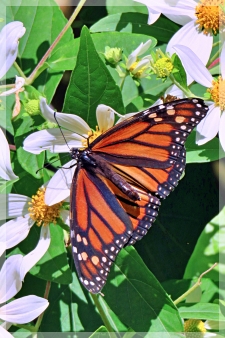
Nearly three years ago, Voskamp’s book inspired me to start my own list of “gifts” (what Macmillan and Donahoe called “brilliant” things). But, like the play’s narrator, I put it aside after a while. Although there were moments I thought, “That’s one for the list,” I rarely added them and they were forgotten. It wasn’t until my most recent bout with depression and pain that I resumed adding to it. Of course, I couldn’t add to the list without making a point of opening my eyes to God’s presence in the ordinary stuff of life. Some were big things like taking Communion or learning that my girls are visiting in a few weeks. Most things, however, are pretty mundane—the aroma of night-blooming jasmine, the two standard poodles that sit regally beside their person as he chauffeurs them around the community in his golfcart, Savannah Guthrie’s book Mostly What God Does, whipped cream on a cup of hot cocoa, and monarch butterflies. There’s nothing extraordinary about these “brilliant” things; nevertheless, they bring a smile to my face and remind me of God’s presence in all things.
Although our cups overflow with God’s blessings, it’s been said that joy comes in sips rather than gulps. May we always remember that it wasn’t in the storm that Elijah heard God—it was in His whisper. Indeed, God whispers to us in the seemingly insignificant but “brilliant” things of life. Let us take note of each and every one!
There is not one little blade of grass, there is no color in this world that is not intended to make men rejoice. [John Calvin]
 During that dark time about which I recently wrote, I was in intense pain and it seemed like God had turned His back on me. When I confided to a friend that God seemed deaf to my pleas, she asked the simple question, “Have you turned it over to the Lord?” I assured her I had but, as the day wore on, I wondered if that were true.
 When I first started reading the psalms, I suspected David might have been bi-polar—his highs seemed so high and his lows so very low; now I understand that he was just being truthful. In his psalms, David unabashedly expressed his deepest feelings to God. Pouring out his soul, he openly shared his emotions—whether anger, disappointment, sorrow, regret, shame, joy, love, fear, doubt, or even his desire for vengeance upon his enemies. No matter how troubled he was, David never was afraid to speak from his heart. I’m not sure we are willing to be as vulnerable and straightforward in our prayers as was David.
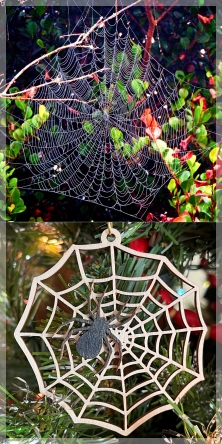 It was a web day at the park and I don’t mean the world-wide kind. It was one of those days when the morning dew, mist, and light cooperated in such a way that we saw beautiful intricate spider webs hanging everywhere. Looking as if they were made of strands of silver rather than proteinaceous silk extruded from a spider’s spinnerets, it seemed like the spiders had decorated all the trees in celebration of Christmas.
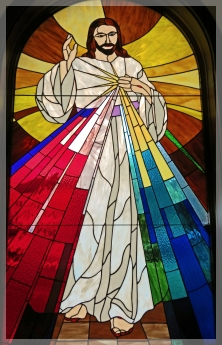 “And be sure of this,” He promised, “I am with you always, even to the end of the age.” [Matthew 28:20 (NLT)]
 God took Heaven’s best—the Lord Jesus Christ—to redeem earth’s worst! [Billy Graham]
 Devotions of the Heart